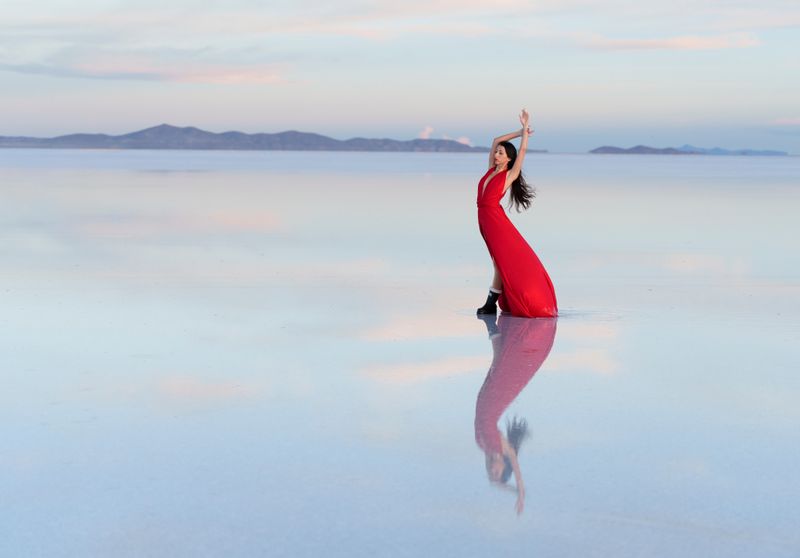
Sleeping on a salt flat at 3,656 m altitude, with the Milky Way overhead and 10,582 km² of white silence outside your window, is one of travel’s genuinely singular experiences. Here are the seven best properties doing it in 2026.
Why Salt Hotels Work
Salt blocks are practical building material in the ultra-dry altiplano. With less than 250 mm of annual rainfall and extreme solar radiation, salt is abundant, locally quarried, and structurally stable. The result: walls, floors, ceilings, bed frames and furniture all carved or assembled from the same material you’re walking on outside.
All properties at this altitude (3,656 m) require altitude preparation — see the altitude planning section at the end.
The 7 Best Salt Hotels
1. Kachi Lodge — Ultra-Luxury ($600+/night)
Six geodesic domes on the salt flat itself, positioned for maximum mirror-effect photography. Fully solar-powered with composting toilets; the most sustainable property at Uyuni. Each dome has a king bed on a salt platform, private bathroom, and 270° panoramic windows. The experience package includes Incahuasi Island tours, sunset on the flat, and sunrise mirror photography. Book 4–6 months ahead for June–August.
2. Palacio de Sal — Flagship ($250+/night)
The original and most established salt hotel, 7 km from Uyuni town. One million salt blocks form the walls, floors and ceilings. Facilities include a heated indoor pool, spa, sauna, golf course (9 holes, on the salt flat) and restaurant with panoramic views. Best for: Combining Uyuni town access with full-service luxury.
3. Luna Salada — Rooftop Stargazing ($180+/night)
Perched on the edge of the salt flat, Luna Salada offers rooftop stargazing sessions with telescopes on clear nights (year-round at this altitude). The terrace restaurant has some of the best views of any hotel in Bolivia. More intimate than Palacio de Sal, with warmer common areas.
4. Cristal Samaña — Design ($120+/night)
The most architecturally distinctive of the mid-range properties, with Feng Shui-influenced layout and the warmest interior design. Strong on couples’ experiences — private dinners on the salt flat can be arranged with 24 hours’ notice.
5. Tayka de Sal — Community ($95+/night)
Community-owned and operated by the Colchani salt flat workers’ cooperative. The most authentic connection to the local salt-mining community; profits stay within the cooperative. Good base for photographing the hexagonal salt crust patterns (dry season) or mirror effect (wet season).
6. Casa Andina — Budget Reliable ($70+/night)
The Peruvian hotel chain’s Uyuni property is the most reliable budget option — consistent service, central heating, good beds. Salt construction on walls and floors but standard hotel furniture. Best for: Travellers who want salt hotel experience without luxury prices.
7. Los Flamencos — Eco ($85+/night)
The smallest and most eco-focused property, with a flamingo-observation platform and bird-watching focus during the wet season. Located closest to the flamingo feeding areas at the flat’s southern edge.
Altitude Planning
All Uyuni properties are at 3,656 m. Essential preparation:
- Arrive from La Paz (3,640 m) or Sucre (2,810 m) — not direct from sea level
- Rest first day — no strenuous activity for 24 hours after arrival
- Symptoms: Headache, nausea, shortness of breath are normal. Descend if these worsen after 24 hours.
- Medication: Diamox (acetazolamide) available by prescription; most effective when started 24 hours before ascent.
3-Day Itinerary from a Salt Hotel
Day 1: Arrival sunset on the salt flat → Incahuasi Island (1,200-year-old cacti) → night photography (Milky Way April–September)
Day 2: Sunrise mirror photography (wet season Nov–Mar) or hexagon patterns (dry season) → Laguna Colorada flamingos (4,278 m) → Sol de Mañana geysers (4,850 m)
Day 3: Laguna Verde (Chilean border) → Train Cemetery (19th-century British locomotives) → departure
Booking Strategy
Peak dry season (June–August): Book 4–6 months in advance. Kachi Lodge and Luna Salada sell out first.
Mirror effect season (January–February): Book 3–4 months ahead. Not all hotels operate during wet season — verify before booking.
Shoulder seasons (April–May, September–October): Best value — 20–30% lower rates, fewer crowds, manageable weather.
Key facts
- → Uyuni's salt hotels are built from locally quarried salt blocks — walls, floors, ceilings and furniture — sustainable in the ultra-dry altiplano climate.
- → All Uyuni salt hotels are at 3,656 m altitude; altitude sickness affects up to 25% of sea-level visitors and must be planned for.
- → Kachi Lodge (6 geodesic domes, fully solar-powered) is Bolivia's most exclusive accommodation at $600+/night — listed among the world's most remote luxury lodges.
- → Incahuasi Island cacti (visible from salt flat hotels) reach 10 m and are estimated at 1,200 years old — older than the Spanish colonial period.
- → Dry season (May–September) peak: book 4–6 months in advance. Wet season (November–March): fewer hotels open, but mirror effect is active.
Frequently asked questions
Do salt hotels actually stay dry? Don't they melt in rain? +
Yes — the Uyuni altiplano receives less than 250 mm of rain per year (most falling November–March). The salt block construction is entirely stable in this climate. Interior humidity is controlled with dehumidifiers; floors are sealed. The main concern is the exterior eroding slowly over decades, not melting.
What is the best salt hotel for the Uyuni mirror effect? +
Kachi Lodge (on the salt flat) and Luna Salada (edge of the flat) offer the most direct access to the mirror effect during the rainy season. Both have dedicated sunrise photography spots on the flat. Book the wet season (November–March) specifically for this experience.