Skip to content
Parque Nacional Amboró Bolivia — bosque nublado en la intersección de Amazonía, Andes y Cerrado, departamento de Santa Cruz
— Ecosystem · Tucumano-Bolivian Forest

Parque Nacional
Amboró, Bolivia.

442,500 ha where the Amazon, Andes and Cerrado meet. 830+ bird species — possibly the highest count of any park on the planet. Spectacled bear, tapir, jaguar. 2 hours from Santa Cruz.

Area
442,500 ha
Birds
830+ species
Altitude
300–3,200m
Biomes
3 (Amazon, Andes, Cerrado)
From Santa Cruz
~2h to Buena Vista
Best season
May–Oct (dry season)
— Why Amboró

Bolivia\'s most biodiverse park.

Just 2 hours from Santa Cruz, Amboró National Park holds more bird species than any entire European country — and is almost entirely off the international tourist radar.

🌐
The intersection of three worlds
Amboró sits at the exact convergence of the Amazon, eastern Andes and Cerrado. Each contributes unique species that coexist nowhere else on earth. This is why its bird and mammal diversity is unmatched.
🦅
830+ bird species
Amboró's bird count exceeds 830 recorded species — a number that rivals or surpasses parks far larger in Brazil and Costa Rica. This makes it one of South America's most important birding destinations, though little-known internationally.
🐻
11 cat species
Amboró holds 11 of Bolivia's 13 cat species, including jaguar (Panthera onca), puma (Puma concolor), ocelot (Leopardus pardalis) and margay. It also shelters the spectacled bear (Tremarctos ornatus) — South America's only native bear.
🌿
Intact cloud forest
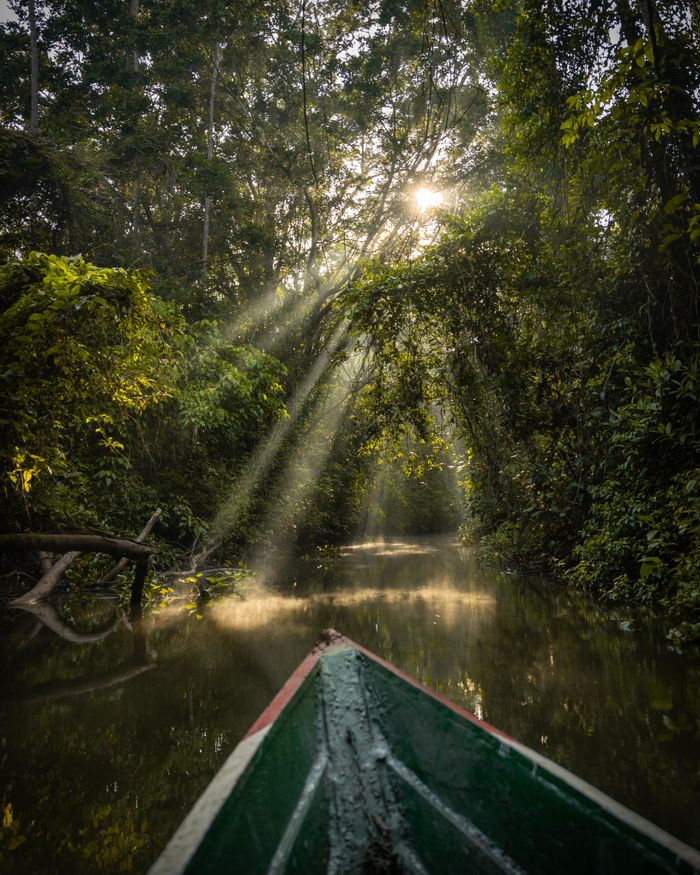
Amboró's Andean slopes between 1,500m and 3,000m host virtually intact cloud forest. Tree ferns, orchids and epiphytes cover the trees. Habitat for endemic species that exist nowhere outside this ecosystem.
— Key wildlife

Wildlife from three worlds.

Amboró mixes Andean, Amazonian and cerrado species in a relatively compact area. A local guide is essential — the park has no systematically signposted trails.

🐻
Spectacled bear
Tremarctos ornatus
Low (tracks frequent)Year-round
South America's only bear. Named for white facial markings resembling spectacles. Habitat: cloud forest 1,500–3,200m. Shy and nocturnal — tracks (claw marks on trees, fruit remains) are frequent; direct sightings are rare.
🐆
Jaguar
Panthera onca
Very low (tracks possible)Dry season
Bolivia has one of South America's highest jaguar densities, but Amboró is not the easiest jaguar site — dense forest reduces visibility. Tracks and camera traps detect them more often than direct sightings.
🐎
Mountain tapir
Tapirus pinchaque
Low-medium with night guideYear-round
The smallest of Bolivia's three tapir species. Inhabits Amboró's Andean cloud forests. Nocturnal and elusive. With a night guide in known areas, sighting probability is reasonable.
🦁
Ocelot
Leopardus pardalis
Low (camera traps)Year-round
Medium-sized nocturnal, solitary cat. Frequent tracks in muddy areas. Park camera trap programmes document constant presence in several sectors.
🦜
Military macaw
Ara militaris
High in flightYear-round
Bolivia's largest macaw. Nests on the cliffs of Amboró's north sector. Flocks of 50–100 individuals are visible in flight over the forest. Loud, characteristic call.
🐊
Yacaré caiman
Caiman yacare
High on riversDry season
The lowland rivers of Amboró (Ichilo, Yapacaní) have high yacaré caiman density. Groups of 10–20 sunning on riverbanks are routine.
— Getting there

2 hours from Santa Cruz.

🌿Recommended
North Sector: Buena Vista

Buena Vista (430m) is the most accessible gateway — 100km northwest of Santa Cruz (~2h by bus or car). It has accommodation, restaurants and certified local guide agencies. The north sector gives access to Amboró's lowlands (rivers, caimans, hummingbirds, toucans). A local guide is required for all trails.

Buses from Santa Cruz Bimodal Terminal to Buena Vista: every 30–60 minutes. Price: ~$3–5 USD.
🏔️Andean access
South Sector: Samaipata

Samaipata (1,650m), 120km from Santa Cruz (~2.5h), accesses Amboró's Andean sector — cloud forest, spectacled bear, mountain tapir. The Samaipata route to the park is less tourist-heavy and wilder. Combine with a visit to El Fuerte (UNESCO 1998).

Buses Santa Cruz → Samaipata: several daily from Bimodal Terminal. 2–2.5h journey.
🧭Essential
Certified local guide

Amboró National Park has no systematically signposted trails. A local guide is essential both for safety (it is easy to get lost) and sighting probability. Buena Vista guides know the trails, tracks and habitats intimately. Love Bolivia works with certified guides.

Average cost for a 1-day Amboró guide: $40–80 USD. Minimum 2 nights in the area for a complete experience.
— FAQ

Frequently asked questions.

Get in touch →

Amboró National Park is a 442,500 ha reserve in Bolivia's Santa Cruz department, 120km west of Santa Cruz city. It is Bolivia's most biodiverse reserve, positioned at the convergence of three major biomes — the Amazon, eastern Andes and Cerrado — which concentrates an extraordinary diversity of species: 830+ bird species, spectacled bear, jaguar, ocelot, tapir and 11 threatened cat species. Altitude ranges from 300m to 3,200m.

Amboró has 830+ recorded bird species — one of the highest counts of any park in the world. For reference, all of Europe has around 500 breeding bird species. This extraordinary diversity comes from Amboró's position at the Amazon-Andes-Cerrado junction, concentrating lowland Amazonian species, Andean cloud forest species and cerrado savannah species in a single park. It is one of South America's premier birding destinations, though still underknown internationally.

Two main access routes: (1) North sector via Buena Vista — 100km northwest of Santa Cruz (~2h by bus, ~$3-5 USD from Bimodal Terminal). Most accessible, with accommodation and certified guides. Access to lowland Amazonian zone. (2) South sector via Samaipata — 120km from Santa Cruz (~2.5h). Access to Andean cloud forest zone. A local certified guide is essential for both sectors — trails are not systematically signposted.

The dry season (May–October) is best: trails are accessible, vegetation is less dense and wildlife sightings are more frequent as animals concentrate near water sources. June–August is peak dry season and has the most active bird life. The rainy season (November–April) can make trails impassable. Even in dry season, pack waterproofs — the cloud forest at 1,500m+ receives rain year-round.

Yes — a local guide is essential. Amboró has no systematically signposted trails and it is easy to get lost in the dense forest. More importantly, a good local guide multiplies wildlife sightings dramatically. Certified guides in Buena Vista and Samaipata know the specific trails, habitats and microhabitats for each target species. Love Bolivia can arrange certified naturalist guides for both sectors. Average guide cost: $40–80 USD/day.

— Plan your Amboró visit

830 birds.
2 hours from Santa Cruz.

We design your Amboró experience with certified naturalist guide, accommodation and complete logistics.

Book a consultation → $90Tucumano Forest ecosystem →