
What is Kaa-Iya National Park?
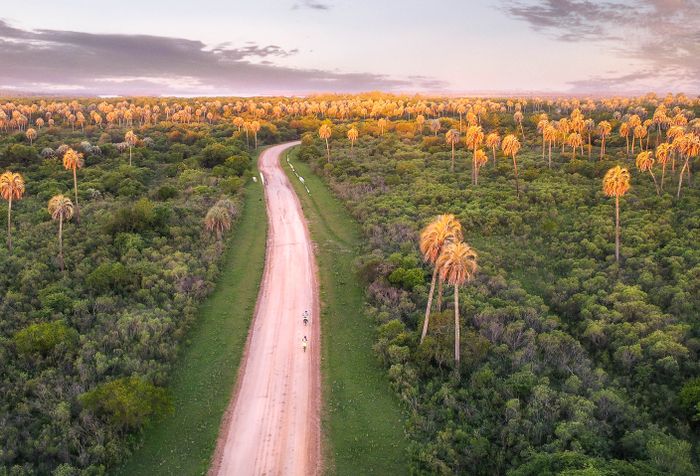
Kaa-Iya del Gran Chaco National Park covers 34,000 km² of Bolivia's southeastern lowlands — an area larger than Belgium and the biggest national park in the country. Created in 1995 at the direct initiative of the Izoceño-Guaraní people, it was the first national park in the Americas to be founded and co-managed by an indigenous community. The park protects the largest continuous tract of dry tropical forest in South America: a mosaic of thorny scrub, palm savannahs, and gallery forest threaded by the Parapetí River. Kaa-Iya is home to jaguars, pumas, giant anteaters, tapirs, giant armadillos, and more than 50 reptile species — most of which exist at densities impossible to find anywhere else on the continent.
The Giant Armadillo — the Chaco's most elusive resident
Priodontes maximus is the world's largest armadillo: adults reach 50 cm in height, weigh up to 30 kg, and dig burrows 30 cm wide at the bases of termite mounds — its primary food source. The giant armadillo is strictly nocturnal and extraordinarily shy; direct sightings require patience and luck. But its signs are unmistakable and found throughout Kaa-Iya in the right habitat: the wide, circular burrow entrance cut cleanly into a termite mound, three-toed footprints in dry clay, and claw marks scored into the sides of termite structures. Camera trap data from the park confirms a healthy population. On approximately 25% of expeditions into the park interior, guests encounter the animal directly. The experience of finding a fresh burrow at dawn, knowing the animal rested there hours before, is one that few people anywhere in the world have had.
The Izoceño-Guaraní and 3,000 years in the Chaco
The Izoceño-Guaraní are one of Bolivia's oldest indigenous peoples, with a documented presence along the Parapetí River stretching back more than three millennia. Their language — Guaraní — is spoken by approximately seven million people across South America and is one of the few indigenous languages on the continent that remained dominant even after European colonisation. The Izoceño-Guaraní maintain traditional land management practices that have shaped the ecology of the Chaco for centuries: controlled burning, seasonal hunting protocols, and a deep knowledge of the region's water sources. Visiting Kaa-Iya means entering their territory. All access requires advance community permission, which LOVEBOLIVIA arranges as part of the route. Interaction with community members is guided by protocol — gifts are not appropriate, but purchasing traditional crafts directly supports community development projects.
When to visit — the Chaco has one viable window
The Gran Chaco operates on a binary seasonal calendar that allows no compromise. From April to October, the dry season brings road conditions that make Kaa-Iya accessible by high-clearance 4×4, with temperatures ranging from 25°C to 35°C and wildlife concentrating at the waterholes that shrink as the season progresses. From November to March, summer rains transform the clay tracks into impassable mud — the park is effectively closed to vehicle access, and temperatures peak at 45°C with humidity that makes outdoor activity dangerous. There is no shoulder season to negotiate. If your dates fall in the dry window, the Tatú Carreta route is one of the most extraordinary wilderness experiences available in South America. If they do not, we recommend combining the dates with another route and returning to the Chaco in the right season.
— Itinerary
Day by day
6 carefully designed stages. Every itinerary adapts to your group and dates.
— What's included
Everything you need, nothing more.
— Gallery
The landscape, in images.


Start planning your El Tatú Carreta route.
45 minutes. We listen and design an exact plan for your trip.
$90 · €85 · Bs. 623 per session · Deducted from the final price