
Skip to content
Llanos de Moxos Bolivia sabanas Beni
capibara
— Ecosystem · Beni Savannas~200m

The Llanos
de Moxos.

South America's largest seasonal floodplains. The world's largest pre-Columbian earthworks. Pink dolphins, black caimans and jabiru storks in the Beni pampas.

Area
120,000 km²
Department
Beni
Best season
May–Sep
Base city
Trinidad
Altitude
~200m
Flood season
Nov–Apr
— The Beni floodplains

The plains that flood and come alive.

The Llanos de Moxos are a vast alluvial plain of ~120,000 km² in Bolivia's Beni department. Every year between November and April, rivers overflow and transform the savanna into a vast freshwater mirror. When the waters recede, wildlife concentrates along remaining channels in one of the continent's highest faunal density zones.

Beneath the plains lies another story: the world's largest known complex of pre-Columbian earthworks, built by the Moxos people over 2,000 years ago. Over 10,000 mounds, causeways and fish ponds structured a sophisticated hydraulic system that transformed a hostile ecosystem into one of the Amazon's most productive.

Llanos de Moxos wetlands Beni
10,000+
Pre-Columbian mounds
— Key destinations

Pampas, rivers and civilisations.

Beni

Pampas del Yacuma

Best wildlife density
Pink dolphins, anacondas & caimans

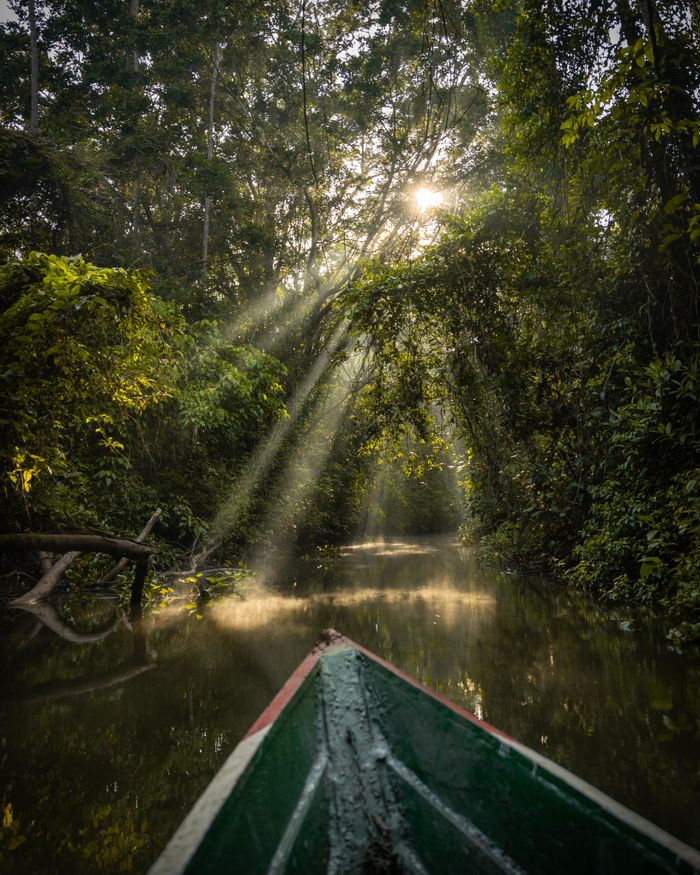
Three hours by motor canoe from Rurrenabaque, the Pampas del Yacuma offer the highest wildlife sighting density in Bolivia. Pink river dolphins surfing the bow wave, anacondas on the banks, black caimans watching from the water, capybaras in groups of 50, giant river otters — near-daily encounters from open canoes in narrow savanna channels.

Tip
May–September when water drops and animals concentrate in narrower channels. Avoid February — peak flood, dispersed wildlife.
Full guide →
Llanos de Moxos

Pre-Columbian Earthworks

UNESCO candidate
The world's largest ancient earthwork complex

Over 10,000 geometric mounds, raised causeways, fish ponds and forest islands built by the Moxos civilisation over 2,000+ years. This hydraulic civilisation predated the Inca and managed the floodplains with extraordinary engineering. The earthworks are most dramatic from the air — 1,000-year-old raised fields are visible as dark green rectangles against the savanna.

Tip
Visit with a guide from Trinidad. Ask about aerial overflights (small plane, ~$80–120 USD/person) for the perspective that makes these earthworks comprehensible.
Full guide →
Beni

Trinidad & Río Mamoré

River gateway
Beni's capital and river life

Trinidad (110,000 people) is the capital of Beni and gateway to the Llanos. The Río Mamoré — one of the Amazon's great tributaries — runs along its eastern edge. Boat trips on the Mamoré offer river dolphin encounters, river turtle nesting beaches, caiman night spotting, and the slow rhythm of Bolivian river life.

Tip
Trinidad is 1h by plane from Santa Cruz. Motorbike taxi (mototaxi) is the main local transport. The river is best May–August when water drops and dolphins follow fish to the channels.
Full guide →
La Paz / Beni

Rurrenabaque

Gateway town
The Amazon & Pampas access point

Rurrenabaque ('Rurre') sits on the Beni river at the foot of the Andes — the classic access point for both Madidi jungle tours and Pampas wildlife tours. A 40-minute flight from La Paz drops you into this small frontier town where the Amazon ecosystem begins. Most Pampas tours depart by motorised canoe from here.

Tip
Fly from La Paz (El Alto airport, Amaszonas or Boliviana de Aviación, ~$80–100 one way). The road is spectacular but takes 16–18h and is often cut by landslides. Book Pampas tours in advance for May–August.
Full guide →
— Pampas wildlife

Bolivia\'s highest wildlife sighting density.

🐬
Pink river dolphin
Bufeo colorado of the Amazon
🐊
Black caiman
Up to 5m — the largest in the Amazon
🦦
Giant river otter
Up to 1.8m, in family groups
🐍
Anaconda
The world's heaviest snake
🦭
Capybara
The world's largest rodent
🐦
Jabiru stork
The Americas' tallest stork
🦜
Macaws
Scarlet and blue-and-yellow visible
🦌
Marsh deer
In savanna-forest transition zones
🐒
Howler monkey
Call heard 5km away
🐢
River turtle
Nesting beaches on the Mamoré
— When to visit

When the water drops, the wildlife appears.

Jan
Feb
Mar
Apr
May
Jun
Jul
Aug
Sep
Oct
Nov
Dec
🐬May–Aug
Peak wildlife — the best season
Water drops, animals concentrate in narrow channels. Dolphins, caimans, anacondas and capybaras at maximum visual density from canoe. Comfortable temperature (25–32°C daytime).
🦜Sep–Oct
Dry-wet transition
Temperatures rising but wildlife still concentrated. Fewer visitors than July–August. Good season for migratory birds and wading birds at lagoon margins.
🌊Nov–Apr
Flood season — avoid
The plains become an inland sea. Wildlife disperses. Access roads and tracks flood. Not recommended for wildlife tourism. Reproduction season for many species.
🎭Odd years
Trinidad's Carnival — Beni
Trinidad's Carnival is one of Bolivia's most authentic and least touristified. Comparsas, llano traditional dances and Beni music in the streets of the Beni capital.
— Love Bolivia route

The route designed for the Llanos.

La Capibara route Llanos Moxos
Route 08
La Capibara

Beni pampas · Pink dolphins · Caimans · Earthworks · Trinidad · Rurrenabaque. 6–9 private days from Santa Cruz or La Paz.

6–9 days · From Santa Cruz or La Paz
from $1,600 · €1,496 · Bs. 11,088
FAQ

Frequently asked questions.

Still wondering? Write to us.

Get in touch →

The Pampas del Yacuma offer the highest wildlife sighting density in Bolivia: pink river dolphins, anacondas, black caimans, capybaras, giant river otters, jabiru storks, macaws and hundreds of bird species. Near-daily encounters from motor canoes in the channels. Best May–August when water levels drop.

The Llanos de Moxos holds the world's largest known complex of pre-Columbian earthworks — over 10,000 geometric mounds, raised causeways, fish ponds and forest islands built by the Moxos civilisation over 2,000+ years. A UNESCO World Heritage candidacy is ongoing. Best appreciated from the air — ask your operator about small-plane overflights from Trinidad.

Trinidad is a 1-hour flight from Santa Cruz (Boliviana de Aviación or Amaszonas). For Pampas del Yacuma, fly to Rurrenabaque from La Paz (40 min) or Santa Cruz, then 3h by motorised canoe. Road access to Trinidad from Santa Cruz is possible (12–18h, partly unpaved). Rurrenabaque road from La Paz takes 16–18h and is frequently cut by landslides.

May to September (dry season) is the best time. Water levels drop, wildlife concentrates near water, and sightings are at their peak. May–August is the optimal window for the Pampas del Yacuma. Avoid November–March when flooding makes roads impassable and wildlife disperses.

Pampas del Yacuma (open savanna wetland) offers far easier and more reliable wildlife sightings — dolphins, caimans, anacondas and capybaras are seen from open canoes in clear water channels. Madidi is denser jungle with harder sightings but greater biodiversity. Many travellers combine both on the same trip from Rurrenabaque (2–3 days Pampas + 2–3 days Madidi).

— Plan your trip

The plains flood.
And come alive.

45 minutes. We design your Llanos de Moxos itinerary with local lodging and specialist guides.

$90 · €85 · Bs. 623

Book a consultation → $90 · €85 · Bs. 623La Capibara →