Skip to content
Pink river dolphin — Bolivia Amazon
bufeo
— Ecosystem · Bolivian Amazon180–400m

The Amazon
of Bolivia.

40% of Bolivia's territory is Amazon rainforest. Madidi is the world's most biodiverse park. The bufeo colorado — the pink river dolphin — swims in the Beni and Mamoré. Almost nobody knows.

Amazon territory
425,000 km²
Madidi Park
18,958 km²
Recorded birds
1,400+ sp.
Mammals
200+ sp.
Gateway town
Rurrenabaque
Flight from La Paz
25 min
— Bolivia's Amazon

The most biodiverse national park on earth.

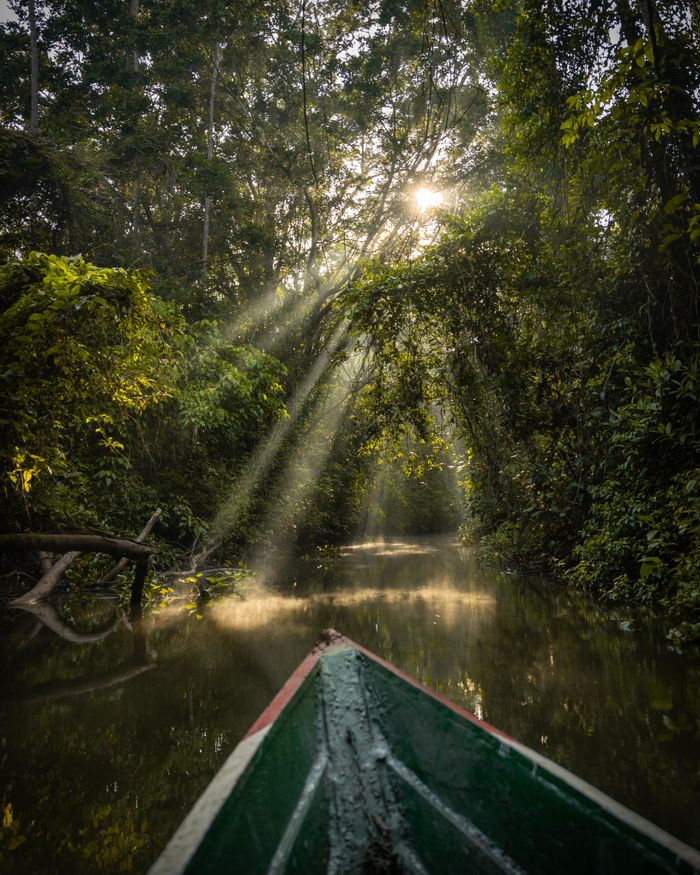
40% of Bolivia's territory is Amazon basin — 425,000 km² of tropical rainforest, navigable rivers and flooded savannahs. Bolivia shares the Amazon basin with Brazil, Peru, Colombia and six other countries, but its sector is one of the least explored and best preserved on the continent.

Madidi National Park, established in 1995, spans 18,958 km² across five altitudinal zones — from Andean cloud forest at 5,700m down to Amazonian lowland jungle at 180m. A 2010 study identified more individual bird species in Madidi than in any other single protected area on earth: over 1,000 in one park.

Bolivia's river system feeds the Beni and Mamoré rivers — tributaries of the Madeira, which flows into the Amazon. In those rivers lives the bufeo colorado (Inia boliviensis), Bolivia's endemic freshwater pink river dolphin — a separate species from the Brazilian boto, recognised as such since 2006.

Pink river dolphins Bolivia
Bufeo colorado — Beni river, Bolivia. © Love Bolivia
1,400+
bird species in Madidi
200+
mammal species
18
indigenous languages in Beni
70%
of Madidi unexplored
— The question everyone asks

Jungle vs. Pampas: which one?

3–5 days

Jungle (Madidi)

Primary rainforest immersion

Guided walks through primary Amazon jungle, canoe navigation on the Tuichi river, birdwatching from platforms, encounters with three monkey species, medicinal plant learning. Stay at Chalalan Ecolodge — community-owned and operated by the Quechua-Tacana people since 1997. UNESCO recognised it as a model for sustainable ecotourism.

Why go
Best birdwatching on earth (1,000+ species)
Primate encounters (howler, spider, capuchin)
Cultural immersion with Quechua-Tacana community
Night treks with guide
Chalalan Ecolodge — exceptional community-run lodge
Trade-offs
Fewer large-animal sightings than pampas
4-hour boat access each way to Chalalan
Higher cost (from ~$220/person/night inclusive)
More physically demanding
2–3 days

Pampas del Yacuma

Highest wildlife density in Bolivia

Flooded savannah 3 hours downriver from Rurrenabaque. Open water channels make wildlife spotting easy and frequent. This is where you swim with pink dolphins, see anacondas in the grass, spot caimans at night by torchlight, and watch capybara herds grazing on the riverbank.

Why go
Pink dolphins — near-daily sightings
Anaconda tracking on foot
Night caiman spotting by boat
Capybara, river turtles, giant river otters
Easiest large-wildlife access in Bolivia
Trade-offs
Less jungle atmosphere (open savannah)
Hot and exposed (little tree cover, Feb–Apr)
More crowded route — many operators run it
Limited cultural component
💡
Love Bolivia recommendation: Do both. A 5-night itinerary with 2 nights in the pampas (dolphins, anacondas, caimans) and 3 nights in the jungle (Chalalan, birds, primates) is the gold standard for the Beni. Most clients with 7+ days available choose this combination.
— Amazon destinations

Six destinations, one river.

Rurrenabaque
263m
Beni

Rurrenabaque

Gateway to the Bolivian Amazon

A small river town on the Beni River, population 15,000. The entry point for all Amazon and pampas tours in Bolivia. 25-minute flight from La Paz or 16–20 hours by bus. The town has a well-developed ecotourism infrastructure: reputable agencies, riverside restaurants, basic-to-mid-range hotels. Most tours depart Rurrenabaque by motorboat at 8am.

Tip
Fly. The road is long and sometimes impassable. TAM Bolivia sells La Paz–Rurrenabaque flights from $60 one way. Book 3–5 days in advance.
Full guide →
Madidi National Park
UNESCO candidate
La Paz / Beni

Madidi National Park

The world's most biodiverse park

Established in 1995. 18,958 km². Spans 5 altitudinal zones from Andean glaciers (5,700m) to Amazonian lowlands (180m). Contains 1,000+ bird species, 200+ mammals, 300+ fish species, 12,000+ plant species. The Quechua-Tacana community of San José de Uchupiamonas runs the Chalalan Ecolodge inside the park — the most responsible way to visit Madidi.

Tip
Access via Chalalan Ecolodge (4-hour motorised canoe from Rurrenabaque up the Tuichi River). Book Chalalan directly or through Love Bolivia.
Full guide →
Pampas del Yacuma
2–3 days
Beni

Pampas del Yacuma

Pink dolphins, anacondas, caimans

Flooded savannah 3 hours down the Beni and Yacuma rivers from Rurrenabaque. Open water channels and low vegetation make large-animal sightings near-certain. Pink river dolphin encounters happen on almost every trip. Anacondas are tracked on foot in the grass. Caimans are spotlit at night from the boat. Giant river otters appear at dawn.

Tip
Best season: May–October (dry season). Water drops and animals concentrate near channels. Avoid February — peak flood season reduces access.
Full guide →
Chalalan Ecolodge
Community-run
Madidi NP

Chalalan Ecolodge

The most awarded ecolodge in South America

Built in 1997 with UNDP funding, Chalalan is owned and run entirely by the Quechua-Tacana indigenous community. 24 bungalows on Laguna Chalalan inside Madidi. The lodge has received more international ecotourism awards than any other property in Bolivia. Staying here directly funds community education, health and forest protection. Rated by Condé Nast Traveler and National Geographic as a top South America eco destination.

Tip
Book 4–8 weeks in advance. All-inclusive packages from $220/person/night. The price funds the community, not a hotel chain.
Full guide →
Trinidad
236m
Beni

Trinidad

The capital of the Bolivian Amazon

Capital of the Beni Department at 236m. Population 130,000. Less visited than Rurrenabaque but offers excellent access to the Beni River, the Loretoyapu community reserve, and the pre-Columbian earthwork mounds (lomas) built by the Moxos civilization 2,000 years ago. Trinidad is the departure point for river expeditions east toward the Iténez and the Brazilian border.

Tip
Reached by direct flights from La Paz and Santa Cruz (45–60 min). Recommended for experienced travelers wanting off-the-beaten-track Amazonian Bolivia.
Full guide →
Noel Kempff Mercado
UNESCO 2000
Santa Cruz

Noel Kempff Mercado

The most remote wilderness in Bolivia

UNESCO World Heritage since 2000. 15,838 km² in the far northeast of Santa Cruz department, on the Brazilian border. Considered one of the best-preserved areas of tropical lowlands in South America. Home to giant anteaters, maned wolves, giant armadillos, jaguars and over 600 bird species. Access is difficult — light aircraft from Santa Cruz only. For serious wildlife travelers.

Tip
Access by chartered light aircraft from Santa Cruz (3h). Requires advance planning and a specialist guide. Love Bolivia can arrange access.
Full guide →
— Wildlife guide

9 animals you can see in Bolivia.

Sighting probability based on our route experience. "Dry season" = May–October.

🐬Near-certain
Pink River Dolphin
Inia boliviensis
Pampas del Yacuma, Beni & Mamoré riversYear-round
🐊Very high
Black Caiman
Melanosuchus niger
Pampas del YacumaMay–Oct
🐍High
Green Anaconda
Eunectes murinus
Pampas del Yacuma (grass zones)May–Oct
🦦Good
Giant River Otter
Pteronura brasiliensis
Pampas del YacumaJun–Sep
🦜Very high
Scarlet Macaw
Ara macao
Madidi, Rurrenabaque surroundsYear-round
🐒High
Black Howler Monkey
Alouatta caraya
Madidi jungleYear-round
🐆Low (tracks common)
Jaguar
Panthera onca
Madidi, Noel KempffDry season
🐾Medium
Giant Anteater
Myrmecophaga tridactyla
Noel Kempff, Beni pampasDry season
🐢Very high
Yellow-spotted Amazon Turtle
Podocnemis unifilis
Beni & Yacuma riversYear-round
— When to visit

The season changes everything.

Jan
Feb
Mar
Apr
May
Jun
Jul
Aug
Sep
Oct
Nov
Dec
Pampas
Jungle
☀️May–Oct
Dry season — pampas at their best
Water levels drop, animals concentrate near channels, sightings multiply. Skies are clear and heat is manageable (28–34°C days, 14–18°C nights). Best period for both experiences.
🦅Jun–Jul
Peak birding season
December–February is breeding season. By June–July the chicks are flying and parrot, heron and macaw colonies are at maximum activity. The best months for intensive birding.
🐬Jan–Mar
Most active dolphins — but difficult access
The rainy season floods the pampas. Pink dolphins are more active and approach boats more closely, but access gets complicated. Avoid February for the pampas; if going in January or March, confirm river conditions with your operator.
🐊Aug–Sep
Best month for big wildlife
August and September are the perfect sweet spot: low water, concentrated animals, cool nights. The month with highest probability of seeing black caiman, giant otter and anaconda on a single trip.
— Getting there

The gateway is Rurrenabaque.

✈️Recommended
Flight La Paz → Rurrenabaque

TAM Bolivia and Amaszonas operate daily 25-minute flights from El Alto International (LPB). Typical price: $60–100 USD one way. The flight crosses the Yungas and the descent into the Beni is spectacular. Book 3–5 days ahead in peak season, 1–2 weeks for July–August.

⚠️ Fog cancellations are common (mornings). Always fly early (7–9am) to minimise the risk.
🚌Alternative
Bus La Paz → Rurrenabaque

16–20 hours. Depart from La Paz terminal at 6–7pm, arrive early morning. Price: $15–25 USD. The road passes through the Yungas. Sleeper buses available. Not recommended if you're on a tight schedule or if the route is cut by rain (October–March: landslide risk).

Only recommended for flexible travellers with extra time.
✈️Eastern Beni access
Flight Santa Cruz → Trinidad

Direct 55-minute flights from Santa Cruz Viru Viru (VVI) to Trinidad. BoA and TAM operate the route. From Trinidad you access the Beni Reserve, Mamoré river circuits, and the Moxos pre-Columbian earthwork civilisation (prehistoric lomas mounds).

Trinidad also connects to Rurrenabaque by charter light aircraft through local operators.
— Before you go

What nobody tells you about the jungle.

🦟
Mosquitoes & DEET
Use 30%+ DEET repellent and reapply every 3–4 hours. Aedes aegypti (dengue) is active at dawn and dusk. Long sleeves at dawn and after sunset are mandatory, not optional. Nights in the jungle require a mosquito net over your bed.
💉
Yellow fever vaccination
Strongly recommended before entering the Amazon basin (Beni, Pando departments). Some countries require a yellow fever certificate on entry if you have recently been in Bolivia. Consult your travel medicine doctor 6–8 weeks before travel. Bolivia's Ministry of Health offers it free at health centres.
🌡️
Heat & humidity
The lowland jungle sits at 32–38°C with 80–95% humidity. Your body needs 2–3 days to adapt. Drink at least 3 litres of water daily, wear quick-dry fabrics (not cotton), and rest during the hottest hours (noon–3pm). Dehydration in the jungle is the most common problem, not the wildlife.
👟
What to pack
Tall rubber boots (essential in pampas and jungle — rental available in Rurrenabaque), long-sleeve clothing in light colours, wide-brim hat, headtorch with spare batteries, SPF 50 sunscreen, binoculars if you have them, waterproof bags to protect your main bag in the boat.
📱
Connectivity
Rurrenabaque has Tigo and Entel coverage (3G/4G in town). Inside Madidi and the pampas there is no signal. Chalalan Ecolodge has limited satellite WiFi. Tell your family your itinerary before heading into the jungle — you will be offline for 3–5 days.
🏥
Health: malaria
Malaria risk exists in the Bolivian Amazon (Beni and Pando departments). Consult your travel medicine doctor about prophylaxis. Around Rurrenabaque and Madidi the risk is low-to-moderate for travellers with good mosquito protection. In more remote areas (Pando, Iténez river) the risk is higher.
— Love Bolivia Amazon routes

Two routes designed from the inside.

El Bufeo
Route 02
El Bufeo

Pampas navigation, pink dolphin encounters, anaconda tracking, night caiman spotting. The Amazon in 7–10 days.

Rurrenabaque · Pampas · Pink Dolphins · 7–10 days
from $1,800 · €1,683 · Bs. 12,474
El Tapir
Route 06
El Tapir

La Paz → Madidi National Park → Chalalan Ecolodge → pampas. Bolivia's deepest Amazon experience.

Madidi · Chalalan · Cloud Forest · 12–14 days
from $3,200
FAQ

Frequently asked questions.

Have another question? Write to us — we answer personally.

Get in touch →

Both are exceptional but different. The pampas (Pampas del Yacuma, 3 hours by river from Rurrenabaque) offers the highest wildlife density: pink river dolphins, anacondas, caimans, capybaras and birds are near-certain sightings. The jungle (Madidi National Park, Chalalan Lodge) offers deeper immersion into primary rainforest, richer birdlife, primates, and cultural encounters with the Quechua-Tacana community. Serious wildlife watchers should do both: 2 nights pampas, 3 nights jungle.

Two options: a 25-minute TAM or Amaszonas flight from El Alto International Airport (La Paz) — typically $60–100 USD one way — or a 16–20 hour night bus. The flight is strongly recommended. Book 3–5 days in advance from La Paz. Fog cancellations are common in the morning; take the earliest available flight.

Yellow fever vaccination is strongly recommended before entering the Amazon basin (Beni, Pando departments). Some countries require proof on entry if you have recently visited Bolivia. Hepatitis A and typhoid vaccines are generally recommended for all Bolivia travel. Malaria prophylaxis is recommended for the Amazon lowlands — consult your travel medicine doctor 6–8 weeks before travel. Use DEET 30%+ repellent for dengue (no vaccine available).

In the pampas: pink river dolphins (near-certain), anacondas, black and spectacled caimans, capybaras, giant river otters, river turtles, jabiru storks and kingfishers. In Madidi jungle: three monkey species (howler, spider, capuchin), tapirs, peccaries, 1,000+ bird species, night species on guided night treks. Jaguar sightings are rare but tracks are common on guided walks.

Madidi National Park (18,958 km²) is considered one of the most biodiverse protected areas on earth. It contains over 1,000 bird species (more than the entire USA and Canada combined), 200+ mammal species, 300+ fish species, and 12,000+ plant species. It spans 5 altitudinal zones — Andean cloud forest at 5,700m down to Amazonian lowlands at 180m — which accounts for its extraordinary biodiversity range. A 2010 study identified more individual bird species in Madidi than in any other single protected area on the planet.

The bufeo colorado (Inia boliviensis) is Bolivia's endemic freshwater pink river dolphin — a separate species from the Brazilian/Peruvian boto, recognised as its own species since 2006. Found exclusively in the Beni, Mamoré and Iténez river systems. Adults reach up to 2.5m and 180kg. They are pink due to blood vessels close to the skin surface. Considered sacred in Aymara cosmology. Near-daily sightings on Rurrenabaque pampas tours.

— Plan your Amazon trip

Ready to swim
with the pink dolphins?

45 minutes. We design your Amazon itinerary with logistics, accommodation and a realistic budget.

$90 · €85 · Bs. 623

Book a consultation → $90 · €85 · Bs. 623See El Bufeo route