

How much time do you need?
- Morning: bus from Sucre (30 min)
- Guided tour of Parque Cretácico (2h)
- Titanosaur footprint observation
- Panoramic viewpoint of the wall
- Lunch at the park
- Afternoon return to Sucre
- Day 1: morning in Sucre (plaza, market)
- Afternoon: Cal Orcko with specialist guide
- Sunset over the Valle de Sucre
- Day 2: Charcas Museum and Casa de la Libertad
- Lunch at the central market
- Free afternoon in Sucre
- Day 1: arrive Sucre, historic center
- Day 2: Cal Orcko morning + Tarabuco afternoon
- Day 3: Maragua Crater and communities
- Authentic jalq'a weaving
- Sucre gastronomy (salteñas, mondongo)
- Return or continue to Potosí
68 million years. One wall.
Dinosaur Track Viewing
The main wall at Cal Orcko is the most spectacular paleontological site in South America. Titanosaur, ankylosaur, theropod and sauropod tracks are clearly visible on the 80m-high near-vertical limestone face. A life-size replica titanosaur at the entrance puts the scale in context. The guided walk along the base of the wall takes approximately 90 minutes.
Panoramic Viewpoint
A series of elevated walkways and a purpose-built mirador give visitors a bird's-eye perspective over the Cal Orcko wall from above. From this vantage, the sheer scale of the tracksite becomes clear — the limestone wall stretches over 1km horizontally. The view over the valley towards Sucre and the surrounding mountains is magnificent in the morning light.
Cretaceous Museum
The Parque Cretácico museum houses life-size models of the dinosaur species found at Cal Orcko, including a full titanosaur model and an ankylosaur. Fossil casts and geological cross-sections explain the extraordinary process that created the nearly-vertical wall: tectonic uplift gradually rotated what was once a lakeside mud flat to 70 degrees.
Active Paleontological Research
Cal Orcko is an active research site. Paleontologists from the Universidad Mayor de San Francisco Xavier and international institutions continue to excavate new sections of the wall. Visitors can sometimes observe ongoing excavations from designated viewing platforms. Over 300 new tracks have been documented in recent years.
Fossil Trail Walk
Beyond the main wall, the Parque Cretácico has a 2km walking trail that passes secondary fossil sites including areas with additional track fragments, petrified wood, and invertebrate fossils embedded in exposed limestone outcrops. The trail passes through dry valley scrub typical of the Chuquisaca valleys ecosystem. Total walk time: 45–60 minutes at easy pace.
Photography & Documentation
Cal Orcko offers extraordinary photography opportunities: the sheer scale of the limestone wall, individual tracks clearly visible in close-up, the life-size dinosaur models against the valley backdrop, and the natural landscape surrounding the site. The late afternoon light (3–5pm) creates dramatic shadows that highlight the track textures.
What makes Cal Orcko unique in the world.
How the wall formed
Cal Orcko's near-vertical wall is the result of tectonic plate activity over the past 25 million years. What was once a shallow lake margin — where dinosaurs walked in soft mud 68 million years ago — was gradually tilted to its current 70-degree angle by the uplift of the Andes. The original lake sediments hardened to limestone, perfectly preserving the tracks. The exposed wall we see today was first revealed by quarry operations at the adjacent FANCESA cement factory in 1994.
Which dinosaurs left tracks
At least 8 species have been identified at Cal Orcko from track morphology. The most common are titanosaur sauropods (the largest land animals that ever lived — tracks up to 1m across), ankylosaurs (armored dinosaurs), and theropods (two-legged carnivores). The site also has abelisaurid tracks — a carnivore group unique to Gondwana. One remarkable trackway follows a single titanosaur for 347 meters — the longest documented dinosaur trackway on Earth.
68 million years ago
The tracks were made during the Maastrichtian Age of the Late Cretaceous period — approximately 68 million years ago, just 2 million years before the asteroid impact that caused the mass extinction of non-avian dinosaurs. At that time, South America was an island continent, and the area that is now Sucre was a subtropical lake environment at lower altitude. The climate was warmer and more humid than today.
World records at Cal Orcko
Cal Orcko holds multiple world records: largest number of dinosaur tracks on a single outcrop (5,055 individual tracks); highest number of individual dinosaurs recorded at one site (294 individuals); longest single dinosaur trackway (347m, a titanosaur); and greatest diversity of Cretaceous dinosaur species at one location (8+ species). It is one of only a handful of sites on Earth where complete titanosaur trackways can be studied.
FANCESA and conservation
Cal Orcko is located adjacent to the FANCESA cement factory (Fábrica Nacional de Cemento), which was quarrying the same limestone formation when the tracks were discovered in 1994. Bolivia designated the wall a protected paleontological monument, and the Parque Cretácico was developed with World Bank and Spanish cooperation funding. Active quarrying has been redirected away from the tracksite.
Ongoing scientific research
Cal Orcko remains one of the most actively studied paleontological sites in South America. The Universidad Mayor de San Francisco Xavier de Chuquisaca (USFX) has a dedicated paleontology department that conducts ongoing fieldwork at the site. International collaborations have produced over 40 peer-reviewed publications on Cal Orcko specimens. New track sections continue to be documented as erosion gradually exposes additional wall surface.
Sucre as your base for exploration.
Sucre city
The constitutional capital of Bolivia, Sucre is a UNESCO World Heritage city with its brilliant white colonial architecture, Plaza 25 de Mayo, Casa de la Libertad (where Bolivian independence was signed in 1825), and the remarkable Charcas Museum. Sucre is one of the best-preserved colonial cities in Latin America and makes an ideal base for visiting Cal Orcko.
Tarabuco market
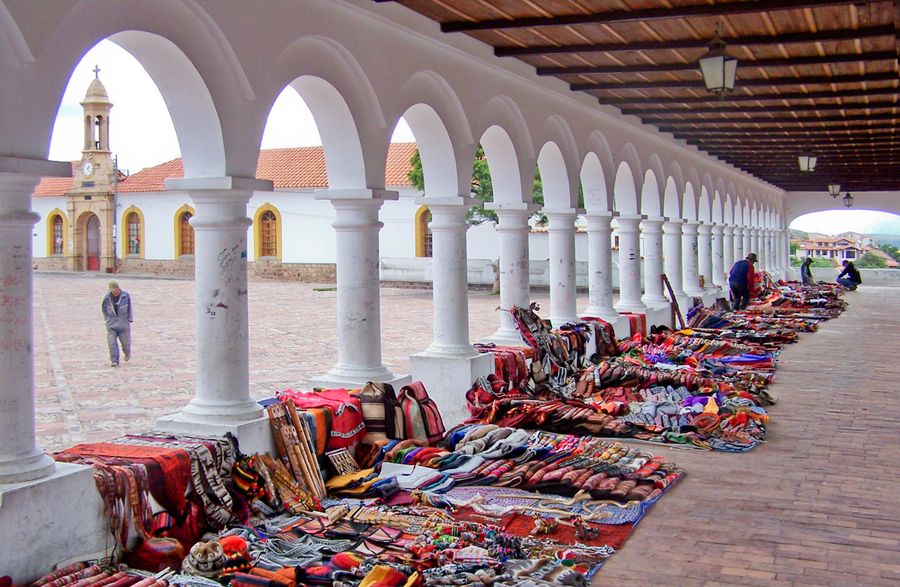
The Sunday market at Tarabuco is one of the most authentic indigenous markets in Bolivia, renowned for the extraordinary textiles of the Jalq'a and Yampara communities. The geometric designs, natural dyes and weaving techniques are pre-Columbian in origin. Artisans sell directly from their own production. The market runs from 8am–2pm every Sunday.
Maragua Crater
Maragua is a remote valley that resembles a meteor impact crater — a circular geological depression surrounded by steeply folded rock strata, creating an otherworldly landscape. The valley is home to indigenous communities producing exceptional textiles. Accessible by 4WD from Sucre, the full-day excursion includes trekking through the crater and visiting artisan communities.
Potosí & Cerro Rico
The legendary silver mountain that funded the Spanish Empire for 200 years. At 4,090m, Potosí is the world's highest city of its scale. Cerro Rico contains an estimated 8 billion ounces of silver — mined since 1545 with over 8 million lives lost in the process. The working mines can be visited today with specialized tour operators. The city is a UNESCO World Heritage site.
15 minutes from Sucre.
Getting there
- From La Paz: fly to Sucre (~45 min, BOA or Amaszonas) + taxi/minibus 15 min to Cal Orcko.
- From Santa Cruz: fly to Sucre (~1h) or overnight bus (14h, not recommended).
- From Potosí: bus to Sucre (~3h on the direct route) + taxi from Sucre.
- From Cochabamba: bus to Sucre (~11h) or fly (~40 min).
- Cal Orcko is only 5km from central Sucre — no in-situ accommodation needed.
- Juana Azurduy de Padilla airport (SRE) is 5km from central Sucre.
Getting around
- Taxi from Sucre to Cal Orcko: ~25–35 Bs (one way), 10–15 min.
- Urban minibus: lines 4 and 11 pass near the park (3–5 Bs).
- Organized tour from Sucre: offered by all agencies (~50–80 Bs/person including guide).
- On foot: possible but not recommended — road has no footpath, especially last 2km.
- Inside Parque Cretácico: foot access only, uneven terrain.
- Park hours: Tuesday to Sunday, 9am–5pm. Closed Mondays.
Good year-round. Best in the dry.
Dry season
Best conditions. No rain, clear skies and perfect visibility of the wall from the viewpoint. The dry winter cold can be intense (0–5°C at night) — bring warm layers. Tours are easier to organize and the park is well-staffed.
Transition season
Good conditions with occasional showers possible. September–November is particularly good: pleasant temperatures, green valley vegetation. Afternoon light is excellent for photographing the wall. Fewer tourists than dry season.
Wet season
Rains can make the trails slippery. However, the tracks remain accessible and the park stays open. Prices in Sucre are lower and there are fewer visitors. Rain usually falls in the afternoon — visit the park in the morning.
— Gallery
Bolivia in focus
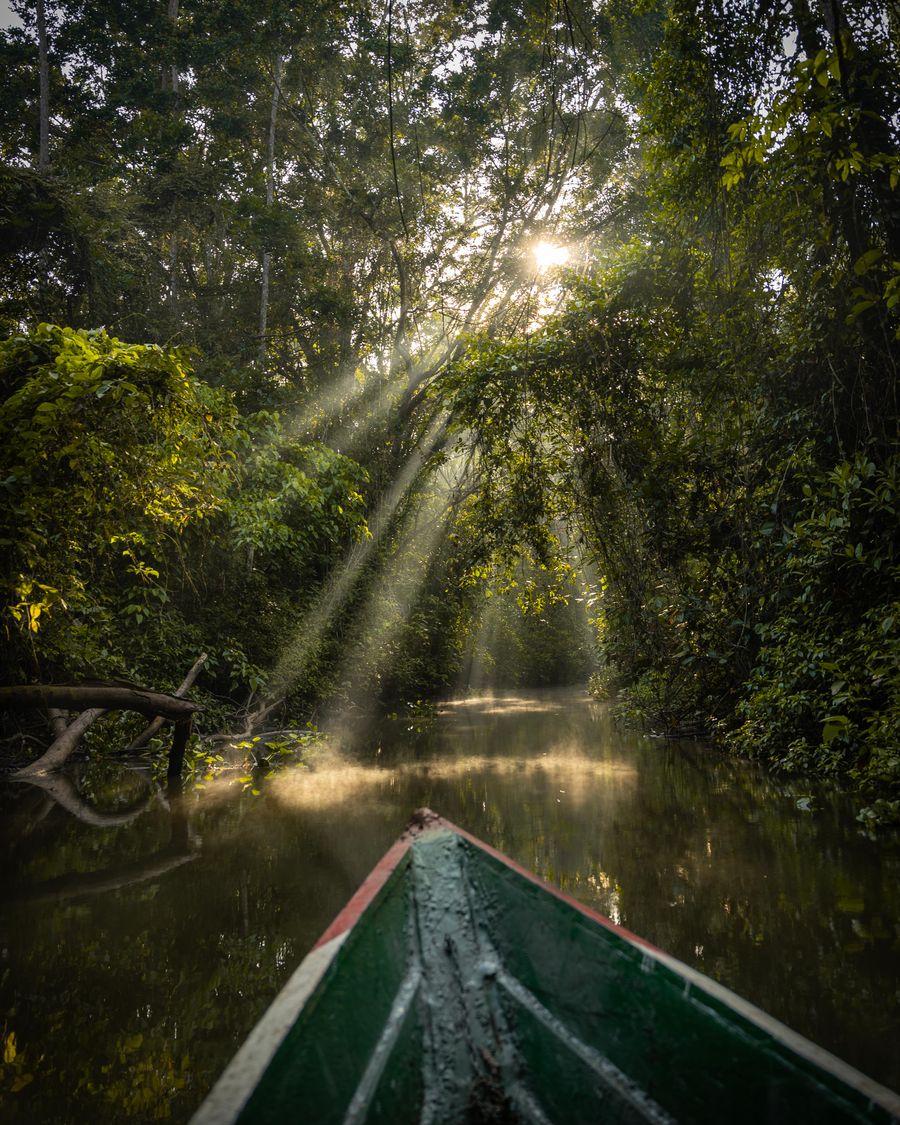
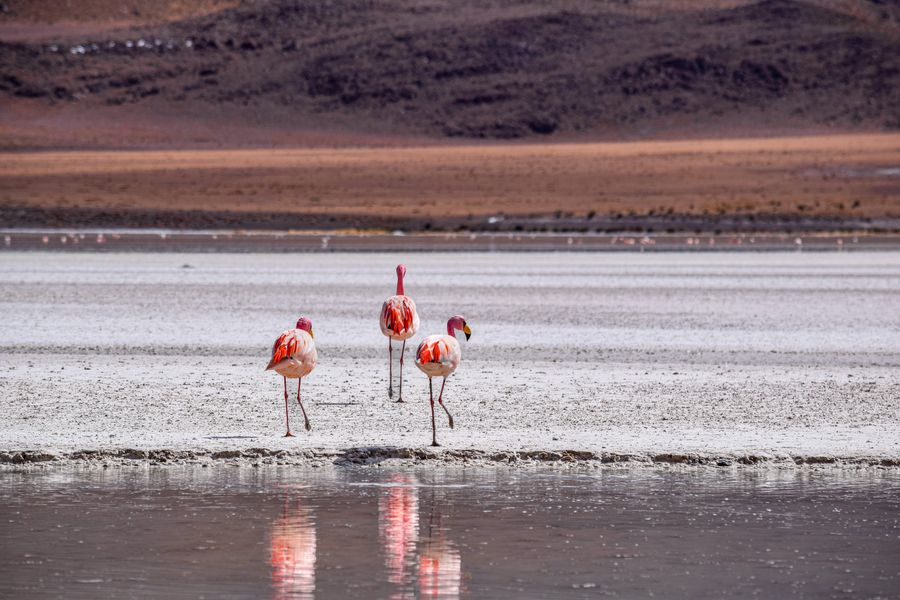
Real photography from our routes. No stock images. Hover to explore.
Frequently asked questions.
Everything you need to know before visiting Cal Orcko and the Parque Cretácico.
68 million years
are waiting for you.
We organize your Cal Orcko visit with specialist palaeontology guides, combined with the best of Sucre, Tarabuco and the route towards Potosí.