Skip to content
Salar de Uyuni — Bolivia\'s Altiplano
— Region · Bolivian Altiplano4,000m+

The Altiplano
of Bolivia.

The world's largest plateau outside Tibet. The largest salt flat on earth. The planet's highest navigable lake. All in a single trip.

Average altitude
3,750 m
Area
105,000 km²
Main city
City of La Paz
Best season
May–Oct
Language
Aymara · Spanish
Currency
Boliviano (BOB)
— What is the Altiplano?

The highest plateau in the world, outside Tibet.

The Bolivian Altiplano is a high-altitude plateau stretching 105,000 km² between the two main Andean mountain ranges. With an average elevation of 3,750 metres above sea level, it is the world's most inhabited high-altitude environment and the second largest plateau on earth after Tibet.

The altiplano is the cultural heart of Bolivia. It is where the Aymara and Quechua nations live, where Tiwanaku rose 1,500 years ago, where the Carnaval de Oruro brings 28,000 dancers into the streets every February, and where the Salar de Uyuni — 10,582 km² of white salt — becomes a mirror for the sky during rainy season.

Lake Titicaca Bolivia
3,812m
Lake Titicaca
— Altiplano destinations

Six destinations, one plateau.

The altiplano is Bolivia's most dense destination. Everything is connected and everything has altitude.

Salar de Uyuni Bolivia
10,582 km²
Potosí

Salar de Uyuni

The world's largest salt flat

A white hexagonal crust stretching to the horizon, 3,656m above sea level. In rainy season (Jan–Mar), a thin film of water creates a perfect mirror reflection of the sky. The Salar de Uyuni is Bolivia's most iconic image and one of the most photographed places on earth.

Tip
Best time: November–March for the mirror effect. May–October for the clean white crust and clear skies.
Full guide →
Lake Titicaca Bolivia
3,812 m
La Paz

Lake Titicaca

The world's highest navigable lake

Shared between Bolivia and Peru, Lake Titicaca sits at 3,812m — the highest commercially navigable lake on earth. The Bolivian side holds Copacabana, the Isla del Sol, and the floating Uros reed islands. Considered sacred in Aymara cosmology, it is the mythological birthplace of the sun.

Tip
Day trip from La Paz (3h) or stay 2 nights in Copacabana for the Isla del Sol circuit.
Full guide →
La Paz Bolivia
3,600 m
La Paz Dept.

City of La Paz

The city that greets you with altitude

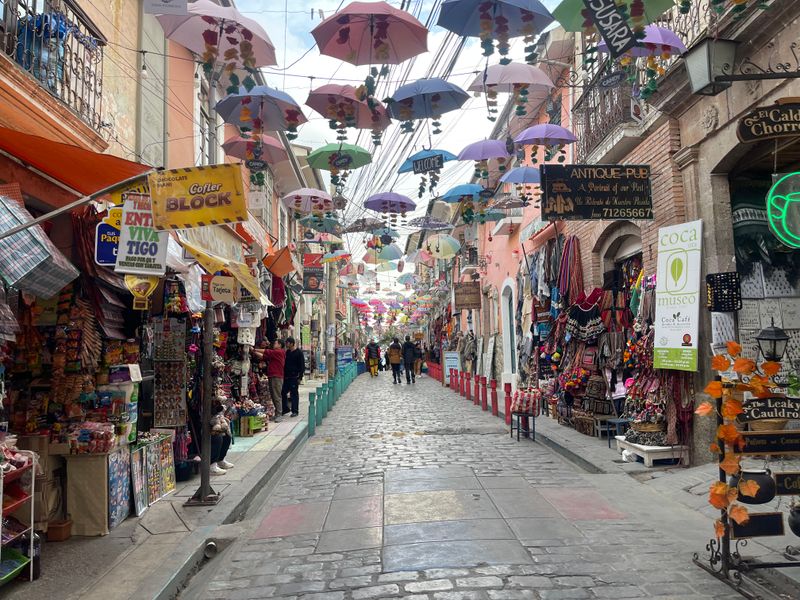
Bolivia's administrative capital sits in a bowl-shaped valley at 3,600m, with El Alto (4,100m) above it. La Paz is the entry point to the Altiplano for most travelers — and a destination in itself. Witches Market, Valle de la Luna, cholita wrestling in El Alto, and Freddy Mamani's cholet architecture.

Tip
Spend 2 full days before ascending further — acclimatisation is non-negotiable above 3,500m.
Full guide →
Tiwanaku ruins Bolivia
700 CE
La Paz

Tiwanaku

The pre-Inca civilization that built the Andes

Two hours from La Paz on the shores of the altiplano, Tiwanaku was the centre of a civilization that flourished from 300 to 1,000 CE — predating the Incas by centuries. The Sun Gate (Puerta del Sol) and the Akapana pyramid remain the defining iconography of Aymara cultural identity today.

Tip
Go early. The site opens at 9am and gets busy by midday. Combine with an afternoon at Copacabana.
Full guide →
Carnaval de Oruro Bolivia
UNESCO 2001
Oruro

Oruro

Home of Bolivia's greatest festival

Oruro is a mining city at 3,706m, best known as the home of the Carnaval de Oruro — declared a UNESCO Masterpiece of Oral and Intangible Heritage in 2001. The Entrada parade: 20 hours of continuous dance, 28,000 dancers, 10,000 musicians, 48 folkloric brotherhoods. Outside Carnaval, the city's mining heritage and Paria archaeological site reward a day's visit.

Tip
For Carnaval (Feb–Mar), book accommodation 6–8 months in advance. Prices triple during the festival.
Full guide →
Potosí Bolivia
4,090 m
Potosí

Potosí

The highest city in the world

Potosí sits at 4,090m — one of the highest cities on earth. Built on the silver of Cerro Rico, it funded the Spanish Empire for two centuries and earned UNESCO World Heritage status in 1987. The Casa de la Moneda (the colonial mint) is one of the best-preserved industrial heritage sites in the Americas.

Tip
Altitude hits hard at 4,090m. Arrive from La Paz (3,600m) or Oruro (3,706m), not from sea level.
Full guide →
— When to visit

Every month has its reason.

Jan
Feb
Mar
Apr
May
Jun
Jul
Aug
Sep
Oct
Nov
Dec
Jan–Mar
Mirror effect at Uyuni
The rainy season creates the iconic mirror effect on the salt flat. Skies are more dramatic. Road access can be muddy and slower.
Feb 14–17 (2026)
Carnaval de Oruro
Bolivia's greatest festival (UNESCO 2001). The 2026 Entrada was February 14–15. The 2027 date follows Ash Wednesday — check the calendar early. Book accommodation in Oruro 6–8 months in advance; hotels fill at 100% capacity.
May–Oct
Dry season
Clear skies, pristine white salt crust, colder nights (down to -10°C on the salt flat). The best period for most travelers.
Jun–Jul
Solstice at Tiwanaku
On June 21st, thousands gather at Tiwanaku for the Andean winter solstice sunrise. One of the most powerful cultural events of the year.
— Altitude guide

Altitude sickness is real. And manageable.

City of La Paz sits at 3,600m and some routes exceed 4,800m. The body needs time. These are the six steps that work.

💧
Hydrate
Drink 3–4 litres of water per day. Dry air at altitude accelerates dehydration faster than you expect.
🫖
Coca tea
The local and genuine remedy. Available at every hotel, market and restaurant on the altiplano. It works.
Acclimatise
Spend at least 2 nights in City of La Paz (3,600m) before ascending to Uyuni (3,656m) or Potosí (4,090m).
🚫
Skip alcohol
For the first 48 hours. Alcohol significantly worsens altitude sickness (soroche) symptoms.
💊
Diamox
Acetazolamide (Diamox) can be prescribed as a preventative. Consult your doctor before travelling.
Descend if needed
If you experience confusion, inability to walk, or chest pain, descend immediately. Severe soroche is dangerous.
— Love Bolivia routes on the Altiplano

Two routes designed from the inside.
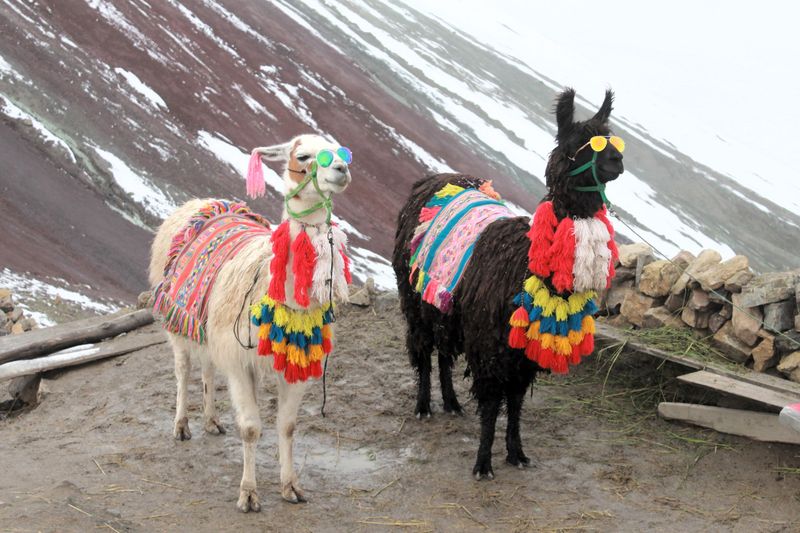
La Llama
llama
Route 01
La Llama
Andes · Salar de Uyuni · Lake Titicaca · 10–14 days
from $2,400 · €2,244 · Bs. 16,632
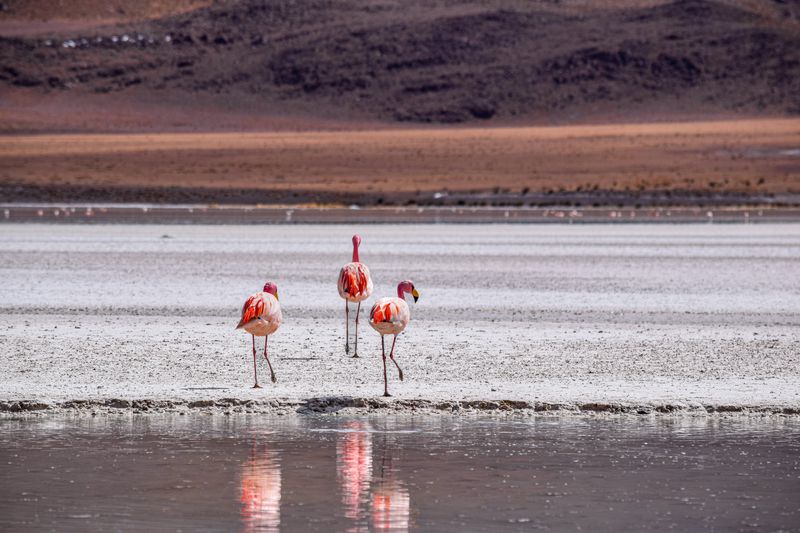
El Flamenco
llama
Route 05
El Flamenco
Laguna Colorada · Flamingos · Geysers · 7–10 days
from $1,900 · €1,777 · Bs. 13,167
— FAQ

Frequently asked questions.

Still wondering? Write to us — we answer every question personally.

Get in touch →

The Bolivian Altiplano is a high-altitude plateau averaging 3,750m above sea level, covering 105,000 km² of western Bolivia between the two main Andean mountain ranges. It is home to the Salar de Uyuni (the world's largest salt flat at 10,582 km²), Lake Titicaca (the world's highest navigable lake at 3,812m), and the cities of La Paz, Oruro and Potosí. The altiplano is the cultural heartland of the Aymara and Quechua peoples.

The dry season (May to October) is the best time for most visitors — clear skies, pristine salt crust at Uyuni, and reliable road conditions. For the mirror effect at Uyuni, visit during January to March. The Carnaval de Oruro (UNESCO) takes place in February or early March; book accommodation in Oruro 6–8 months in advance — hotels fill at 100% capacity. The 2026 Entrada was February 14–17; the 2027 date follows Ash Wednesday.

Spend at least 2 full days acclimatising in La Paz (3,600m) before ascending further. Drink 3–4 litres of water daily, avoid alcohol for the first 48 hours, and drink coca tea — freely available and genuinely effective. Your doctor can prescribe acetazolamide (Diamox) as a preventative. Symptoms to watch: persistent headache, nausea, dizziness, difficulty breathing. If symptoms worsen, descend immediately.

A focused Altiplano trip covering La Paz, Tiwanaku, Lake Titicaca and the Salar de Uyuni takes 7–10 days minimum. Adding Oruro and Potosí extends this to 10–12 days. The full southwest circuit (Laguna Colorada, Sol de Mañana geysers, Eduardo Avaroa reserve) needs 3–4 additional days from Uyuni. Our La Llama route covers the Altiplano's essential stops in 10–14 days.

Yes. The Altiplano is one of the safest regions of Bolivia for travellers. The main risks are opportunistic theft in crowded market areas and unreliable transport in remote zones — both common across South America. La Paz has well-established tourist areas. We recommend travelling with local guides for Uyuni 4×4 circuits and remote routes.

— Plan your Altiplano trip

Ready to see the salt flat
with your own eyes?

45 minutes. We design your Altiplano itinerary with logistics, accommodation and a realistic budget.

$90 · €85 · Bs. 623

Book a consultation → $90 · €85 · Bs. 623See La Llama route