
Skip to content
Cementerio de Trenes Uyuni Bolivia — locomotoras a vapor británicas del siglo XIX oxidándose en el altiplano a 3669m, a 3km de Uyuni
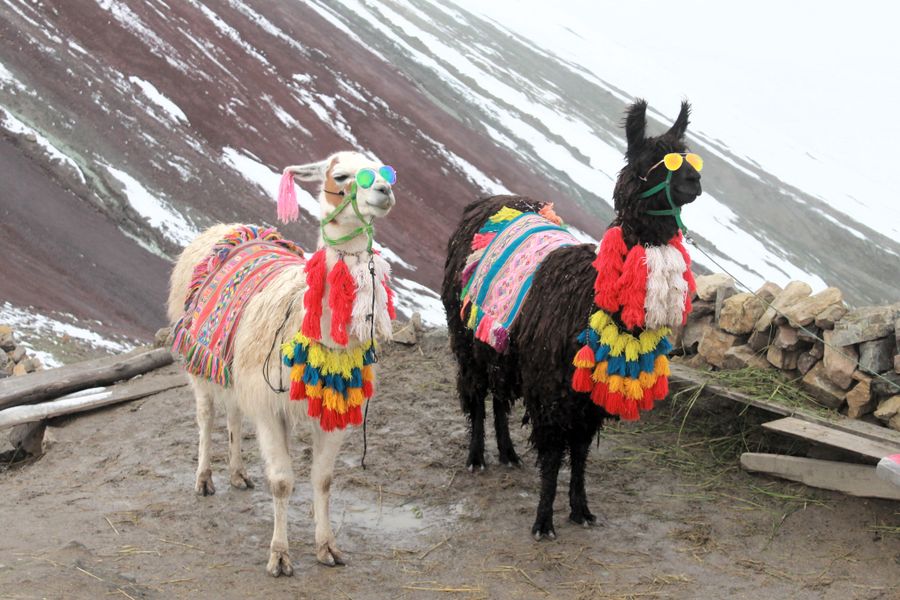
llama
— Steam locomotives · ~30 units · 1890s–1940s · 3km from Uyuni · 3,669m

Uyuni Train
Cemetery, Bolivia.

Thirty British 19th-century steam locomotives rusting on the Bolivian altiplano at 3,669m. Brought in the 1890s for the mining boom. Abandoned in the 1940s when the ore ran out. Entry is free. The gates never close.

Locomotives
~30 steam units
Altitude
3,669m altiplano
Era
1890s–1940s
Origin
British manufactured
Entry
Free · open 24h
From Uyuni
3km · 15min walk
— How long do you need

Sunrise is the reason.

2h
  • Taxi from Uyuni (5min, Bs 15–20)
  • Free walk through the cemetery: 1–1.5h
  • Return to Uyuni for breakfast

The minimum. Arrive at dawn (5:00–5:30am) for the golden light on the rust without tourists — the most photogenic moment at the cemetery.

Half day
  • Sunrise at the train cemetery (5:00–7:00am)
  • Breakfast in Uyuni
  • Visit to the Salt Museum and Uyuni centre
  • Free afternoon or first day of Salar tour

The standard itinerary. Sunrise at the cemetery pairs perfectly with breakfast in Uyuni and the start of the Salar tour at midday.

Full day
  • Sunrise at the cemetery (5:00am)
  • Salar de Uyuni 4×4 tour (all day)
  • Incahuasi, Colchani, sunset on the Salar
  • The cemetery is visited leaving Uyuni on the way out

The standard Uyuni tour includes the Train Cemetery as the first stop before the Salar. This way you use the morning light at the cemetery and reach the Salar when the sun is already illuminating the water mirror.

— What to see at the Train Cemetery

Thirty locomotives. One hundred years of rust.

One of the world's most photogenic collections of abandoned industrial machinery. Sunrise transforms it into a film set. Midday turns it into a tourist forge. The choice is obvious.

🌅
5:00–7:30am · golden hour

Sunrise Photography

Rust, light and silence — the defining Uyuni photograph

The Train Cemetery at sunrise is one of Bolivia's great photographic experiences. The orange and gold light of the first sun on the rusted iron creates a visual intensity that the midday or afternoon cannot replicate. Arriving at 5:00–5:30am means you have the cemetery almost entirely to yourself for the first 60–90 minutes — by 8am, tour groups begin to arrive.

Local tip
Set your alarm for 4:30am. A taxi from Uyuni costs Bs 15–20 (5min) or you can walk the 3km in 35 minutes in the pre-dawn. Bring a jacket — the altiplano at 3,669m is cold before sunrise even in summer. A tripod for long exposures. The best light lasts from first light (5:00am) to about 7:30am.
🚂
Full cemetery · 1–1.5h walk

Locomotive Exploration

~30 steam locomotives · British built · 1890s railway era

The cemetery contains approximately 30 steam locomotives in various states of decay, along with carriages, wagons and equipment. The locomotives were manufactured in Britain (Hunslet Engine Co., Leeds; Kitson & Co.) and imported in the 1890s for the Antofagasta and Bolivia Railway. They served the silver and tin mining routes from the Bolivian altiplano to the Chilean Pacific coast. Mining declined in the 1940s and the locomotives were simply left.

Local tip
Look for the manufacturer plates on the locomotive frames — many still clearly show "Hunslet Engine Co., Leeds" or "Kitson & Co." dates from the 1890s. The wheels and mechanical parts of the most intact locomotives can be explored up close — you can climb on some (do so carefully, the metal is sharp and unstable). The three most photogenic locomotives are at the far western end of the site.
⛏️
Uyuni town · museum

Mining History & Context

Silver, tin and the British railway network that built Bolivia

The Train Cemetery cannot be understood without the story of 19th-century Bolivian mining. In the 1880s–1920s, Bolivia was one of the world's largest silver and tin producers. The Antofagasta and Bolivia Railway (owned by a British-Chilean consortium) connected the altiplano mines to the Pacific port of Antofagasta. At the peak, the Uyuni rail hub processed enormous volumes of ore. When ore prices crashed after WWII and production fell, the railway equipment was economically worthless to move.

Local tip
Visit the Uyuni Museo de Sal or ask your hotel for context on the mining history before visiting the cemetery — the historical background makes the site dramatically more meaningful. The Pulacayo mines (90km from Uyuni) are the best companion visit for the full industrial history: the most important silver mine of the 1880s–1940s, with intact machinery from the same era as the cemetery locomotives.
🎨
Throughout the cemetery

Street Art & Graffiti Layer

A century of paint over rust — the unofficial gallery

Decades of graffiti from travellers, locals and artists have added a second layer of visual texture to the rusted locomotives. Some pieces are thoughtfully done — murals that engage with the locomotive forms. Others are simple tags. The combination of industrial decay, oxidised iron colours and painted surfaces creates photographic compositions unlike any prepared gallery. The graffiti is part of the site's identity now.

Local tip
The graffiti layer is densest on the sides of the locomotives facing south (towards the road). The north-facing sides often have cleaner rust surfaces if you prefer the untagged industrial aesthetic. A wide-angle lens close to the ground gives the most dramatic locomotive + sky compositions. The locomotives themselves are often 2–3m tall at the boiler height.
🌄
5:00–7:00pm altiplano

Sunset Visit

Second best light — crowd-free afternoon

If you cannot make the sunrise, the hour before sunset (approximately 5:00–6:30pm depending on season) offers the second-best light. The western-facing locomotive sides are warm-lit. The cemetery sees fewer visitors in the afternoon than in the morning, making it a viable alternative to the dawn visit. Combine: Salar de Uyuni tour during the day → cemetery sunset → dinner in Uyuni.

Local tip
Check the local sunset time on the day of your visit — on the Bolivian altiplano it varies from 6:00pm (May–July) to 7:00pm (November–January). The low sun angle creates long shadows between the locomotives — interesting compositionally. The temperature drops sharply after sunset, so bring a jacket even if the afternoon was warm.
🏔️
Uyuni basin · 3,669m

The Altiplano Setting

The highest and flattest plain on Earth outside Tibet

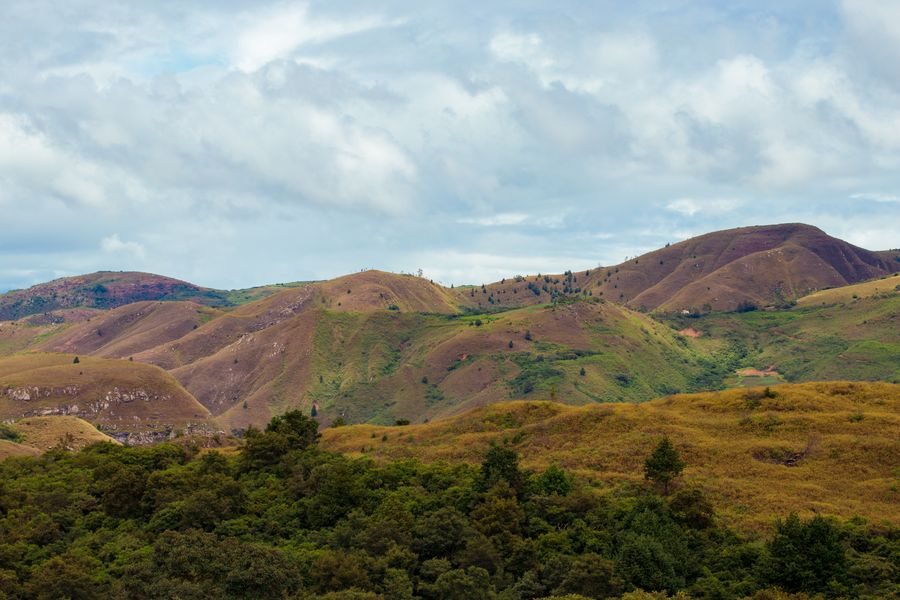
The Train Cemetery sits at 3,669m in the Uyuni basin — part of the Bolivian altiplano, the second-largest high-altitude plain on Earth after the Tibetan Plateau. The setting is extraordinary: abandoned machinery on a treeless plain with the Andean peaks visible in the distance. The silence, the altitude and the visual emptiness of the altiplano amplify the photographic drama of the rusted locomotives.

Local tip
Altitude affects all visitors at 3,669m. If you've just arrived from sea level, take the first day easy — headache and breathlessness are normal. Hydrate well and avoid alcohol on arrival day. Coca tea (mate de coca) is available in Uyuni hotels and helps with altitude adjustment. Most visitors feel fully acclimatised within 24–48 hours.
— History and context of the Train Cemetery

The mining boom, the collapse and the forgetting.

Six contexts to understand why there are thirty British locomotives rusting on the Bolivian altiplano.

🔧
The Antofagasta-Bolivia Railway (FCAB)
The Antofagasta-Bolivia Railway was built between 1873 and 1892 by The Antofagasta (Chili) and Bolivia Railway Company, owned by Chilean and British capital. It was Bolivia's first railway and one of the highest in the world. The line connected the port of Antofagasta (Chile) with Uyuni and eventually La Paz via the Bolivian altiplano. The cemetery locomotives were the workhorses of this system.
⚙️
Why they were built in Britain
In the 19th century, Britain was the world's largest manufacturer of steam locomotives. Companies like Hunslet Engine Co. (Leeds, 1864) and Kitson & Co. (Leeds, 1839) exported railway machinery worldwide. Bolivia had no heavy industry capable of building locomotives, and importing them from Britain was cheaper than developing local capacity. The manufacturer plates still visible at the cemetery document this origin.
📉
Why they were abandoned
The mass abandonment of locomotives at Uyuni resulted from a convergence of factors: 1) The collapse of tin and silver prices during and after World War II. 2) The progressive closure of altiplano mines. 3) The cost of repairing or moving the locomotives exceeded their commercial value. 4) Bolivia had no remote scrapyard capacity. The result was a gradual abandonment through the 1940s to 1960s.
📷
Why the cemetery is so photogenic
The combination of several factors creates the cemetery's exceptional photographic quality: the absolute horizontality of the altiplano as background, the locomotives as large architectural objects, the rust colours (ochre, orange, red) against the altiplano blue sky, and the wide-angle light at dawn and sunset. The cemetery has the visual structure of a film set.
🌍
The geopolitical context: the War of the Pacific
The FCAB was built in the context of the War of the Pacific (1879–1884), in which Bolivia lost its sea access to Chile. The railway was in part an instrument of Chilean economic penetration into Bolivia — the FCAB's owner controlled the freight tariffs on Bolivian ore through the port of Antofagasta. The cemetery locomotives are material evidence of this history.
🏛️
The conservation debate
The Train Cemetery has no formal protection as a historical heritage site in Bolivia. The locomotives progressively deteriorate through weather exposure, and graffiti increasingly covers the original surfaces. International railway heritage organisations have documented the site, but no formal conservation project is underway. The site remains in institutional limbo between a tourist attraction and official neglect.
— From the Train Cemetery and Uyuni

The southwestern Bolivia circuit.

Excursion
3km from the cemetery

Salar de Uyuni · The Salt Flat

The world's largest salt flat · 10,582 km² · mirror effect

The Train Cemetery is the standard first stop on the Uyuni salt flat tour — the two are a natural pair. The Salar de Uyuni (10,582 km²) is the world's largest salt flat at 3,656m altitude. The mirror effect (November–March, 2–5cm water depth) creates the most spectacular visual illusion in Bolivia. The full Salar tour (4×4, full day) typically includes: Train Cemetery → Colchani salt village → Salar interior → Incahuasi Island → sunset → Uyuni.

Tip
Book your Salar tour for the day after arrival in Uyuni — your first day at altitude is for acclimatisation. The best Salar tours start early (8–9am), include the Train Cemetery as the first stop, and are run by operators with modern 4×4 vehicles. Avoid the cheapest operators — vehicle reliability on the Salar is critical.
Excursion
90km · 1.5h

Pulacayo · Silver Mine Museum

Bolivia's most important 19th-century silver mine · intact machinery

Pulacayo (3,600m, 90km from Uyuni) was Bolivia's most productive silver mine from the 1830s to the 1950s. At its peak in the 1890s, Pulacayo processed more silver ore than any other mine in Bolivia. The mine town is now a ghost town and open-air museum, with original 19th-century processing machinery, the Butch Cassidy connection (Cassidy and Sundance Kid allegedly robbed the Pulacayo mine train in 1908), and the same-era steam equipment as the Uyuni cemetery.

Tip
Pulacayo requires a 4×4 vehicle or an organised tour from Uyuni. The mine is accessible with a guide from Uyuni (half-day excursion, Bs 80–120 per person). The machinery at Pulacayo is better preserved than the Uyuni cemetery locomotives — some pieces still have legible manufacturer plates and operational components intact.
Excursion
120km · 2h

Tunupa Volcano · North Salar

Aymara legend · 5,321m summit · mummies · panoramic Salar views

Tunupa (5,321m) is the dormant volcano on the northern shore of the Salar de Uyuni, visible from Uyuni town as the great pyramid above the salt flat. The base village of Tahua has Aymara communities with the legend of Tunupa — the goddess whose tears mixed with her milk created the Salar. Pre-Hispanic mummies have been found in summit caves. The summit gives the most spectacular panoramic view of the full Salar. Accessible as a day trip from Uyuni or part of the 3-day Uyuni-Atacama circuit.

Tip
Tunupa summit (5,321m) requires 4–5h ascent from Tahua village and good acclimatisation. It is often included in the 3-day Uyuni tour as a side excursion to the Tahua village. The drive around the northern shore of the Salar to Tahua is itself spectacular — passing through the flamingo lagoons.
Excursion
160km · 3h

Potosí · The Silver Mountain

UNESCO city · Cerro Rico · 4,090m · Spanish Empire's treasury

Potosí (4,090m, 160km from Uyuni) is the natural historical companion to the Train Cemetery. The silver mined at Cerro Rico funded the Spanish Empire for 200 years (1545–1825) and the demand for transport infrastructure was the reason the FCAB railway was built. The UNESCO World Heritage city has the Casa de la Moneda (Royal Mint), Baroque churches and working mine tours on Cerro Rico. Combine: Uyuni (2 nights) → Potosí (2 nights) → Sucre (1–2 nights).

Tip
The Potosí–Uyuni road (160km) is now mostly paved, making it a comfortable 3h drive. Buses run daily. The altitude jump from Uyuni (3,669m) to Potosí (4,090m) is manageable if you've already been in Uyuni for 1–2 days. The Potosí mine tour (active Cerro Rico mines) is one of the most intense visitor experiences in Bolivia — not for everyone, but historically essential.
— Travel logistics

Getting there and getting around.

🚌

How to get to Uyuni and the Cemetery

  • Flight La Paz or Cochabamba → Uyuni: 1h (Boliviana de Aviación, BoA)
  • Overnight bus from La Paz: 8–10h · Bs 80–150
  • Bus from Potosí: 3h · Bs 30–50 · mostly paved road
  • From central Uyuni to the cemetery: taxi Bs 15–20 (5min) or 35min walk
  • No direct public transport to the cemetery — taxi or walking only
  • Cemetery entry: free · open 24h
🚶

How to get around the cemetery

  • The cemetery is an open area of approximately 400×200m — no barriers or marked paths
  • Recommended time: 1–1.5h for full exploration
  • Sturdy footwear essential — the terrain is uneven with rusted rails
  • No toilet facilities or water at the cemetery
  • The cemetery sits directly next to the Colchani road — no internal signage
  • Temperature: always bring a jacket on the altiplano (5–15°C even in summer)
— Climate and seasons

When to visit Uyuni.

Jan
Feb
Mar
Apr
May
Jun
Jul
Aug
Sep
Oct
Nov
Dec
April – October
Dry season — best for the cemetery
Days are clear, the sky is deep blue and temperatures are moderate by day (10–18°C) and cold at night (–5 to 5°C). The absence of cloud guarantees the best dawn light on the locomotives. For the Salar: dry season has no mirror effect but the salt hexagon pattern is highly photogenic.
November – March
Wet season — for the Salar mirror effect
If your main objective is the Salar de Uyuni mirror effect (January–March), this is the season. For the cemetery, altiplano rains do not affect it directly but cloudy skies reduce dawn light quality. Combine: cemetery at dawn (always) + Salar with mirror effect (full day).
Year-round
For the cemetery: season doesn't matter
The Train Cemetery works year-round because altiplano rain does not affect it and the rust does not change with seasons. The only important variable is visit time: always at dawn or sunset. Cloudy sky can create interesting diffuse light — it is not always worse than direct sun.
FAQ

Questions about the Train Cemetery.

The 5 most common questions about South America's most photogenic railway cemetery.

Plan your trip with us →

The Uyuni Train Cemetery (Cementerio de Trenes) is an open-air collection of approximately 30 abandoned British-made steam locomotives and railway wagons located 3km from the town of Uyuni, Bolivia, at 3,669m altitude. The locomotives were imported in the 1890s for the Antofagasta-Bolivia Railway, serving the silver and tin mining routes from the Bolivian altiplano to the Pacific coast. They were abandoned in the 1940s when mining declined. Entry is free and the site is open 24 hours.

The best time to visit the Train Cemetery is at sunrise (approximately 5:00–7:30am depending on season). The dawn light is golden and warm on the rusted iron, and you will have the cemetery to yourself for the first 60–90 minutes before tour groups arrive. Sunset is the second-best option. Midday should be avoided — harsh overhead light, maximum tourist crowds, and flat photography conditions. The cemetery is photogenic year-round regardless of wet or dry season.

No. The Train Cemetery has no entrance fee and no opening hours — it is an open-air, unfenced site accessible 24 hours a day, 7 days a week. You simply arrive, walk in, and explore. There are no ticket booths, no guides required (though voluntary guides are sometimes present at the entrance), and no time limits. A taxi from Uyuni centre costs Bs 15–20 each way (5 minutes) or you can walk the 3km in approximately 35 minutes.

The Train Cemetery is generally safe for visitors during daylight hours. The main physical risks are from the metal infrastructure itself: sharp rust edges, unstable surfaces on the locomotives, and uneven ground with buried rail sections. Sturdy closed-toe shoes are essential. Pre-dawn visits (for sunrise photography) are common and generally safe, but go in pairs or small groups and bring a torch. Do not leave cameras or bags unattended. The site has no official security or lighting.

Yes — and this is the standard approach. Virtually all Salar de Uyuni 4×4 tours stop at the Train Cemetery as the first visit of the day (typically 8–9am). The cemetery is on the way from Uyuni to the Salar, 3km before the Colchani salt processing village. If you want the best cemetery experience, arrive at the cemetery independently at sunrise (5:00am) before your Salar tour starts — two hours at the cemetery in the golden light, then join your tour group at the Uyuni meeting point.

— Plan your Southwest Bolivia trip

The altiplano waits.
Set the alarm.

45 minutes. We design your Uyuni, Salar and Potosí itinerary with logistics, accommodation and a realistic budget.

$90 · €85 · Bs. 623

Book consultation → $90 · €85 · Bs. 623Salar de Uyuni →