Skip to content
— Bolivia Ecosystems

Bolivia has 11 ecosystems.

From the world's largest salt flat to the Amazon, the dry Chaco and the baroque missions. Bolivia packs more biodiversity per km² than almost any country on earth — and most of that biodiversity isn't on any tourist map yet.

11
Ecosystems
4
Climate zones
1,400+
Bird species
11,000+
Plant species
1.1M km²
Territory
Highland · 3,750 m

Altiplano

Andes · Uyuni · Titicaca · Tiwanaku

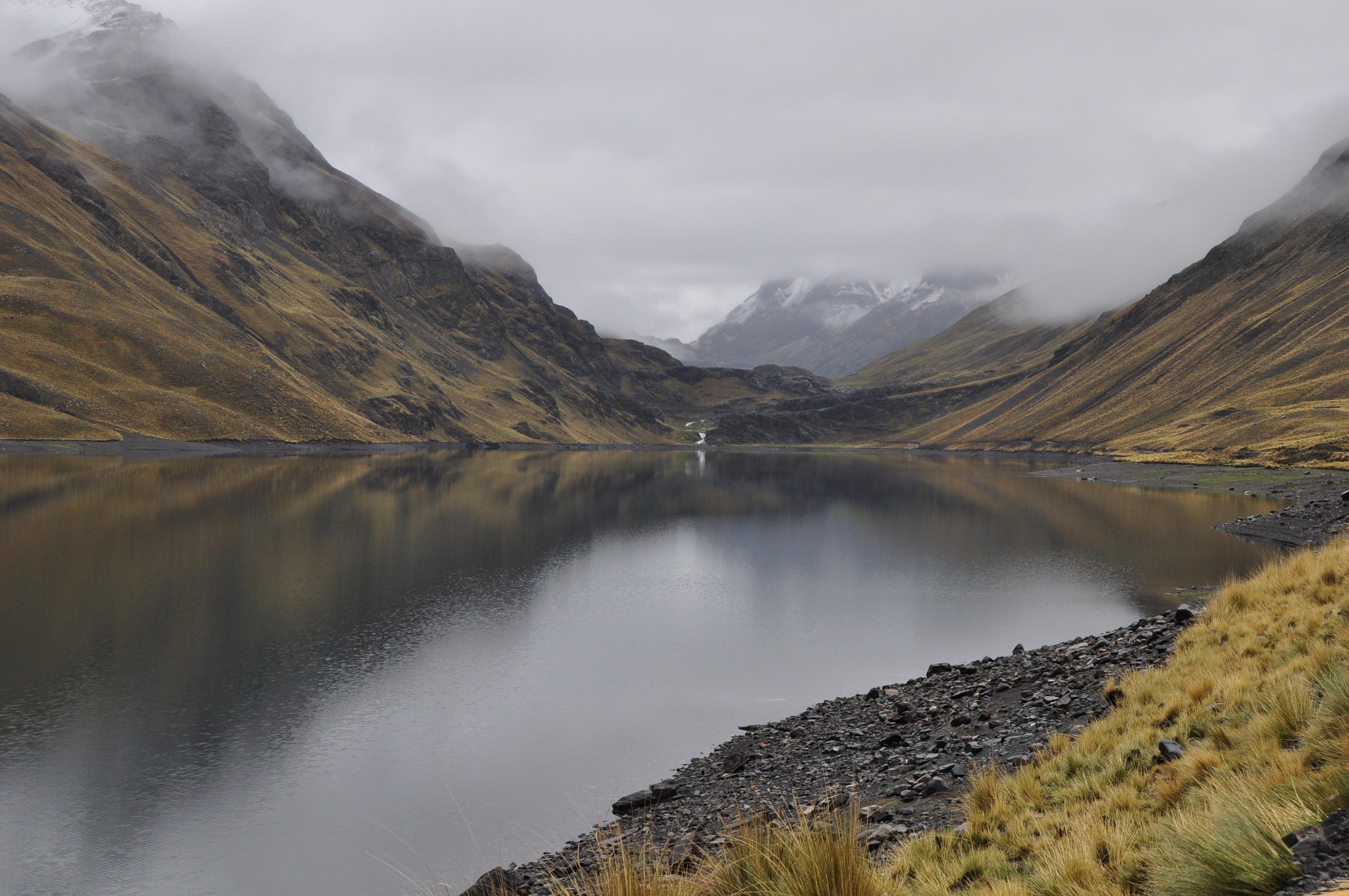
Bolivia's Altiplano is the world's largest plateau outside Tibet — averaging 3,750 m over 105,000 km². The Salar de Uyuni (10,582 km²) is the world's largest salt flat and holds 50–70% of the planet's known lithium reserves; in the wet season it becomes an infinite mirror of sky. Lake Titicaca at 3,812 m is the world's highest navigable lake and the largest in South America by volume. The pre-Inca city of Tiwanaku (500–1100 AD), a UNESCO World Heritage site, was the capital of an empire that dominated the Andes for six centuries.

Area
105,000 km²
Alt.
3,750 m
Season
May–Oct
Birds
250+
VicuñaCóndor andinoFlamenco andinoSuri
Key places
Salar de UyuniLago TiticacaTiwanaku (UNESCO)Potosí (UNESCO)
The Salar de Uyuni contains an estimated 21 million tonnes of lithium — 50–70% of known global reserves.
Lowland · 200–500 m

Amazon

Madidi · Beni River · Chalalan · Rurrenabaque

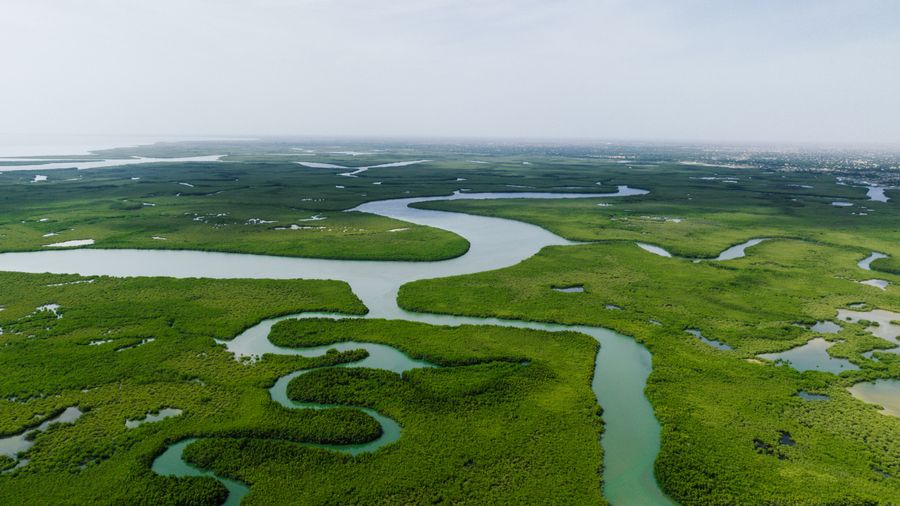
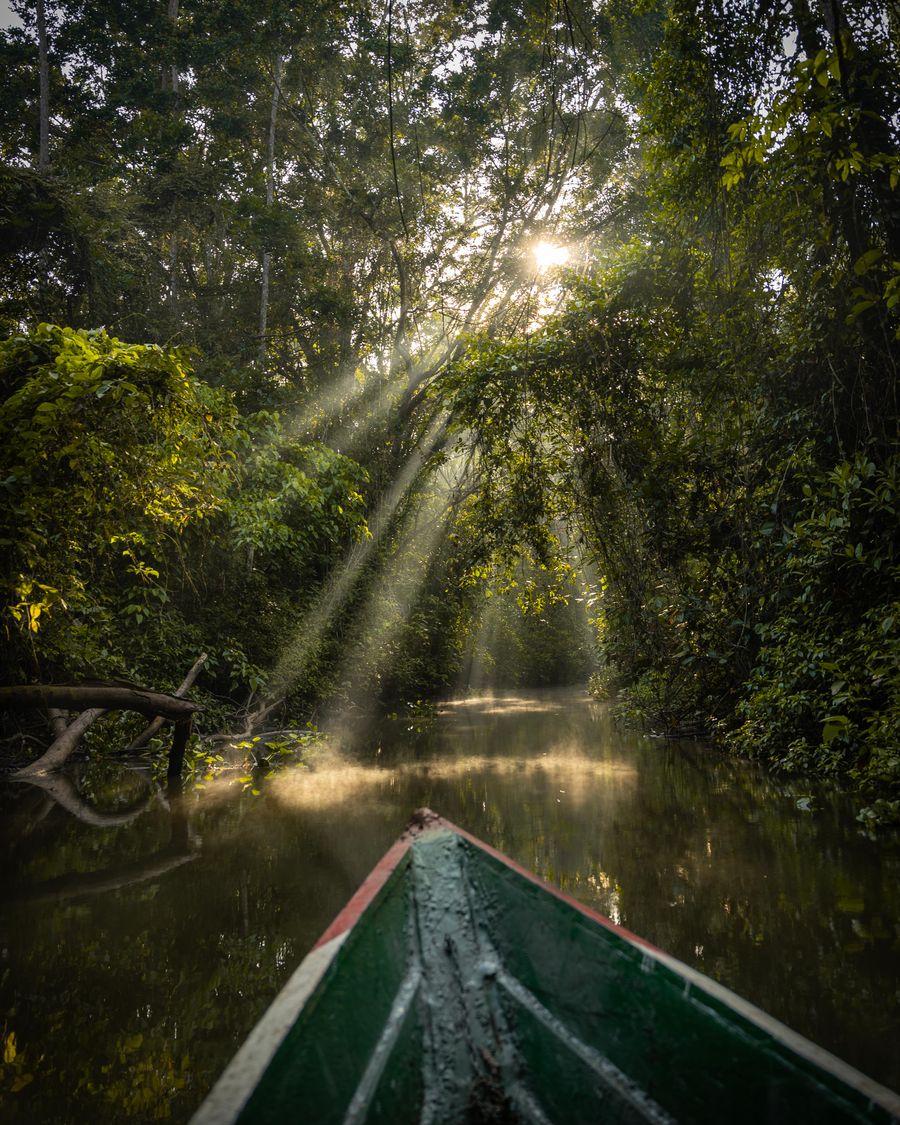
Bolivia's Amazon covers 274,000 km² — 25% of the national territory — and contains Madidi National Park, consistently ranked as the world's most biodiverse protected area per unit of surface. In 1.9 million hectares, scientists have recorded 1,000+ bird species, 300 mammal species, 1,500 plant species, and 1,800 butterfly species. The Inia boliviensis — the Bolivian river dolphin, genetically distinct from its Brazilian relative — is endemic to Bolivian waterways and found nowhere else on earth. Chalalan Ecolodge, 4 hours by motorised canoe up the Tuichi River, has been owned and operated by the Quechua-Tacana community since 1998.

Area
274,000 km²
Alt.
200–500 m
Season
May–Sep
Birds
1,200+
Bufeo rosadoTapir amazónicoJaguarAnaconda
Key places
Madidi NPRurrenabaqueEcolodge ChalalanRío Tuichi
Madidi holds more bird species (1,000+) in a single park than exist in the entire United States.
Wetland · 150–300 m

Pantanal

Otuquis · San Matías · Iténez River · Caimans

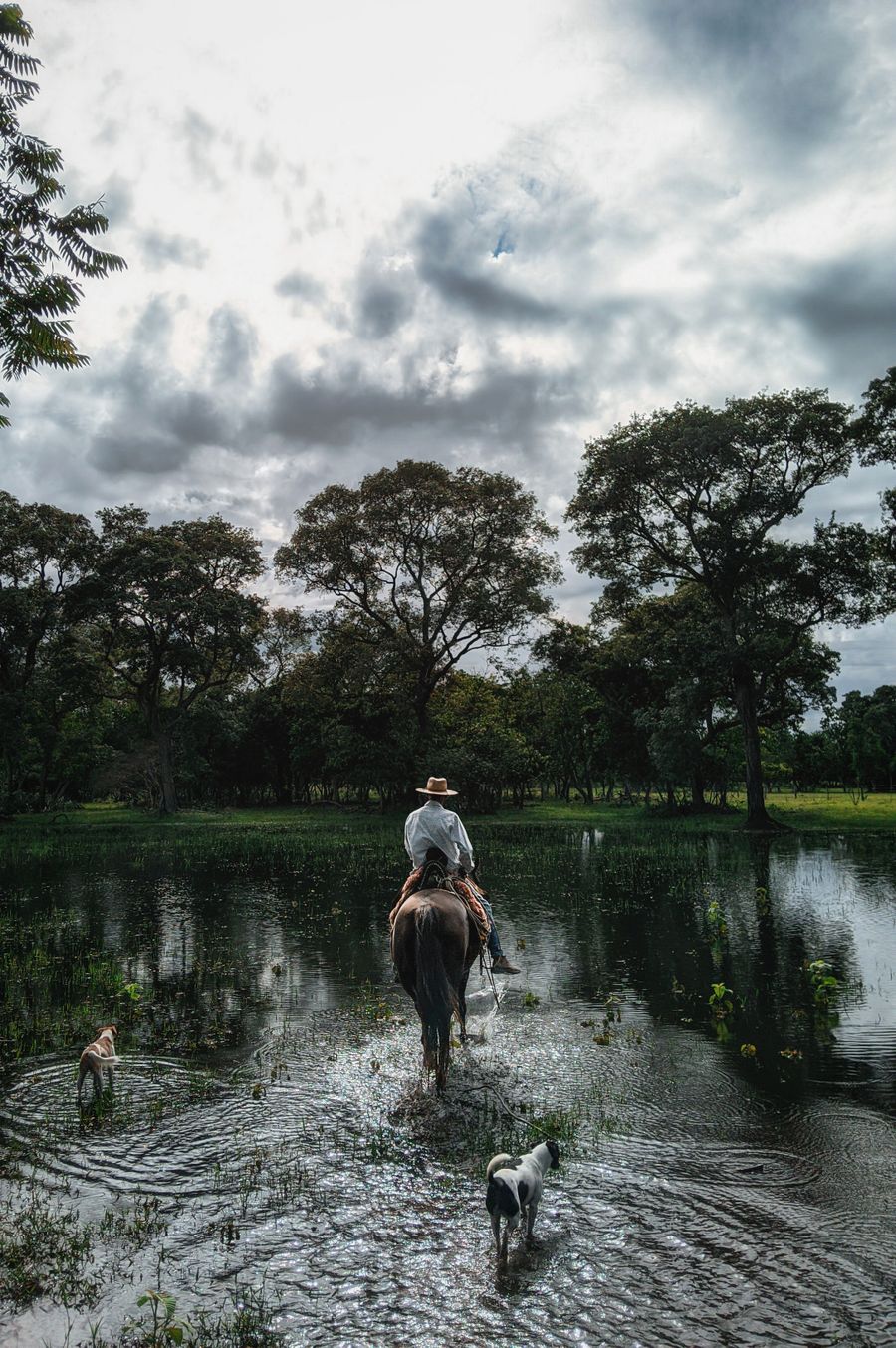
Bolivia's portion of the Pantanal covers approximately 150,000 km² — the world's largest tropical freshwater wetland, shared with Brazil and Paraguay. The Bolivian side holds two national parks (Otuquis, 1 M ha; San Matías, 2.6 M ha) and remains far less visited and more pristine than the Brazilian Pantanal. Caiman (Caiman yacare) densities here reach 50–100 individuals per river bend — among the highest in South America. The giant river otter (Pteronura brasiliensis) — the world's longest mustelid at up to 1.8 m — maintains established family territories in gallery-forest channels, with sighting rates exceeding 90% on guided surveys.

Area
150,000 km²
Alt.
150–300 m
Season
Apr–Oct
Birds
650+
Nutria giganteYacaréCiervo del pantanoJabiru
Key places
PN OtuquisPN San MatíasPuerto SuárezRío Iténez
Giant river otter sighting rates in the Bolivian Pantanal exceed 90% on guided boat surveys.
Temperate · 2,000–3,500 m

Valleys

Sucre · Cochabamba · Samaipata · Potosí

Bolivia's inter-Andean valleys, spanning 2,000–3,500 m across the departments of Chuquisaca, Cochabamba, and Tarija, hold the country's richest concentration of colonial-era heritage and most temperate climate. Sucre — Bolivia's constitutional capital — is a UNESCO World Heritage city (1991) and the site where Bolivia declared independence from Spain on August 6, 1825. El Fuerte de Samaipata, a pre-Inca ritual site carved into a single sandstone rock at 1,950 m, is Bolivia's largest pre-Columbian monument and a second UNESCO site (1998). The Cinti and Tarija valleys at 2,000–2,800 m produce Bolivia's entire wine output at among the world's highest-altitude vineyards, yielding Malbec, Tannat, and Muscat.

Area
~180,000 km²
Alt.
2,000–3,500 m
Season
Year-round
Birds
350+
Oso andinoPumaLoro de frente rojaMono aullador
Key places
Sucre (UNESCO)El Fuerte Samaipata (UNESCO)CochabambaPotosí (UNESCO)
The valleys hold three UNESCO World Heritage sites: Sucre, El Fuerte de Samaipata, and the silver-mine city of Potosí.
Transition · 600–2,500 m

Yungas

Death Road · Coroico · Taquesi Inca Trail

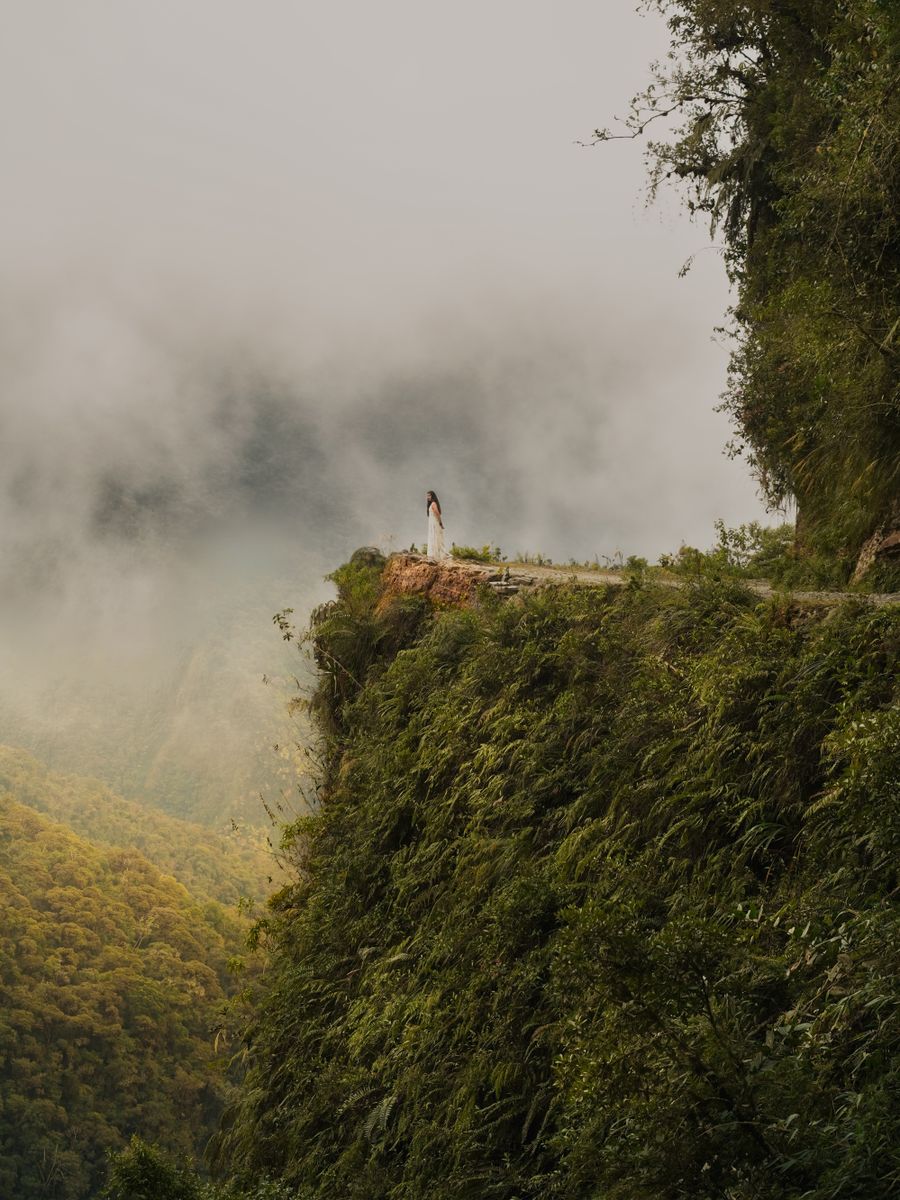
The Yungas is Bolivia's most dramatic altitudinal gradient — the transition zone between the Andes and the Amazon lowlands, dropping 3,000 m in elevation over just 60 km. The Carretera de la Muerte (Death Road) descends from La Cumbre pass (4,650 m) to Coroico (1,760 m) in 64 km of single-lane mountain road — now Bolivia's most famous mountain bike descent, with 3,000 m of vertical drop. Cloud forest covers over 70% of the zone and harbors 600+ endemic plant species, including 300+ orchid varieties. The Taquesi Inca trail, used continuously since the 15th century, links highland communities to lowland coca-growing villages via original stone-paved pre-Columbian road.

Area
~60,000 km²
Alt.
600–2,500 m
Season
May–Oct
Birds
600+
Oso andinoGallito de la rocaPava cornutaMono araña
Key places
Ruta de la MuerteCoroicoPN CotapataCamino Taquesi
The Death Road's 64 km descent drops 3,000 m in altitude — Bolivia's record vertical drop in a single route.
Highland · 4,000–5,000 m

Southwest

Laguna Colorada · Sol de Mañana · Dalí Desert

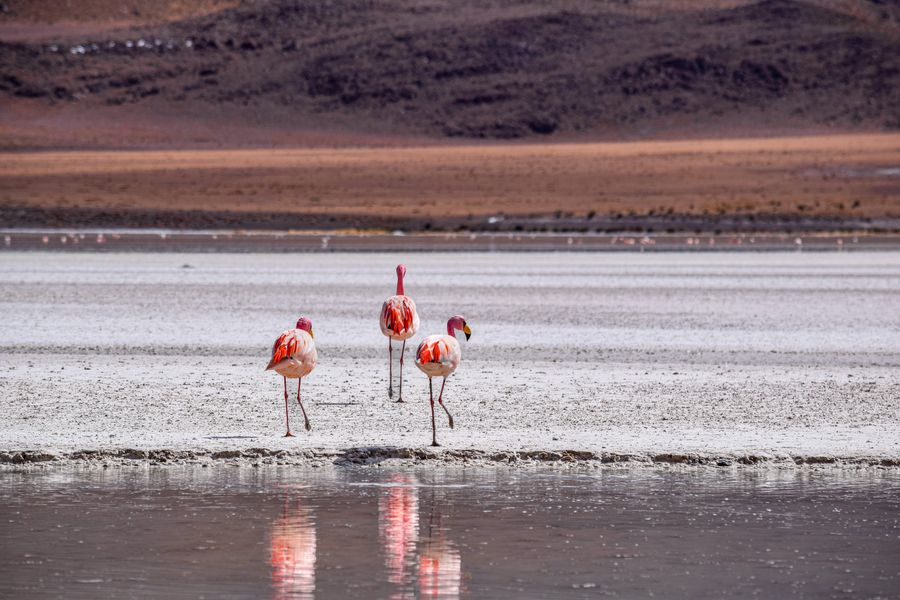
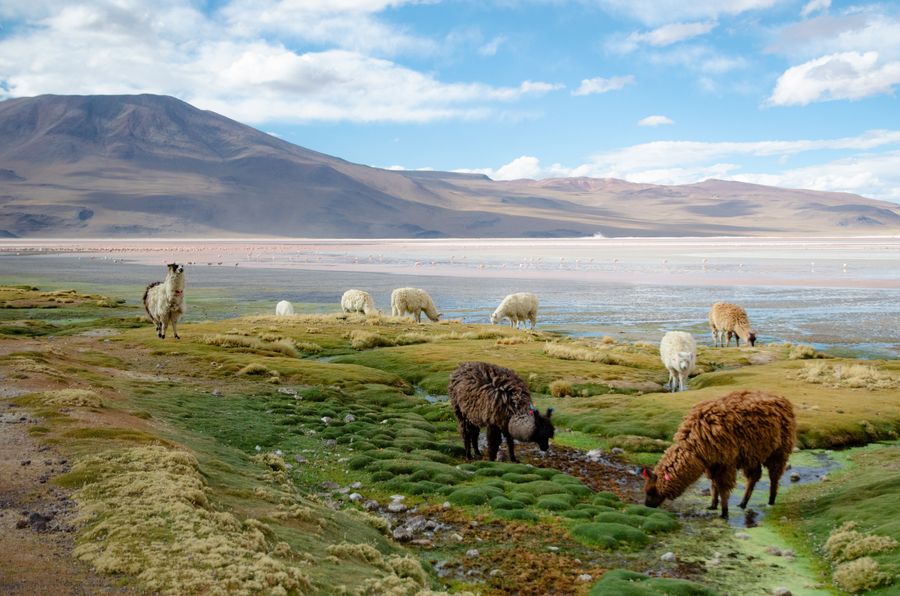
Bolivia's southwest circuit, set entirely above 4,000 m in the Eduardo Avaroa National Reserve (714,000 ha), is the most visually extreme landscape in South America. Laguna Colorada owes its blood-red color to the microalgae Dunaliella salina and iron-rich volcanic sediment; during breeding season (Nov–Jan) it hosts 40,000 flamingos of three species simultaneously — Phoenicoparrus andinus, Phoenicoparrus jamesi, and Phoenicopterus chilensis — making it the only place on earth where all three Andean flamingo species coexist. The Sol de Mañana geothermal field at 4,850 m is the world's highest active geyser area, most spectacular at dawn when ambient temperatures reach -20°C. Laguna Verde's intense turquoise color results from high concentrations of arsenic, lead, and calcium carbonate dissolved in the water.

Area
714,000 ha
Alt.
4,000–5,000 m
Season
May–Oct
Birds
80+
Flamenco andinoFlamenco de JamesFlamenco chilenoSuri
Key places
Laguna ColoradaSol de MañanaLaguna VerdeDesierto de Dalí
Laguna Colorada is the only place on earth where three Andean flamingo species breed simultaneously.
Dry Forest · 400–700 m

Chiquitanía

UNESCO Missions · Noel Kempff · Baroque Music

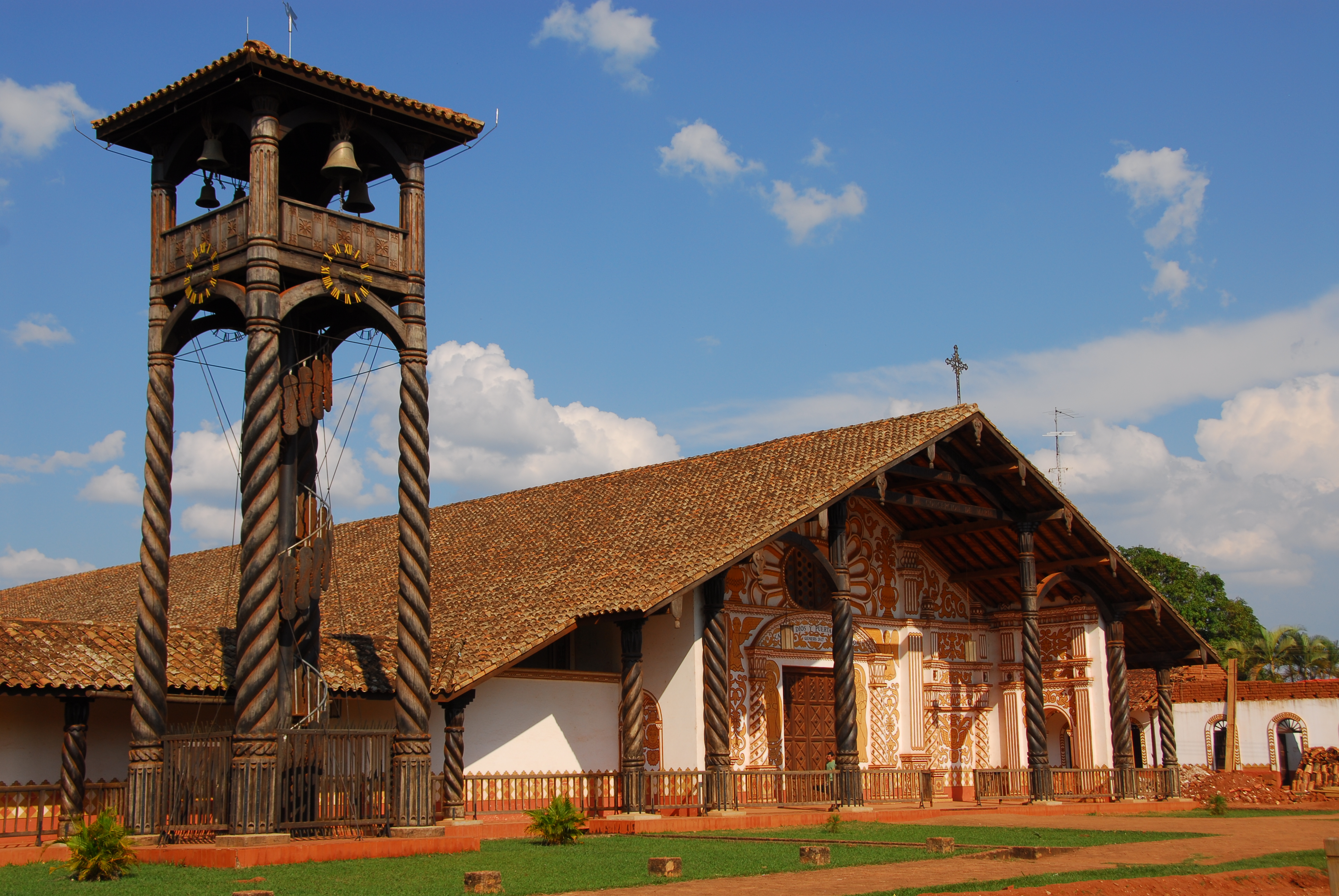
The Chiquitanía is eastern Bolivia's defining landscape — a dry tropical forest that is one of the last intact examples of its kind in South America, covering 200,000 km². Six baroque mission churches built between 1691 and 1767 by Jesuit priests alongside the Chiquitano indigenous people are a collective UNESCO World Heritage site (1990), featuring carved wood retablos unrivaled in the Americas. The annual Festival de Música Renacentista y Barroca Americana in San Ignacio de Velasco (every two years) is Latin America's premier baroque music event. Noel Kempff Mercado National Park at the region's northern edge, also UNESCO (2000) and covering 1.5 million ha, rises on ancient Precambrian tepui plateaus with 600+ bird species and 4,000+ plant species.

Area
~200,000 km²
Alt.
400–700 m
Season
Apr–Oct
Birds
600+
Oso hormiguero giganteTatú carretaLapa de frente castañaPato real
Key places
San JavierConcepciónSan Ignacio de VelascoPN Noel Kempff (UNESCO)
The Chiquitanía has two UNESCO World Heritage sites in a single region — the missions (1990) and Noel Kempff NP (2000).
Flooded Savannah · 200–300 m

Llanos de Moxos

Trinidad · Earthworks · River Dolphins · Capybara

The Llanos de Moxos in Bolivia's Beni department is the world's largest seasonally flooded savannah system, covering 126,000 km². Archaeological surveys have identified 35,000 km² of pre-Columbian raised platforms, causeways, fish weirs, and canals built by the Moxos civilization between 100 BCE and 1400 CE — the largest known engineered landscape in the pre-Columbian Americas. During peak season, capybara (Hydrochoerus hydrochaeris) herds reach 500+ individuals per river bend, alongside black caimans and the pink river dolphin (Inia boliviensis). Trinidad, the department capital at 236 m, is the only city in Bolivia where motorcycling is the primary form of urban transport — a unique cultural marker of the lowlands.

Area
126,000 km²
Alt.
200–300 m
Season
May–Sep
Birds
500+
CapibaraCaimán negroBufeo rosadoCiervo del pantano
Key places
TrinidadRío MamoréLomas de MoxosBaures
The Moxos civilization engineered 35,000 km² of raised platforms and canals — the largest pre-Columbian landscape on earth.
Dry Forest · 200–500 m

Gran Chaco

Kaa-Iya NP · Guaraní · Jaguar · Giant Armadillo

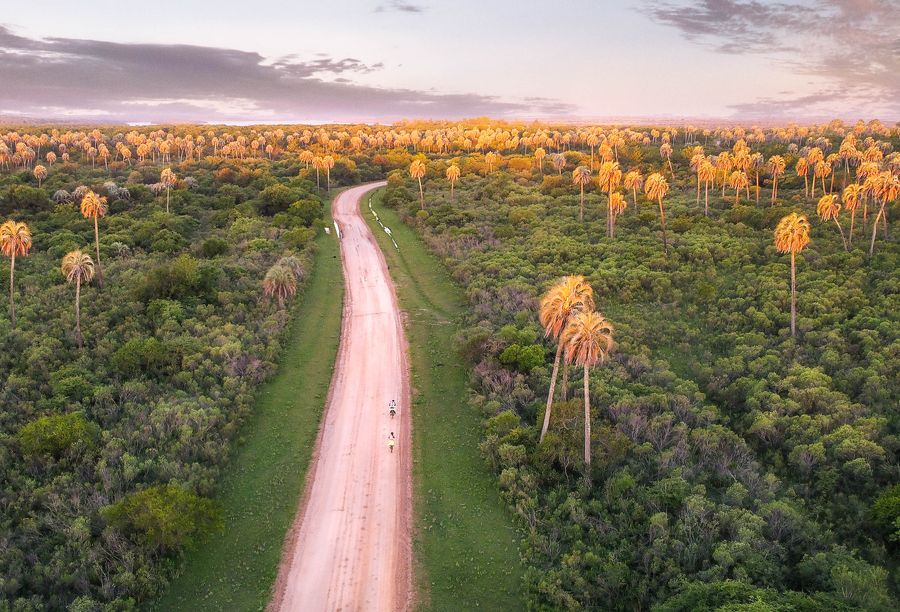
Bolivia's Gran Chaco forms part of South America's largest dry forest — 1.1 million km² spanning Bolivia, Paraguay, Argentina, and Brazil. Kaa-Iya del Gran Chaco National Park (3.4 million ha — larger than Belgium) was established in 1995 as the first protected area in the world created and co-managed exclusively by indigenous peoples (the Izoceño-Guaraní since its founding). The park protects the largest population of jaguars (Panthera onca) in Bolivia, the highest density of giant armadillos (Priodontes maximus) in South America, and 300+ bird species. Summer temperatures regularly exceed 45°C, making the Gran Chaco the hottest inhabited region in the Americas.

Area
3.4M ha (Kaa-Iya)
Alt.
200–500 m
Season
Apr–Sep
Birds
300+
JaguarTatú carretaPecarí labiadoOso hormiguero gigante
Key places
PN Kaa-IyaCamiriCharaguaIzozog
Kaa-Iya (3.4M ha) was the world's first national park created and managed exclusively by indigenous peoples.
Savannah · 200–600 m

Cerrado

Maned Wolf · Noel Kempff Tepuis · Precambrian

Bolivia's Cerrado is the country's easternmost biome and the southwestern edge of the world's most biodiverse savanna system — the South American Cerrado, covering 2 million km² and ranking second only to the Amazon in continental biodiversity. Noel Kempff Mercado National Park (UNESCO, 2000) — 1.5 million ha in northeastern Santa Cruz — sits on ancient Precambrian tepui plateaus rising 500–700 m above the surrounding plains, creating isolated sky-island ecosystems with 600+ bird species, 4,000+ plant species, giant otters, and jaguars. The maned wolf (Chrysocyon brachyurus) — Bolivia's largest canid, with legs evolved for visibility in tall grasslands — is the Cerrado's flagship species. Bolivia's Cerrado is among the last intact examples of a biome that has lost over 80% of its area to soybean agriculture in Brazil.

Area
~60,000 km²
Alt.
200–600 m
Season
Apr–Oct
Birds
600+
Lobo de crinOso hormiguero giganteCiervo de pampasNutria gigante
Key places
PN Noel Kempff (UNESCO)San Ignacio de VelascoFlor de OroHuanchaca plateau
Noel Kempff Mercado's tepui plateaus rise 700 m above the plains — isolated sky-islands with species found nowhere else.
Cloud Forest · 500–3,000 m

Tucumano Forest

Tarija · Tariquía · Butterflies · High-Altitude Wine

The Tucumano-Boliviano cloud forest is Bolivia's least-explored and most underrated biome, stretching from Tarija north through Chuquisaca along the Andean foothills at 500–3,000 m. Tariquía National Reserve (246,870 ha) in Tarija department protects one of the most intact Tucumano forests remaining, with 550+ bird species including 15 endemics and the highest spectacled bear (Tremarctos ornatus) density in Bolivia. The Tarija and Cinti valleys at 2,000–2,800 m produce Bolivia's entire wine output — among the world's highest-altitude vineyards — with Malbec and Tannat thriving in intense UV conditions. The Blue Morpho butterfly (Morpho helenor), with its iridescent 12 cm wingspan, was the inspiration for the Mariposa Morfo route name and is endemic to this ecosystem corridor.

Area
~120,000 km²
Alt.
500–3,000 m
Season
Mar–Nov
Birds
550+
Mariposa MorphoOso andinoPumaTucán del sur
Key places
TarijaRN TariquíaBermejoValle de la Concepción
Tarija's vineyards at 2,000–2,800 m are among the world's highest-altitude wine producers, with Bolivia's only certified Malbec.

Not sure which ecosystem is right for you?

A 45-minute consultation is enough to design a complete bespoke itinerary. From Santa Cruz, with real local knowledge.

Book a consultation · $90 · €85 · Bs. 623