Skip to content
La Paz Bolivia — mercado callejero vibrante en la ciudad más alta del mundo a 3.640m
condor
— City · Bolivia's administrative capital3.640m

City of La Paz,
Bolivia.

The world's highest capital. A 30km cable car over the rooftops. The Witches' Market. Cholita wrestlers. El Alto's cholets. A city unlike any other on earth.

Mean altitude
3,640m
El Alto airport
4,065m
Metro population
~2.3M
Cable car
10 lines · 30km
Cable car fare
$0.43 USD
Fly via
Lima · Bogotá · BA
— How long do you need

Three itineraries. One starting point.

48 hours
  • Day 1: Arrival & acclimatisation — Witches' Market, San Francisco, Sopocachi evening
  • Day 2: Mi Teleférico Red line to El Alto · Cholet architecture · Cholita wrestling (Sundays)

Minimum viable. Add Tiwanaku (+1 day) or Death Road (+1 day).

5 days
  • Days 1–2: The city — cable car, Witches' Market, Valle de la Luna, El Alto
  • Day 3: Day trip to Tiwanaku (depart 8am, back by noon)
  • Days 4–5: Copacabana + Isla del Sol (2 nights)

The standard itinerary for a first visit to Bolivia via La Paz.

7 days
  • Days 1–2: The city — 48h itinerary
  • Day 3: Tiwanaku (sunrise, local guide)
  • Days 4–5: Copacabana + Isla del Sol
  • Day 6: Death Road cycling + night in Coroico
  • Day 7: Return to La Paz. Onward flight or start of route

The perfect La Paz-based week. Includes the three best day excursions.

— Things to do in La Paz Bolivia

Six essential experiences.

Selected by Bolivians. Without the typical travel guide traps.

🚡
City-wide · 10 lines

Mi Teleférico

World's longest urban cable car — 30km

10 lines connecting La Paz (3,640m) and El Alto (4,150m). Cost: 3 bolivianos ($0.43) per ride. Buy a rechargeable card at any station. Red line (Central → El Alto) and Yellow line offer the best city views. Rush hour (7–9am, 5–7pm) shows the city at full intensity. Over 300,000 passengers per day.

Local tip
Ride the Red line from Central to El Alto at dusk. The sun sets behind Illimani and the city lights up across the valley bowl.
🧙
Calle Linares, Historic Centre

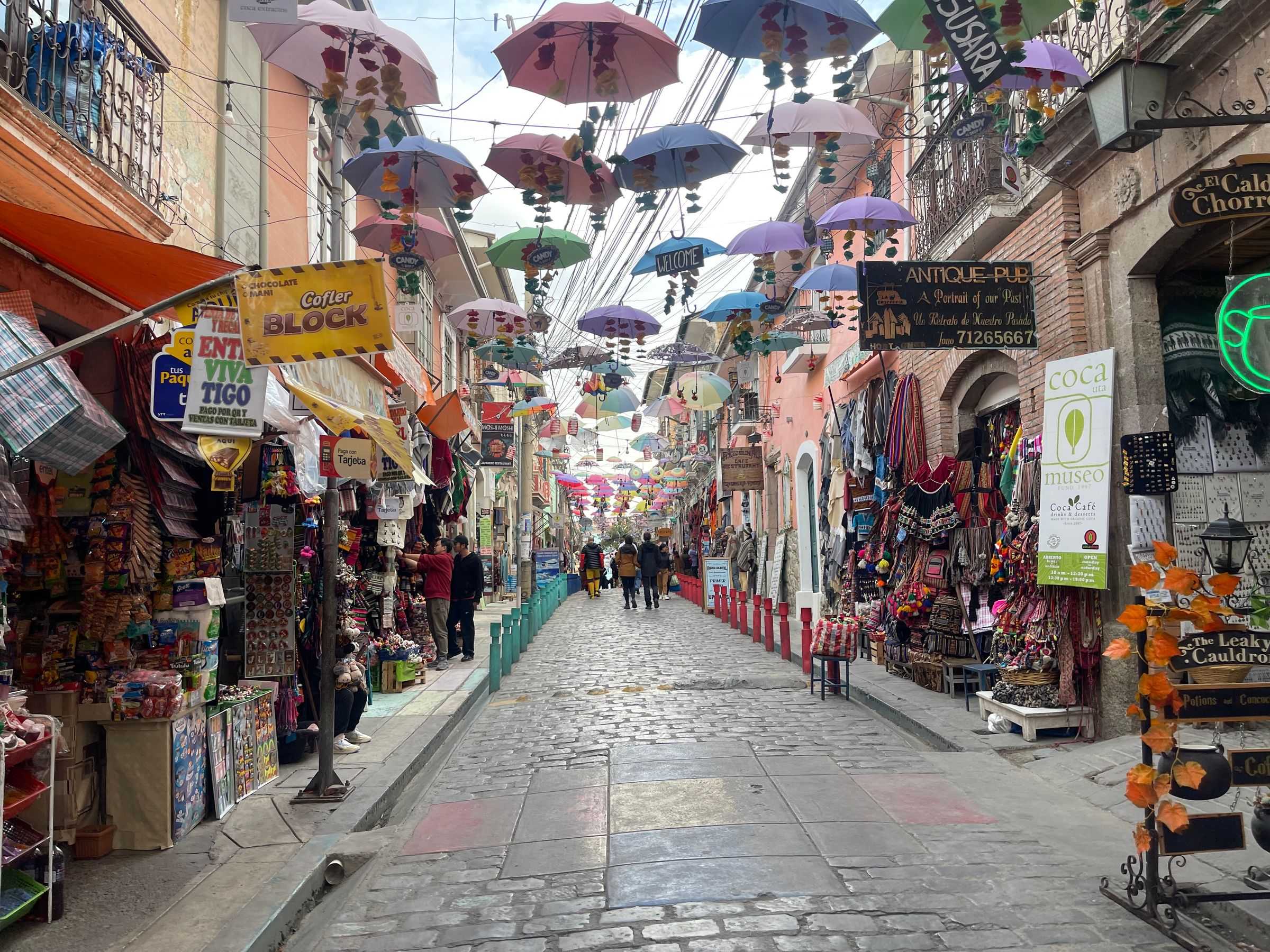
Witches' Market

The spiritual heart of Aymara La Paz

Market stalls selling Aymara ritual items: dried llama foetuses (Pachamama offerings), herbs, amulets and items for the ch'alla ceremony. Vendors are yatiris — Aymara spiritual specialists. A working market, not a tourist attraction. Treat it with the same respect as a place of worship. Ask before photographing anyone.

Local tip
Most active Tuesday–Thursday mornings. Walk Calle Linares from the San Francisco church uphill. Don't photograph vendors without asking.
💪
El Alto — La Ceja (Sundays)

Cholita Wrestling

Aymara women's theatrical wrestling

Lucha libre cholita: Aymara women in traditional pollera dress and bowler hats competing alongside male luchadors. Shows at venues in El Alto's La Ceja neighbourhood, Sundays ~5pm. Tickets ~$10–15 USD including transport from La Paz. The cholitas perform with real athletic skill — this is Aymara cultural identity reclaimed through spectacle.

Local tip
Book through your hotel or a La Paz tour operator. Multifuncional El Alto arena (Sundays) is the main venue. Show includes dramatic entrances, crowd interaction and storylines.
Full guide →
🏛️
El Alto — various streets

Cholet Architecture Tour

Freddy Mamani's indigenous maximalism

Architect Freddy Mamani has built 80+ "cholets" in El Alto since 2005 — portmanteau of "cholo" (urban indigenous person) and "chalet." Each mixes Tiwanaku iconography, Andean colour theory and 21st-century maximalism: ground floor commerce, event halls in the middle, penthouse above. The style has inspired dozens of imitators across the Andes.

Local tip
A local guide is essential — the best cholets are spread across El Alto and the context makes them comprehensible. Half-day tour available from most La Paz agencies (~$25–35 USD).
🌑
10km from city centre

Valle de la Luna

Moon-like eroded clay formations

A labyrinth of eroded clay and sandstone formations just 10km from the centre — the name comes from the lunar resemblance. 30-minute taxi ($3–5 USD). Walking circuit: 45–90 minutes depending on paths. Best in late afternoon when horizontal light deepens the shadows into something extraordinary.

Local tip
Easy half-day from La Paz. Combine with Mallasa (native species zoo, adjacent). Taxi from Zona Sur (~10 min) or from city centre (~30 min).
Full guide →
🍽️
La Paz inner city

Sopocachi

Best restaurants, cafés and culture

La Paz's creative and gastronomic neighbourhood on sloping Art Deco and colonial streets. Home to Gustu (the Bolivia restaurant that put Andean cuisine on the global map), Ali Pacha (Bolivian vegan), Suma Phayata (Andean), craft beer bars and the weekend artisan market. Walk uphill from Plaza Abaroa.

Local tip
Gustu (Calle 10 de Agosto 2255) requires booking weeks ahead — worth it. More accessible: Ali Pacha (same street) and the weekend artisan market at Plaza del Maestro.
— La Paz at 3,640m above sea level

Altitude: what actually happens.

The vast majority of travellers arrive fine. Problems occur when body signals are ignored in the first hours.

Arrive and rest
First 4–6 hours in La Paz: don't do anything demanding. Drop your bag, walk slowly, eat something light. Your body needs time, not pressure.
💧
3–4 litres of water per day
Dry air at 3,640m dehydrates faster than you notice. Coffee and alcohol dehydrate — avoid them the first 24–48 hours.
🫖
Coca tea
The local and genuine remedy. At every hotel, restaurant and market. Coca leaf is not cocaine — it is the sacred Andean leaf with millennia of use. It works.
🚠
Cable car, not stairs
La Paz has extreme gradients. Climbing stairs on your first morning leaves you breathless. Use the teleférico to gain altitude without physical effort.
💊
Diamox (if your doctor prescribes)
Acetazolamide accelerates acclimatisation. Consult your travel medicine doctor before departure. Not mandatory for most people.
⚠️
Warning signs requiring descent
Confusion, inability to walk in a straight line, chest pain, pink frothy cough. These are signs of serious altitude oedema — descend immediately and seek medical attention.
— Day trips from La Paz Bolivia

Everything within 3 hours.

Day trip
2h each way

Tiwanaku

Pre-Inca civilization · UNESCO

The foundational civilization of Aymara cultural identity, 72km from La Paz at 3,840m. Founded ~300 AD, at its peak ~700 AD — predating the Inca by 600 years. The Sun Gate (Puerta del Sol), carved from a single 10-tonne andesite block, aligns precisely with the winter solstice sunrise. The Akapana pyramid covers 6.5 hectares. Still the defining site of Bolivian national identity.

Tip
Depart 8am for the best light and fewer crowds. Hire a guide at the site entrance — much richer than going alone. Return by noon. Combine with Copacabana same day for an intense altiplano circuit.
Full guide →
Day trip
3.5h each way

Lake Titicaca & Copacabana

World's highest navigable lake · 3,812m

Copacabana sits on the Bolivian shore at 3,812m. The 1605 Basilica, the hillside Via Crucis and the reed boat dock. Day trip is possible but a 2-night stay unlocks the Isla del Sol circuit: sunrise from the island, walk the pre-Inca trail, afternoon return. Best done as part of an Altiplano itinerary (La Llama route).

Tip
Buses leave from La Paz cemetery terminal (Terminal del Cementerio) — not the main bus terminal. 3.5h on mostly paved road. Crossing the Tiquina Strait by barge is part of the experience.
Full guide →
Day trip
30 min each way

Valle de la Luna

Moon-like clay formations · 3,400m

A labyrinth of eroded clay formations 10km from the city centre at 3,400m — slightly lower than La Paz, which gives your lungs a small reprieve. 30-minute taxi ($3–5 USD). Walking circuit: 45–90 minutes. Best in late afternoon. One of the easiest half-days from La Paz.

Tip
Taxi from Zona Sur or city centre. Combine with Mallasa native-species zoo (adjacent). A good choice for the first day — lower altitude helps acclimatisation.
Full guide →
Day trip
1h to La Cumbre start

Death Road cycling

World's most famous mountain bike descent

La Cumbre (4,650m) to Coroico (1,760m) — a 2,890m descent in 70km, mostly on an unpaved cliff-edge road through cloud forest. All tours depart La Paz 7–8am, include full-suspension bikes and full-face helmets, and finish with lunch and pool. Return to La Paz by 7–8pm or stay 1–2 nights in subtropical Coroico.

Tip
Book through a reputable La Paz operator (Gravity Bolivia, Barracuda Biking, Altitude Bolivia). Full-suspension bikes and full-face helmets are non-negotiable. Confirm what's included: guide-to-rider ratio matters.
Full guide →
— Travel logistics

Getting there and getting around.

✈️

How to get to La Paz

  • Direct flights from: Miami (American Airlines), Buenos Aires (LATAM / Aerolíneas), Lima (LATAM), Bogotá (Avianca), São Paulo (LATAM)
  • From Europe: connect in Lima (~13h total) or Bogotá (~12h total)
  • Airport: El Alto (LPB), 4,065m — the world's highest commercial international airport
  • From airport: radio taxi ~$15 USD to Sopocachi (30 min) / Red cable car line from El Alto: $0.43
  • By land: buses from Puno (4h), Copacabana (3.5h), Santa Cruz (overnight, 12h), Uyuni (overnight, 10h)
🚠

How to get around La Paz

  • Mi Teleférico: 10 lines, 30km, 3 Bs ($0.43) per ride — buy rechargeable card at any station
  • Taxis: never hail from the street — call by phone or app (Safer Taxi, Easy Taxi) to avoid fake taxi scams
  • Micros: cheap (2 Bs) but hard without knowing routes — use the cable car instead
  • Walking: works in Sopocachi and historic centre, but gradients are extreme — use the teleférico to gain altitude effortlessly
— Climate and seasons

When to visit La Paz.

Jan
Feb
Mar
Apr
May
Jun
Jul
Aug
Sep
Oct
Nov
Dec
May – October
Dry season — the best
Clear skies, views of snow-capped peaks, roads and trails accessible. June includes the Aymara New Year (Willkakuti, 21 June) at Tiwanaku — one of Bolivia's most extraordinary rituals.
February – March
Oruro Carnival (UNESCO)
The wet season has one extraordinary exception: Oruro Carnival (UNESCO Intangible Heritage, 230km from La Paz) in February. A day trip from La Paz. The rest of the wet season has daily afternoon rain — the city works fine, rural roads less so.
January
Avoid for rural excursions
January is the wettest month. La Paz city works fine, but many roads toward Chaco, Cerrado and rural altiplano become impassable. Tiwanaku and Copacabana excursions remain possible.
— From the City of La Paz

Connected routes and ecosystems.

The City of La Paz is the natural starting point for five Love Bolivia routes and the Altiplano and Yungas ecosystems.
Nearby ecosystems
condor
Altiplano
Uyuni · Titicaca · La Paz
oso-andino
Yungas
Ruta de la Muerte · Coroico · Bosque nublado
Routes departing from La Paz
condor
14 · La Paz Circuit
El Cóndor
The La Paz-based route. Five days inside the most vertical city on earth: teleférico, El Alto market, cholet architecture, cholita wrestling, Tiwanaku at sunrise.
5–8 daysfrom €1,100
llama
01 · Altiplano
La Llama
The grand Altiplano circuit. Begins and ends in La Paz — covers the Salar de Uyuni, Lake Titicaca and the full Andean altiplano.
10–14 daysfrom €2,200
oso-andino
06 · Yungas
El Oso Andino
From La Paz to cloud forest in one day. The Death Road descent, Coroico valley, Taquesi Inca trail — all departing from La Paz.
5–8 daysfrom €1,290
tapir
07 · Madidi
El Tapir
From La Paz by road to Rurrenabaque, then by canoe up the Tuichi into Madidi — the most biodiverse national park on earth.
8–12 daysfrom €2,020
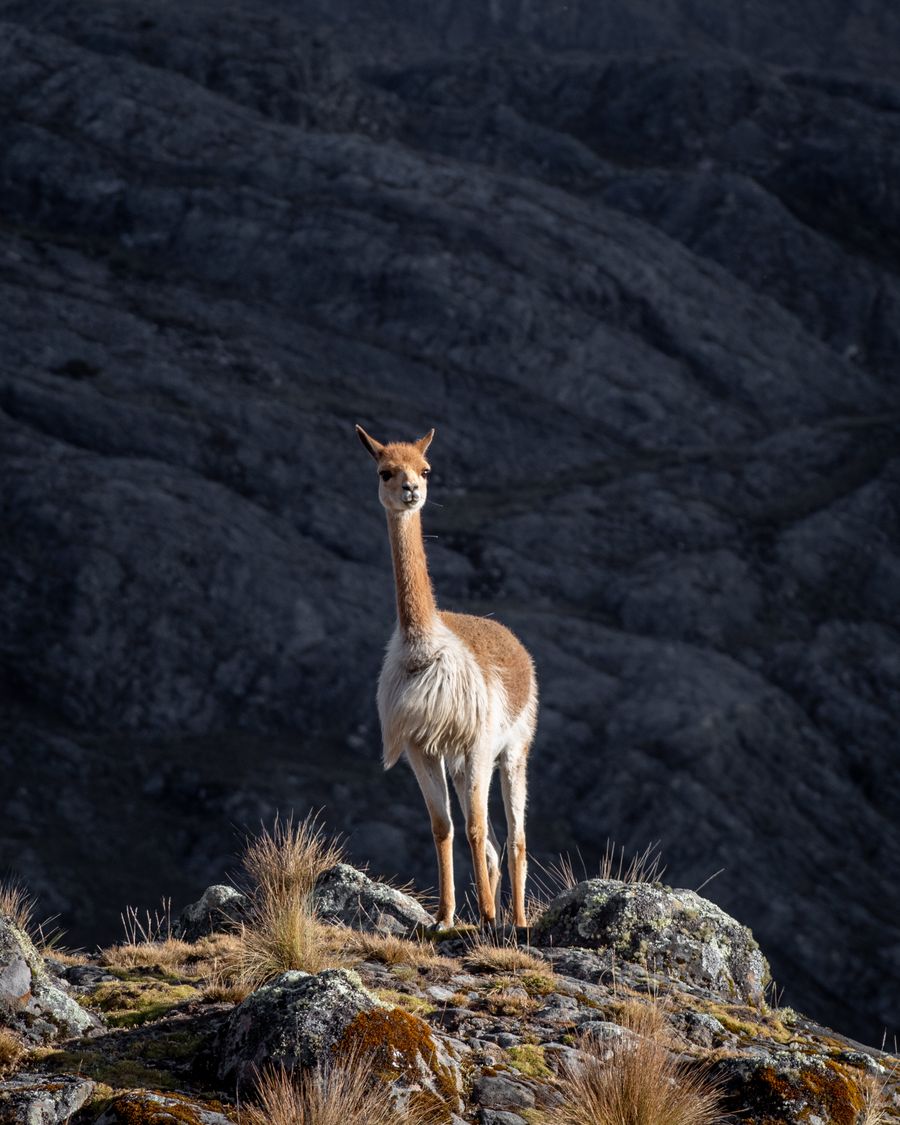
vicuna
16 · Extended Altiplano
La Vicuña
The full Andean traverse from La Paz: Sajama volcano (6,542m), Salar de Coipasa, Oruro Carnival, Potosí and Uyuni in one grand loop.
12–16 daysfrom €2,390
FAQ

Questions about La Paz.

The 9 most common questions about travelling to La Paz, Bolivia.

Plan your trip with us →

La Paz (official name: Nuestra Señora de La Paz) is Bolivia's administrative and executive capital at 3,640m. It is the world's highest administrative capital. The adjacent city El Alto (4,150m) sits on the altiplano above. Combined metro population: ~2.3 million. Not the constitutional capital — that is Sucre (2,750m).

La Paz has a mean altitude of 3,640m (11,942 feet). El Alto International Airport is at 4,065m — the world's highest commercial international airport. El Alto city is at 4,150m. La Paz's upscale Zona Sur neighbourhood is at approximately 3,200m. The altitude varies significantly by neighbourhood — descending from El Alto into the city bowl drops several hundred metres.

Mi Teleférico is the world's longest urban cable car network: 10 lines, 30km, connecting La Paz (3,640m) and El Alto (4,150m). Constructed 2014–2019. Carries over 300,000 passengers daily. Cost: 3 bolivianos (~$0.43 USD) per ride. Buy a rechargeable card at any station. The Red line (Central → El Alto) and Yellow line offer the most spectacular aerial views of the city.

The Mercado de las Brujas (Witches' Market) is a cluster of stalls on Calle Linares in La Paz's historic centre. It sells Aymara ritual items: dried llama foetuses (Pachamama offerings), herbs, amulets, coloured candy offerings and items for the ch'alla ceremony. Vendors are yatiris — Aymara spiritual specialists. It is a working market, not a tourist attraction. Treat it with respect. Ask before photographing.

Minimum 2 days: day 1 for acclimatisation + historic centre + Witches' Market; day 2 for Mi Teleférico + El Alto (cholets + cholita wrestling on Sundays). Add: +1 day for Tiwanaku; +1–2 days for Copacabana and Isla del Sol; +1 day for Death Road cycling. Most Bolivia itineraries allocate 3 nights at the start in La Paz.

"Cholets" are mixed-use buildings designed by architect Freddy Mamani Silvestre in El Alto since 2005. The word blends "cholo" (urban indigenous person) and "chalet." Each building combines pre-Columbian Tiwanaku iconography, Andean colour theory and 21st-century maximalism across multiple floors: ground floor commerce, event halls in the middle, penthouse residence above. Mamani has built over 80 buildings. The style now has dozens of imitators across Bolivia and Peru.

The dry season (May–October) is best: clear skies, snow-capped peak views, accessible roads. June is particularly good — the Aymara New Year (Willkakuti, 21 June) at Tiwanaku is extraordinary. Exception: Oruro Carnival (UNESCO, February–March, 230km from La Paz) is worth the wet season travel. Avoid January for rural excursions — roads become impassable. La Paz city works year-round.

Best in Sopocachi neighbourhood: Gustu (Calle 10 de Agosto 2255 — the Bolivia restaurant that put Andean cuisine on the world map; book weeks ahead), Ali Pacha (Bolivian vegan, same street), Suma Phayata (Bolivian-Andean, Calle Villazón). For authentic local food: Mercado Lanza (historic centre, api and pastel for breakfast), Mercado Rodríguez (Tuesday and Friday). Salteña (Bolivian baked pastry) is eaten 10am–12pm only — find them fresh at street stalls.

La Paz is generally safe in tourist areas (Sopocachi, historic centre, Zona Sur). Main risks: opportunistic theft in crowded markets and bus terminals; fake taxi scams. Always use radio taxis (called by phone or app — never hail from the street). The Mi Teleférico is safe and avoids street-level congestion. Most incidents involve smartphones or bags left visible. The same precautions as any South American capital city apply.

— Plan your La Paz & Bolivia trip

Ride the cable car.
Start in La Paz.

45 minutes. We design your La Paz and Bolivia itinerary with logistics, accommodation and a realistic budget.

$90 · €85 · Bs. 623

Book consultation → $90 · €85 · Bs. 623La Llama route →