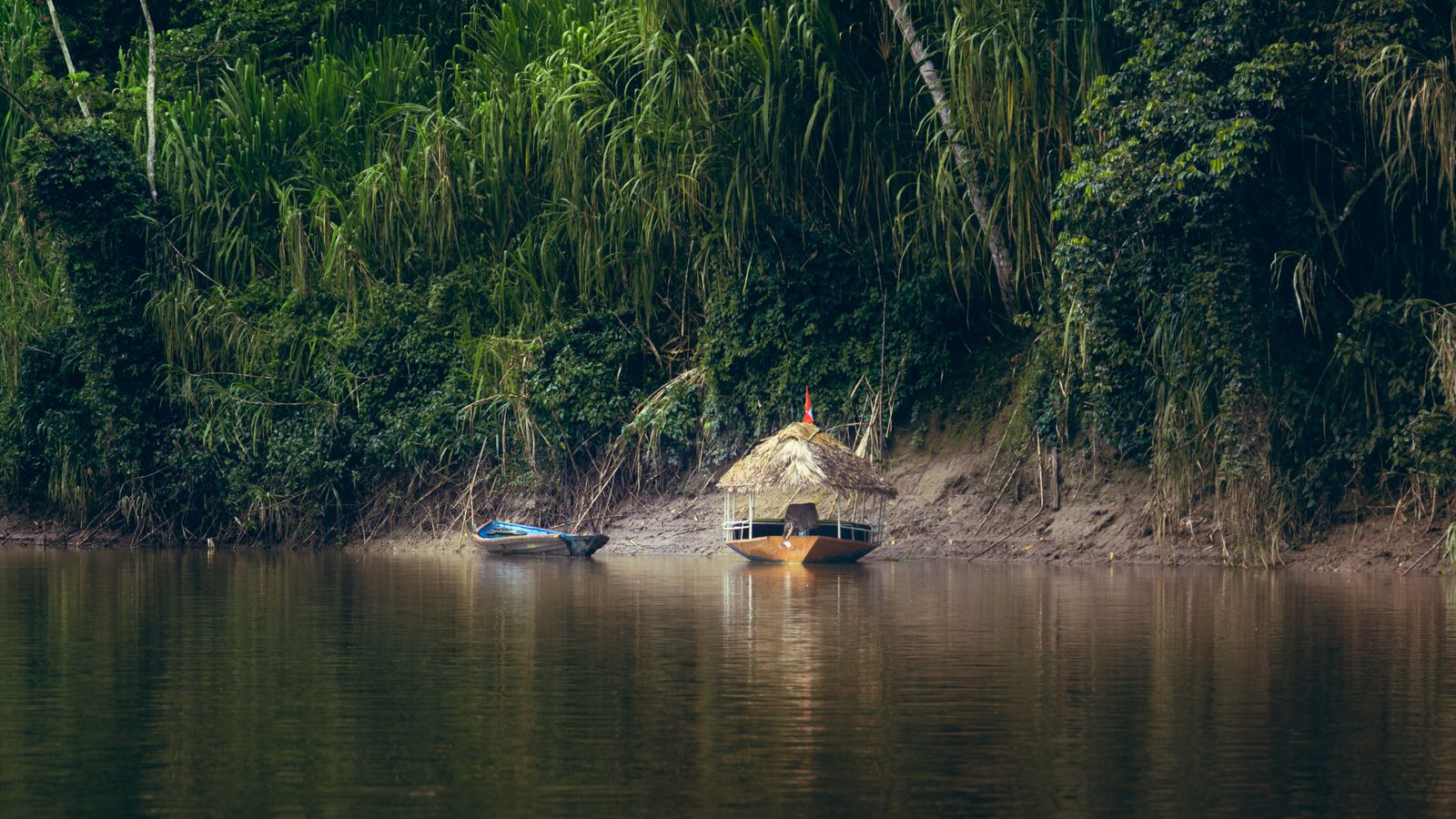
Three itineraries. One living ecosystem.
- Day 1: Rurrenabaque → 3h boat → pampas lodge arrival at noon
- Afternoon: first boat excursion — pink dolphins, first wildlife contact
- Day 2: Dawn excursion + morning + afternoon + night caiman tour
- Day 3: Final dawn + return boat → Rurrenabaque → La Paz flight
The minimum viable. 4–5 boat excursions. Enough to see the main species. Adding 1 more night changes everything.
- Days 1–3: Pampas — 6+ boat excursions · dawn · dusk · night tour
- Extra day allows exploring more remote channels and increasing species count
- Day 4: Return to Rurrenabaque · free afternoon · flight or continue to Madidi
The ideal pampas itinerary. Enough time to feel the ecosystem's rhythm and see virtually everything.
- Days 1–2: Pampas del Yacuma (flooded grassland wildlife)
- Day 3: Transit — night in Rurrenabaque
- Days 4–5: Serere Sanctuary or lower Madidi jungle
The perfect combination for maximum distinct habitats in one week. Pampas + jungle = two completely different Bolivias.
Six encounters you won\'t forget.
Pink River Dolphins
The bufeo colorado (Inia boliviensis) is Bolivia's endemic pink river dolphin — distinct from the Peruvian/Brazilian boto. Adults reach 2.5m and 180kg. They travel in family groups and approach boats voluntarily out of curiosity. On most tours in dry season, dolphins surface within the first hour. Some operators offer a supervised swimming interaction in a calm canal — dolphins choose whether to approach.
Anaconda Tracking
The green anaconda (Eunectes murinus) can reach 8m and 250kg — the world's heaviest snake. In dry season, anacondas bask on the riverbanks to regulate body temperature. Your guide spots them from the boat, then approaches on foot for a closer look. Responsible operators observe without handling. An anaconda basking at full length on a riverbank — sometimes multiple metres from the bow — is one of the most primal encounters available.
Night Caiman Tour
Every pampas programme includes a night spotlight boat tour: black caimans (up to 6m) and spectacled caimans, their eyes reflecting the guide's light in bright orange dots across the surface. At night the channels feel entirely different — the sheer number of crocodilians visible within 100m of the boat is unlike anything you'll experience in a zoo or any other ecosystem on earth.
Capybara Watching
The capybara (Hydrochoerus hydrochaeris) is the world's largest rodent — up to 1.3m and 65kg. In the pampas they live in family groups of 10–30 on the riverbank, entering the water when threatened. Dawn and dusk are the best times to see them in large numbers, often sharing the bank with caimans in striking proximity.
Giant River Otter
The giant river otter (Pteronura brasiliensis) is critically endangered globally with fewer than 5,000 individuals estimated in the wild. The pampas channels host family groups of 4–8. They are intensely vocal — their caterwauling alarm call carries across the water — and very territorial. A family at close range, standing upright on a bank to assess the boat, is one of Bolivia's top wildlife moments.
Pampas Birding
The pampas are not just about mammals. The bird diversity is extraordinary: jabiru storks (the largest flying bird in the Americas, up to 1.4m wingspan), roseate spoonbills, sunbittern, sungrebe, a dozen kingfisher species, macaws flying overhead, herons in eight species, and the extraordinary capped heron. A serious birder can count 100+ species in a single dawn excursion.
Six excursions a day. None the same.
Getting there and what to bring.
How to get to the Pampas del Yacuma
- Step 1: Fly La Paz to Rurrenabaque (25 min, ~$60–100 USD, TAM or Amaszonas)
- Step 2: Evening before: briefing with your operator in Rurrenabaque
- Step 3: Early morning (7am): motorised boat 3h down the Beni River to the Yacuma tributary
- Step 4: Additional 1h through the Yacuma channels to the pampas lodge
- Always book return flight with a 1-day buffer before any international connection
- Access also possible from Trinidad (Beni capital) — 4h by boat on the Mamoré and Yacuma rivers
What to bring to the pampas
- DEET 30%+ repellent — essential. Apply before each excursion and every 3h
- SPF 50+ sunscreen (sun reflects off the water — burns twice as fast)
- Wide-brim hat
- Light long-sleeved top and trousers (sun protection + insects)
- 8x42 binoculars minimum — pampas is open terrain, distances are long
- Camera with telephoto or powerful zoom — 200mm minimum for dolphins and birds
- Ziplock bags to protect equipment from boat spray
When to visit the pampas.
Connected routes and ecosystems.



— Gallery
Bolivia in focus
Real photography from our routes. No stock images. Hover to explore.



The dolphins are waiting.
Start here.
45 minutes. We design your pampas and Bolivian Amazon itinerary with responsible operators and a realistic budget.
$90 · €85 · Bs. 623