Skip to content
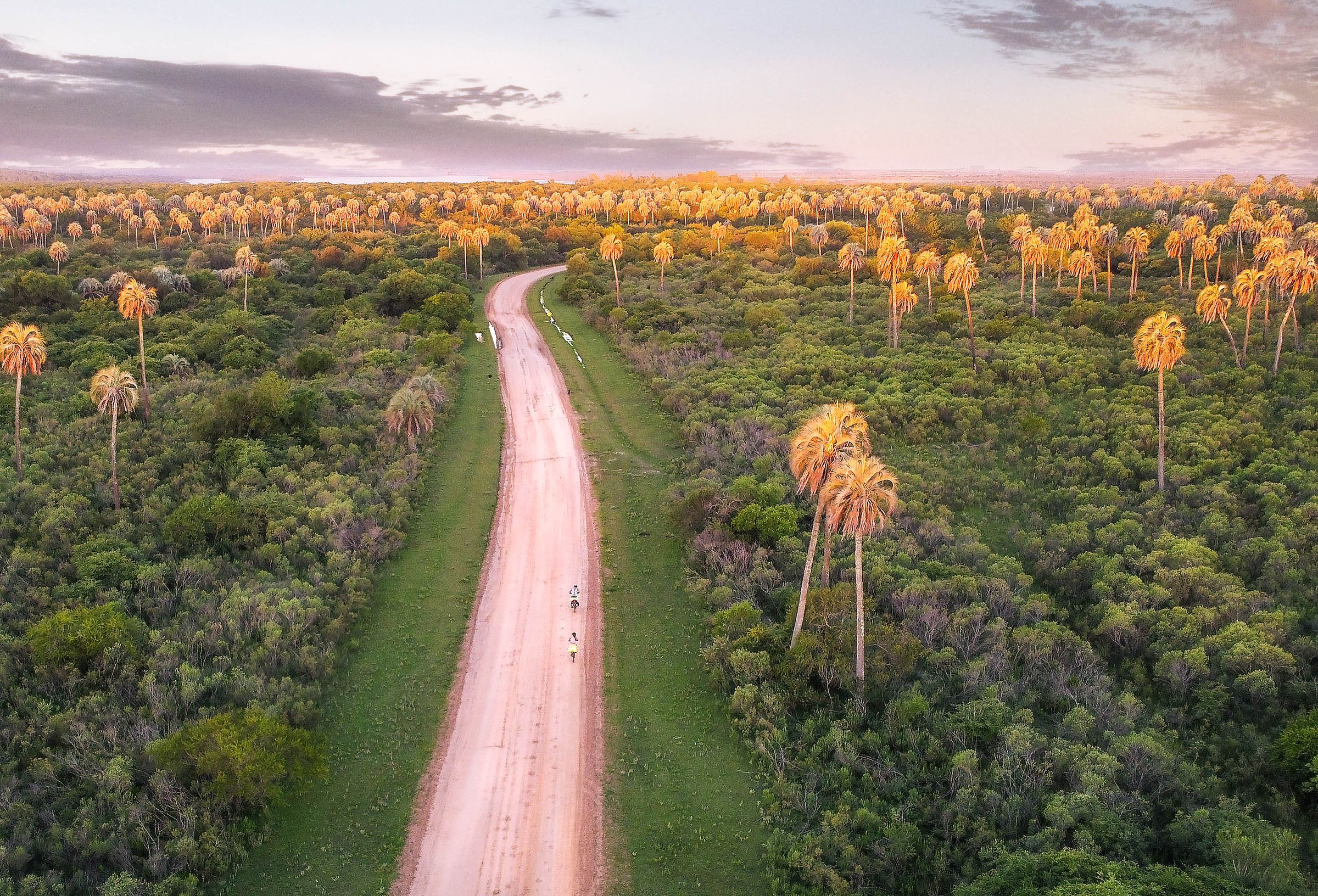
Vista aérea del Gran Chaco boliviano — camino de tierra en el bosque seco del Parque Nacional Kaa-Iya, Bolivia. Foto: Hector Perez / Pexels
jaguar
— National Park · Bolivian Gran Chaco34.411 km²

Kaa-Iya del
Gran Chaco.

Bolivia's largest national park. South America's second largest forest. Jaguars, giant armadillos and maned wolves in dry Chaco forest. Co-managed by the Izoceño-Guaraní people since 1995.

Area
34,411 km²
Ecosystem
Gran Chaco dry forest
Co-management
Izoceño-Guaraní
Mammals
60+ species
Birds
300+ species
Base
Camiri · Santa Cruz
— How long do you need

Three expeditions. One Chaco.

5 days
  • Days 1–2: Santa Cruz de la Sierra — briefing, logistics and equipment
  • Day 3: Transfer to Camiri (5–6h) + orientation with Guaraní guide
  • Days 4–5: Bañados del Izozog — first wildlife contact, waterholes, jaguar tracks

Chaco introduction. Ideal combined with Santa Cruz and Chiquitanía on the same trip.

8 days
  • Days 1–2: Santa Cruz — briefing + 4×4 logistics
  • Day 3: Transfer to Camiri · Charagua
  • Days 4–6: Park interior — waterholes, camera traps, jaguar tracking, giant armadillo signs
  • Days 7–8: Southern zone (Villamontes) — second wildlife corridor, Chaco fishing

The complete itinerary. Covers the main park zones and two distinct wildlife corridors.

12 days
  • Days 1–2: Santa Cruz + scientific briefing with field biologist
  • Days 3–5: Northern route — Charagua, Bañados del Izozog, dense forest
  • Days 6–9: Deep Kaa-Iya interior — camera trap installation, night tracking
  • Days 10–11: Villamontes + surubí fishing
  • Day 12: Return to Santa Cruz

The full expedition. For travellers who want Chaco in depth, with time to install and review their own camera traps.

— Things to do in Kaa-Iya National Park Bolivia

Six expedition experiences.

The Bolivian Chaco is not conventional tourism. It is tracking, patience and wildlife that exists nowhere else.

🐆
Río Parapetí · Bañados del Izozog

Jaguar Tracking

Camera traps · footprints · waterhole vigils

The Chaco jaguar population is distinct from Amazonian populations — adapted to the extreme dry forest and its prey base of peccaries, tapirs and caimans. Tracking is done on foot with a Guaraní guide: reading fresh prints in the mud near waterholes, identifying claw-marks on territorial trees, and reviewing camera-trap footage from stations set along known corridors. Direct sightings are possible but require patience and luck.

Field tip
The best tracking window is 5–8am at waterholes after a dry night. Guides from the CABI Guaraní organisation have mapped the jaguar corridors and waterhole sites for 30 years. Their knowledge of individual tracks and behaviour is irreplaceable.
🦔
Kaa-Iya interior · Chaco dry forest

Giant Armadillo Signs

World's largest armadillo · burrow detection

The giant armadillo (Priodontes maximus) is one of the most elusive mammals on earth — deeply nocturnal, solitary and rarely seen directly anywhere. Kaa-Iya is one of its last strongholds. What you will find: fresh burrows (30cm diameter, up to 5m deep), with loose excavated earth at the entrance indicating recent activity. Camera traps set at active burrows give the best chance of a visual record. The scale of the burrow is startling when you see one in person.

Field tip
Burrow identification is the primary skill. Your Guaraní guide knows which burrows are active and which are abandoned — fresh red earth versus weathered grey earth at the entrance is the key indicator. Install your camera trap at the entrance the night you arrive: armadillos return to active burrows regularly.
🐺
Chaco–cerrado transition zone

Maned Wolf

South America's tallest canid

The maned wolf (Chrysocyon brachyurus) is not a true wolf or fox — it is its own genus, with stilt-like legs evolved to see over tall grass. It lives in the transition zone between Chaco dry forest and cerrado savanna on Kaa-Iya's eastern edge. Primarily nocturnal and crepuscular: best sightings at dusk, walking open edges between forest and grassland. Diet: lobeira fruit, rodents, reptiles, birds — omnivorous and unique.

Field tip
Drive slowly along open tracks at dusk between the forest and any grass clearing — the maned wolf often uses these edges. Its red coat blends with the warm light of sunset. Early morning is the second-best __win. Binoculars are essential in the open cerrado habitat.
🏹
Charagua · Isoso territory

Izoceño-Guaraní Culture

First indigenous co-managed park in the Americas

The Izoceño-Guaraní have inhabited the Isoso territory — the river corridor of the Parapetí — for centuries. In 1995 they became the first indigenous people in the Americas to propose and co-manage their own national park. The CABI organisation (Capitanía del Alto y Bajo Isoso) controls access, runs wildlife monitoring, and employs local rangers. A visit to Charagua — the Guaraní cultural capital — and a meeting with community guides is an integral part of any Kaa-Iya itinerary.

Field tip
Request a community meeting through your operator when booking. The Guaraní guides do not just navigate the terrain — they carry generational ecological knowledge of jaguar behaviour, plant use and seasonal patterns that no visiting biologist can replicate. This relationship is the reason Kaa-Iya's wildlife has survived.
🦅
Kaa-Iya · Izozog wetlands · Villamontes

Chaco Birding

300+ species · Chaco endemics · greater rhea

Over 300 bird species inhabit Kaa-Iya and the surrounding Chaco. Endemic and near-endemic Chaco specialities: bare-faced ibis, crowned eagle, greater rhea, red-legged seriema, spot-winged falconet. In the Bañados del Izozog wetlands: jabiru stork, roseate spoonbill, tiger-herons, hundreds of waders. Dawn walks in the dry forest canopy: undulated tinamou, Chaco owl, many woodpeckers. The Bañados are a seasonal bird concentration point rivalling any wetland in South America.

Field tip
The Bañados del Izozog are the highlight: a seasonal wetland system inside Kaa-Iya where thousands of birds concentrate during the dry season as surrounding areas dry out. Dawn boat or 4×4 excursions in the Bañados (July–September) are among the best birding available anywhere in South America.
🌙
Kaa-Iya interior

Chaco Night Safari

Ocelot · armadillo · Chaco peccary · vipers

The Chaco comes alive at night in a way the daytime conceals entirely. Nocturnal spotlight drives: ocelot, margay, common and giant armadillos, pampas fox, chaco peccary (Catagonus wagneri — a species thought extinct until 1975 and rediscovered in the Chaco), red brocket deer, various species of Bothrops viper. The Chaco peccary is one of the rarest large mammals on earth and is a genuine target of night drives in Kaa-Iya.

Field tip
Night drives require a vehicle with a powerful external spotlight and a guide who knows the network of tracks inside the park. Drive slowly, stop often, scan both the track and the forest edge. Cold dry-season nights (June–July) are the most productive — animals stay active longer in cool temperatures.
— What nobody explains before you go

The Gran Chaco: how it works.

The world's largest dry forest works differently from the jungle or the pantanal. Understanding it is the difference between a frustrating expedition and a transformative one.

🌵
What is the Gran Chaco
The Gran Chaco is South America's second largest forest after the Amazon — 1.1 million km² across Bolivia, Argentina, Paraguay and Brazil. Bolivia's Chaco covers ~250,000 km². It is a tropical dry forest with marked seasonality: a wet season (December–March) and an extreme dry season (May–October) with temperatures reaching 49°C in summer.
💧
The waterhole: the key to everything
In dry season, water disappears from the Chaco except at specific points — natural waterholes, permanent watercourses, bañados. All large mammals converge on these. An active waterhole in August can host jaguars, tapirs, peccaries, deer and armadillos within 24 hours — animals that would otherwise never meet. Your guide knows which are active.
📸
How camera traps work
Camera traps are infrared motion sensors installed at known crossing points — near waterholes, on trail intersections, in front of armadillo burrows. They trigger on movement and heat. In Kaa-Iya they have been in use since the 1990s. Indirect camera-trap sighting is the standard method for jaguar and giant armadillo — not direct observation.
🌙
Night vs. day in the Chaco
The vast majority of Chaco mammals are nocturnal or crepuscular. Daytime is for tracking (prints, burrows, marks). Night is when animals move. Spotlight drives in a vehicle with an external beam are the most effective method for ocelot, maned wolf, Chaco peccary and armadillos.
🌡️
The dry season effect
The dry season (May–October) not only makes roads passable — it transforms animal behaviour. Without rain, water concentrates. Animals must travel further to drink, increasing activity at water points. Jaguars defend access to waterholes. Camera traps in August–September record passing rates up to three times higher than in wet season.
⚠️
Realistic expectations
Kaa-Iya is an expedition destination, not a conventional photographic safari. Jaguars are tracked but rarely seen directly. The giant armadillo is almost never seen in person — a camera-trap result is the expected outcome. What is routine: fresh prints, active burrows, exceptional birding, nocturnal ocelots, and the deep experience of the world's largest dry forest.
— Key zones of Kaa-Iya National Park Bolivia

Four zones. One forest.

Zone
North zone · 2h from Camiri

Bañados del Izozog

Seasonal wetlands · highest wildlife density

The Bañados del Izozog are a permanent wetland system inside Kaa-Iya fed by the Parapetí River — the only significant water source in this part of the Chaco. In dry season (July–September) they become one of the most remarkable wildlife concentration zones in South America: thousands of birds, black caimans, capybaras, giant otters and the full suite of large mammals visiting to drink. This is the recommended first zone for any Kaa-Iya expedition.

Tip
July–September is peak season in the Bañados. The main channel narrows as water drops — wildlife becomes visible from the banks. Dawn boat excursions (where permitted) are spectacular. Bird count for a single morning here regularly exceeds 80 species.
Zone
Core jaguar zone

Río Parapetí Corridor

Jaguar territory · primary dry forest

The Río Parapetí and its gallery forest form the primary jaguar corridor of Kaa-Iya — the river provides permanent water in an otherwise waterless landscape, creating a linear concentration of all prey species and therefore the highest jaguar activity. Tracking walks along the riverbanks: fresh prints in mudflats, territorial scrapes, scent marks on fig trees. Camera traps set along the riverbank record the highest jaguar pass-through rates in the park.

Tip
Access to the deep Parapetí corridor requires the full permit package and a minimum 3-night commitment — it is too far from Camiri for a day trip. The reward: the densest jaguar habitat in Bolivia, with supporting cast of tapir, white-lipped peccary, giant anteater and all the Chaco waders.
Zone
Northern gateway · cultural base

Charagua · Guaraní territory

Guaraní capital · park entry point

Charagua is the main Guaraní cultural centre and the northern gateway to Kaa-Iya. In 2016 it became the first autonomous indigenous municipality in Bolivia under a new constitutional framework — the Guaraní govern themselves here. The CABI organisation has its offices in Charagua: this is where permits are arranged, guides contracted and the Guaraní conservation programme is explained in person. A 2-hour meeting here before entering the park transforms the experience.

Tip
Arrange an overnight in Charagua before entering the park. An evening with CABI staff and community guides gives context that no written guide provides. The mission church in nearby Charagua Pueblo (1760s, Jesuit period) adds historical depth to the Guaraní cultural visit.
Zone
Southern gateway · Tarija dept.

Villamontes · Southern Chaco

Southern gateway · fishing capital of Bolivia

Villamontes (population ~30,000) is the southern gateway to Kaa-Iya and the self-declared fishing capital of Bolivia. The Pilcomayo River here holds surubí, dorado, sábalo and other Chaco fish in extraordinary numbers — the Fiesta del Pescado (August) celebrates this. The southern Chaco around Villamontes is drier and more open than the north: excellent for maned wolf, pampas fox and Chaco peccary sightings, and a distinct dry forest avifauna.

Tip
Villamontes is easier to access than Camiri from Tarija (3h by bus) or Santa Cruz (8–10h). Combining north (Camiri) and south (Villamontes) in a single loop gives the full Kaa-Iya picture. The August Fiesta del Pescado is one of Bolivia's most authentic regional festivals — worth timing a visit around.
— Expedition logistics

Getting there and getting in.

🚗

How to get to Kaa-Iya National Park

  • Main base: Santa Cruz de la Sierra — direct flights from all Bolivian capitals and from Madrid, Buenos Aires, Lima, São Paulo.
  • Santa Cruz to Camiri: bus 5–6h (daily service) or private/hired vehicle.
  • Charagua (northern gate): 3h from Santa Cruz on paved road to the junction, then unpaved.
  • Villamontes (southern gate): 3h from Tarija by bus; 8–10h from Santa Cruz.
  • Inside the park: 4×4 vehicles only — no paved roads. Dirt tracks passable in dry season (May–October) only.
  • SERNAP permit: arrange in advance from Santa Cruz or Camiri — mandatory for access to the park interior.
🧭

How to get around Kaa-Iya

  • 4×4 vehicle with two spare tyres, jack and tools — essential and non-negotiable.
  • Self-sufficient fuel for 2–3 days: no petrol stations inside the park or on internal access tracks.
  • Authorised Guaraní guide (contracted through CABI in Charagua): mandatory for interior zones.
  • GPS with offline maps of the area: mobile signal is zero inside the park.
  • Radio communication (optional but strongly recommended for expeditions of 5+ days).
  • Drinking water for 3 days minimum: 5L/person/day in summer, 3L/person/day in winter.
— Climate and seasons in the Gran Chaco

When to visit Kaa-Iya.

Jan
Feb
Mar
Apr
May
Jun
Jul
Aug
Sep
Oct
Nov
Dec
May – August
Dry season — the best
Temperatures 20–32°C (tolerable), 4×4 tracks passable, wildlife concentrated at waterholes, peak birding at the Bañados del Izozog. August is the peak wildlife concentration month at water sources. July and August also coincide with the Fiesta del Pescado in Villamontes.
January – February
Avoid: extreme heat + flooding
Temperatures regularly exceed 45°C and sometimes 49°C. Park interior tracks flooded and impassable. Expedition conditions that make park access unnecessarily difficult and potentially dangerous. Do not visit in these months.
September – October
Transition: heating up
Still passable but warming quickly. Wildlife remains active at waterholes through late September. October can be very hot (38–42°C) but tracks remain dry. A viable last-resort window if May–August is not possible.
— From Kaa-Iya

Connected routes and ecosystems.

Kaa-Iya is the central point for four Love Bolivia routes and the heart of Bolivia's Gran Chaco and Cerrado.


Connected ecosystems
jaguar
Chaco
Kaa-Iya · Jaguar · Tatú carreta · Guaraní
lobo
Cerrado
Noel Kempff · Lobo de crin · Sabanas
Routes through Kaa-Iya
jaguar
03 · Pantanal · Chaco
El Jaguar
Track the jaguar through Kaa-Iya, the Pantanal and Chiquitanía. Camera traps, paw-print identification and community guides in the largest national park in Bolivia.
8–12 daysfrom €1,930
tatu
17 · Gran Chaco
El Tatú Carreta
The giant armadillo — one of the most elusive animals on earth — is the flagship of the Bolivian Chaco. Expedition-style through Kaa-Iya, crossing Guaraní territory to Villamontes.
8–11 daysfrom €1,750
lobo
11 · Cerrado · Chaco
El Lobo de Crin
The maned wolf — Bolivia's most elusive large mammal — roams the cerrado savannas bordering the Chaco. This route crosses the second largest tropical biome on earth.
10–14 daysfrom €2,200
caiman
12 · Pantanal ext.
El Yacaré
Extended Pantanal circuit through Bolivia's southeast. Two national parks, the Pantanal border with Brazil and caiman densities that rival anywhere on earth.
8–12 daysfrom €1,930
FAQ

Questions about Kaa-Iya.

The 9 most common questions about Kaa-Iya National Park and the Bolivian Gran Chaco.

Plan your expedition with us →

Kaa-Iya del Gran Chaco is Bolivia's largest national park (34,411 km²) and the world's largest protected Chaco area. It was the first national park in the Americas proposed and co-managed by an indigenous people — the Izoceño-Guaraní, through their organisation CABI, since 1995. It holds one of the densest jaguar populations in Chaco habitat, plus giant armadillo, maned wolf, giant anteater, tapir, guanaco and 300+ bird species.

The main gateway is Camiri (Santa Cruz department), reachable by bus from Santa Cruz in 5–6 hours or from Sucre in 4–5 hours. From Camiri, a 4×4 vehicle is required to access the park interior. Charagua (2h from Camiri) is the northern cultural gateway and Guaraní headquarters. Villamontes (Tarija) is the southern gateway. Access to the park interior requires advance SERNAP permits and an authorised Guaraní guide — there is no tourist infrastructure inside the park.

Direct jaguar sightings in Kaa-Iya are possible but not guaranteed — they require an expert guide, patience and favourable conditions (early morning at waterholes after a dry night). What is reliably found: fresh prints in the mud near waterholes, claw marks on territorial trees, and camera-trap records from stations on known corridors. The Chaco jaguar population is genetically distinct from Amazonian populations. Best tracking window: May–September, dry season.

The giant armadillo (Priodontes maximus) is the world's largest armadillo — up to 1.5m long and 60kg. It is one of the most elusive mammals on earth: deeply nocturnal, solitary and almost never seen directly. Kaa-Iya is one of its last strongholds. The primary evidence is active burrows (30cm diameter, up to 5m deep) with fresh excavated earth at the entrance. Camera traps set at active burrows give the best chance of a visual record.

The maned wolf (Chrysocyon brachyurus) is South America's tallest canid — not a true wolf or fox, but its own genus. Its stilt-like legs evolved to see over tall cerrado and Chaco grass. It lives in the transition zone between Chaco dry forest and cerrado savanna on Kaa-Iya's eastern edge. Primarily nocturnal and crepuscular: best sightings at dusk along open tracks between forest and grassland. Its striking red coat and black legs make it unmistakable when seen.

In 1995 the Izoceño-Guaraní became the first indigenous people in the Americas to propose and co-manage their own national park. Their organisation CABI (Capitanía del Alto y Bajo Isoso) controls park access, runs wildlife monitoring, employs local rangers and designs visitor programmes. This co-management model has been cited by the IUCN as a benchmark for indigenous conservation globally. Every visit to Kaa-Iya requires coordination with CABI and directly funds Guaraní conservation efforts.

May to August is best: temperatures 20–32°C (bearable), roads dry and passable, wildlife concentrated at waterholes, peak birding at the Bañados del Izozog. August is the month of maximum wildlife concentration at water sources — the most productive for jaguar tracking. Avoid January and February: temperatures exceed 45°C, roads flood and are impassable. September is still good but warming. October through April is increasingly difficult.

The Gran Chaco is South America's second largest forest after the Amazon — 1.1 million km² across Bolivia, Argentina, Paraguay and Brazil. Bolivia's Chaco covers ~250,000 km² in Santa Cruz, Chuquisaca and Tarija departments. It is a tropical dry forest with extreme seasonality: a wet season (December–March) and a severe dry season (May–October) with temperatures reaching 49°C. Despite the extremes, it holds an extraordinary density of large mammals: jaguar, tapir, giant anteater, guanaco, both peccary species, giant armadillo and puma all coexist here.

Kaa-Iya is an expedition destination with no tourist services inside. Essential: a 4×4 vehicle with two spare tyres, jack and tools; self-sufficient fuel for 2–3 days; drinking water for 3 days minimum (5L/person/day in summer); DEET 30%+ repellent (ticks, mosquitoes, kissing bugs); first aid kit with antivenom; full camping equipment. Strongly recommended: GPS with offline maps, radio communication for groups of 5+ days, long-sleeved shirts and trousers for thorn scrub. Your Guaraní guide will advise on the specific kit needed for your zone and season.

— Plan your Kaa-Iya & Gran Chaco expedition

The jaguar is waiting.
In the Chaco.

45 minutes. We design your Kaa-Iya expedition with SERNAP permits, certified Guaraní guides, 4×4 logistics and a realistic budget.

$90 · €85 · Bs. 623

Book consultation → $90 · €85 · Bs. 623El Jaguar route →