Skip to content
Santa Cruz de la Sierra Bolivia — la ciudad más grande del país, hub del oriente boliviano
jaguar
— City · Bolivia's economic capital · 416m

Santa Cruz
de la Sierra.

Bolivia's largest city. 416m, subtropical climate, 2.5 million people. The eastern Bolivia hub — everything departs from here: Chiquitanía, Pantanal, Chaco, Noel Kempff.

Altitude
416 m
Metro population
~2.5 M
Airport
Viru Viru (VVI)
Climate
24–30°C year-round
Chiquitanía
3h by car
Noel Kempff
2h by charter plane
— Things to do in Santa Cruz Bolivia

Six reasons to stay in SCZ.

City centre

Plaza 24 de Septiembre

The heart of Santa Cruz

Plaza 24 de Septiembre is the social and architectural centre of Santa Cruz — a large shaded square flanked by the Metropolitan Cathedral (construction 1838–1916), the government palace and the arcaded facades of historic buildings. The plaza is lively at all hours: breakfasters at 7am, office workers at midday, families with children at dusk. The evening paseo around the plaza is a Santa Cruz institution.

Local tip
The Cathedral's interior is modest by Bolivian standards — the real interest is the 19th-century colonial architecture of the surrounding facades. The best view of the plaza is from the roof terrace of the Hotel Cortez (1st floor access, ask the reception).
🦋
10 min from centre

Biocentro Güembé

Tropical butterfly sanctuary and pools

Biocentro Güembé is a private nature reserve 10km from central Santa Cruz — tropical gardens, the largest butterfly house in Bolivia (500+ species), swimming pools fed by natural springs, birdwatching trails and a restaurant. It is the most complete nature experience available without leaving the city area. Popular with families.

Local tip
Arrive at opening (8am) for the butterflies — they are most active in the morning cool. The birdwatching trail produces 30–40 species in two hours. Book the restaurant for lunch (excellent regional cuisine — try the locro de maíz).
🌿
Northeast of the city

Jardín Botánico

550 hectares of dry forest and Chiquitano ecosystem

Santa Cruz's Jardín Botánico (550ha) is one of the largest botanical gardens in South America — but more wild forest than manicured garden. Walking trails through the cerrado and Chiquitano dry forest transition zone produce excellent birding: parrots, toucans, hawks, and dozens of flycatcher species. The forest is primary in the interior zones.

Local tip
Go early and stay at least 3 hours — the forest takes time. Bring binoculars (8x42 minimum). The wetland zone in the southwest of the garden is the richest for birds. Weekdays are almost empty — weekends have more visitors.
🥩
City centre · Calle Quijarro

Mercado Los Pozos

The gastronomic heart of Santa Cruz

Mercado Los Pozos is the most important traditional market of Santa Cruz — a labyrinth of stalls selling tropical fruits, regional cheeses, river fish, dried meats, chicha, spices and cooked food. The inner food court opens at 6am. The best breakfast in the city: api con pastel, majadito, or rice with chicken (arroz con queso).

Local tip
Arrive between 7–9am for the best atmosphere — vendors are at peak activity, the food is freshest and the light through the market roof is extraordinary. Try the majadito (dried beef with rice, egg and banana) — the definitive Santa Cruz breakfast.
🌅
30 min from centre

Lomas de Arena

Natural sand dunes in tropical forest

Lomas de Arena is a natural reserve 17km from central Santa Cruz — an improbable landscape of 30-metre sand dunes surrounded by tropical forest, on the edge of a lagoon that fills with flamingos in the wet season. No entrance fee, accessible by taxi or rental car. Sunset from the top of the dunes over the lagoon is a Santa Cruz classic.

Local tip
Best in dry season (May–October) when the dunes are fully accessible and the lagoon paths are dry. Wet season: the water level rises, making some areas inaccessible but adding birdlife. Bring sun cream and water — the dunes have no shade.
🍖
City-wide

Cruceño Gastronomy

Bolivia's richest regional cuisine

Santa Cruz has the most distinctive regional cuisine in Bolivia — tropical, meat-heavy, direct. Classics: majadito (dried beef with rice and egg), locro de maíz (corn soup), cuñapé (yuca cheese bread), patasca (tripe soup), sonso (yuca and cheese fritter), and the asado de res — the finest grilled beef in Bolivia. The city also has the country's best ice cream (helado artesanal de pacay, cacao and cupuazú).

Local tip
The best cruceño cuisine is not in restaurants but in the homes of locals and at the market. For a restaurant experience, try Kiosko de los Milagros (Plaza Amor de Dios) or El Aljibe (Equipetrol) for refined regional dishes. The Zona Norte (Las Palmas, Equipetrol) has the best nightlife and restaurant scene.
— From Santa Cruz de la Sierra

All of eastern Bolivia starts here.

Day trip
2–2.5h

Samaipata & El Fuerte

Pre-Inca fortress · UNESCO · cloud forest

El Fuerte de Samaipata — carved from a single massive sandstone rock by the Chané culture (600 AD) — is Bolivia's most enigmatic archaeological site. UNESCO World Heritage. The town of Samaipata sits at 1,650m in a valley of cloud forest: excellent birdwatching, waterfalls, and a bohemian expat community. A complete day trip or 2-night stay.

Tip
Samaipata is the best Santa Cruz day trip by a large margin. Hire a local guide at El Fuerte for the full archaeological context. Combine with a trail walk in the cloud forest and dinner in town.
Full guide →
Day trip
3h to San Javier

Chiquitanía Circuit

6 Jesuit missions · UNESCO 1990

The Jesuit mission circuit begins just 3 hours from Santa Cruz. A long weekend covers the two closest missions (San Javier and Concepción). The full circuit of all six missions requires 7–10 days. The historic Ferrobus to San José de Chiquitos departs twice weekly.

Tip
The mission circuit is the most important cultural route from Santa Cruz. Plan minimum 3 days for a meaningful experience. The Ferrobus adds an essential railway dimension — don't fly when the train is available.
Full guide →
Day trip
1h by plane to Puerto Suárez

Pantanal & Otuquis

Bolivia's Pantanal wetlands · jaguar

Otuquis National Park is Bolivia's Pantanal — accessed from Puerto Suárez (1h flight or 4h bus from Santa Cruz). Giant otters, capybaras, caimans, jaguars. The Bolivian Pantanal is far less visited than Brazil's, with comparable wildlife density and a fraction of the tourism pressure.

Tip
Fly to Puerto Suárez rather than take the bus — the 4-hour road is poorly maintained in wet season. A 3-night programme at a Puerto Suárez lodge (pantanal boat tours) is the minimum for the Pantanal experience.
Full guide →
Day trip
2h by charter plane

Noel Kempff Mercado

UNESCO · waterfalls · cerrado

Noel Kempff Mercado National Park (15,234 km², UNESCO 2000) is accessed exclusively by charter plane from Santa Cruz — 2 hours to Flor de Oro or Los Fierros. Bolivia's most isolated and spectacular park: El Encanto waterfall (60m), giant otters, cerrado wildlife. A Santa Cruz specialist operator is essential.

Tip
Noel Kempff requires advance planning — book minimum 4 weeks ahead for the charter and guides. The park receives fewer than 500 visitors per year. Your Santa Cruz operator handles permits, charter coordination and lodge booking in one package.
Full guide →
— Travel logistics

Getting there and getting around.

✈️

How to get to Santa Cruz

  • Direct international flights: Miami (American Airlines), Buenos Aires (LATAM/Aerolíneas), Lima (LATAM), Bogotá (Avianca), São Paulo (LATAM/GOL), Madrid (Air Europa, seasonal)
  • Viru Viru International Airport (VVI) — 15km from centre, taxi ~$8–12 USD, 20 min
  • Domestic flights from La Paz (55 min), Cochabamba (45 min), Trinidad (50 min), Sucre (1h), Rurrenabaque (1h)
  • Bus from La Paz: ~12h (overnight sleeper bus, comfortable)
  • Bus from Cochabamba: ~8h
  • VVI airport is modern and efficient — good international and domestic connections
🚕

How to get around Santa Cruz

  • Taxi: most convenient. Conventional taxi (agree price first) or Uber/InDriver app (~$3–6 USD anywhere)
  • Micro (city bus): cheap but complex without local knowledge. Price ~2 Bs
  • Car rental: recommended for Samaipata or Chiquitanía excursions. Available at VVI (~$40–80 USD/day)
  • The city is organised by ring roads (primer, segundo anillo) and cardinal directions — all neighbourhoods defined this way
  • Zona Norte (Las Palmas, Equipetrol): best restaurants, hotels and shops
  • Centro: Plaza 24 de Septiembre, markets, colonial architecture
— From Santa Cruz de la Sierra

Ecosystems and routes from SCZ.

Ecosystems
mision-jesuita
Chiquitanía
Misiones UNESCO · Bosque seco · Aves
caiman
Pantanal
Otuquis · San Matías · Jaguar
tatu-carreta
Cerrado
Noel Kempff · Armadillo · Lobo de crin
Love Bolivia Routes
jaguar
03 · Pantanal/Chaco
El Jaguar
Track the jaguar through Kaa-Iya, the Bolivian Pantanal and the Chiquitanía.
8–12 daysfrom €1,930
oso-hormiguero
10 · Chiquitanía
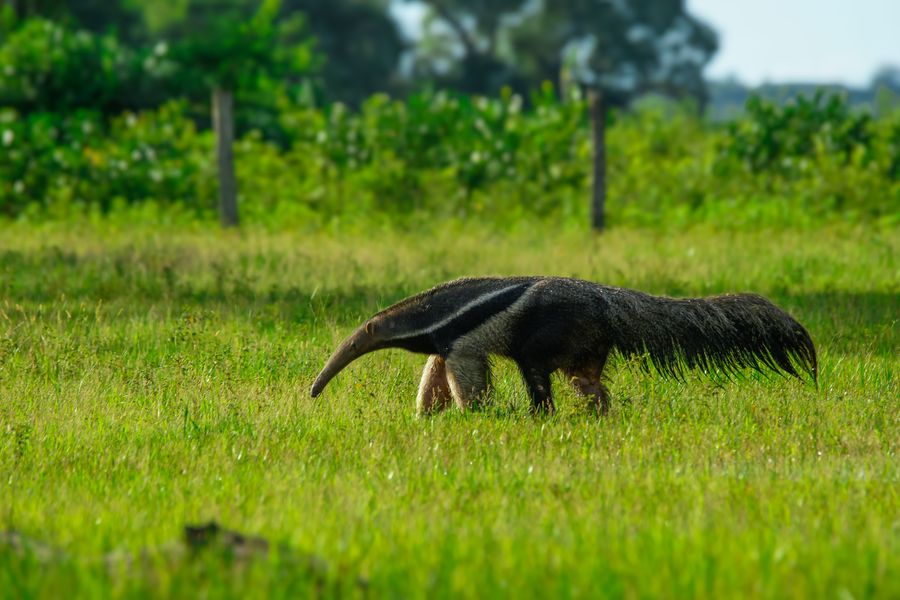
El Oso Hormiguero
The complete Chiquitanía circuit — all 6 missions plus Noel Kempff Mercado.
10–14 daysfrom €2,450
lobo
11 · Cerrado
El Lobo de Crin
The cerrado circuit — Noel Kempff, maned wolf, giant anteater and Bolivia's dry forest.
10–14 daysfrom €2,280
FAQ

Questions about Santa Cruz.

Plan your trip →

Santa Cruz de la Sierra is Bolivia's largest city (~2.5 million metro population) and economic capital, at 416m altitude with a subtropical climate (24–30°C year-round). It is the hub for eastern Bolivia — Chiquitanía UNESCO missions, Pantanal, Gran Chaco, Noel Kempff and Samaipata all depart from here. With the most comfortable climate of any major Bolivian city, it is often used as a base for the entire eastern Bolivia circuit.

Viru Viru International Airport (VVI) receives direct international flights from Miami (American Airlines), Buenos Aires (LATAM/Aerolíneas), Lima (LATAM), Bogotá (Avianca), São Paulo (LATAM/GOL) and Madrid (Air Europa, seasonal). Domestic connections: La Paz (55 min), Cochabamba (45 min), Trinidad (50 min), Sucre (1h), Rurrenabaque (1h). By bus from La Paz: ~12h overnight sleeper.

Best day trips and excursions from Santa Cruz: (1) Samaipata and El Fuerte (2–2.5h, UNESCO, cloud forest — best all-round day trip); (2) Lomas de Arena (30 min, sand dunes in tropical forest); (3) Biocentro Güembé (10 min, butterfly sanctuary); (4) Start of the Chiquitanía circuit (3h to San Javier); (5) Puerto Suárez/Pantanal (1h by plane); (6) Noel Kempff Mercado (2h by charter plane, full expeditions).

As a city: 1–2 days (Plaza 24 de Septiembre, Mercado Los Pozos, Biocentro Güembé, Lomas de Arena). As a base for eastern Bolivia: 1–3 nights between excursions. For the Chiquitanía circuit (7–10 days) plus Samaipata (2 days) plus Pantanal (3 days): allow 14–18 days total based in Santa Cruz. Most eastern Bolivia itineraries use SCZ as hub with nightly returns or stays along the route.

Santa Cruz has a subtropical climate at 416m — the most comfortable of any major Bolivian city. Typical temperatures: 24–30°C in winter (June–August), 28–35°C in summer (November–March). Two seasons: dry (April–October, clear skies, moderate heat) and wet (November–March, afternoon rains, high humidity). There is no altitude problem — you can go directly from any international flight to full activity. Occasional "surazos" (cold fronts from the south) can drop temperatures to 10°C in June–July.

— Your eastern Bolivia base

Eastern Bolivia starts
in Santa Cruz.

45 minutes. We design your Santa Cruz, Chiquitanía, Pantanal and eastern Bolivia itinerary with full logistics.

$90 · €85 · Bs. 623

Book consultation → $90 · €85 · Bs. 623Jesuit Missions →