
500 years in six chapters.
From Potosí's mines to the Nor Yungas valleys — the complete story of the Afro-Bolivians.
16th century: Potosí silver mines
The first Africans arrived in what is now Bolivia in the 1540s — enslaved by Spanish colonisers and transported from West and Central Africa to work the silver mines of Potosí. At peak production (1580–1650), Potosí was the largest city in the Americas and required an enormous labour force. An estimated 8 million people died in the Cerro Rico mines over two centuries — among them tens of thousands of enslaved Africans alongside indigenous Mita workers.
Relocation to the Yungas valleys
After the abolition of slavery and the decline of Potosí's silver production in the late 18th century, Afro-Bolivian communities were relocated to the Yungas valleys — a warm subtropical zone suited for coca and sugar cane cultivation. This relocation is central to Afro-Bolivian identity: the Yungas valleys became home, while their Andean highland heritage was partially preserved through music, communal traditions and oral history.
The African King: Rey Africano
The Afro-Bolivian communities maintain a unique institution — the Rey Africano (African King), a hereditary symbolic monarchy tracing descent to the African chiefs who were enslaved. The current dynasty descends from the historic Uchicho family. The Rey Africano has no political power but is a powerful cultural symbol of community identity and continuity. The king participates in major community festivals and is the living embodiment of five centuries of Afro-Bolivian survival.
Saya: music as resistance and identity
The saya is the most visible expression of Afro-Bolivian culture — a polyrhythmic music and dance form with two types of drums (cununus and tumbas), female lead vocalists (captanas) and male chorus response, accompanied by a cowbell (guatia). The saya was officially recognised as Bolivia's Intangible Cultural Heritage in 2009. It is performed at community festivals, national events and international stages. The rhythm combines West African musical structures with Andean and Bolivian influences accumulated over 500 years.
The communities today: Tocaña, Mururata, Dorado Chico
The main Afro-Bolivian communities in the Nor Yungas are Tocaña (20km from Coroico), Mururata (35km) and Dorado Chico (40km). Tocaña is the most accessible and the primary destination for cultural visits — it has a community centre, a small museum, and an established responsible tourism protocol. Mururata is the royal seat of the Rey Africano and slightly more reserved about external visitors. Dorado Chico is the most remote and authentic, receiving very few visitors.
How to visit responsibly
Responsible visits to Afro-Bolivian communities require: (1) advance contact — never arrive unannounced; (2) a community-approved guide or local contact; (3) respecting photography restrictions — always ask before photographing people; (4) contributing economically — pay for community music performances, buy local products; (5) understanding the visit is a cultural exchange, not a performance for tourism. The best festivals for visits are Santos Inocentes (28 December) and La Candelaria (2 February).
The Afro-Bolivian communities of the Nor Yungas are the only group in South America with a surviving African royal dynasty — the Rey Africano. Their saya music was recognised as Bolivia\'s Intangible Cultural Heritage in 2009. Approximately 25,000 people today maintain a 500-year cultural heritage in the valleys 3 hours from La Paz.
— Gallery
Bolivia in focus
Real photography from our routes. No stock images. Hover to explore.

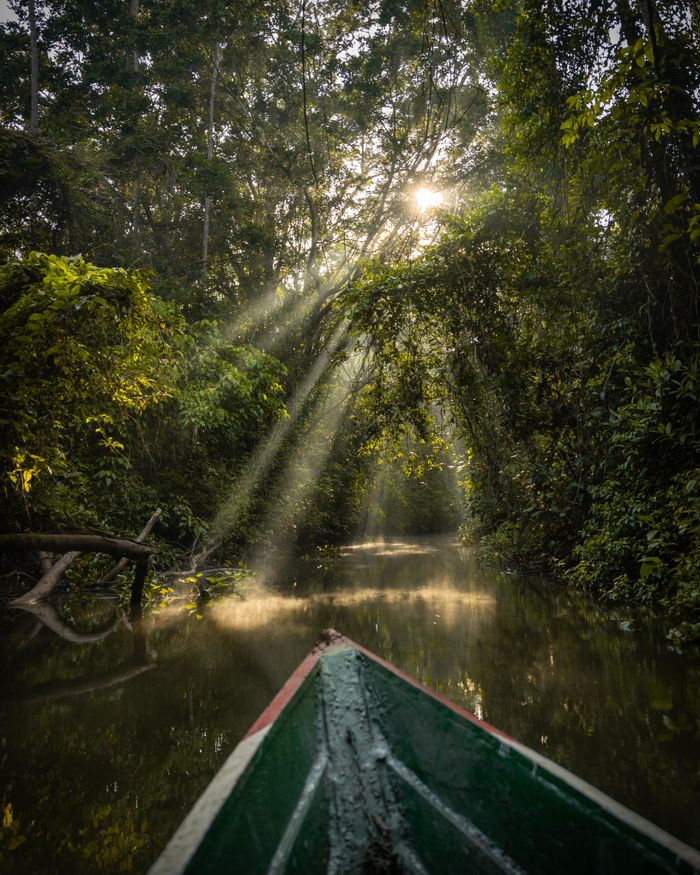


Arriving with respect, staying with purpose.
How to get to the Afro-Bolivian communities
- Recommended base: Coroico (Nor Yungas) · 3h from La Paz on the new paved road.
- From Coroico to Tocaña: ~20km on dirt road · taxi or 4x4 · 30–40 min.
- Mururata and Dorado Chico: 25–40km from Coroico · similar dirt-road access.
- From La Paz direct: bus to Coroico (Villa Fátima terminal, ~20 Bs) + local taxi to the community.
- Always visit with a guide or advance community contact — never arrive unannounced.
When to visit and what to expect
- Festivals with live saya: Santos Inocentes (28 Dec) and La Candelaria (2 Feb).
- Cultural visits year-round: saya workshops, oral history and Afro-Bolivian cooking with advance booking.
- Dry season (May–Oct): best for the dirt roads of the Nor Yungas.
- Recommended duration: half-day visit from Coroico or as part of 2 nights in the Nor Yungas.
- Ideal combination: Coroico + Tocaña + coffee farm + Death Road descent = 3 days.
500 years of history
waiting in Tocaña.
We organise your Afro-Bolivian community visit with advance community contact, local guide and responsible protocol.
$90 · €85 · Bs. 623