Skip to content
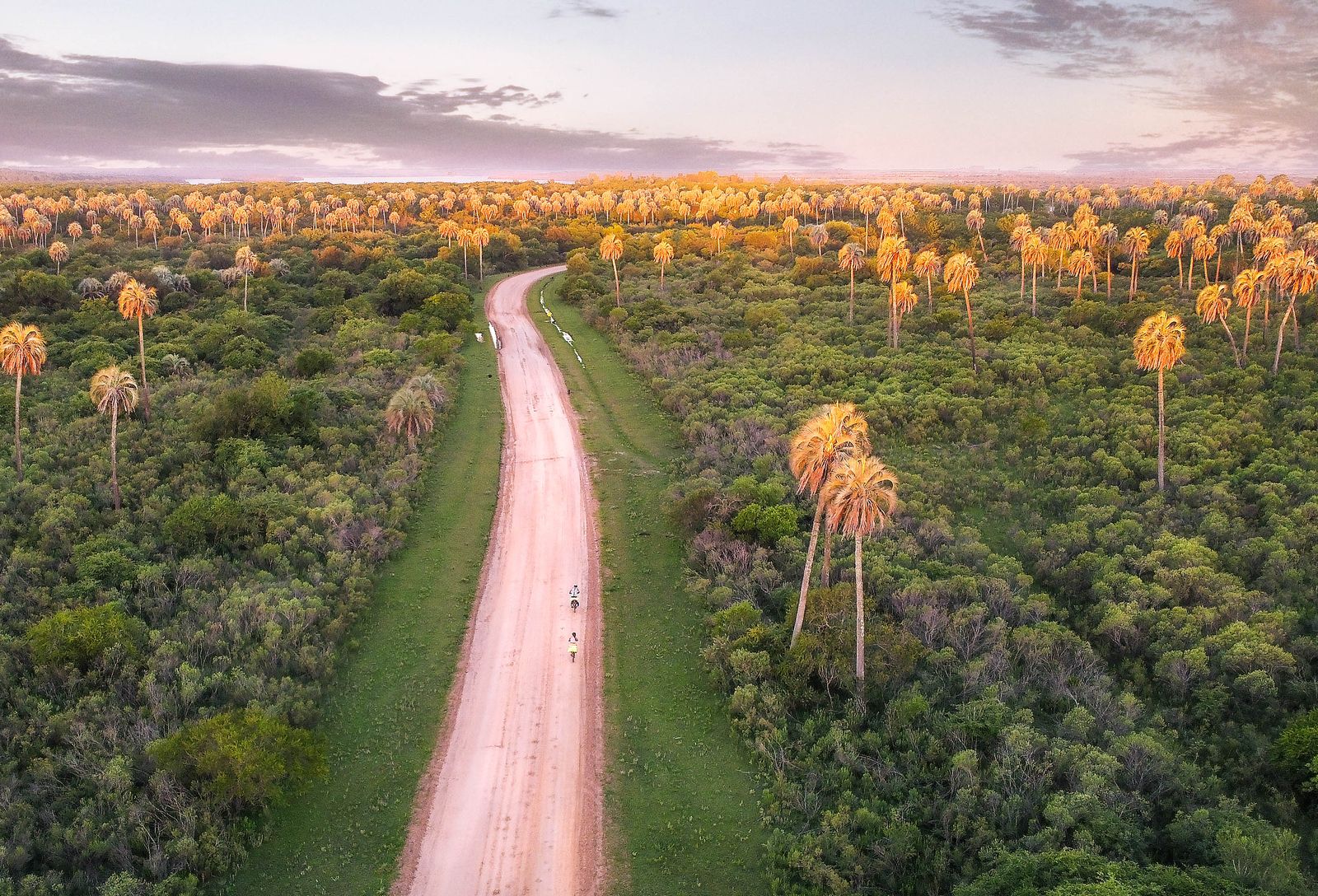
Gran Chaco boliviano desde Camiri, Santa Cruz — bosque seco y pórtico al parque Kaa-Iya
— Ecosystem · Bolivian Gran Chaco800m

Camiri,
Bolivia.

Bolivia's oil capital at 800m. The gateway to Kaa-Iya Park — 34,411 km² of Gran Chaco, the country's largest park. The Chaco jaguar. And the zone that was theatre to Che Guevara's last guerrilla campaign.

Altitude
800m
Department
Santa Cruz
Kaa-Iya
2–3h south
From Sta. Cruz
5–6h by bus
Best season
May–Aug
History
Oil capital
— The most Chaco city in the north

The northern gateway to the Gran Chaco.

Camiri is not a destination to linger in — it's a destination to pass through, to prepare and to enter. Enter the Chaco. Kaa-Iya Park. The most remote, hottest and most demanding zone in the country. Its role is that of gateway: it has fuel, it has guides, it has connectivity and it has history.

Camiri's history is marked by oil. When YPFB began exploiting the Chaco fields in the late 1920s, Camiri became the economic centre of southern Bolivia. That legacy is still felt: the city has the infrastructure of a regional capital — decent hotels, restaurants, mechanics, cheap fuel — making it an ideal base for Chaco expeditions.

Less than 100km south, in the Izozog zone, lives the Izoceño-Guaraní people. Their co-management agreement for Kaa-Iya Park — signed in 1995 and the first of its kind in the Americas — is one of the continent's most successful models of indigenous biodiversity management.

🛢️
Bolivia's oil capital
Bolivia's first commercial well — Camiri No. 1 — was drilled here in 1927. It marked the beginning of Bolivia's petroleum industry. YPFB maintained its headquarters in Camiri for decades.
🌵
Where the real Chaco begins
At 800m, Camiri is the last city before the Chaco plain. Heading south, the thorny Gran Chaco vegetation begins to dominate. The landscape changes dramatically in the first 20km toward Boyuibe.
🛣️
Southern Bolivia route hub
Camiri connects Santa Cruz with Villamontes (Tarija), Boyuibe (deep Chaco) and the Che trail (Lagunillas → Muyupampa → La Higuera). It is the logical base for exploring the northern Gran Chaco.
🤝
Izoceño-Guaraní community
The Izoceño-Guaraní people — co-managers of Kaa-Iya Park since 1995, the first national park in the Americas co-managed by an indigenous people — have their communities in the Izozog, east of Camiri.
— Access to Bolivia's largest park

Kaa-Iya from Camiri.

Kaa-Iya del Gran Chaco National Park — 34,411 km² of pristine Chaco forest, home of the Chaco jaguar — has no tourist infrastructure. Camiri is the only viable preparation point. Four mandatory steps.

01
SERNAP permit
Kaa-Iya Park requires an entry permit from the National Service of Protected Areas (SERNAP). Permits are arranged in advance — Love Bolivia can manage them. Without a permit, access to the park interior is not authorised.
02
Specialist guide
The park has no tourist infrastructure. A local guide specialising in Chaco wildlife and Guaraní territorial management is essential — for logistics, wildlife sightings and ecosystem interpretation.
03
4×4 and fuel
Dirt tracks inside the park require 4×4. Fill up completely in Camiri — there are no fuel stations in the area. The route from Camiri passes through Boyuibe (60km) then continues overland into the interior.
04
Minimum 3 days
Kaa-Iya Park deserves at least 3 nights. First night to settle and locate water points. Nights 2–3 for jaguar tracking, giant anteater and giant armadillo at dawn and dusk.
Full Kaa-Iya Park guide →
— Northern Chaco wildlife

The Chaco jaguar lives here.

🐆
Chaco jaguar
Genetically distinct from Amazonian. Kaa-Iya has the highest density outside Madidi.
🦔
Giant armadillo
Up to 60kg. Present in grasslands and scrub. Globally threatened.
🦡
Giant armadillo (tatú carreta)
The world's largest armadillo. Chaco endemic. Nocturnal and elusive.
🦌
Pampas deer
In savanna and grassland zones. Most active at dawn near water.
🦒
Guanaco
Wild camelid of the dry Chaco. Present in arid zones south of Boyuibe.
🐗
White-lipped peccary
In herds of up to 200 individuals. One of the Chaco's most complex social animals.
🦔
Giant anteater
Up to 2.1m snout to tail. In open grasslands at dawn.
🐆
Puma
Apex predator of the Chaco forest. Present throughout the Kaa-Iya area.
— History · Che's last guerrilla campaign

1967. The Chaco as stage.

Between November 1966 and October 1967, Ernesto 'Che' Guevara led his last guerrilla project in the canyons of the Bolivian Chaco. The operations zone extends around Camiri — the city was the Bolivian army's logistics base during the counter-insurgency. Four points on the historical map.

~100km south
Nancahuazú
The canyon where Guevara established his base camp (Nov 1966). The guerrilla operated here until July 1967. Difficult access — local guide and 4×4 required.
50km north
Lagunillas
Village near the operations zone. Part of the historical route of the campaign.
City centre
Camiri (courthouse)
Several captured guerrillas were tried in Camiri in 1967. The historical courthouse building exists in the centre.
130km north
Vallegrande
Where Guevara's body was taken after his execution on October 9, 1967. Hospital Señor de Malta preserved as a memorial.
📍
Full Che trail: See the full Vallegrande and La Higuera guide — the itinerary covering all historical sites of the Che's Bolivian campaign, including La Higuera (site of execution) and the Vallegrande mausoleum. Vallegrande & La Higuera →
— When to visit

Winter. No exceptions.

Jan
Feb
Mar
Apr
May
Jun
Jul
Aug
Sep
Oct
Nov
Dec
☀️Jun–Aug
Dry season — the ideal time
Bearable temperatures (22–30°C), dry and stable tracks, Chaco wildlife concentrated at water holes. June and July are the best months for Kaa-Iya expeditions.
🌿May and Sep
Transition seasons
May: start of dry season, vegetation still green from last rains. September: temperatures rising but wildlife still concentrated. Fewer visitors than July–August.
🌡️Oct–Nov
Rising heat — still feasible
October and November are feasible for visiting Camiri and the pre-Chaco, but temperatures already exceed 35°C. For deep Kaa-Iya, summer approaches — limit activity to dawn hours.
🔥Dec–Mar
Chaco summer — avoid
Temperatures of 38–43°C are common. Tracks toward Kaa-Iya can flood. Risk of mechanical problems in extreme conditions is high. Only for very experienced expeditioners.
— Getting there

420km from Santa Cruz.

🚌Main option
Bus from Santa Cruz

Santa Cruz's Bimodal Terminal has daily buses to Camiri. Time: 5–6h on paved highway (420km). Price: $10–15 USD. Frequent service, reliable. The highway is fully paved and in good condition.

Some companies operate night and morning departures. Arrive in the morning to have the day available.
🚌From the south
Bus from Sucre or Potosí

Camiri is 4–5 hours from Sucre by road (via Monteagudo). Price: $8–12 USD. This route is shorter than from Santa Cruz and connects Camiri to southern Bolivia. From Potosí: 7–8h (via Sucre or Camargo).

The Sucre–Camiri road passes through spectacular pre-Chaco landscapes (Monteagudo, Iñao hills).
🚗Private vehicle
Private or rental car

For Chaco expeditions, having your own or rented 4×4 is essential. You can rent in Santa Cruz and drive the 4.5–5h to Camiri. In Camiri there are mechanics, cheap fuel and basic expedition supplies.

Fill up completely in Camiri before heading to Boyuibe and Kaa-Iya. No fuel stations in the park area.
— Destinations from Camiri

Camiri as operations base.

2–3h south via Boyuibe34,411 km²
Kaa-Iya del Gran Chaco NP
Bolivia's largest national park
Advance SERNAP permits required. Specialist guide essential from Camiri. Minimum 3 nights inside the park.
Full guide →
130km northChe Guevara trail
Vallegrande & La Higuera
The final chapter of Che Guevara
Hospital Señor de Malta (where body was displayed) + La Higuera mausoleum. 4×4 recommended for La Higuera.
Full guide →
250km southFishing capital
Villamontes
Río Pilcomayo & Fiesta del Pescado
5–6h south by bus or car. Continue south on the highway through the pre-Chaco to the Pilcomayo.
Full guide →
— FAQ

Frequently asked questions.

Still wondering? Write to us — we answer every question personally.

Get in touch →

Camiri is a city of ~40,000 people in Santa Cruz department, Bolivia, at 800m altitude. Known as Bolivia's 'Petroleum Capital' (Capital Petrolera) because the country's first commercial oil well was drilled here in 1927. Today Camiri is primarily the access point for Kaa-Iya del Gran Chaco National Park (34,411 km²) — Bolivia's largest park — and a base for Gran Chaco expeditions.

Four steps required: (1) Advance entry permit from SERNAP (Servicio Nacional de Áreas Protegidas) — arrange before arrival; (2) Hire a specialist local guide in Camiri experienced with Chaco wildlife and Guaraní community protocols; (3) 4×4 vehicle with full fuel tank — no fuel available inside the park; (4) Minimum 3-night stay to properly explore the park. The route goes Camiri → Boyuibe (60km paved) → park interior (dirt tracks, 2–3h). Love Bolivia can arrange the full logistics.

Bus from Santa Cruz Bimodal Terminal takes 5–6 hours on a fully paved highway (420km). Price: $10–15 USD. Daily departures in both directions. By private car: 4.5–5 hours. From Sucre: 4–5 hours via Monteagudo. There is no regular commercial air service to Camiri — the nearest airport is Santa Cruz Viru Viru (VVI).

The Chaco zone around Camiri and Kaa-Iya Park holds: jaguar (Chaco population — genetically distinct, Bolivia's densest outside Madidi), giant armadillo (tatú carreta, up to 60kg), giant anteater, puma, guanaco, pampas deer, white-lipped peccary, collared peccary and 300+ bird species including the greater rhea, bare-faced ibis and several Chaco endemics.

Camiri served as the Bolivian army's logistics base during the counter-insurgency against Che Guevara's guerrilla campaign (1966–1967). Several captured guerrillas were tried at the Camiri courthouse in 1967. The Nancahuazú zone where Guevara's column operated is ~100km south. Vallegrande — where his body was taken — is 130km north. Camiri sits at the centre of the historical circuit.

May to August (dry season) is the best time: temperatures are 22–30°C, roads are reliable, and wildlife concentrates near water. June–July are ideal for Kaa-Iya expeditions. Avoid December–March (temperatures of 38–43°C, flood risk on Chaco tracks). September–October is still acceptable but temperatures begin rising sharply.

Yes. Camiri has several hotels of basic to mid-range quality — the city has good infrastructure as a regional economic centre. Options include Hotel Camiri, Hotel Colonial and a few guesthouses. Book ahead for the July–August high season. Inside Kaa-Iya Park there are no tourist facilities — you camp or stay in very basic ranger shelters (arrange with your guide in advance).

— Plan your Chaco expedition

Camiri is the
starting point.

45 minutes. We design your Gran Chaco expedition with Kaa-Iya permits, specialist guide and complete logistics.

$90 · €85 · Bs. 623

Book a consultation → $90 · €85 · Bs. 623Gran Chaco ecosystem →