Skip to content
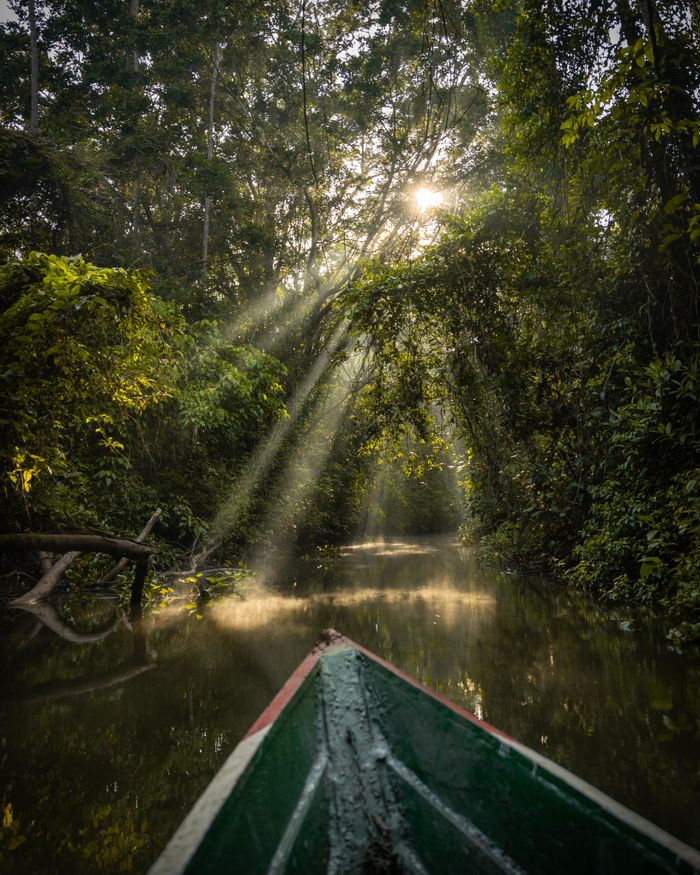
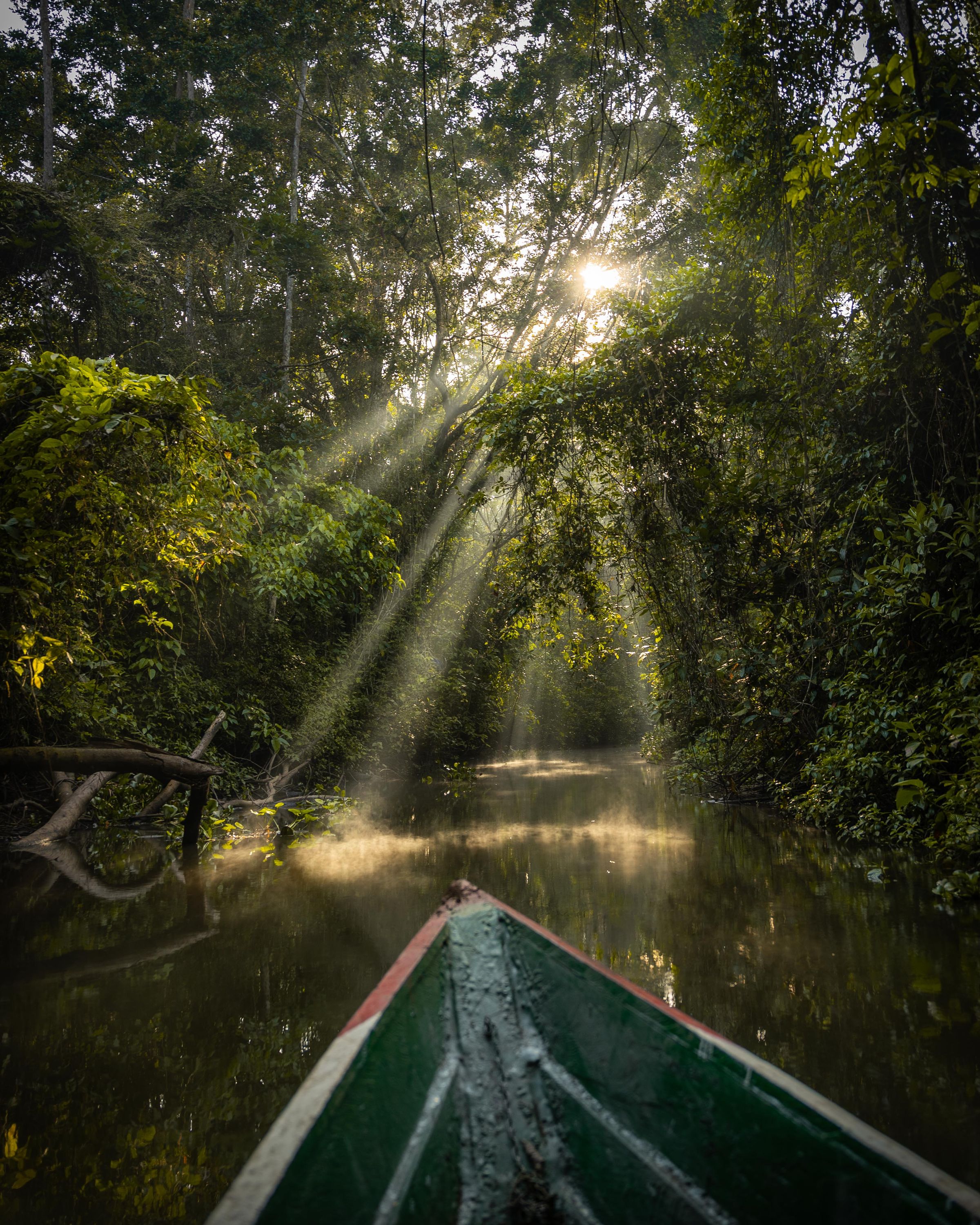
Parque Nacional Madidi Bolivia — barca en el río Tuichi entrando a la selva primaria amazónica, el espacio protegido más biodiverso del planeta. Foto: Bill Salazar / Pexels
tapir
— National Park · Beni / La Paz, Bolivia18.958 km²

National Park
Madidi.

18,958 km² of primary rainforest. Over 1,000 bird species — more than the entire USA. The most biodiverse protected area on earth. Accessible by boat from Rurrenabaque.

Surface area
18,958 km²
Bird species
1,000+
Mammals
200+
Plant species
12,000+
Altitudinal zones
5 (180–5,700m)
Access via
Rurrenabaque
— How long you need

Three itineraries. One park.

3 nights
  • Day 1: Rurrenabaque → boat up Beni + Tuichi (3–4h) → jungle camp
  • Days 2–3: Guided walks · dawn chorus · night walk
  • Day 4: Return boat → Rurrenabaque → La Paz flight

Minimum viable. Enough for primates, birds and nocturnal wildlife. For Chalalan: 3 nights minimum at the lodge.

5 nights
  • Days 1–2: Gallery forest camp (Beni river) — riverine birds and caimans
  • Days 3–5: Deep primary forest — primates, tapirs, dawn chorus
  • Day 6: Return to Rurrenabaque

The ideal itinerary. Covers two distinct habitat zones and maximises sighting variety.

8+ nights
  • Days 1–3: Pampas del Yacuma (lowland wildlife)
  • Days 4–5: Transit + Madidi entry camp
  • Days 6–10: Deep jungle — specialist birding itinerary

The itinerary for serious birders or wildlife photographers. Combines two completely distinct ecosystems.

— Things to do in Madidi Bolivia

Six essential experiences.

🌅
Primary forest · 5am

Dawn Bird Chorus

500+ species heard in 2 hours

The dawn chorus in primary jungle is one of the most overwhelming natural experiences on earth. At 5am, with the first light barely filtering through the canopy, every bird in the forest activates simultaneously. An experienced guide can identify 100+ species by call alone in a single morning walk. Bring your binoculars pre-focused.

Local tip
Your guide wakes you before first light. The first 90 minutes after dawn are non-negotiable — most Amazonian species are active only then. The rest of the day will give you mammals and plants. Dawn is for birds.
🐒
Forest trails · all day

Primate Watching

4 species — nearly guaranteed

Madidi has four primate species: howler monkeys (you hear them before seeing them — a prehistoric bellow at 5am), capuchins (intelligent, tool-using, common in mid-canopy), squirrel monkeys (tiny, fast, in family groups of 30–50), and spider monkeys (the largest, in the high canopy). Any 3-night visit in Madidi produces all four.

Local tip
Howler calls at dawn can be disorienting — they sound like something much larger. They're announcing territory. Your guide will track them by sound and bring you within 10m.
🔦
Forest trails · 8pm

Night Walk

Nocturnal Bolivia — unseen by day

The jungle at night is a completely different ecosystem. With headlamps and your guide's spotlight: giant tarantulas on tree trunks, kinkajous in the canopy, caimans' eyes reflecting in a stream, tree frogs on leaves in luminescent colours, sleeping toucans (eyes closed on a branch, beak tucked under wing), and occasionally a tapir crossing the trail.

Local tip
Wear rubber boots — no exceptions. The ground has things you don't want to step on. Your guide carries a spotlight for caimans and a red headlamp for insects. Do not wear insect repellent on your hands — it ruins your sense of smell, which your guide uses to detect animals.
🛶
Chalalan Ecolodge · Madidi

Canoe on Laguna Chalalan

Giant otters on an oxbow lake

Laguna Chalalan is a glassy oxbow lake at the heart of primary forest — accessible only by canoe. At dawn, the lake reflects the jungle canopy in absolute silence, broken only by bird calls and the surfacing of giant otters. The giant river otter (Pteronura brasiliensis) is critically endangered and this population is one of the most accessible in the world.

Local tip
Giant otters are vocal and territorial. Your guide will bring you close but never interrupt their morning feeding. A family of 5–8 otters at close range, vocalising on the lake bank, is among the top wildlife experiences in South America.
🏡
San José de Uchupiamonas

Quechua-Tacana Community

Indigenous conservation in practice

San José de Uchupiamonas is the Quechua-Tacana community that owns and operates Chalalan. A visit includes meeting community members who work as guides, cooks, boatmen and conservationists — roles that replaced subsistence hunting after the lodge was established. The community has maintained Madidi's forest in their territory without a single documented deforestation incident since 1998.

Local tip
Chalalan bookings support the conservation fund directly. The community reinvests 30% of revenue into school infrastructure and 20% into conservation monitoring. This is what functional community-based conservation looks like — not theory.
🦜
Madidi · all altitudinal zones

Specialist Birding

1,000+ species — world record territory

Bolivia ranks in the global top 5 for bird diversity with 1,400+ species. Madidi alone has 1,000+. The park encompasses cloud forest, montane forest, Andean foothills, gallery forest and Amazonian lowland — each with entirely different avifauna. Three macaw species visible simultaneously are a rarity only Madidi delivers. The Harpy Eagle is regularly sighted by specialist guides.

Local tip
Book a specialist birding guide through Asociación Armonía (Bolivia's birding NGO) in addition to your lodge guide. A good birding guide doubles your species count. Pre-dawn departure is non-negotiable. Bring a scope — 60x minimum for forest edge species.
— Key species in Madidi

200+ mammals. 6 to know.

Madidi's wildlife is so dense the question isn't whether you'll see something — it's how much. These are the six species every visitor should know before entering.

🐆Vulnerable
Jaguar
Bolivia has the largest jaguar population of any country. Madidi is core territory. Sightings on trails are rare but documented. Camera traps confirm dense population.
🌿Vulnerable
Tapir
The largest land mammal in South America. Regularly seen crossing rivers and at saltlicks. Your guide will know the muddy tracks. Night encounters at stream crossings are common.
🦦Endangered
Giant Otter
Chalalan's lake is one of the most accessible giant otter populations in the world. Family groups of 5–8. Intensely vocal at dawn. Up to 1.8m in length.
🦅Vulnerable
Harpy Eagle
The largest eagle in the Americas. Madidi has confirmed nesting pairs. Specialist guides know active territories. A sighting requires patience but is possible.
🐊Conservation Dependent
Black Caiman
Up to 6m. Madidi's rivers and lakes have healthy populations. Night spotlight tours produce consistent sightings. Not aggressive to humans unless provoked.
🦜Varies
Macaws (3 species)
Blue-and-yellow, scarlet and chestnut-fronted macaws visible together — a global rarity. River clay licks at dawn produce flocks of 50–100 parrots and macaws simultaneously.
— Where to stay in Madidi

Three lodges. Three communities.

Community lodge · Quechua-Tacana
4–5h from Rurrenabaque

Chalalan Ecolodge

The benchmark of community conservation

Owned and operated by the Quechua-Tacana community of San José de Uchupiamonas since 1998. On Laguna Chalalan — an oxbow lake surrounded by primary forest. 98% primate sighting rate. Comfortable bungalows with solar power. Every stay funds the community conservation trust directly.

Tip
Book via Chalalan's La Paz office. 3 nights minimum. The most ethically solid option in the park.
Community lodge · Mosetén
3h from Rurrenabaque

Mapajo Ecolodge

Cloud forest edge — Quiquibey River

Run by the Mosetén indigenous community on the Quiquibey River, at the ecotone between foothills and Amazonian lowland. Excellent for cloud forest bird species not found at lower Madidi lodges. A different Madidi habitat entirely — the transition zone is one of the richest.

Tip
Mapajo is harder to book than Chalalan (limited marketing) but worth the effort. Ask specialist Bolivia travel agencies. Cloud forest species accessible in a 2h walk from the lodge.
Community camp · Tacana
1.5h from Rurrenabaque

San Miguel del Bala

Madidi entry point — most accessible

The most accessible community camp in Madidi, 1.5h up the Beni River from Rurrenabaque. Ideal for shorter trips (2 nights) or as a first stop before continuing deeper. The surrounding gallery forest is rich in riverine birds and caimans.

Tip
Good choice for travellers with limited time (3-day / 2-night programme). Can be combined with a half-day at the pampas for a compact Rurrenabaque programme.
— Travel logistics

Getting there and what to bring.

✈️

How to get to Madidi

  • Step 1: Fly La Paz to Rurrenabaque Airport (RBQ) — 25 min, ~$60–100 USD, TAM or Amaszonas
  • Step 2: Your operator meets you in Rurrenabaque for an evening briefing
  • Step 3: Early morning: motorised boat 2h down the Beni River to the Tuichi confluence
  • Step 4: 1–2h more up the Tuichi to your camp or Chalalan
  • Always book your return flight with a 1-day buffer before any international connection
  • RBQ flights cancel for tropical weather — always confirm the night before
🎒

What to bring

  • Rubber boots (essential — your operator usually has them but confirm)
  • DEET 30%+ repellent — apply constantly, day and night
  • Light long-sleeved clothing — not cotton (gets wet, doesn't dry)
  • Binoculars — minimum 8x42 for jungle birding
  • Light poncho or rain jacket
  • Headlamp with spare batteries
  • Yellow fever vaccine — essential. Ask your doctor about malaria prophylaxis.
— Climate and seasons

When to visit Madidi.

Jan
Feb
Mar
Apr
May
Jun
Jul
Aug
Sep
Oct
Nov
Dec
May – October
Dry season — the best
Walkable trails, rivers at ideal navigation levels, concentrated wildlife. July and August are peak season — book lodges months ahead. The dawn chorus in dry season is particularly rich.
Year-round for birds
Avifauna has no season
Unlike megafauna, birds are equally rich all year. Some specialists prefer the wet season (Nov–Apr) for song: rainy days in primary jungle produce extraordinary calling activity when they clear. Madidi's jungle is safe year-round.
November – April
Wet season — still good
Daily rain (usually afternoons). Trails become muddy — rubber boots become even more essential. Vegetation is more lush. Primates and arboreal wildlife don't decrease. Chalalan and San Miguel operate year-round.
— From Madidi

Connected routes and ecosystems.

Nearby ecosystems
bufeo
Amazonia
Madidi · Pampas · Delfines rosados
capibara
Llanos
Pampas del Beni · Trinidad
Love Bolivia Routes
tapir
07 · Madidi
El Tapir
From La Paz to Rurrenabaque then deep into Madidi by canoe — the flagship biodiversity route.
8–12 daysfrom €2,020
bufeo
02 · Amazon
El Bufeo
Navigate the Beni and Mamoré alongside pink river dolphins into primary rainforest.
7–10 daysfrom €1,650
guacamayo
09 · Birding
La Paraba
Bolivia's top birding circuit — 1,000+ species in Madidi, cloud forest in Apolobamba.
10–16 daysfrom €2,570
FAQ

Questions about Madidi.

The most common questions about visiting Madidi National Park.

Plan your trip with us →

Madidi National Park (18,958 km²) is a Bolivian protected area in La Paz and Beni departments, considered one of the most biodiverse on earth. It spans 5 altitudinal zones from Andean glaciers at 5,700m to Amazonian lowland at 180m — an extreme range that explains its extraordinary species count: 1,000+ birds, 200+ mammals, 12,000+ plants. Created in 1995.

To reach Madidi: (1) Fly La Paz → Rurrenabaque (25 min, ~$60–100 USD, TAM or Amaszonas); (2) From Rurrenabaque: motorised canoe 2h up the Beni River to the Tuichi confluence, then 2h up the Tuichi to the lodge or camp. Total from Rurrenabaque: 3–5h depending on destination. All logistics managed by your operator. Always book return flights with a 1-day buffer — weather cancellations are common.

Over 1,000 confirmed bird species in Madidi — more than the entire United States. A 2010 ornithological study identified more individual bird species in Madidi than in any other single protected area on earth. Among the most sought: Harpy Eagle, three macaw species visible together (rare globally), Andean Cock-of-the-rock, and dozens of cloud forest endemics. Bolivia as a whole has 1,400+ species.

Chalalan is a community lodge inside Madidi National Park, owned and operated by the Quechua-Tacana community of San José de Uchupiamonas since 1998. Located on Laguna Chalalan — a glassy oxbow lake in primary forest. 98% primate sighting rate. Primate species: howler, capuchin, squirrel and spider monkeys. Giant otters on the lake. Book directly through Chalalan's La Paz office, minimum 3 nights.

May to October (dry season) is best: walkable trails, ideal river levels, concentrated wildlife. July and August are peak season — book months ahead. Birding is excellent year-round — some specialists prefer the wet season (Nov–Apr) as rainy days produce intense bird song. Madidi operates and is safe in all seasons.

Madidi is consistently cited as one of the most biodiverse protected areas on earth — often the most biodiverse. It holds the world record for bird species in a single protected area (2010 ornithological study). Its extreme altitudinal range (180m to 5,700m) concentrates Amazonian, montane and Andean species in one contiguous park. Scientists continue to discover new species every year.

Basic 3-night jungle camp from Rurrenabaque: ~$300–500 USD all-inclusive (boat, guide, meals, camp accommodation). Chalalan Ecolodge: ~$280–350 USD/night all-inclusive. Prices exclude: La Paz–Rurrenabaque flight (~$100 USD one way), park entrance fee, and specialist guide surcharge. Love Bolivia's El Tapir route (8–12 days) covers Madidi as part of a full Amazon itinerary from €2,020.

Yellow fever vaccination is strongly recommended before entering Bolivia's Amazon basin. Some countries require proof of vaccination if you have recently visited Bolivia. Also recommended: Hepatitis A, typhoid. Consult your travel medicine doctor about malaria prophylaxis 6–8 weeks before departure. Dengue: no vaccine available — use DEET 30%+ constantly and long sleeves from dusk. Rubber boots protect against snake bites on trails.

— Your Madidi itinerary

The most biodiverse park.
Enter with us.

45 minutes. We design your Madidi itinerary with the best community operators, accommodation and a realistic budget.

$90 · €85 · Bs. 623

Book consultation → $90 · €85 · Bs. 623Chalalan Ecolodge →