Skip to content
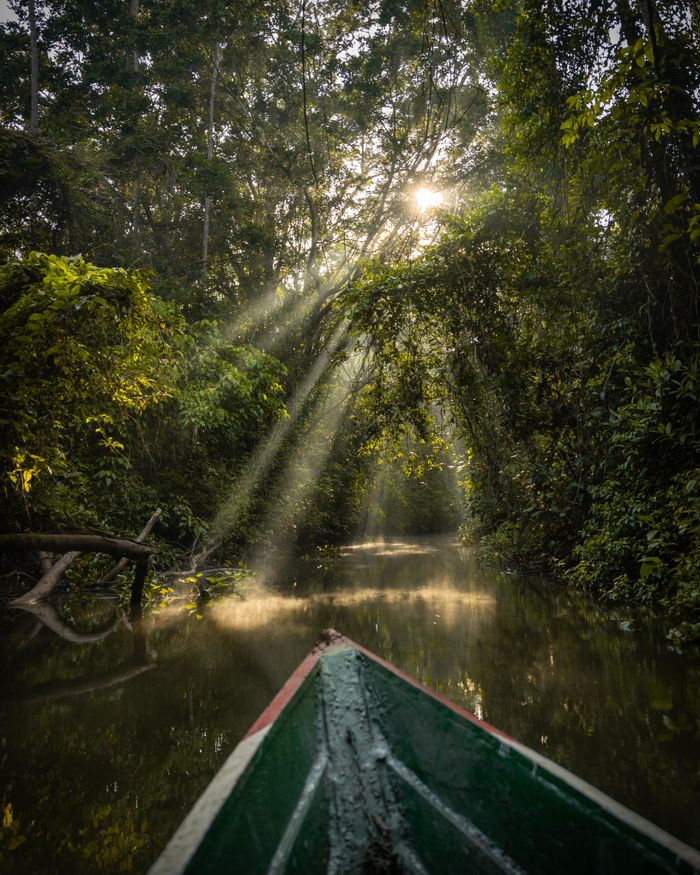
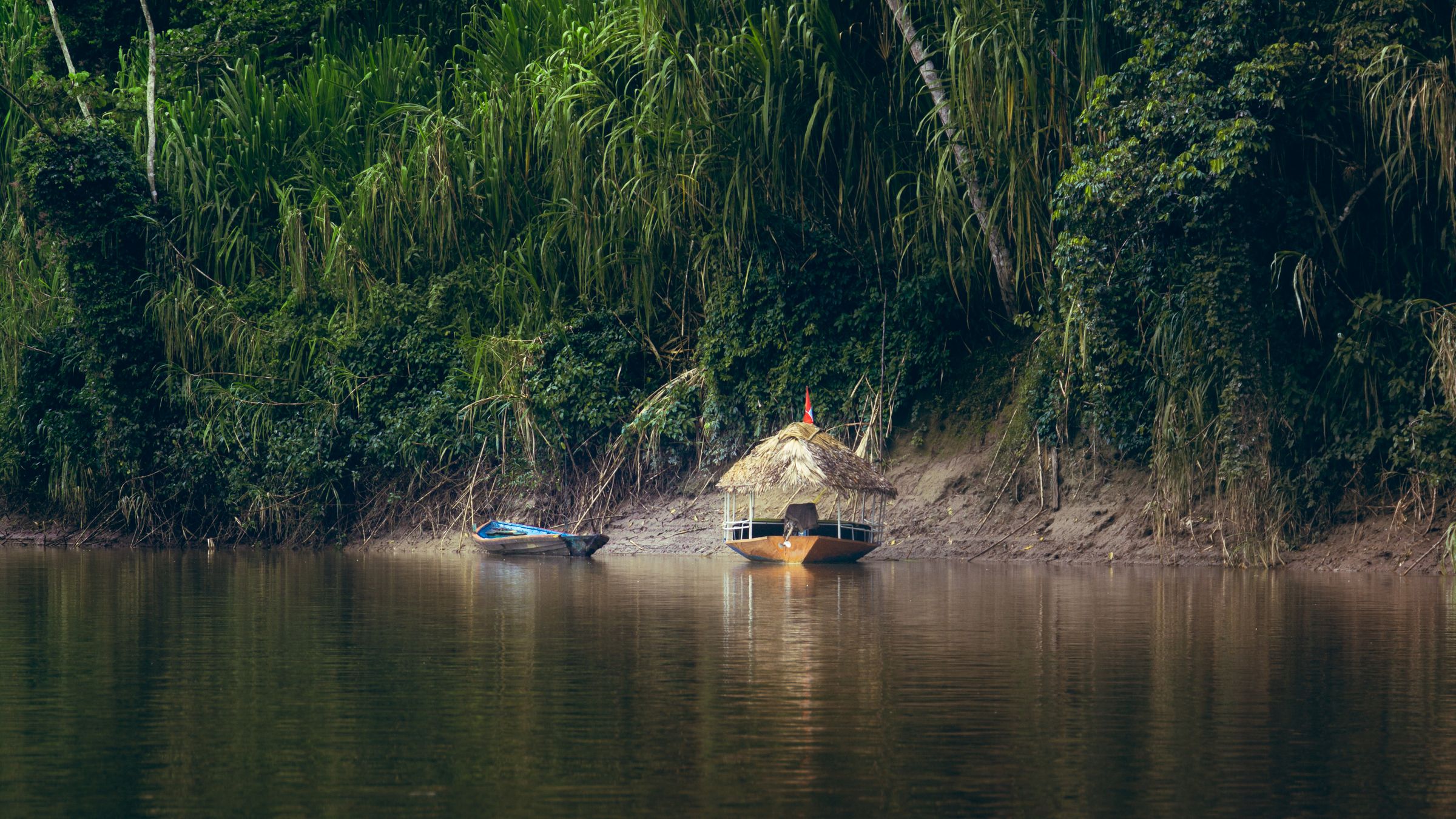
Rurrenabaque Bolivia — barca en el río Beni, puerta de entrada a la Amazonía boliviana
bufeo
— Town · Gateway to the Bolivian Amazon270m

Rurrenabaque,
Bolivia.

The Beni River. Pink dolphins in the Yacuma. Madidi — the most biodiverse park on earth. A quiet town of 14,000 that unlocks everything.

Altitude
270 m
Beni River
navigable
Madidi Park
18,958 km²
Flight from La Paz
25 min
Best season
May – Oct
Birds in Madidi
1,000+ species
— How long do you need

Three itineraries. Two worlds.

4 nights
  • Day 1: Arrive in Rurrenabaque, orientation and tour briefing
  • Days 2–3: Pampas del Yacuma — pink dolphins, anacondas, caimans
  • Day 4: Return to Rurre + free afternoon + flight back to La Paz

The minimum viable. Covers the pampas. To add jungle you need at least 6 nights.

7 nights
  • Day 1: Arrival · operator briefing
  • Days 2–4: Pampas del Yacuma (3 nights)
  • Day 5: Transit day in Rurrenabaque + rest
  • Days 6–8: Madidi jungle or Chalalan Lodge

The standard itinerary to do both experiences properly.

10 days
  • Days 1–4: Pampas del Yacuma (intensive wildlife)
  • Days 5–8: Chalalan Lodge — deep Madidi — night treks
  • Days 9–10: Serere Sanctuary or free days in Rurre

The itinerary for serious wildlife watchers. Maximum habitat diversity.

— Things to do in Rurrenabaque Bolivia

Six essential experiences.

Selected by Bolivians. The Amazon without the usual tourist circuits.

🐬
3h by boat from Rurrenabaque

Pampas del Yacuma

Highest wildlife density in Bolivia

The Yacuma pampas are 3 hours downriver from Rurrenabaque by motorised boat — a journey through gallery forest opening into vast flooded grassland. Pink river dolphins surface alongside the boat almost every trip. Anacondas basking on the riverbanks. Caimans at eye-level from the hull. Capybara herds at dusk. The sighting rates here are among the highest in all of South America.

Local tip
Dry season (May–October) concentrates animals in fewer water channels — sighting frequency goes up dramatically. Night boat spotlight tours add caimans and amphibians. 2 nights minimum to feel the full rhythm of the pampas.
🌿
3–4h by boat via Beni & Tuichi rivers

Madidi National Park

Most biodiverse protected area on earth

Madidi National Park covers 18,958 km² across 5 altitudinal zones — from Andean cloud forest at 5,700m to Amazonian lowland at 180m. Over 1,000 bird species (more than the entire USA), 200+ mammals, 12,000+ plants. To reach the park's interior: motorised boat from Rurrenabaque up the Beni River, then up the Tuichi. The transition from open river to primary jungle canopy is immediate and dramatic.

Local tip
A local guide from a Madidi-certified operator is not optional — it's the difference between 20 and 200 species identified in three days. The dawn chorus at 5am in primary jungle is one of the most overwhelming natural experiences available anywhere.
🛶
Madidi — Quechua-Tacana community

Chalalan Ecolodge

Indigenous-run rainforest lodge inside Madidi

Chalalan is owned and operated by the Quechua-Tacana community of San José de Uchupiamonas — one of the oldest community-based conservation lodges in South America, established with WCS support in 1998. Located on Laguna Chalalan, a oxbow lake surrounded by primary forest. Walking trails, night walks, canoe lake excursions, and a 98% sighting rate for primates. A night here funds community conservation directly.

Local tip
Book directly through Chalalan's La Paz office. 3 nights minimum to justify the river journey and to experience the full animal activity cycle. Primates — squirrel monkeys, howlers, capuchins — are seen on virtually every walk.
🐟
Yacuma pampas — daily sightings

Pink River Dolphins

Bolivia's endemic freshwater dolphin

The bufeo colorado (Inia boliviensis) is Bolivia's endemic pink river dolphin — a separate species from the Peruvian/Brazilian boto. Adults reach 2.5m and 180kg; the pink colour comes from blood vessels close to the skin. They travel in family groups and are intensely curious about boats. On most pampas tours, swimming interactions in a designated pampas channel are offered — the dolphins approach voluntarily.

Local tip
Sightings are almost guaranteed on every pampas boat trip in dry season. Swimming interaction depends on the day — dolphins choose whether to approach. Only do it with operators who follow non-disturbance protocols: no chasing, no feeding.
🦜
Madidi · Yacuma · Cloud forest

Birding in Madidi

1,000+ species — top 5 birding on earth

Bolivia is a top-5 birding destination globally with 1,400+ species. Madidi alone has over 1,000. Rurrenabaque gives access to multiple distinct habitats in a single trip: Amazonian lowland (macaws, toucans, parrots), riverine gallery forest (herons, kingfishers, jacamars), and cloud forest edge accessible in one day via charter plane to Apolo. Three species of macaw visible together in Madidi are a global rarity.

Local tip
Serious birders: book a specialist guide through Asociación Armonía (Bolivia's birding NGO). Pre-dawn departure is non-negotiable — most Amazonian species are active only in the first two hours of light. Bring your scope.
🏘️
On the Beni River

Rurrenabaque Town

The Amazon basecamp

Rurrenabaque is a quiet town of 14,000 on the Beni River that serves as the operational base for all Amazon tours. The malecón (riverfront promenade) runs along the Beni and is the town's social centre at dusk. Across the river: San Buenaventura, linked by a new bridge and by dugout canoe. The town has good hostels, tour agencies, restaurants and a small airport. It functions as a comfortable logistical base, not a destination in itself.

Local tip
Stay at least one free evening in Rurrenabaque. Walk the malecón at sunset — the Beni is enormous and watching it from the bank as daylight fades is something. The market opens at 6am and the best breakfast is here: api with pastel or salteña.
— The question everyone asks

Jungle or pampas: how to choose.

The number one question for every traveller arriving in Rurrenabaque. The honest answer.

🐊
PAMPAS
Pampas wildlife
High density, open terrain. Pink dolphins, anacondas, black caimans, capybaras, giant otters, turtles, jabiru storks, macaws. Sightings are nearly immediate — within the first hours of the first morning.
🐒
JUNGLE
Jungle wildlife
Greater diversity, requires patience. Three monkey species (howler, capuchin, squirrel), tapirs, peccaries, 1,000+ birds. Not passive boat-watching — active searching on trail.
📷
BOTH
Photography
Pampas: open light, accessible animals from the boat, water-level shots. Jungle: primary forest canopy, extraordinary colours, primate portraits. For bird photography: jungle wins.
🌧️
CONDITIONS
Season dependency
Pampas depend on water level: dry season (May–Oct) concentrates wildlife and maximises sightings. The jungle works year-round — including rain.
LOGISTICS
Minimum duration
Pampas: 2 nights (3 days). Basic jungle: 3 nights. Chalalan Lodge: 3–4 nights minimum to justify the journey. To do both: 7 nights minimum.
CONCLUSION
Our recommendation
Do both. They're not interchangeable — they're entirely different experiences. If you can only choose one and your priority is volume of sightings — pampas. If you want ecosystem immersion — jungle.
— Tours from Rurrenabaque Bolivia

Four doors. One world.

Tour
3 nights / 4 days

Pampas del Yacuma

Flagship wildlife tour · near-guaranteed sightings

The most popular tour from Rurrenabaque: 3-hour boat ride down the Beni to the Yacuma tributary, then into open pampas grassland. Camp-style lodges on the riverbank. Three boat excursions per day: dawn, morning, late afternoon/dusk, plus a night spotlight tour. Species seen on almost every trip: pink dolphins, anacondas, caimans, capybaras, giant otters.

Tip
Book through a Rurrenabaque-based operator who employs local Tacana guides — they know the pampas channels better than anyone. Ask specifically about their anaconda handling policy: responsible operators observe from distance, no handling for photos.
Tour
3–5 nights

Madidi Jungle

Primary rainforest immersion · 1,000+ bird species

Motorised canoe up the Beni (2h) then up the Tuichi River (2h) into Madidi. Community jungle camps on the riverbank. Guided trail walks in primary forest — your guide identifies every bird call, every track in the mud, every medicinal plant by smell. Dawn bird count: typically 50–80 species before breakfast. Primates: almost guaranteed.

Tip
A 5-night Madidi itinerary splits into: days 1–2 downriver camp (gallery forest), days 3–5 upriver (primary forest). The deeper you go, the quieter and richer it gets. The upper Tuichi near the Chalalan junction is the most biodiverse accessible zone.
Tour
3–4 nights

Chalalan Lodge

Indigenous-run ecolodge inside Madidi

The benchmark community conservation lodge of South America, owned and operated by the Quechua-Tacana community of San José de Uchupiamonas since 1998. Situated on Laguna Chalalan, a glassy oxbow lake in primary forest. Guided walks, night treks, canoe excursions on the lake (giant otters, caiman), and extraordinary birdlife. Staying here puts money directly into the community conservation fund.

Tip
Book in advance through Chalalan's La Paz office (not through third-party platforms — they do their own bookings). Chalalan is not the cheapest option but it is the most ethically solid. The lake at night — surrounded by jungle sounds — is extraordinary.
Tour
2–3 nights

Serere Sanctuary

Macaws, primates and secondary forest

Serere is a wildlife sanctuary 2 hours by boat from Rurrenabaque, run by the Biosphere Foundation. It protects secondary forest and a lake system with extremely rich birdlife — particularly parrots and macaws. Canoe tours of the lake at dawn. Blue-and-yellow macaws, scarlet macaws and chestnut-fronted macaws often seen together. Tapirs and primates are regular sightings.

Tip
Serere is a good choice for travellers with limited time who cannot do the full Madidi journey. 2 nights here plus 2 nights pampas makes a solid 4-night Rurrenabaque programme. The accommodation is comfortable and the lake is visually spectacular.
— Travel logistics

Getting there and getting around.

✈️

How to get to Rurrenabaque

  • Flight: TAM or Amaszonas from El Alto (La Paz) — 25 min · ~$60–100 USD one way. The cheapest flight in Bolivia.
  • Book 3–5 days ahead in peak season (Jul–Aug). 19-seat aircraft — flights cancel for tropical weather.
  • RBQ airport has a dirt runway — confirm your flight the night before.
  • Night bus from La Paz: ~18–20h via the Yungas. Possible but not recommended.
  • By land from Santa Cruz: ~12h via Trinidad. Possible but long.
  • Always book your return flight with a 1-day buffer before any international connection.
🚣

How to get around Rurrenabaque

  • The town is small — everything walkable from the centre (15 min max).
  • Mototaxis for the airport or heavy luggage: 10–15 Bs.
  • Motorised boats for tours: the operator manages these — you don't need to arrange them separately.
  • San Buenaventura (town across the Beni): connected by a new bridge or dugout canoe (5 Bs, 5 min).
  • No conventional taxis — mototaxis cover the entire urban area.
  • The malecón (riverfront) is the town's social hub: everything is 5 minutes from here on foot.
— Climate and seasons in Rurrenabaque

When to visit the Amazon.

Jan
Feb
Mar
Apr
May
Jun
Jul
Aug
Sep
Oct
Nov
Dec
May – October
Dry season — best for pampas
Water levels drop in the Yacuma channels, concentrating wildlife and maximising sightings. Anacondas bask on the banks. Pink dolphins gather in smaller pools. July and August are peak season — book weeks ahead.
November – April
Wet season
Pink dolphins are more active at high water, moving more freely. The jungle is greener and denser — birdlife doesn't decrease. The pampas partly flood, limiting access to some zones. Avoid February: peak flood season.
Year-round for Madidi
The jungle works all 12 months
Unlike the pampas, Madidi National Park and Chalalan operate well in all seasons. Rain doesn't reduce biodiversity — it increases it. Rainy days in primary jungle are, for many travellers, the most memorable.
— From Rurrenabaque

Connected routes and ecosystems.

Rurrenabaque is the natural starting point for four Love Bolivia routes and the gateway to Bolivia's Amazon and Llanos ecosystems.
Nearby ecosystems
bufeo
Amazonia
Madidi · Pampas · Delfines rosados
capibara
Llanos
Pampas del Beni · Trinidad · Capibaras
Routes departing from Rurrenabaque
bufeo
02 · Amazon
El Bufeo
Navigate the Beni and Mamoré rivers alongside Bolivia's pink river dolphins into primary rainforest. The most immersive Amazon river journey available.
7–10 daysfrom €1,650
tapir
07 · Madidi
El Tapir
From La Paz by road to Rurrenabaque, then by canoe up the Tuichi into Madidi — the most biodiverse national park on earth.
8–12 daysfrom €2,020
capibara
08 · Beni Pampas
La Capibara
Bolivia's Beni holds the world's largest flooded savannahs. Capybara in the thousands, caimans, river dolphins, and almost zero other tourists.
6–9 daysfrom €1,470
guacamayo
09 · Birding Circuit
La Paraba
Bolivia is a top-5 birding destination. Rurrenabaque is the base for Madidi's 1,000+ species and the cloud forest routes of Apolobamba — one of the richest birding circuits on earth.
10–16 daysfrom €2,570
FAQ

Questions about Rurrenabaque.

The 9 most common questions about travelling to Rurrenabaque and the Bolivian Amazon.

Plan your trip with us →

Rurrenabaque is a town of ~14,000 on the Beni River in Bolivia's Beni department, at 270m. It is the main gateway to Madidi National Park — considered the most biodiverse protected area on earth — and to the Pampas del Yacuma, where pink river dolphins, caimans and anacondas are daily sightings. The town itself has good tourist infrastructure: hostels, tour agencies, restaurants and a small airport.

The best option is a TAM or Amaszonas flight from El Alto International Airport (La Paz) — 25 minutes, typically $60–100 USD one way. Book 3–5 days ahead in peak season (July–August). The aircraft are small (19 seats) and flights cancel for tropical weather — always confirm the night before and build a 1-day buffer before any international connection. The alternative is a night bus (18–20 hours via the Yungas) — it exists but is not recommended.

Both are exceptional but different. The pampas (Pampas del Yacuma, 3h by boat) offer the highest wildlife density: pink dolphins, anacondas, caimans, capybaras and birds are near-guaranteed every day. The jungle (Madidi National Park, Chalalan Lodge) offers deeper immersion in primary forest, richer birdlife, primates, and cultural encounters with the Quechua-Tacana community. Serious wildlife watchers do both: 2–3 nights pampas + 3 nights jungle. If you can only choose one, pampas wins for sheer volume of sightings; jungle wins for depth and diversity.

Near-guaranteed sightings in dry season (May–October): pink river dolphins (multiple per trip), anacondas on riverbanks, black and spectacled caimans, capybaras in herds, giant river otters, river turtles, jabiru storks, kingfishers, dozens of heron species and macaws. Night spotlight tours add caiman eyes glowing in the dark and a remarkable chorus of frogs and insects. In Madidi: 1,000+ bird species, howler monkeys, capuchins, squirrel monkeys, tapirs and peccaries.

Minimum 4 nights: 2 in pampas + transit day + 1 in jungle. Ideal: 7 nights to do both properly (3 nights pampas + 3 nights jungle). For serious wildlife watchers or birders: 10+ days. Always add a 1-day buffer before your return flight to La Paz — cancellations for weather are common. The boat to the pampas takes 3h each way; to Madidi, 3–4h each way.

May to October (dry season) is best for the pampas: water levels drop, concentrating wildlife in fewer channels and maximising sightings. July and August are peak season — book well ahead. November to April (wet season) still offers excellent wildlife — pink dolphins are more active at high water — but some pampas zones flood. Avoid February for pampas: peak flood season. Madidi jungle operates well year-round.

The bufeo colorado (Inia boliviensis) is Bolivia's endemic freshwater pink river dolphin — a separate species from the Peruvian/Brazilian boto. Adults reach 2.5m and 180kg; the pink colour comes from blood vessels close to the skin surface. They travel in family groups and are intensely curious about boats. In Amazonian mythology they are considered shapeshifters. Near-daily sightings are standard on pampas tours. Swimming interaction is possible through responsible operators — the dolphins approach voluntarily.

Yellow fever vaccination is strongly recommended before entering Bolivia's Amazon basin (Beni and Pando departments). Some countries require a yellow fever certificate if you have recently visited Bolivia. Hepatitis A and typhoid vaccines are generally recommended for all Bolivia travel. Consult your travel medicine doctor about malaria prophylaxis 6–8 weeks before departure. Dengue has no available vaccine — use DEET 30%+ repellent and long sleeves from dusk.

Madidi National Park (18,958 km²) is considered one of the most biodiverse protected areas on earth: 1,000+ bird species (more than the entire USA), 200+ mammal species, 300+ fish species and 12,000+ plant species. It encompasses 5 altitudinal zones from Andean cloud forest at 5,700m down to Amazonian lowland at 180m — the extreme range of habitat types accounts for its extraordinary species count. A 2010 ornithological study identified more individual bird species in Madidi than in any other single protected area on the planet.

— Plan your Rurrenabaque & Bolivia Amazon trip

The Beni is waiting.
Start here.

45 minutes. We design your Rurrenabaque and Bolivian Amazon itinerary with certified operators, accommodation and a realistic budget.

$90 · €85 · Bs. 623

Book consultation → $90 · €85 · Bs. 623El Bufeo route →