Skip to content
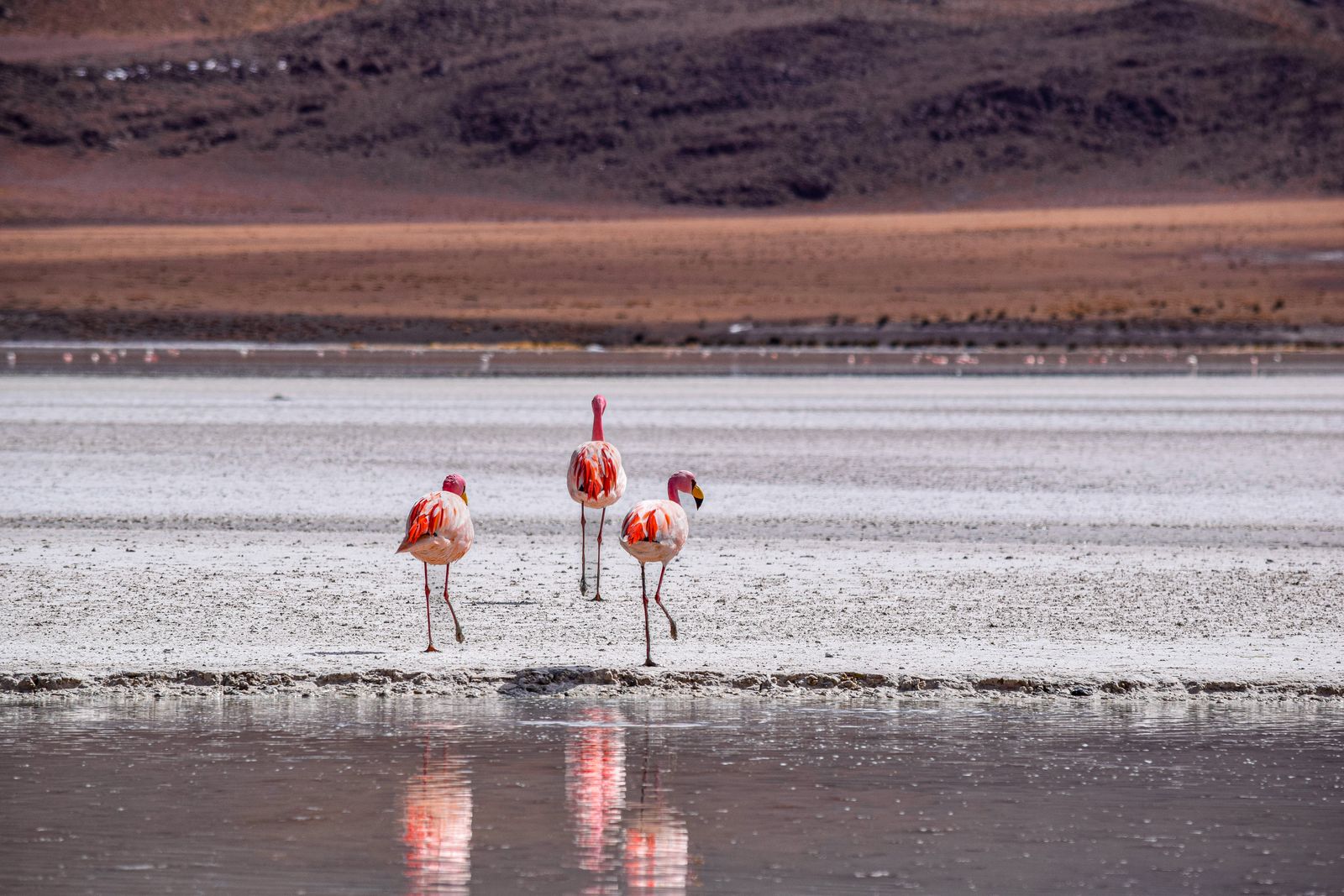
Laguna Colorada Bolivia flamingos
flamenco
— Ecosystem · Bolivian Southwest4.200–5.000m

The Southwest
of Bolivia.

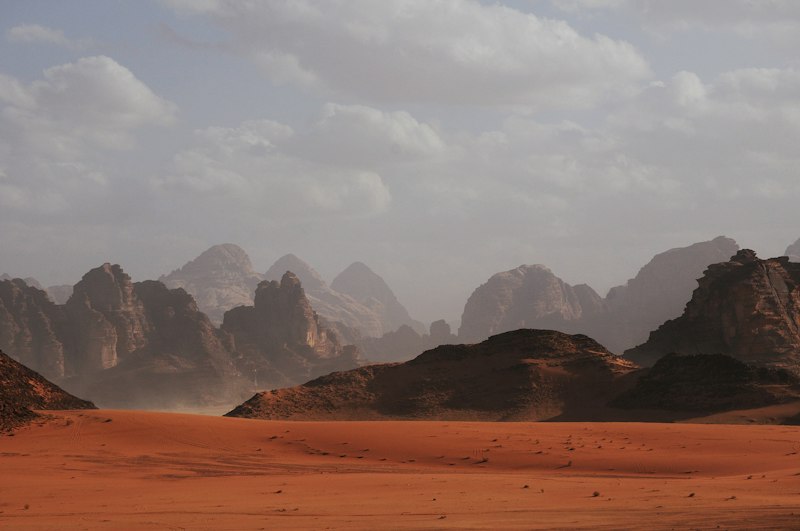
The blood-red lagoon at 4,278m. Three flamingo species in the same place. South America's largest geyser field at dawn. The most surreal landscape on earth. Four hours from Uyuni.

Laguna Colorada
4,278m
Sol de Mañana
4,850m
Flamingos
Up to 40,000
Species
3 in one place
Avaroa Reserve
714,745 ha
Access
4×4 from Uyuni
— The southwest circuit

The most surreal landscape on earth.

The Bolivian southwest circuit is one of the world's most extraordinary natural experiences — a high-altitude landscape (4,200–5,000m) of impossible-coloured lagoons, active geysers, snow-capped volcanoes, rock deserts and 10,000–40,000 pink, red and white flamingos. Everything is within the Eduardo Avaroa Andean Fauna National Reserve, in the far southwest of Bolivia, four hours from Uyuni by dirt track in a 4×4.

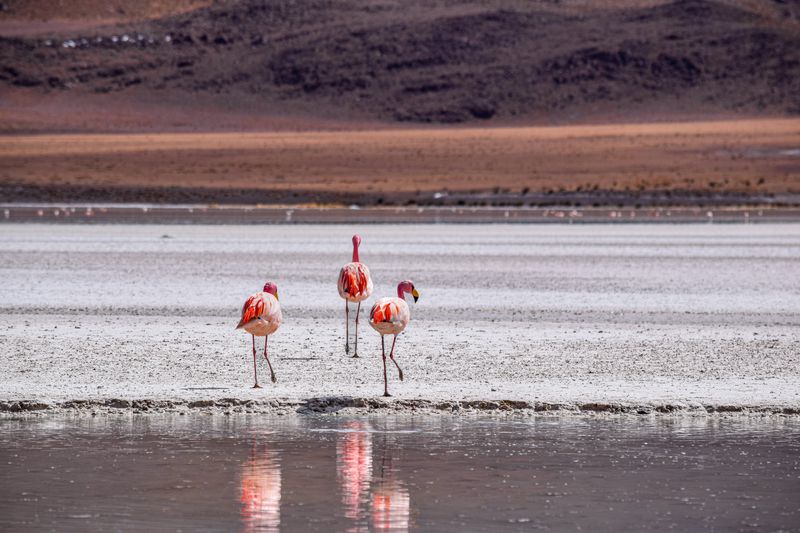
Laguna Colorada — the red lagoon — is not a metaphor: it is genuinely red, deep burgundy, from algae and iron sediment on the bottom. The flamingos are not decoration: they are three distinct species (Andean, James's and Chilean) that concentrate here because this is one of their main breeding sites. And the Sol de Mañana geysers, at 4,850m, reach full activity at dawn when the earth-air temperature difference is greatest.
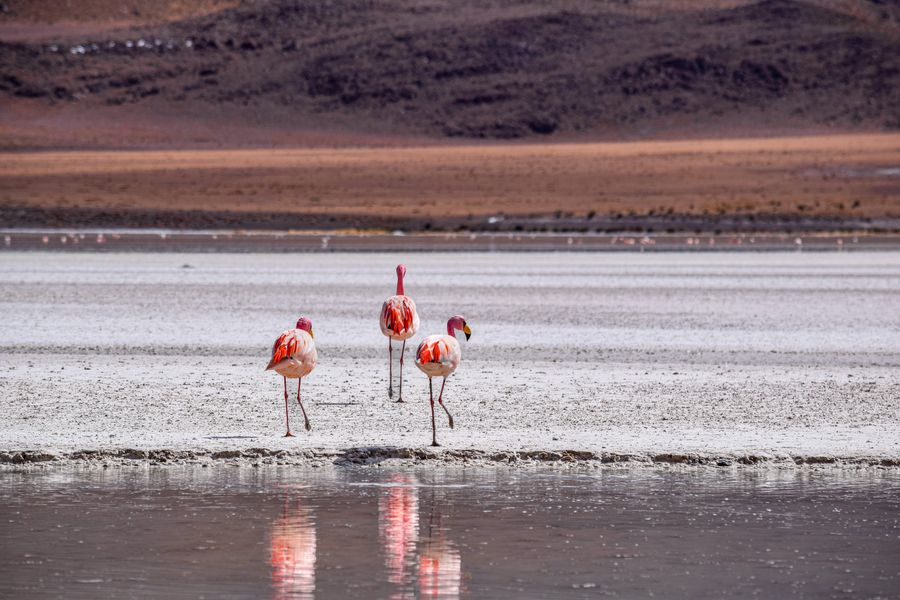
Bolivia flamingos
4,278m
Laguna Colorada altitude
40,000
flamingos at peak
3
species in one lake
–20°C
coldest salt flat night
— Southwest destinations

Six destinations, one circuit.

Laguna Colorada
4,278m
Potosí

Laguna Colorada

The blood-red flamingo lagoon

60 km² of blood-red water at 4,278m — one of Bolivia's most iconic images. The red comes from red algae and iron-rich sediment. The white patches are borax deposits. Up to 40,000 flamingos of three species. Most visited at sunset, when the sky reflects in the still water and the flamingos glow pink against the red surface. Eduardo Avaroa Reserve entry required ($30 USD).

Tip
Arrive in the afternoon for the best light. Cold nights (-15 to -20°C) are normal — sleeping at the lagoon in basic shelters is possible but dress in extreme cold-weather layers.
Sol de Mañana
4,850m
Potosí

Sol de Mañana

South America's largest geyser field

The Sol de Mañana geyser field sits at 4,850m — the highest and most active in South America. Mud pools boil, steam columns rise 10m, sulphur vents colour the ground yellow. The field is most dramatic at dawn (5–7am) when cold air makes the steam columns most visible. The smell of sulphur is intense. Stay on the marked paths — the ground crust is thin and unstable in places.

Tip
Tours stop here between 5–7am en route to Laguna Verde. Dress in your warmest layers — it is 4,850m at dawn. Don't step off the marked paths.
Laguna Verde & Blanca
4,400m
Potosí

Laguna Verde & Blanca

Emerald lake at the base of Licancabur

Laguna Verde (Green Lagoon) sits at the base of the Licancabur volcano (5,916m) on the Chilean border — the colour comes from copper, lead and arsenic minerals in the water. Adjacent Laguna Blanca (White Lagoon) contrasts sharply. The view of Licancabur's perfect cone reflected in the green water is one of the most photographed in Bolivia.

Tip
The Chile–Bolivia Hito Cajón border crossing is visible from the lagoon. The lake is at its most vivid green in the wind — copper minerals stir up when the water is rough.
Polques Hot Springs
30°C
Potosí

Polques Hot Springs

Natural hot springs in the altiplano

The Polques thermal pools (also called Aguas Termales Chalviri) are natural hot springs at 4,400m, adjacent to a flamingo lagoon. Water temperature holds at 30°C year-round. Bathing at 30°C in minus temperatures with flamingos 50m away and Licancabur in the background is one of the southwest circuit's most memorable moments.

Tip
Bring your swimwear in your daypack — the springs are brief but unmissable. The contrast of hot water and cold air at 4,400m is intense.
Dalí Desert & Siloli
4,500m+
Potosí

Dalí Desert & Siloli

Rock sculptures in the altiplano wind

The Dalí Desert (named for the Salvador Dalí paintings it resembles) is a plateau of wind-eroded volcanic rock formations in the Siloli Desert, at about 4,500m. The Árbol de Piedra (Stone Tree) — a 7m rock pedestal sculpted by wind-blown sand — is the most photographed rock formation in the Bolivian altiplano. The palette of ochre, red and black rock against blue sky and white salt flats is uniquely surreal.

Tip
The Stone Tree is on the main circuit route — standard stop on all southwest tours. Best photographed in the mid-morning light.
Uyuni — The Gateway
3,656m
Potosí

Uyuni — The Gateway

Starting point for all southwest circuits

All southwest circuits start and end in Uyuni town (3,656m). The salt flat is either visited as part of the circuit (day 1 or day 6) or as a separate tour. Uyuni has good accommodation, tour agencies, and basic restaurants. The train cemetery (2km from town) — rusting steam locomotives from the 1900s — is a worthwhile afternoon stop on arrival.

Tip
Book your southwest circuit (min. 3 days) before arriving in Uyuni — reputable agencies fill up during high season. The Uyuni mirror effect (rainy season, Nov–Mar) can be combined with the southwest circuit on the same trip.
— The three species

Three flamingos, one lake.

Laguna Colorada is one of the only places on earth where all three South American altiplano flamingo species coexist in the same lake at the same time.

🦩The rarest

Andean Flamingo

Phoenicoparrus andinus
Vulnerable (IUCN)

The scarcest of the three — only about 30,000 individuals worldwide. Distinguished by yellow legs and the most intense pink plumage. Breeds on the southern Bolivian altiplano (Laguna Colorada, Laguna Hedionda). Bolivia holds 40–60% of the world's total population.

🦩Yellow face

James's Flamingo

Phoenicoparrus jamesi
Near Threatened (IUCN)

Also called the Puna flamingo. Distinguished by the yellow bill with black tip and white-pink plumage. Smaller than the Andean. Breeds at extreme-altitude salt lagoons (3,500–4,700m). Laguna Colorada is one of its main breeding sites.

🦩Most common

Chilean Flamingo

Phoenicopterus chilensis
Near Threatened (IUCN)

The most abundant and widely distributed of the three — from Patagonia to Bolivia. On the Bolivian altiplano, seen at almost every lagoon in the southwest circuit. Distinguished from the Andean by pink legs with red knee joints and a longer neck.

📅
Best season for flamingos: November–March. Population peaks during breeding season (December–January). The southwest circuit in dry season (May–October) still has consistent presence of all three species, though in smaller numbers (10,000–15,000 individuals).
— When to visit

Dry vs wet season: two distinct experiences.

Jan
Feb
Mar
Apr
May
Jun
Jul
Aug
Sep
Oct
Nov
Dec
☀️May–Sep
Dry season — reliable roads
Dry tracks, clear skies, perfect circuit conditions. Daytime temperatures are comfortable (12–18°C) but salt flat nights can reach –20°C. Bring extreme cold-weather gear.
🦩Nov–Mar
Maximum flamingo population
The rainy season is the peak wildlife season. Flamingos reach 40,000 at Laguna Colorada during breeding (Dec–Jan). Roads are harder but the wildlife spectacle is unmatched.
🌊Nov–Mar
Uyuni mirror effect
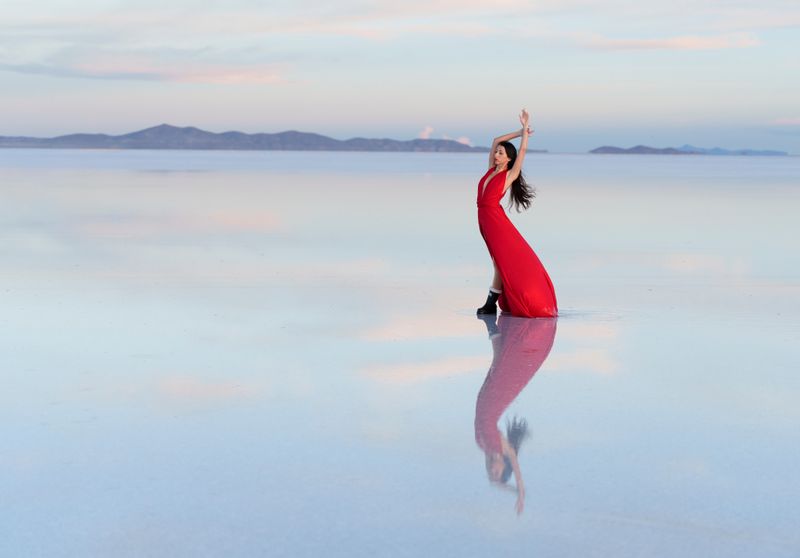
If combining the southwest with the Salar de Uyuni, rainy season brings the mirror effect to the salt flat. The only time you can see red flamingo lagoons AND a mirror-flat salt lake on the same trip.
❄️Jun–Jul
Altiplano winter — extreme cold
June and July nights are the coldest in the southwest — down to –25°C on the salt flat. A warm sleeping bag and proper clothing are not optional. Check your equipment with your operator before departure.
— Love Bolivia route

The route designed for the southwest.

El Flamenco route
Route 05
El Flamenco

The complete southwest circuit: Uyuni · Laguna Colorada · Sol de Mañana · Eduardo Avaroa · Laguna Verde. 7–10 days from Santa Cruz.

7–10 days · From La Paz or Santa Cruz
from $1,900 · €1,777 · Bs. 13,167
FAQ

Frequently asked questions.

Get in touch →

The blood-red color comes from red-pigmented algae (Dunaliella salina) and cyanobacteria that thrive in the shallow, highly saline water, combined with iron-rich red sediment on the bottom. The white patches are borax deposits. The color is most intense in afternoon light and on calm days.

Up to 40,000 flamingos during peak breeding season (November–March). Three species: Andean (rarest, IUCN Vulnerable), James's (IUCN Near Threatened) and Chilean (IUCN Near Threatened). All three can be seen at the same time — one of only a handful of places on earth where this is possible.

Only by 4×4 jeep on guided tour — no public transport. Standard access is a 3-day circuit from Uyuni (280km south). The circuit can also be started from San Pedro de Atacama, Chile. All tours must use a licensed Bolivian operator.

This is Bolivia's highest ecosystem. Laguna Colorada: 4,278m. Sol de Mañana geysers: 4,850m. High desert passes: 5,000m+. Altitude sickness at these elevations is serious. Acclimatize in La Paz (3,600m) or Uyuni (3,656m) for at least 2 days first.

Yes. The circuit can be done in reverse starting from San Pedro de Atacama (Chile), entering Bolivia via the Hito Cajón border post. The circuit ends in Uyuni. You must have a Bolivian tourist visa (if required for your nationality) and the jeep must be operated by a Bolivian licensed operator. Confirm border crossing hours with your operator.

— Plan your southwest trip

Ready to see
the red lagoon?

45 minutes. We design your southwest circuit with logistics, accommodation and a realistic budget.

$90 · €85 · Bs. 623

Book a consultation → $90 · €85 · Bs. 623El Flamenco →