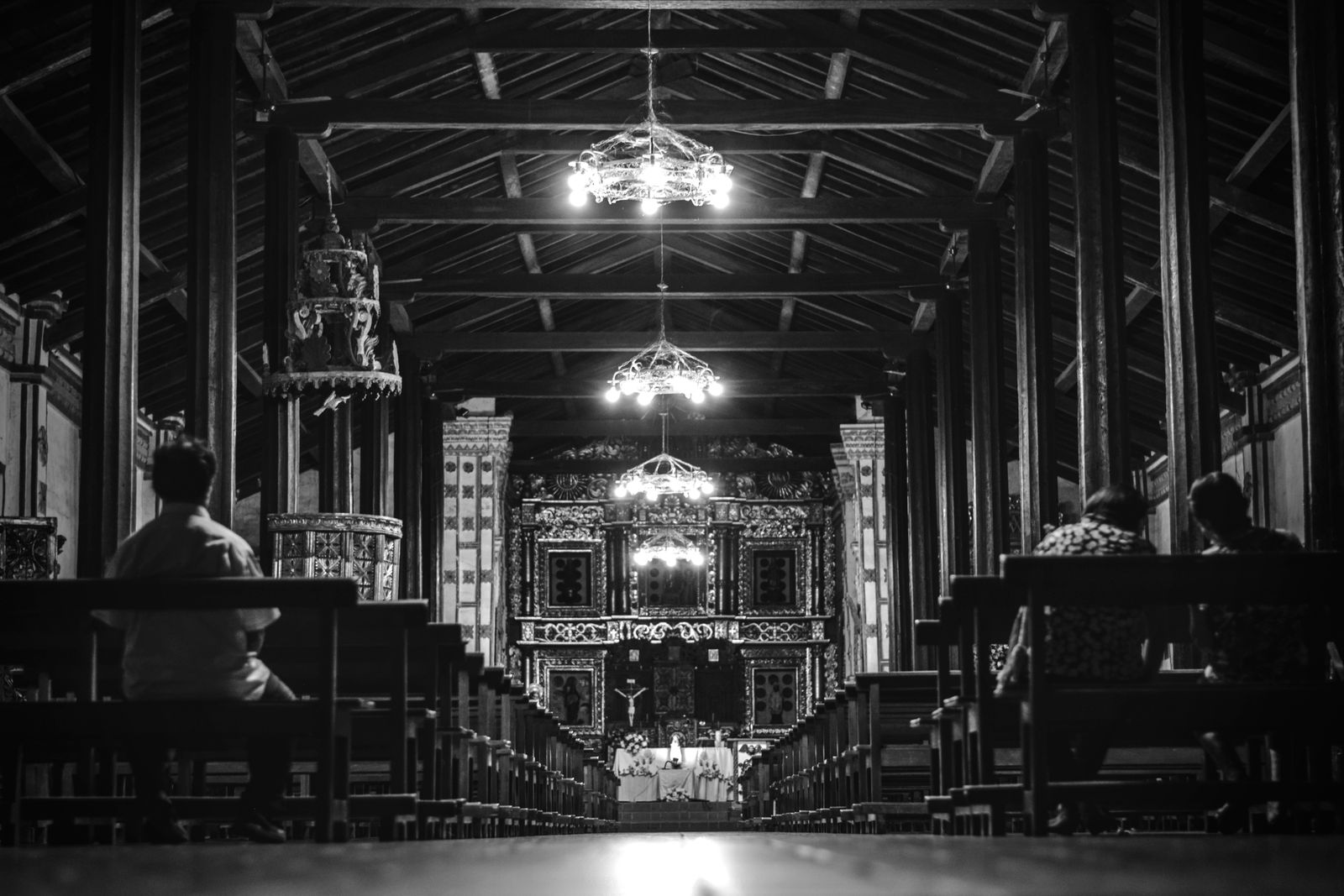
Six Jesuit mission churches east of Santa Cruz de la Sierra were inscribed together as a single UNESCO World Heritage Site in 1990: San Javier, Concepción, Santa Ana, San Miguel, San Rafael and San José de Chiquitos. They are the only mission complex in South America where the churches are still standing, still in use, and still full of people on a Sunday — the Guaraní and Chiquitano missions in Paraguay, Argentina and Brazil survive as ruins. That distinction is the whole reason to come, and it is also the reason nobody has heard of them.
This is Bolivia’s least-travelled World Heritage route. You will not queue. In Santa Ana de Velasco you may well be the only visitor of the day, and the woman with the key to the church will walk over from her house to let you in.
What the Chiquitos missions actually are
Between 1691 and 1755 the Jesuits founded a chain of reducciones in the dry forest of what is now the Santa Cruz department — planned settlements built around a central plaza, a church and workshops, modelled loosely on the “ideal cities” of sixteenth-century humanist writers. San Javier came first in 1691, then San Rafael in 1695, San José in 1698, Concepción in 1699, San Miguel in 1721 and Santa Ana in 1755.
Then, in 1767, the Spanish Crown expelled the Jesuits from all of its American territories. Everywhere else, the missions collapsed. In Chiquitos the Chiquitano communities kept them running by themselves — the buildings, the workshops, the choirs and, extraordinarily, the sheet music.
The architecture
Most of what you see is timber. These are not stone cathedrals; they are enormous wooden halls with carved cedar columns, deep overhanging eaves and walls of adobe, built by Chiquitano craftsmen using European plans and local technique. The Swiss Jesuit Martin Schmid — priest, composer and architect — designed at least three of the surviving churches and built San Rafael de Velasco between 1747 and 1749.
The result is a hybrid you find nowhere else: a Baroque facade painted in ochre and mica, angels with Chiquitano faces, spiral columns of turned wood, and a mica-flecked pulpit that catches the light through an open door.
The missions are not preserved buildings. They are buildings that were never allowed to stop being used — which is a different and rarer thing.
The music archive
When Swiss architect Hans Roth began restoring the churches in 1972, he started finding paper. Bundles of it, in cupboards, under altars, in sacristies. By the time the work ended with his death in 1999, more than 5,000 pages of Renaissance and Baroque scores had been recovered — masses, villancicos and operas written by European Jesuits and by Chiquitano composers whose names in many cases are lost.
The collection is now catalogued, digitised and climate-controlled in the archive at Concepción, and it is the reason the Chiquitania has a Baroque music festival at all.
How to get there from Santa Cruz
Every version of this trip starts in Santa Cruz de la Sierra, Bolivia’s largest city and its main international air gateway alongside La Paz.
By car
This is the option we would recommend if your budget allows. A rental 4×4 from Santa Cruz runs roughly USD 70–110 a day in 2026, and having your own vehicle turns the Velasco loop from a logistics problem into an afternoon.
The road east to San Javier (about 220 km, three to four hours) and on to Concepción (a further 70 km, around 1.5 hours) is paved and easy. Past Concepción toward San Ignacio de Velasco — about 476 km from Santa Cruz in total — surfacing gets patchy, and the loop connecting San Miguel, San Rafael and Santa Ana, roughly 159 km all in, is largely unpaved. In the dry season it is fine in a normal car; in the wet it is not fine in anything.
By bus
Buses leave the Santa Cruz terminal bimodal daily for San Javier, Concepción and San Ignacio de Velasco. Expect roughly Bs 50–90 to Concepción and Bs 100–150 through to San Ignacio depending on the operator and whether you take a semi-cama. Most of the long services run overnight; the daytime departures are worth paying a little more for, because the dry forest is genuinely beautiful and you will otherwise sleep through it.
Where buses fail you is the Velasco loop. Connections between the three small missions are infrequent and badly timed. From San Ignacio, hiring a taxi for the day to do San Miguel, San Rafael and Santa Ana in one circuit costs somewhere around Bs 400–600 split between passengers, and it is money well spent.
By organised tour
Santa Cruz agencies sell three- to five-day mission circuits with a driver-guide. It is the simplest way to do it and typically lands between USD 400 and USD 900 per person depending on group size and hotel standard. Worth it if you want the history explained properly, unnecessary if you have a car and a guidebook.
The six churches, in the order that makes sense
San Javier (1691) — the oldest foundation and the natural first night. The church has a wonderfully austere painted facade and a set of turned columns that Schmid’s workshop is credited with. The town itself is small and green, and the local cheese is genuinely good.
Concepción (1699) — the most spectacular of the six and the one to prioritise if you only see one. Restored between 1975 and 1982, its interior is a blaze of gold leaf and painted timber. The music archive and the mission museum are both here.
San Ignacio de Velasco — not one of the six inscribed churches (the original was demolished in the 1940s and rebuilt), but the largest town on the route with about 35,000 inhabitants, and the practical base for the loop. Hotels, ATMs, pharmacies, restaurants.
San Miguel de Velasco (1721) — a favourite among people who know the circuit well. The facade is a wild, gorgeous piece of ochre-and-white painting, and the interior altarpiece is one of the finest in the Chiquitania.
San Rafael de Velasco (1695) — Schmid’s own church, built 1747–1749. The mica-inlaid pulpit and the ceiling of painted cane are the details to look for.
Santa Ana de Velasco (1755) — the last founded, the smallest, and the most moving. A few hundred people live here. The church was built after the Jesuits had already left, by the Chiquitanos themselves, in timber and adobe, and it was deliberately restored as little as possible. There is no gold. There is a dirt plaza, a bell tower on wooden legs, and near silence.
San José de Chiquitos (1698) — the outlier, and the only one built in stone. Its facade is a flat Baroque wall of lime-washed masonry, quite unlike the other five, and it sits on the paved Santa Cruz–Puerto Suárez highway and railway, so many travellers pair it with the trip toward the Pantanal rather than with the Velasco loop.
When to go
May to September is the dry season and the right answer for almost everyone. Roads are passable, the dry forest thins out, and daytime temperatures sit in the high twenties to low thirties Celsius.
From December to March the rains arrive. The unpaved Velasco sections become deep mud, bus services get cancelled at short notice, and a two-hour stretch can turn into six. It is not impossible, but it is not a trip to plan tightly.
One local quirk in either season: the surazo, a cold wind pushing up from Argentina, which can drop a 32 °C afternoon to 12 °C within hours and hold it there for two or three days. Bring one warm layer even in October.
The festival
The Festival Internacional de Música Renacentista y Barroca Americana “Misiones de Chiquitos” is biennial, held in April of even years. The fifteenth edition ran from 17 to 26 April 2026 with 132 concerts across 21 venues and performers from 16 countries, spread across Santa Cruz, the mission towns and Tarija. The next edition falls in April 2028.
If you can time a trip to it, do. Hearing an eighteenth-century mass sung by a Chiquitano choir, in the church the music was written for, from scores found under that same building’s altar, is not an experience with a substitute anywhere else on earth. Book rooms in Concepción and San Ignacio the moment dates are announced.
Practical notes from people who go
- Carry cash. There are ATMs in San Ignacio and Concepción and effectively nowhere else useful. Small mission towns are cash-only, and card machines fail often.
- Church opening hours are informal. Most open for morning mass and again in the late afternoon. In the smallest towns, ask at the parish house or the plaza — someone has the key and will happily open up.
- A modest donation is expected, usually Bs 10–20 per person, sometimes a small formal entrance fee. Museums in Concepción and San José charge separately, in the same range.
- Yellow fever vaccination is recommended for the Bolivian lowlands, and some travellers will need proof of it for onward travel. Check well before you fly.
- Bring insect repellent. This is dry forest, not Amazon, but the mosquitoes at dusk are enthusiastic.
- Spanish helps enormously. English is rare outside Santa Cruz agencies, and the best conversations on this route are the ones you have on a bench in a plaza.
Is it worth the detour?
If your Bolivia trip is Uyuni, La Paz and Titicaca, adding Chiquitos means committing four or five days and a flight or long bus east. That is a real cost.
What you get in return is the part of Bolivia that international itineraries almost never reach: no altitude, no crowds, a completely different climate and culture from the altiplano, and a set of buildings that survived three centuries because a community decided they would. Come for the architecture, stay because Santa Ana on a quiet Tuesday afternoon is the kind of place that reorganises what you thought this country was.
Key facts
- → Six Chiquitos mission churches were inscribed together as a single UNESCO World Heritage Site in 1990: San Javier, Concepción, Santa Ana, San Miguel, San Rafael and San José de Chiquitos.
- → The missions were founded between 1691 (San Javier) and 1755 (Santa Ana de Velasco), ending with the expulsion of the Jesuits from Spanish America in 1767.
- → The Swiss Jesuit Martin Schmid was architect of at least three of the surviving churches and built San Rafael de Velasco between 1747 and 1749.
- → Restoration led by Swiss architect Hans Roth ran from 1972 until his death in 1999 and recovered more than 5,000 pages of Baroque scores, now kept in the music archive at Concepción.
- → San Javier lies about 220 km from Santa Cruz de la Sierra and San Ignacio de Velasco about 476 km; the Velasco loop linking San Miguel, San Rafael and Santa Ana covers roughly 159 km.
- → San Ignacio de Velasco is the largest town on the route with about 35,000 inhabitants, while Santa Ana de Velasco has only a few hundred.
- → The biennial Festival Internacional de Música Renacentista y Barroca Americana held its 15th edition from 17 to 26 April 2026, with 132 concerts across 21 venues and artists from 16 countries.
Frequently asked questions
How many days do you need for the Chiquitos mission circuit? +
Four days is the realistic minimum for all six UNESCO churches, and five is comfortable. A rushed two-day trip only reaches San Javier and Concepción, which are the two closest to Santa Cruz. The Velasco loop — San Miguel, San Rafael and Santa Ana — sits far deeper along unpaved road and needs a full day on its own plus a night in San Ignacio.
Can you visit the Jesuit missions by public bus? +
Yes, and plenty of Bolivians do. Buses leave Santa Cruz bus terminal daily for San Javier, Concepción and San Ignacio de Velasco, and the paved stretch as far as Concepción is straightforward. The problem is the Velasco loop: connections between San Miguel, San Rafael and Santa Ana are infrequent, so most independent travellers hire a shared taxi for that day from San Ignacio.
When is the Baroque music festival in the Chiquitania? +
The Festival Internacional de Música Renacentista y Barroca Americana is biennial and runs in April of even-numbered years. The 15th edition took place from 17 to 26 April 2026 with 132 concerts across 21 venues, so the next one falls in April 2028. Book accommodation in Concepción and San Ignacio months ahead — the mission towns are small and fill completely.
What is the best time of year to drive the mission circuit? +
May to September, the dry season. The unpaved sections between San Ignacio, San Miguel, San Rafael and Santa Ana turn to deep mud in the rains from December to March, and buses are sometimes cancelled outright. The Chiquitania is lowland and hot year round, so expect 30 °C even in winter — but also the occasional surazo, a cold southern wind that can drop temperatures sharply for two or three days.