Skip to content
Cráter de Maragua Bolivia — capas de roca sedimentaria multicolor en valle de Chuquisaca a 55km de Sucre, comunidades jalq\'a tejedoras
vicuna
— 2-day trek · Jalq'a weavers · Multicolour rock1.800–3.500m

Maragua Crater,
Bolivia.

A geological depression ringed by 400-million-year-old multicoloured sedimentary rock, 55km from Sucre. Jalq'a weaving communities. The best valley trekking in Bolivia.

Altitude range
1,800–3,500m
From Sucre
55km · 1.5h
Geological age
400M years
Standard trek
2 days Chataquila–Maragua
Jalq'a textiles
Direct from weaver
Accommodation
Family homestay
— How long do you need

Three options. One crater.

1 day
  • Taxi Sucre → Chataquila (3,500m) + 2–3h downhill walk to Maragua
  • Lunch at Jalq'a family home + direct textile purchase
  • Afternoon: geological crater walk + shared taxi return

The minimum. Only the Chataquila descent, no overnight — still worth it for the landscape and direct textile buying.

2 days
  • Day 1: Sucre → Chataquila → Maragua (6-8h downhill hike)
  • Night at Jalq'a family home in Maragua
  • Day 2: Maragua → Potolo (4–5h) · Weaving community + return to Sucre

The standard itinerary. Combines geological landscape, trekking and immersion in Jalq'a textile culture.

3 days
  • Day 1: Sucre → Chataquila → Maragua (long route via Niña Niña)
  • Day 2: Maragua → crater exploration + weaving workshop with local family
  • Day 3: Maragua → Potolo → minor archaeological sites + return

The extended version for those wanting to know the communities deeply. With 3 days there is time to learn backstrap loom weaving with a Jalq'a artisan.

— Things to do at Maragua Crater

Six experiences off the circuit.

Geology, textiles and living communities. The most authentic destination in the Chuquisaca valleys — no mass tourism.

🥾
Chataquila 3,500m → Maragua 1,800m

Chataquila–Maragua Trek

Best valley trek in Bolivia · 6–8h descent

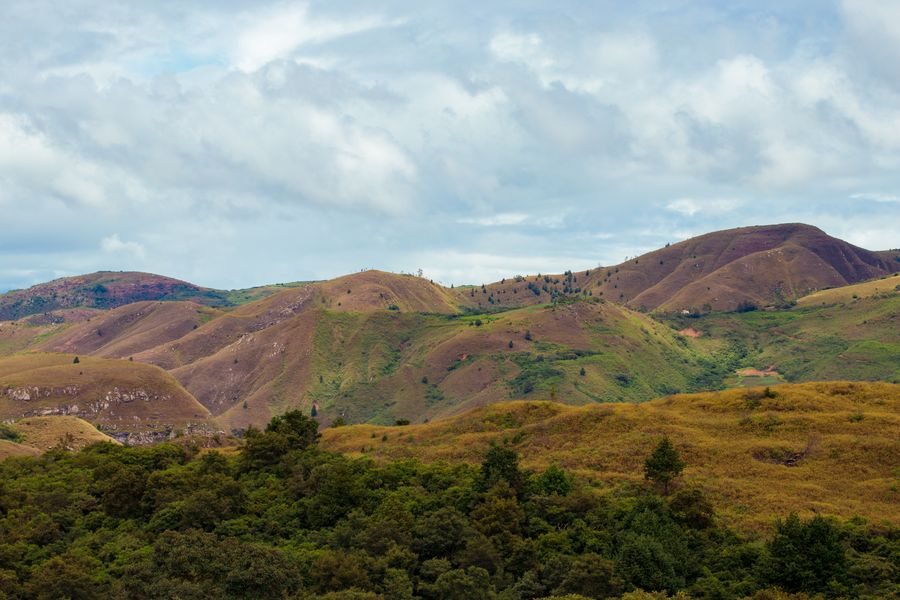
The classic 2-day route: taxi from Sucre to Chataquila viewpoint (3,500m), then 6–8h descent through geological layers of red, white, green and yellow rock to the Maragua depression (1,800m). The trail passes through exposed sedimentary formations — walking through 400 million years of geology in a single day.

Local tip
Start at Chataquila no later than 9am. The descent is long (1,700m drop) but not technical — good trekking boots and poles recommended. Bring 2L water minimum.
🧶
Maragua · Potolo · Chataquila

Jalq'a Textile Purchase

Direct from weaver · unique pieces · no intermediary

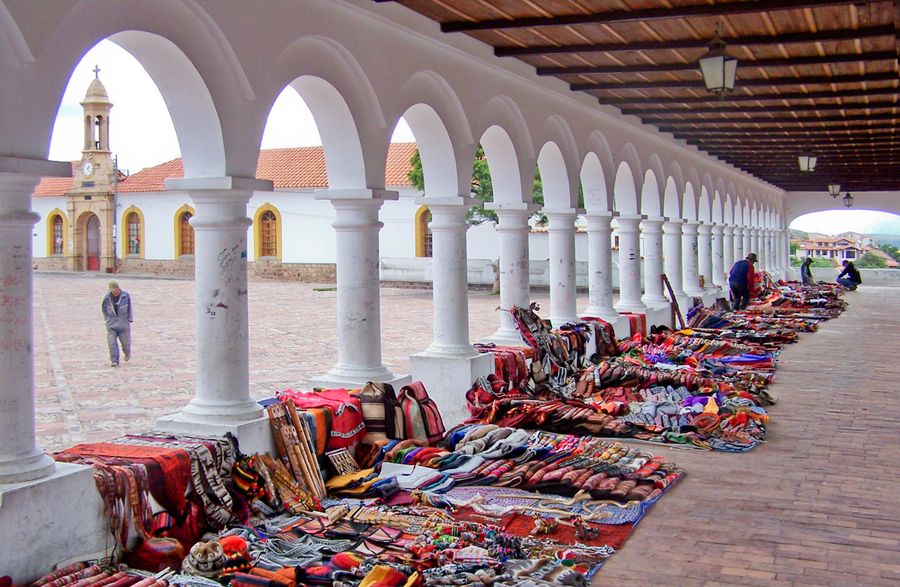
The Jalq'a weave on backstrap looms using sheep wool, in a dark palette of black and red. The motifs represent beings from the ukupacha — the underworld in Andean cosmology: fantastical hybrid creatures. Each piece takes weeks or months and is unique. Prices direct from the weaver: llijlla (shawl) $25–80, chuspa (coca bag) $10–30.

Local tip
Never bargain aggressively — the price reflects the weaver's labour. Ask to see the weaver working: many women in Maragua will show you the backstrap loom process.
🪨
Maragua depression · 1,800m

Geological Crater Walk

400 million years of exposed sedimentary rock

The Maragua depression is a circular geological feature formed by erosion and tectonic folding. The surrounding walls expose layers of Devonian and Carboniferous sedimentary rock in red, white, green and yellow. The 3–4h walk around the rim gives 360° views. No guide needed for the rim walk.

Local tip
Walk the rim in the morning for the best light on the coloured rock faces. Wear a hat — at 1,800m the sun is strong but shade is scarce on the open rim.
🏡
Maragua village

Jalq'a Family Homestay

Breakfast and dinner included · authentic immersion

Jalq'a families in Maragua welcome travellers for overnight stays. Accommodation is basic — shared bathroom, simple bed — but the experience is extraordinary: sleeping in an active weaving household, eating family meals of soup, potato, corn and quinoa. Most families speak Quechua and Spanish.

Local tip
Book through a Sucre agency (Condor Trekkers, Cultura Bolivia) to ensure a family is expecting you. Price: Bs 70–120 per person including breakfast and dinner.
🌄
4–5h from Maragua on foot

Potolo Weaving Community

Day 2 of the classic trek · deeper jalq'a culture

Potolo is the second major Jalq'a community on the 2-day Chataquila–Maragua–Potolo route, reached in 4–5h from Maragua. The Potolo women's weaving cooperative is one of the most active in the region — watch the full backstrap loom process and buy directly.

Local tip
A vehicle from Potolo to Sucre is usually arranged the night before with your host family — the return is 3–4h by truck on a dirt road. Some trekkers continue from Potolo to Tarabuco Sunday market if timing aligns.
📷
Maragua rim · Chataquila viewpoint

Geological Photography

Colours change by hour · unique landscapes

The exposed sedimentary rock at Maragua is one of Bolivia's most photogenic geological landscapes. The layers of red, white, green and yellow rock create contrasts that change dramatically with light. Chataquila viewpoint (3,500m) offers wide-angle views of the descent with the depression visible below.

Local tip
The Chataquila viewpoint (taxi from Sucre) is the most accessible photography point without hiking. For close rock faces: the trail from Maragua to the rim takes 1–2h. Best light: golden hour morning and afternoon.
— What makes Maragua special

Geology, textiles and living communities.

Six keys to understanding Maragua beyond the landscape — the science, culture and rarity of this destination.

🪨
What the Maragua "crater" actually is
The Maragua depression is not an impact crater — it is a syncline (bowl-shaped tectonic fold) formed approximately 65 million years ago as the Andes began their uplift. Subsequent erosion exposed the Devonian and Carboniferous sedimentary rock layers. The name "crater" is a popular denomination that persists due to the circular appearance from the rim.
🎨
Why the colours are so intense
The colours of the rock layers at Maragua result from mineral composition. Red: iron oxide (haematite) under oxidising conditions. Green: copper minerals. White: limestone and gypsum. Yellow: iron oxide under different hydration conditions (goethite). Each colour is literally a geological era with distinct environmental conditions.
🧶
Jalq'a cosmology in the textiles
Jalq'a textile motifs are not decorative — they are theological. They represent the ukupacha, the underworld in Andean Quechua cosmology: the dark, chaotic, feminine space from which life emerges. Jalq'a creatures are impossible hybrids: fish head with bird body, winged jaguar, four-legged serpents.
🌡️
The depression's climate
The Maragua depression (1,800m) is some 1,700m below Chataquila (3,500m). This altitude difference creates distinct microclimates within a single trekking day: cold altiplano departure at Chataquila (10–15°C), subtropical warmth on arrival at Maragua (25–30°C in dry season). Bring layerable clothing.
🗺️
The Inca path to Potolo
The Maragua–Potolo trail partially follows an ancient Inca road (part of the Qhapaq Ñan) that connected valley communities. In some sections the original stone paving is preserved. The path was used for centuries for textile and coca trade between Chuquisaca communities and the colonial centres of Sucre.
🌱
Why there is no mass tourism
Maragua is 55km from Sucre on a dirt road requiring 4×4 in rainy season. No direct public transport. Accommodation is exclusively in family homes — no hotels. This keeps tourism limited to people willing to make the logistical effort. Approximately 500–1,000 visitors per year, compared to 100,000+ at the Tarabuco market.
— From Maragua and Sucre

All on the same valley circuit.

Excursion
55km · 1.5h

Sucre · UNESCO Historic City

Bolivia's constitutional capital · UNESCO World Heritage Site

Sucre is the mandatory base for Maragua — and a destination in itself. The perfectly preserved colonial centre is a UNESCO World Heritage Site: the main plaza, Casa de la Libertad (where independence was declared in 1825), and the Recoleta viewpoint. The ASUR textile museum (Calle San Alberto 413) is the best introduction to Jalq'a weaving before visiting Maragua.

Tip
ASUR has the most comprehensive collection of Jalq'a and Yampara textiles in Bolivia. The museum sells authenticated textiles at fair prices for artisans who cannot travel. Sucre has Bolivia's best selection of accommodation — stay 2 nights to visit Maragua properly.
Excursion
64km from Sucre · Sundays only

Tarabuco · Sunday Market

Most important indigenous Sunday market in the Bolivian valleys

If your Maragua trip falls on a Sunday, combining the Chataquila descent with Tarabuco market is one of the great valley circuits. Tarabuco (3,200m, 64km from Sucre) hosts the most important indigenous Sunday market of the Chuquisaca valleys: Jalq'a and Yampara traders arrive from surrounding communities in traditional dress to sell textiles, food and agricultural products.

Tip
Tarabuco market runs Sundays 9am–2pm only. The Maragua–Tarabuco circuit works: arrive Maragua Saturday, spend the night, taxi from Potolo to Tarabuco for Sunday market, return to Sucre in the afternoon. Ask your host family to arrange the Potolo–Tarabuco vehicle the evening before.
Excursion
5km from Sucre

Cal Orcko · Dinosaur Tracks

World's largest dinosaur track site · 5,055 tracks

Cal Orcko is a near-vertical limestone wall 5km from Sucre with 5,055 dinosaur tracks from 294 individuals — the largest concentration on a single outcrop in the world. 68 million years old. The adjacent Cretaceous Park has full-scale dinosaur replicas and guided interpretation. A half-day from Sucre before or after the Maragua trek is perfectly manageable.

Tip
Cal Orcko Cretaceous Park opens 9am–5pm. Taxi from Sucre centre: Bs 20–30. Entrance: Bs 30. Guided visit takes 1.5–2h. Binoculars help see the smaller tracks on the upper wall.
Excursion
30km from Sucre

Chataquila Viewpoint & Ruins

3,500m viewpoint · Inca and pre-Inca ruins · valley panorama

Chataquila (3,500m) is where the Maragua trek begins — but the viewpoint and the small Inca ruins at the summit are also worth visiting independently. The panoramic view takes in the entire descent route to Maragua: you can see the coloured rock layers and the depression floor from above.

Tip
Taxi from Sucre to Chataquila: Bs 80–120 return including 2h wait. The viewpoint is the most accessible photography point for the Maragua landscape without a full trek. If visiting without trekking, budget 3–4h for the round trip from Sucre.
— Travel logistics

Getting there and getting around.

🚌

How to get to Maragua from Sucre

  • Chataquila (trek start): taxi from Sucre, Bs 80–120 one-way, ~1h on paved then dirt road
  • Organised Sucre → Maragua tour (2 days): Bs 200–300/person with guide, accommodation and transport
  • Own taxi with Chataquila wait (return without trekking): Bs 150–200 all in
  • Niña Niña (alternative): taxi 55km, ~1.5h, ~Bs 120 — start the route lower
  • No direct public transport to Maragua — all access requires taxi or organised tour
  • Rainy season (January–March): dirt track may be impassable — check conditions before departure
🚶

How to get around Maragua

  • Maragua village is fully walkable — all crater area on foot
  • For crater rim: trail from village, 1–2h ascent, no guide needed
  • For Potolo: 4–5h on foot from Maragua via valley trail
  • Transport from Potolo to Sucre: truck arranged with host family, Bs 40–60/person
  • For Maragua–Tarabuco circuit (Sundays): 4×4 arrangeable from Potolo the night before
  • No taxi service in Maragua — all arranged in advance through family or agency
— Climate and seasons

When to visit Maragua.

Jan
Feb
Mar
Apr
May
Jun
Jul
Aug
Sep
Oct
Nov
Dec
May – August
Dry season — the best
Trails are dry, the dirt track to Chataquila is passable in a standard taxi, rock layers have more intense colours under cloudless sun. Temperature in Maragua (1,800m): warm by day (25–30°C), cool at night (12–18°C). Best season for trekking and landscape photography.
January – February
Rainy season — avoid
The dirt track between Sucre and Chataquila can be impassable in heavy rain. The descent trails become slippery and dangerous. If your trip falls in January–February, consider the Tarabuco market instead (the Tarabuco road is paved).
March – April / November
Transition season
Rain decreases in March–April and November. The Chataquila road is usually passable — check conditions before. The landscape is greener. Mild temperatures. Fewer visitors than dry season.
FAQ

Questions about Maragua Crater.

The 8 most common questions about travelling to Maragua Crater and the Chuquisaca valleys.

Plan your trip with us →

Maragua is a geological depression 55km from Sucre surrounded by layers of multicoloured sedimentary rock — red, white, green and yellow — exposed by erosion. It is called a "crater" because of its circular appearance from the rim, but it is not an impact crater: it is a syncline (bowl-shaped tectonic fold) formed approximately 65 million years ago as the Andes began their uplift. Jalq'a indigenous communities live inside the depression and in surrounding villages.

There is no direct public transport to Maragua. Options: (1) Taxi from Sucre to Chataquila (30km, ~1h) + 6–8h downhill trek to Maragua — the classic route; (2) Taxi to Niña Niña (55km, ~1.5h) and start the trek lower; (3) Organised 2-day tour from Sucre (Condor Trekkers, Cultura Bolivia) including guide, transport and homestay, Bs 200–300/person. The Chataquila dirt road is passable in a standard taxi in dry season (May–October); 4×4 recommended in rainy season.

The Chataquila–Maragua–Potolo trek is intermediate level. Day 1: 6–8h descent from Chataquila (3,500m) to Maragua (1,800m) — long but consistently downhill, with a 1,700m altitude drop. The terrain is rocky and uneven; good trekking boots are essential. No technical sections. Day 2: Maragua to Potolo (4–5h), gentler. Good fitness is required.

Jalq'a textiles are backstrap loom pieces woven in sheep wool in black and red, with motifs representing ukupacha beings — fantastical hybrid creatures from the Andean underworld cosmology. Quality indicators: fine thread, dense motif coverage (no background showing through), consistent tension, and clean colour transition. Authentic pieces are never perfectly symmetrical — asymmetry is a feature. Avoid acrylic thread pieces, which have a plasticky sheen.

Accommodation in Maragua is exclusively with local Jalq'a families — there are no hotels or hostels. Prices: Bs 70–120/person including breakfast and dinner. The accommodation is basic (shared bathroom, simple beds) but the experience of sleeping in an active weaving household is extraordinary. Book through Condor Trekkers (Sucre) or Cultura Bolivia for the most reliable arrangements.

Yes — you can reach Maragua by 4×4 vehicle directly via the Niña Niña road (55km from Sucre, ~1.5h). In dry season a standard high-clearance vehicle can manage; in rainy season, only 4×4. This allows a half-day visit: crater rim walk, textile shopping, family lunch. Several Sucre agencies organise half-day vehicle tours to Maragua.

January and February are the wettest months — the dirt tracks can be completely impassable, and the descent trail becomes dangerously slippery in places. December and March are marginal. If your trip falls in the rainy season, consider the Tarabuco Sunday market instead (64km from Sucre on a paved road, fully accessible in all weather).

Essential: trekking boots (rocky, uneven terrain), 2L water minimum, layerable clothing (3,500m cold departure, 1,800m warm arrival), sun hat and sunscreen, trekking poles (useful for steep descent sections), small torch for the family home at night, cash in bolivianos only (no ATMs within 55km), a small gift for the host family. Recommended: binoculars, Spanish phrasebook.

— Plan your Maragua & Bolivia trip

The valleys are waiting.
Start in Maragua.

45 minutes. We design your Chuquisaca valley itinerary with logistics, accommodation and a realistic budget.

$90 · €85 · Bs. 623

Book consultation → $90 · €85 · Bs. 623Sucre, base city →