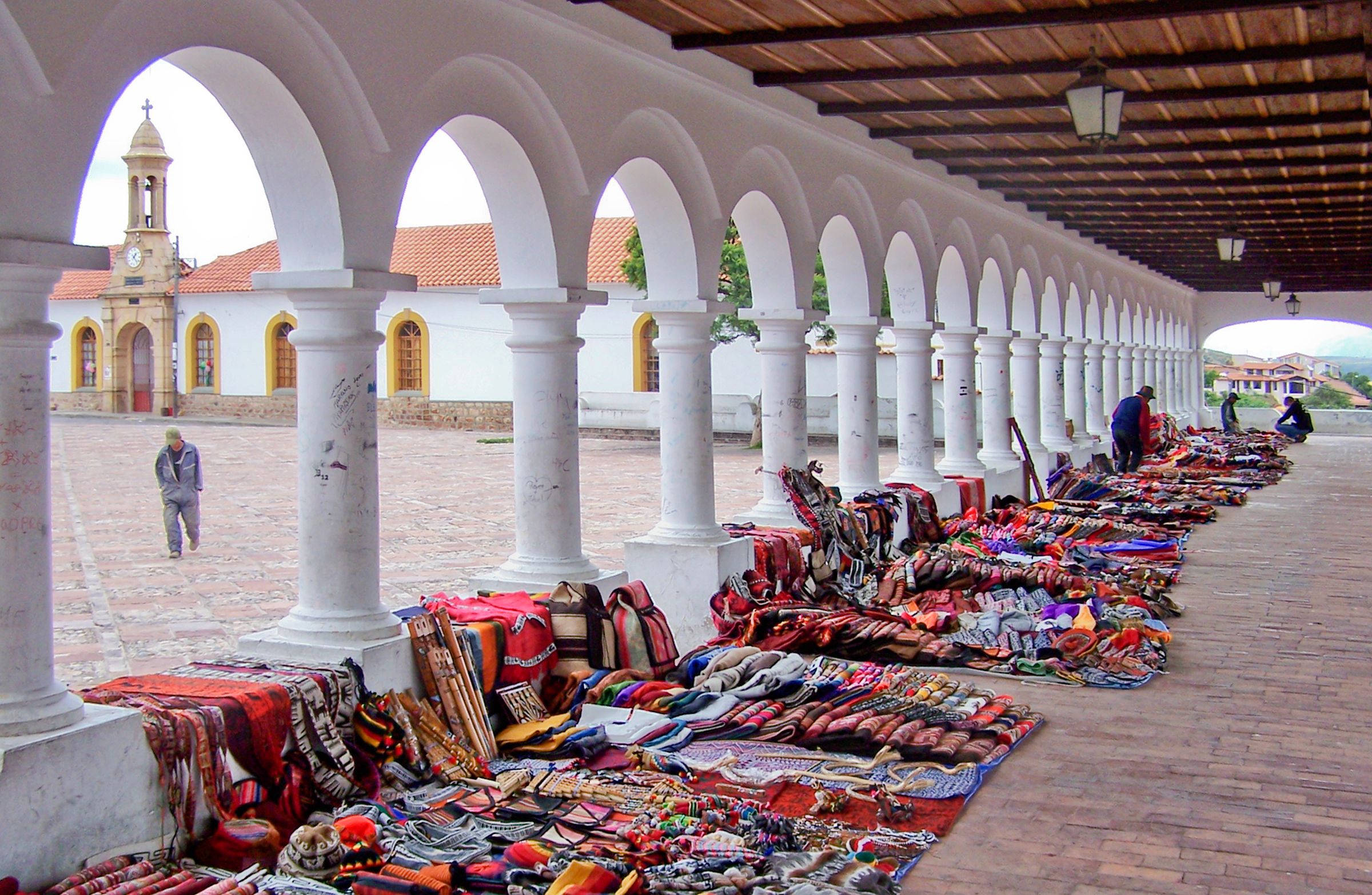

Three itineraries. One white city.
- Day 1: Historic centre — Casa de la Libertad, central market, Recoleta viewpoint, dinner at Arco Iris or El Huerto
- Day 2: Cal Orcko (dinosaur tracks) + Tarabuco if it's Sunday
The minimum viable. Covers both essential sites. Add Potosí (+1 day) if you're already in the region.
- Days 1–2: City — Casa de la Libertad, colonial museums, market, university quarter, Recoleta
- Day 3: Cal Orcko (morning) + Tarabuco if it's Sunday
- Day 4: Day trip to Potosí (3h bus, silver mines + Casa de la Moneda)
The standard first-visit itinerary. Time to see the city properly and add the essential Potosí excursion.
- Days 1–2: City in depth — museums, markets, food scene, Recoleta at sunset
- Day 3: Cal Orcko + Chataquila (Inca sacred site, 30km)
- Day 4: Potosí full day — Cerro Rico mines + Casa de la Moneda
- Day 5: Maragua (crater + jalq'a weaving, community overnight)
- Day 6: Return to Sucre + Tarabuco if it's Sunday
The perfect week in Sucre. Combines the city, its excursions and the valley landscape.
Six essential experiences.
Selected by Bolivians. The White City without the standard guidebook traps.
Casa de la Libertad
The Salón de la Independencia is where Bolivia's founding document was signed on 6 August 1825 — one of the most significant moments in South American history. Located in the old university paraninfo on Plaza 25 de Mayo. The hall preserves the original Act of Independence, portraits of Simón Bolívar and Antonio José de Sucre, and artefacts of the independence period. The plaza itself, surrounded by white colonial buildings, is Sucre at its most photogenic.
Cal Orcko Dinosaur Tracks
Cal Orcko is a near-vertical rock face 80 metres high and 1.2km long covered with more than 5,000 dinosaur footprints belonging to at least 8 species — the world's largest and most diverse dinosaur track site. Age: 68 million years. The wall was originally horizontal at the bottom of a lake; tectonic uplift over millions of years tilted it to near-vertical. Species include titanosaurs (the largest tracks, 1m diameter), theropods and ankylosaurs. The adjacent Parque Cretácico has life-size dinosaur replicas for scale.
Tarabuco Sunday Market
The Tarabuco market runs every Sunday from 9am in the main square and surrounding streets of Tarabuco village, 64km from Sucre. The Yampara and Jalq'a peoples of the region bring textiles, handcrafts and produce. The traditional Tarabuco dress — a helmet-shaped hat derived from Spanish colonial armour, intensely geometric ponchos — is one of the most distinctive indigenous costumes in Bolivia. The Pujllay festival (March) is the largest annual celebration. Arrive before 10am for the fullest atmosphere; by noon it winds down.
Maragua Crater Trek
Maragua is a geological depression — not technically a meteor crater but the result of intense erosion — 55km from Sucre at 3,000–3,500m. A full-day excursion or overnight: hiking trails through coloured rock formations, indigenous Jalq'a weaving communities (the most distinctive textile tradition in Bolivia — dark backgrounds with mythological animals), and views over the valley that are genuinely startling. Overnight stay in community guesthouses puts money directly into local families.
Sucre Food Scene
Sucre is consistently considered Bolivia's best city for food — a combination of fertile valley produce, strong culinary tradition and a university population that sustains good restaurants. Salteñas (baked pastry with spiced stew inside) from Sucre are a benchmark. Chicha de maíz (fermented corn drink) in the traditional chicherías is the local social ritual. The Mercado Central for breakfast: api morado (hot corn drink) with pastel is the standard opening. El Huerto, Arco Iris and Condor Café are the best sit-down options.
Recoleta & the White City
The Recoleta convent (1601, Franciscan) sits on the hill above Sucre's centre and offers the most famous viewpoint over the city — whitewashed rooftops, church towers and valley walls in every direction. The convent museum has colonial religious art and carved-wood choir stalls. The square outside (Plaza Anzures) has the best café terraces in the city. On clear days the view extends to the surrounding valleys. The walk from the centre (15 minutes uphill) is the best introduction to Sucre's neighbourhoods.
Sucre: the capital Bolivia chose.
Six keys to understanding Sucre before you arrive — the history, architecture, textiles and climate that make it unlike any other Bolivian city.
Everything within 3 hours.
Potosí
Potosí is the most powerful day trip from Sucre: a UNESCO World Heritage city at 4,090m built entirely on the silver extracted from Cerro Rico between 1545 and the 19th century. At its peak in 1650 it was larger than London or Paris. The Casa de la Moneda (Royal Mint) is the finest colonial building in Bolivia — eight rooms of the most significant institution in the Spanish colonial economy. The Cerro Rico silver mine tours go inside with local miners.
Tarabuco
Every Sunday the main square and streets of Tarabuco village fill with Yampara and Jalq'a people from the surrounding valleys in traditional dress, selling handwoven textiles, agricultural products and artisanry. The characteristic Tarabuco helmet-hat (derived from Spanish colonial armour) and the intensely geometric ponchos make this visually one of the most remarkable markets in South America. The Pujllay festival (March) brings the entire community together in traditional costume.
Maragua Crater
Maragua is a geological depression formed by intense erosion rather than a meteor impact, at 3,000–3,500m. The landscape is remarkable: multi-coloured rock formations, deep canyon views and a village of Jalq'a weavers who produce the most distinctive textile tradition in Bolivia — asymmetric mythological animals on black backgrounds, no two pieces alike. Trekking trails connect Chataquila (the Inca sacred site) to Maragua and back. Community guesthouses offer overnight stays.
Chataquila Inca Site
Chataquila is an Inca sacred mountain site at 3,500m, 30km from Sucre on a paved road — one of the most accessible Inca sites in Bolivia and one of the most undervisited. The site includes rock carvings, terraces and a ritual platform (ushnu) with 360° views over the valleys and the road to Maragua. The trailhead for the Chataquila–Maragua trekking route starts here. A half-day excursion with any Sucre taxi or agency.
Getting there and getting around.
How to get to Sucre
- Flight: BoA or Amaszonas from La Paz (~50 min, ~$60–100 USD), Santa Cruz (~45 min) or Cochabamba (~35 min). Alcantarí Airport (SRE) is 35km from the centre — taxi ~30 min / ~60 Bs.
- Bus from La Paz: ~11h overnight, several companies, ~60–100 Bs. Comfortable with full flat bed.
- Bus from Potosí: 3h, very frequent, ~20–30 Bs. The most popular inter-destination route.
- Bus from Cochabamba: 7–8h, ~50–70 Bs. Bus from Oruro: 5–6h.
- Bus from Santa Cruz: 12–14h overnight. Bus from Tarija: 6–7h.
- Alcantarí airport sits at 3,500m — higher than the city. You arrive at 3,500m and descend to 2,750m by taxi.
How to get around Sucre
- The historic centre is completely walkable — all major sites within 15 minutes on foot.
- Taxis: abundant, ~10–20 Bs for any journey within the city. Agree price before getting in.
- Micros (minibuses): 2 Bs, cover the whole city — hard without knowing routes, but useful for Cal Orcko.
- For Cal Orcko: direct taxi from the centre ~15–20 Bs (5–10 min). Micro also available.
- For excursions: agencies on Calle Bustillo and around Plaza 25 de Mayo organise daily tours to Tarabuco, Maragua and Chataquila. Hired taxi per day: ~300–500 Bs.
- Mountain bikes: several agencies rent bikes for Chataquila and the Maragua descent.
When to visit Sucre.
Connected routes and ecosystems.
Sucre is the central point for four Love Bolivia routes and the heart of the Bolivian Valleys, with direct access to the Altiplano and Potosí.


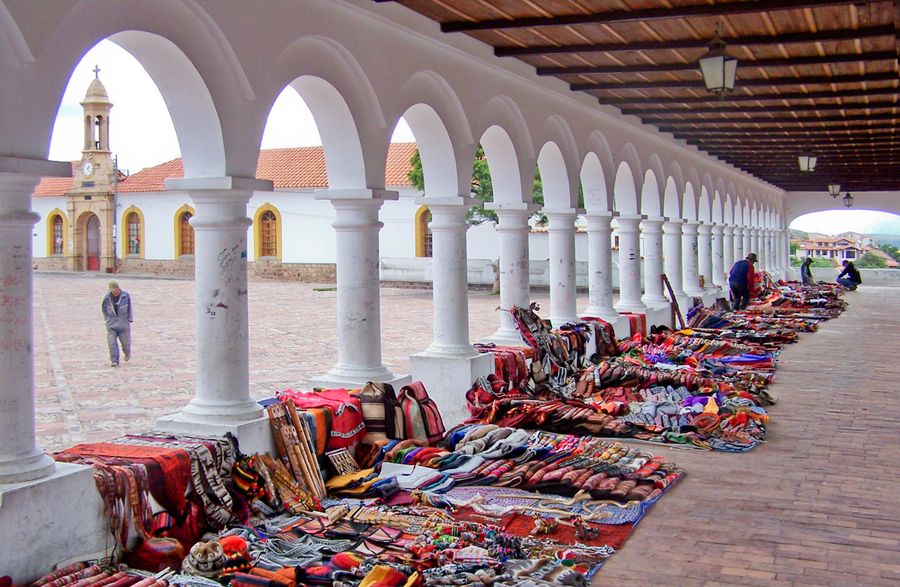
— Gallery
Bolivia in focus
Real photography from our routes. No stock images. Hover to explore.
Questions about Sucre.
The 9 most common questions about travelling to Sucre, Bolivia.
Plan your trip with us →The white city
is waiting.
45 minutes. We design your Sucre and Bolivia itinerary with logistics, accommodation and a realistic budget.
$90 · €85 · Bs. 623