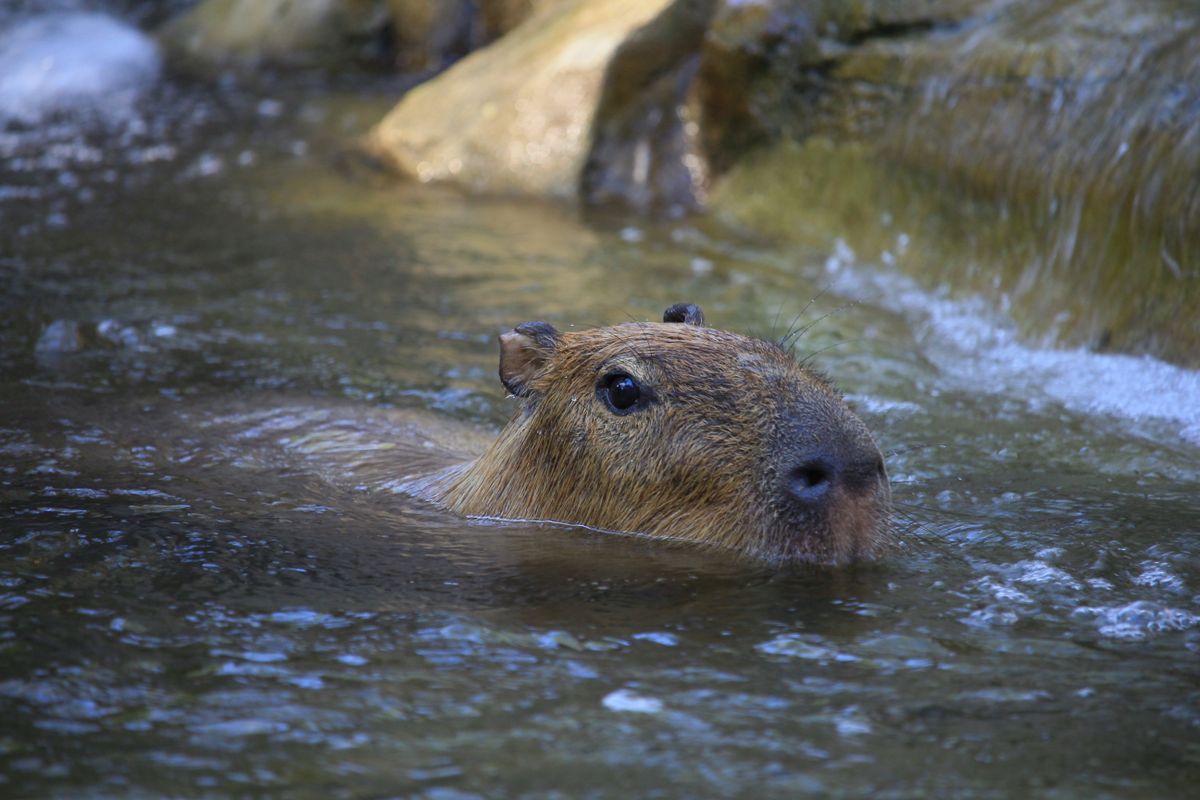
A Rurrenabaque pampas tour is a three-day, two-night trip into the Pampas del Yacuma, a 616,453-hectare protected area of flooded savanna in Bolivia’s Beni Department, and it is the most reliable wildlife viewing in the country. You travel about three hours by road to Santa Rosa de Yacuma, then continue by motorised canoe along the Yacuma River to a riverside lodge. Prices in 2026 start around USD 150 per person with local operators and reach roughly USD 345 at private ecolodges, all-inclusive. Pink river dolphins, caimans, capybaras and squirrel monkeys are not lucky sightings here — they are the baseline.
I grew up hearing about the Beni as the part of Bolivia nobody outside the country could picture. Everyone knows Uyuni. Almost nobody knows that six hours’ travel from La Paz there is a wetland the size of a small European country where dolphins surface next to your boat. If you have room for one wildlife trip in your Bolivia itinerary, this is the one I send friends on.
What the pampas actually is
“Pampas” means plain, and that undersells it. The Llanos de Moxos, the wider ecosystem the Yacuma belongs to, is one of South America’s great seasonal wetlands: grassland that floods in the rains and drains in the dry months, punctuated by islands of forest locals call islas de monte. Rurrenabaque gets about 2,107 mm of rain a year over roughly 119 rainy days. That water has nowhere to go quickly, so it sits on the flat and turns the savanna into shallow lakes and channels.
The Pampas del Yacuma Municipal Protected Area was created in 2007 by the municipality of Santa Rosa de Yacuma and covers 616,453 hectares — around 6,165 km². It has been described as the largest municipal protected area in the world. What makes it unusual is that it is not empty: nine rural communities and more than 170 cattle ranches sit inside the boundaries, with roughly 7,000 people living there. Conservation here has always had to work alongside cattle, and the tourism model was built with community involvement rather than against it.
That matters for what you see. Because the river is the only permanent water in the dry season, everything comes to it.
The animals you can expect
- Bolivian river dolphin (Inia boliviensis), the bufeo. Up to 2.8 m long and 180 kg, pinkish-grey, and completely unbothered by boats. Declared a national treasure under Bolivian law in September 2012.
- Spectacled caiman and black caiman, lining the banks in numbers that take a while to stop being alarming.
- Capybara, the world’s largest rodent, usually in family groups grazing at the water’s edge.
- Squirrel monkeys, capuchins and howlers in the gallery forest along the channels.
- Birds: jabiru storks, roseate spoonbills, hoatzins, kingfishers, hundreds of species in a good three days.
- Anacondas and pink-toed tarantulas on the savanna walk, if the guides find them. Sometimes they don’t.
The pampas is the one place in Bolivia where I have never had to apologise to a guest for the wildlife not showing up. The river does the work for you.
How to get to Rurrenabaque
Rurrenabaque sits at 274 m on the Beni River, in José Ballivián Province. The municipality had 19,195 inhabitants at the 2012 census, about 13,446 of them in town. Everything starts here.
By air (recommended). La Paz to Rurrenabaque takes 45 minutes to an hour in a small aircraft and is the single best-value flight in Bolivia for what it saves you. Expect roughly USD 90–130 one way depending on season and how early you book. Flights are weather-dependent — Rurrenabaque’s runway was only paved in 2010 and low cloud causes cancellations. Reyes Airport, 32 km away, is sometimes used instead because it has better visibility, with a road transfer to compensate.
By bus. 410 km, about 18 hours, from around USD 15–25. The road drops from the altiplano through the Yungas cloud forest and it is genuinely spectacular in daylight. In the rainy season, from November to March, delays of many hours are normal and landslides can close the route entirely.
Timing rule: never schedule your pampas tour to end on the day you fly home. Leave two days of buffer in Rurrenabaque or La Paz. Every experienced guide in Bolivia will tell you the same thing.
The three-day circuit, day by day
Day 1. Morning pickup at your Rurrenabaque hotel, then roughly three hours by 4x4 north to Santa Rosa de Yacuma — about 100 km, at 167 m elevation. The road is unpaved in stretches and dusty in the dry season. From the port you transfer into a long motorised canoe for one to three hours upriver, and the first dolphins usually appear inside the first twenty minutes. Afternoon river safari, sunset from a viewpoint on the savanna, then a night boat ride spotting caiman eyes with torches.
Day 2. The full day. Early river excursion when the birds are active, back for lunch and a siesta through the worst heat, then the anaconda walk through the grassland in rubber boots and the swimming stop where dolphins circle. Piranha fishing in the afternoon on most itineraries. Another sunset, another night walk if you have the energy.
Day 3. Pre-dawn start for sunrise over the water — the best light of the trip, and worth losing the sleep. A last river run, breakfast, then boat and road back to Rurrenabaque by mid-afternoon.
Four-day versions add a day at the lodge. Combined pampas-and-Madidi packages run six days total and are the most efficient way to see both ecosystems if you have the time.
Prices in 2026, and what you get for them
| Tier | Price per person | What it means |
|---|---|---|
| Budget local operator | USD 150–200 | Shared dorm-style cabins, mosquito nets, basic but decent meals, Spanish-speaking guide, group of 6–10 |
| Mid-range | USD 200–280 | Private or twin room, better food, more likely a bilingual guide, smaller groups |
| Ecolodge | USD 300–400 | Private eco-cabins, full board, certified bilingual guide, small groups, more comfortable boats |
All tiers normally include road and river transport both ways, all meals, accommodation, park and community fees, and guiding. Not included: drinks beyond water, tips, rubber boots at some operators, and the flight in.
A few honest notes on choosing. Booking in Rurrenabaque in person is cheaper than booking online, and in the dry season you can usually find a departure for the next morning. Booking ahead makes sense in July and August, the peak. Ask directly whether the guide speaks English if that matters to you — a lot of the value of this trip is in what the guide can name and explain. And ask how many people are in the boat: eight in a canoe is a different experience from fourteen.
Best time to go
May to October — dry season, the best window. Water levels drop, wildlife concentrates on the remaining channels, the road to Santa Rosa is passable and the mosquitoes are marginally less committed. July and August are busiest and coolest. Late September and October are hot but excellent for sightings, because the water is at its lowest.
November to March — rainy season. The savanna floods, animals disperse across a much bigger area, sightings drop, and the road can become impassable. Tours still run but the experience is less reliable. On the other hand, it is greener, emptier and cheaper.
Watch for surazos. Cold fronts push up from the south between May and August and can drop temperatures from 32 °C to 12 °C in a day. Bolivians in the lowlands plan around them. Pack one warm layer even in the tropics — I have seen far too many travellers shivering in a t-shirt on a night boat.
What to pack
- Long-sleeved light shirt and long trousers. Sun and mosquitoes. Not negotiable.
- Strong repellent with DEET or icaridin. Buy it in La Paz or Rurrenabaque if you can’t bring it.
- Rubber boots — most operators lend them, but confirm your size exists.
- Sun hat, sunglasses, high-factor sunscreen. There is no shade on open water.
- Head torch for night walks and for lodges with limited generator hours.
- Dry bag or plastic bags for camera and phone. The canoe will splash.
- One warm layer and a light rain jacket.
- Cash in bolivianos. ATMs in Rurrenabaque are unreliable and there are none at the lodges. Bring more than you think you need.
- Refillable water bottle and any personal medication, including something for stomach upsets.
Practical realities worth knowing
Phone signal at the lodges is patchy to nonexistent — treat the three days as offline. Electricity usually runs on a generator for a few evening hours, so charge everything when you can. Lodges are basic by design: mosquito-netted beds, cold showers, shared bathrooms at the budget end. Food is simple and generous, and vegetarians are catered for if you say so when booking, not on arrival.
On ethics: the good operators keep distance from animals, don’t feed dolphins, don’t pull anacondas out of the grass for photographs, and employ guides from the nine communities inside the reserve. The bad ones do the opposite. You can usually tell within an hour, and asking about community employment before you book is a fair question that a serious operator will answer happily.
Yellow fever vaccination is recommended for the Bolivian lowlands, and worth sorting before you travel — see our yellow fever guide for the details. If you are coming straight from La Paz at 3,600 m, the drop to 274 m will feel wonderful, and the reverse trip is the one to be careful with.
Three days on the Yacuma will change what you thought Bolivia was. Most people arrive expecting salt flats and leave talking about a dolphin that surfaced an arm’s length from the boat at sunrise.
Key facts
- → The Pampas del Yacuma Municipal Protected Area covers 616,453 hectares (about 6,165 km²) in Santa Rosa de Yacuma municipality, Beni Department, and has been described as the largest municipal protected area in the world.
- → The reserve contains nine rural communities and more than 170 cattle ranches inside its boundaries, with an estimated 7,000 residents.
- → Rurrenabaque sits at 274 m (899 ft) on the Beni River, 410 km from La Paz — about 18 hours by bus or 45 minutes to 1 hour by plane.
- → Santa Rosa de Yacuma, the gateway town where boats depart, lies roughly 100 km from Rurrenabaque at 167 m elevation, a drive of about three hours.
- → The Bolivian river dolphin (Inia boliviensis) reaches up to 2.8 m long and 180 kg. It was declared a national treasure by Bolivian law in September 2012 and is listed on CITES Appendix II.
- → A standard three-day, two-night pampas tour costs from about USD 150 per person with Rurrenabaque operators to around USD 345 at private ecolodges in 2026, all-inclusive.
- → Rurrenabaque receives about 2,107 mm of rain per year across an average of 118.6 rainy days, which is why the savanna floods.
- → Rurrenabaque Airport was paved in 2010; Reyes Airport, 32 km away, is used as an alternative because it often has fewer low clouds.
Frequently asked questions
Pampas or jungle — which tour should I choose? +
If your priority is seeing animals, choose the pampas. The flooded savanna is open country and wildlife gathers at the water, so pink dolphins, caimans, capybaras and monkeys are close to guaranteed. Madidi jungle tours are about dense primary rainforest, plants and sounds, with fewer sightings. Many travellers do both back to back from Rurrenabaque, usually three days of pampas followed by three of jungle.
Can you swim with the pink dolphins? +
Most operators include a swim stop in a deep bend of the Yacuma where dolphins come and go. It is not a captive encounter and nothing is guaranteed — the dolphins approach if they feel like it, and guides ask you not to touch or chase them. Do not swim without your guide's approval: the same water holds caimans, and the guide chooses the spot for a reason.
Do I need a yellow fever vaccine for the pampas? +
Yellow fever vaccination is recommended for Bolivia's tropical lowlands, which includes the whole Beni Department and the pampas. The certificate is valid for life and is sometimes requested when entering neighbouring countries after a lowland trip. Get it at least ten days before travelling so it takes effect. Also bring strong repellent — mosquitoes on the pampas are relentless at dusk.
Should I fly or take the bus from La Paz to Rurrenabaque? +
Fly if you can. The flight takes 45 minutes to an hour and drops 3,300 metres in altitude. The bus covers 410 km in about 18 hours on mountain and jungle road, and in the rainy season it can take considerably longer or not run at all. Rurrenabaque flights are also weather-dependent, so never book a pampas tour that ends the same day your international flight leaves.