Skip to content
San José de Chiquitos Bolivia — mayor complejo misional jesuítico UNESCO 1990, única fachada de piedra barroca, accesible en tren desde Santa Cruz
jabiru
— Founded 1698 · UNESCO 1990 · 220km from Santa Cruz · Largest complex · Unique stone facade

San José
de Chiquitos.

The most architecturally ambitious Jesuit mission in Bolivia. Founded in 1698, San José de Chiquitos has the largest complex in the circuit — four buildings with the only stone facade of the six UNESCO missions. The Santa Cruz–Brazil train stops here: the most accessible mission in the circuit.

Founded
1698
UNESCO
1990
Facade
Unique stone (others: wood/plaster)
Complex
4 buildings (the largest)
Access
Train from Santa Cruz
Distance
220km from Santa Cruz
— How long do you need

The best base to start the circuit.

1 day
  • Santa Cruz → San José by road (220km, 3.5h) or train (5h, scenic)
  • Main plaza + 4-building complex (church + college + mortuary chapel + bell tower)
  • Church interior + mission museum (2h)
  • Lunch in San José
  • Return by car (3.5h) or afternoon train

San José is the only circuit mission where the train is a real option. The Ferrocarril del Oriente (Santa Cruz → Puerto Quijarro → Brazil) stops at San José 3 times per week. The combination of going by train (5h, forest views) + returning by car (3.5h) or vice versa maximises the experience.

2 days
  • Day 1: Santa Cruz → San José by train or car → afternoon at the mission complex
  • Day 2: Full morning in San José (museum, local craft workshops) → return to Santa Cruz
  • Optional: San Miguel de Velasco (90km north, 1.5h on paved road)

San José is the best starting base for the full circuit — the night before beginning the route. With 2 days only at San José, the second day allows exploring the complex at leisure and visiting the community's woodworking and weaving workshops.

4–5 days — Full Circuit
  • Day 1: Santa Cruz → San José de Chiquitos (southern circuit base)
  • Day 2: San José → San Miguel (90km paved)
  • Day 3: San Miguel → San Rafael (55km) → Santa Ana (20km)
  • Day 4: Santa Ana → Concepción via northern road
  • Day 5: Concepción → San Francisco Javier (50km) → Santa Cruz

San José as the circuit starting point gives logistical advantage: it is the most accessible and the easiest to orient. The circuit progresses from the largest and most accessible (San José) toward the most remote and authentic (Santa Ana), finishing at the most famous (Concepción).

— What to see in San José de Chiquitos

The most monumental complex, the stone facade.

Four baroque buildings in a 120m facade. The only stone in the circuit. The train from Santa Cruz. The most complete museum. And the gateway to the Pantanal.

🏛️
Mission complex · main plaza

The Four-Building Complex · 120m Long

Church + college + mortuary chapel + bell tower — largest mission complex in Bolivia

San José de Chiquitos has the largest and most architecturally complete mission complex in the Chiquitos UNESCO circuit. Four separate buildings arranged in a continuous baroque facade: the church (the largest nave of the six missions), the Jesuit college, the mortuary chapel, and the bell tower. Together they form a 120-metre ensemble facing the main plaza. The scale of San José reflects the ambition of the Jesuit mission project at its peak — by 1698, the Jesuits had been in Chiquitos for 7 years and had developed a refined construction methodology.

Local tip
Allow 2 full hours for the complex: 45 minutes for the church interior with a guide, 30 minutes for the college (which includes the museum), 15 minutes for the mortuary chapel, and 30 minutes to walk the exterior and photograph the complete facade. The best exterior photograph of the full 120m complex requires standing at the far end of the main plaza — use a wide-angle or panoramic approach.
🪨
Main plaza · west-facing

The Unique Stone Facade

The only stone baroque facade in the Chiquitos circuit — all others are wood and plaster

The defining architectural distinction of San José de Chiquitos is its stone facade — the only one in the six UNESCO missions. While Concepción, San Rafael, San Miguel, Santa Ana and San Francisco Javier all have facades of carved and painted wood or adobe plaster, San José's builders used quarried stone. This gives the complex a weight, permanence and monumentality that distinguishes it from the other missions. The stone carving — baroque ornamental reliefs on the facade surface — was executed by Chiquitano craftsmen who had learned stone carving specifically for this project.

Local tip
The stone facade is best photographed in the late afternoon (4–6pm) when the western light turns the stone warm gold. The scale of the facade — four buildings spanning 120m — means that individual architectural details are best studied up close, while the full ensemble requires distance. The stone carvings on the main church entrance show figures and botanical motifs that blend European baroque with Chiquitano natural imagery.
🚂
San José railway station

The Santa Cruz–Brazil Train

Ferrocarril del Oriente · 5h scenic journey · 3 departures per week

San José de Chiquitos is the only UNESCO Chiquitos mission with a railway station. The Ferrocarril del Oriente (Eastern Railway, now operated by FCA) connects Santa Cruz to Puerto Quijarro on the Brazilian border, passing through the heart of the Chiquitano dry forest. The journey from Santa Cruz to San José takes approximately 5 hours and crosses some of the most intact dry forest landscapes in Bolivia — tapirs, giant anteaters and dozens of bird species are occasionally visible from the windows at dawn.

Local tip
The train runs approximately 3 times per week (schedules change — check current timetables at the Santa Cruz train station). Book in advance, especially on the return (San José → Santa Cruz) which can fill on weekends. First class (Pullman) has reclining seats and air conditioning. The best wildlife viewing is from windows on the right side of the train (south side) on the outbound journey. The train arrives at San José in the early afternoon, giving time for a quick visit to the mission complex.
Mission complex · adjacent to church

Mortuary Chapel · Unique in the Circuit

The only separate mortuary chapel in the six UNESCO missions

San José de Chiquitos is the only mission in the circuit with a dedicated mortuary chapel (capilla mortuoria) — a small baroque building separate from the main church used specifically for funeral rites. This reflects the greater institutional development of San José compared to smaller missions: a full Jesuit college, a separate administrative building and dedicated liturgical spaces for specific functions. The mortuary chapel is a scaled-down baroque building with its own entrance, nave and altar.

Local tip
The mortuary chapel is included in the guided complex visit. It is the smallest of the four buildings and easy to overlook in favour of the main church, but architecturally interesting precisely because of its scale — a complete baroque building in miniature. The chapel gives a sense of how the Jesuits thought about community institutions: every aspect of communal life (including death) had its own dedicated architectural space.
🏺
Jesuit college building · included

Mission Museum · Best in the Circuit

Comprehensive history of all six Chiquitos missions · maps · music manuscripts · artefacts

The Museo Misional at San José de Chiquitos (housed in the restored Jesuit college) is the most comprehensive mission museum in the entire Chiquitos circuit. The museum covers: the pre-Jesuit Chiquitano indigenous culture; the foundation of each of the ten Chiquitos missions (1691–1760); the Jesuit methodology of conversion through education, music and craft; the expulsion of 1767 and its consequences; the 20th-century restoration by Hans Roth; and the current state of the six UNESCO missions. Exhibits include original mission documents, music manuscripts, maps and period artefacts.

Local tip
Allow 45 minutes for the museum — it is the best place to understand the full Chiquitos circuit before or after visiting the other missions. The music manuscript facsimiles give a vivid sense of the Chiquitano baroque music tradition. Ask the museum guide for the current road conditions between missions and their recommendation for the circuit sequence.
🌿
San José · 300km from San Matías border

Gateway to the Eastern Pantanal

Chiquitano forest transitions to the Pantanal — world's largest tropical wetland

San José de Chiquitos sits at the eastern edge of the Chiquitano dry forest, where it begins to transition into the Pantanal ecosystem — the world's largest tropical wetland (150,000 km² in Bolivia, Brazil and Paraguay). The San Matías border crossing (300km east of San José) gives access to the Bolivian Pantanal, a UNESCO Ramsar wetland of exceptional biodiversity. San José is the natural staging point for travellers combining the Chiquitos mission circuit with a Pantanal excursion.

Local tip
The Bolivian Pantanal (accessed via San Matías, 300km east) is a distinct experience from the Chiquitano mission circuit — wetland fauna rather than dry-forest baroque. The combination (circuit + Pantanal) requires at least 7–8 days from Santa Cruz. Operators in Santa Cruz can arrange Pantanal extensions from San José. The best Pantanal access is via San Matías; the road from San José to San Matías (300km) is partly paved and passable year-round.
— History and context of San José de Chiquitos

The only stone in the circuit.

Why San José chose stone, how the train changed its history, and why it is the best starting point for the Chiquitos circuit.

🪨
Why stone at San José and wood at the others?
San José's stone was not the Jesuit standard option — it was a specific choice for this site. The San José area has accessible limestone quarries not available near the other northern missions. The Chiquitano craftsmen who had learned wood carving for the earlier churches adapted their skills to stone. The result is a unique convergence: indigenous carving technique adapted to a European material, in the Jesuit baroque iconographic style.
📐
The 4-building complex layout
San José de Chiquitos's complex follows the standard Jesuit typology but at larger scale: (1) Church — main nave, the largest in the circuit; (2) College — adjacent to the church, for the education of young Chiquitano; (3) Mortuary chapel — separate, for funeral rites; (4) Bell tower — free-standing tower for bells. The four form a continuous 120m facade. The interior courtyard between church and college was the centre of the mission's educational life.
🚂
The Ferrocarril del Oriente: history
The Ferrocarril del Oriente was built between 1938 and 1955 as part of the peace agreement ending the Chaco War between Bolivia and Paraguay. Brazil provided financing and technology in exchange for access rights. The Santa Cruz–Puerto Quijarro line (650km) was Santa Cruz's first rail connection to the outside world. Today it operates under FCA (Ferroviária Centro-Atlântica) concession. The stop at San José de Chiquitos made the mission one of the first interior Bolivian towns with rail access.
🌳
The Chiquitano forest around San José
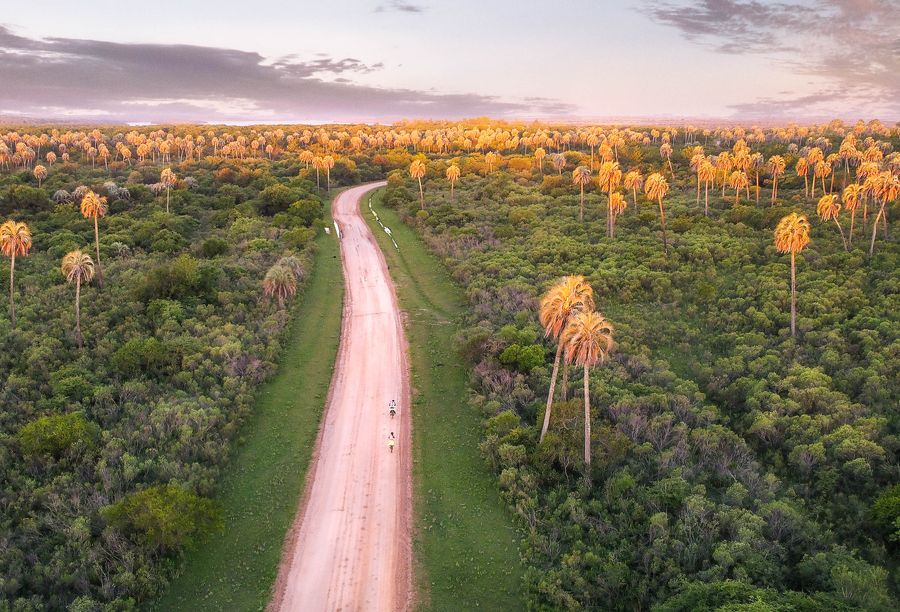
San José de Chiquitos is surrounded by Chiquitano dry forest — the world's largest intact tropical dry forest. Unlike the northern missions (closer to Santa Cruz, with more deforestation), San José has intact forest within a few kilometres. The road and railway east of the town cross stretches with good fauna — tapirs (Tapirus terrestris), giant anteaters (Myrmecophaga tridactyla) and over 350 bird species are common.
🎭
Hans Roth and the restoration of San José
Hans Roth worked at San José de Chiquitos after San Miguel (1972), Concepción (1975–1982) and San Rafael. The restoration of San José was technically different because of the stone material — the cleaning and consolidation methods for stone are distinct from those for painted wood. Roth also had to manage the larger scale of the complex. The San José restoration was completed in the 1990s.
🌐
San José as the circuit starting point
San José de Chiquitos is recommended as the circuit starting point for several reasons: (1) more accessible than the other missions (paved road + train); (2) the most complete mission museum to understand the circuit before visiting it; (3) the largest complex that sets the reference frame; (4) the best accommodation and restaurant infrastructure of the southern circuit. The route from San José progresses toward more remote and authentic territories.
— From San José de Chiquitos

The full circuit and the Pantanal.

Excursion
90km · 1.5h paved

San Miguel de Velasco · 90km north

First Roth restoration (1972) · weaving cooperative · junction to southern missions

San Miguel de Velasco (90km north of San José on a mostly paved road) is the next stop on the circuit and the natural staging point for the southern sub-circuit (San Rafael + Santa Ana). Hans Roth began his restoration work here in 1972. The town has a women's weaving cooperative, better accommodation than the southern missions, and the most important junction in the circuit — from San Miguel, the southern unpaved road leads to San Rafael (55km) and Santa Ana (75km).

Tip
The San José → San Miguel drive (90km, 1.5h) is the only fully paved road segment between the six UNESCO missions south of Concepción. Use this segment to make good time and plan arrival in San Miguel before 3pm to have time to visit the church and cooperative before they close.
Excursion
215km · 3.5h

Concepción de Chiquitos · 215km northwest

Most photographed Chiquitano mission · cream-white baroque facade · EABO festival

Concepción de Chiquitos (215km northwest of San José via the main highway and then north) is the most famous and photographed mission of the circuit — its cream-white baroque facade and the biennial EABO baroque music festival make it the public face of the Chiquitos UNESCO heritage. From San José, the route goes west on the main highway to San Miguel (90km), then north to Concepción (125km, partly unpaved).

Tip
Concepción is the natural culmination of the full circuit from San José — after the remote southern missions (San Rafael, Santa Ana), Concepción's relative accessibility and larger town infrastructure is a welcome contrast. The EABO festival (biennial, even years, April) should be booked 6+ months in advance for accommodation.
Excursion
300km · 5h via San Matías

Bolivian Pantanal · 300km east

World's largest tropical wetland · jaguars · caimans · capybaras

The Bolivian Pantanal (accessed via San Matías, 300km east of San José) is the natural extension of the Chiquitos circuit for wildlife-focused travellers. The Pantanal is the world's largest tropical wetland (150,000 km² across Bolivia, Brazil and Paraguay) and one of the best places on Earth to see jaguars (Panthera onca), giant river otters (Pteronura brasiliensis), yacaré caimans and capybaras in the wild. The Bolivian section (accessed from San Matías) is the least visited and most pristine part of the Pantanal.

Tip
The Pantanal extension from San José requires at least 3 additional days: 1 day travel to San Matías (300km), 2 days in the Pantanal lodges. Santa Cruz tour operators (Jukumari Tours, Amboro Ecotours) arrange Pantanal packages from San José. The best jaguar-viewing season is July–October (dry season, when animals concentrate around water sources). The road from San José to San Matías (300km) is partly paved and passable year-round.
Excursion
220km · 3.5h or 5h by train

Santa Cruz de la Sierra · 220km

Circuit base · international connections · rental car · tour operators

Santa Cruz de la Sierra (220km from San José — 3.5h by road or 5h by train) is the gateway to the entire Chiquitos circuit. All tour operators, car rental agencies and logistics for the circuit are based here. The city has international connections (flights via Bogotá, Lima, São Paulo) and domestic flights from La Paz and Cochabamba. San José is the last stop before Santa Cruz on the southern circuit loop.

Tip
The return from San José to Santa Cruz by train (departures ~3 per week, check current schedule) is a beautiful journey — the late afternoon train arrives in Santa Cruz in the evening. Book the return train seat before starting the circuit, as weekend departures fill. The road return (3.5h) is the faster option if the train schedule doesn't align.
— How to get there

Car or train from Santa Cruz. The most accessible.

🚙

How to get to San José de Chiquitos

  • By car: 220km from Santa Cruz on mostly paved road (3.5h)
  • By train: Ferrocarril del Oriente Santa Cruz → San José (5h, ~3 departures/week)
  • Flights to Santa Cruz (VVI) from La Paz, Cochabamba and international (via Bogotá, Lima)
  • Car rental from Santa Cruz: recommended for the full circuit (4×4 for the southern stretch)
  • Bus from Santa Cruz Terminal Bimodal: services available but irregular schedules
ℹ️

In San José: what to know

  • Mission complex: open for guided visits approx. 8am–5pm (coordinate with museum)
  • Mission Museum: most complete in the circuit — allow 45 minutes
  • Railway station: 10min from centre by taxi — verify schedules before arriving
  • Accommodation: Hotel Misión (best option), others on the main plaza
  • Restaurants: decent variety around the plaza — better than the southern missions
  • No 4×4 needed for San José alone: road from Santa Cruz is paved
— Seasons and access

Accessible year-round. Best in dry season.

Jan
Feb
Mar
Apr
May
Jun
Jul
Aug
Sep
Oct
Nov
Dec
May – September
Dry season — best for the circuit
The dry season (May–September) is the most recommended for starting the full circuit from San José. The unpaved roads of the southern sub-circuit (San Miguel → San Rafael → Santa Ana) are only reliable in dry season. San José, being accessible year-round by paved road and train, can be visited in any month — but if continuing south, plan for dry season.
October and April
Transition — possible for San José alone
San José is visitable year-round thanks to its accessibility (paved road + train). October and April are transition months with possible rain but generally accessible. If the plan is only San José (without the southern sub-circuit), any month works. For the full circuit, wait for dry season.
Wet season (November–March)
Valid for San José, not the southern circuit
San José de Chiquitos is accessible in wet season — the paved road from Santa Cruz and the train run year-round. The wet season problem is the southern sub-circuit (San Miguel → San Rafael → Santa Ana): those unpaved roads can become impassable. For visiting only San José, any time of year is valid.
FAQ

Questions about San José.

The 5 most common questions about the largest, most accessible mission and the only one with a stone facade in the Chiquitos UNESCO circuit.

Plan the circuit with us →

San José de Chiquitos has three distinctive features that set it apart from the other five UNESCO missions: (1) it has the only stone baroque facade in the circuit — all others use wood and plaster; (2) it has the largest complex — four buildings (church, college, mortuary chapel, bell tower) spanning 120 metres; (3) it is the most accessible — 220km from Santa Cruz on a paved road, and the Santa Cruz–Brazil train stops here. It is also the natural starting point for the full circuit.

Yes. The Ferrocarril del Oriente (Eastern Railway, operated by FCA) connects Santa Cruz to Puerto Quijarro on the Brazilian border, with a stop at San José de Chiquitos approximately 5 hours from Santa Cruz. The train runs approximately 3 times per week (schedules change — check current timetables at the Santa Cruz main train station or with tour operators). First class (Pullman) has reclining seats and air conditioning. Book in advance, especially for weekend departures.

The stone facade of San José de Chiquitos is the only carved stone baroque facade in the six UNESCO Chiquitos missions. All other missions (Concepción, San Miguel, San Rafael, Santa Ana, San Francisco Javier) use facades of carved and painted wood, adobe or plaster. San José's builders used locally quarried limestone because the site had accessible stone quarries not available near the other missions. Chiquitano craftsmen adapted their wood-carving skills to stone. The result is a monumental baroque ensemble that differs in both material and scale from the rest of the circuit.

Yes — it is the recommended starting point. San José has four advantages as a circuit base: (1) most accessible (paved road + train from Santa Cruz); (2) largest mission complex for orientation; (3) most complete mission museum to understand the circuit before visiting; (4) best infrastructure (accommodation, restaurants) of the southern missions. Starting in San José and progressing north (San Miguel → San Rafael → Santa Ana → Concepción) takes you from the most accessible to the most remote, ending in the most famous.

Yes. San José de Chiquitos is the natural staging point for a Pantanal extension (300km east to San Matías). The Bolivian Pantanal is the least visited and most pristine section of the world's largest tropical wetland. Combining the Chiquitos circuit (4–5 days) with a Pantanal excursion (2–3 days) requires at least 7–8 days from Santa Cruz. Santa Cruz operators (Jukumari Tours, Amboro Ecotours) arrange both circuits. The best jaguar-viewing season in the Pantanal is July–October (dry season).

— Plan the Chiquitos circuit

The most monumental.
The stone baroque.

45 minutes. We design your complete circuit of the 6 UNESCO Jesuit missions with the right operators and optimal itinerary.

$90 · €85 · Bs. 623

Book consultation → $90 · €85 · Bs. 623Santa Cruz →