
Itineraries
How long do you need
- Depart Santa Cruz 6am
- San Miguel via Chiquitos highway (3–3.5h)
- Church: painted facade and interior
- Weaving cooperative (workshop and shop)
- Lunch on the plaza
- Return to Santa Cruz
- Day 1: San Miguel (church, cooperative, overnight)
- Day 2: San Rafael (55km south, 4×4 recommended)
- Day 3: Santa Ana de Velasco (20km further, overnight) → return
- Santa Cruz → San José de Chiquitos → San Miguel
- San Miguel → San Rafael → Santa Ana
- Return via San José or north via Concepción
What to Do
The essential experiences in San Miguel de Velasco
Swiss architect Hans Roth chose San Miguel in 1972 as the starting point for what would become the most significant restoration project in Bolivian cultural heritage history. When Roth arrived, San Miguel's church was in advanced decay — the roof had partially collapsed and the painted interior was heavily damaged. Roth's work here established the methodological approach he would apply to all six missions: archaeological analysis, traditional material reproduction, and maximum respect for original elements. The restoration took 4 years (1972–1976).
San Miguel's church facade and interior use natural pigments that Roth identified and recreated during the restoration. The painted wooden facade (white base with terracotta and green ornamental bands) is more colourful than Concepción's monochrome cream. The interior has ceiling paintings with Amazonian natural motifs — birds, flowers, vines — integrated into the European baroque compositional grammar. The carved wooden columns in the nave have distinctive floral capitals.
San Miguel has Bolivia's most established Chiquitano weaving cooperative, producing traditional textiles using techniques that trace to the mission period. The cooperative's women artisans weave cotton and silk fabrics using patterns that encode Chiquitano cosmology — geometric designs that represent animals, plants and celestial bodies in the Bésiro (Chiquitano language) visual tradition. The cooperative sells directly to visitors at the workshop and showroom on the main plaza.
Unlike some heritage sites, San Miguel's church is an active parish in a living Chiquitano community. Sunday mass (9am) incorporates Bésiro language elements and traditional music — a direct continuation of the Jesuit music education tradition. The community uses the plaza for markets and gatherings. The church's daily rhythm (bells, mass, community events) gives San Miguel a warmth that museum sites cannot replicate.
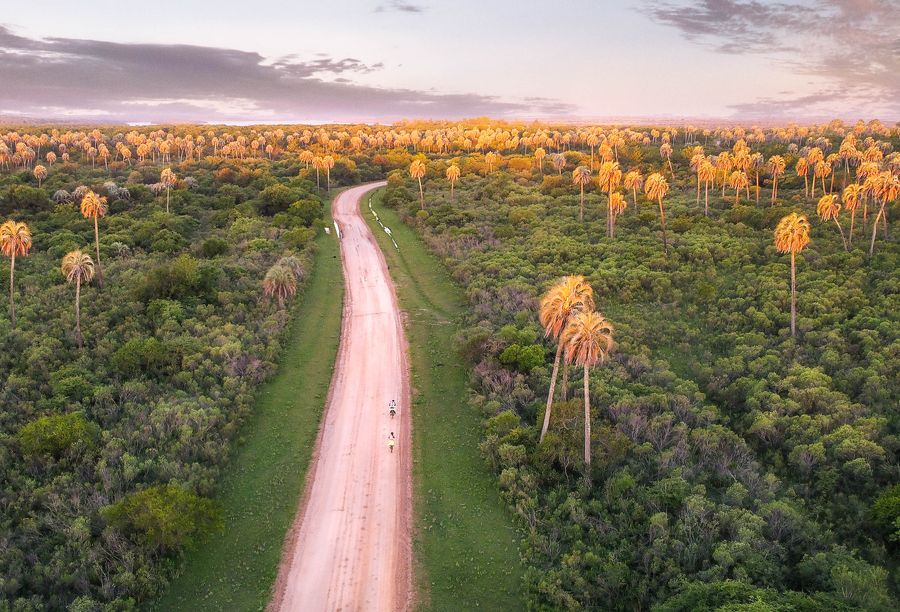
San Miguel sits in the Chiquitano dry forest — the world's largest intact tropical dry forest. The transition between the mission's cultivated plaza and the surrounding forest is abrupt and dramatic: the adobe walls of the town give way immediately to tall dry-season forest with distinctive deciduous trees and abundant wildlife. The road between San Miguel and the next missions (San Rafael to the south) passes through protected forest with good birdwatching.
San Miguel is the junction point on the circuit where the route splits toward the southern missions (San Rafael, Santa Ana) which are the most remote and least visited of the six UNESCO churches. From San Miguel, San Rafael is 55km south and Santa Ana is 20km beyond San Rafael. The road from San Miguel south is not paved and requires 4×4 in wet season.
Historical Guide
Roth, the weaving tradition and the southern circuit
Roth's approach was unique in Latin American heritage conservation: he removed all later additions (19th–20th century modifications) and used physical evidence — surviving paint traces, original timber analysis, archival photographs — to guide the reconstruction. He trained local Chiquitano craftsmen in traditional techniques, creating a self-sustaining restoration capacity that continued after his death. San Miguel was the proof of concept that justified the entire project.
The APAC foundation (Acción Para el Arte y la Cultura) was the institutional vehicle for Roth's restoration work. Founded in Bolivia with Swiss and European support, APAC managed the funding, materials and logistics for the multi-decade restoration of all six missions. The foundation continues to work on conservation and cultural programming in the Chiquitos region after Roth's death in 2000.
The weaving tradition in San Miguel traces its origins to the mission period when Jesuit missionaries introduced European textile techniques (frame loom, silk cultivation) alongside indigenous Chiquitano backstrap loom traditions. The resulting synthesis produced a distinctive Chiquitano textile style: geometric patterns in the Bésiro visual tradition, natural dyes from local plants, cotton and silk combination fabrics. San Miguel's cooperative is the most active custodian of this tradition.
Bésiro (also called Chiquitano) is the indigenous language of the Chiquitano people — the only surviving language from the Chiquitano reduction network that is not endangered. Approximately 30,000–40,000 speakers in Bolivia and Brazil maintain active use of Bésiro. The language is integrated into Sunday mass liturgy in San Miguel and the other mission towns. Bésiro has a written tradition that developed during the Jesuit mission period.
The road from San Miguel south to San Rafael (55km) and then Santa Ana (20km further) is unpaved dirt and gravel. In dry season (May–September) it is passable with a 2WD vehicle with good ground clearance. In wet season (October–April) 4×4 is mandatory — the road can become impassable after heavy rain. Always ask locally about current conditions. The road from Santa Ana back to San José de Chiquitos (joining the main highway) is also unpaved.
San Rafael de Velasco (founded 1696) and Santa Ana de Velasco (founded 1755) are the two least-visited missions in the UNESCO circuit. Both have outstanding baroque churches with painted interiors. Santa Ana is the smallest and most intimate of the six — a single-nave church with extraordinary painted wooden interior. Both towns are smaller and quieter than Concepción or San Miguel, with limited but basic accommodation.
The Circuit: Other Missions
The missions before and after San Miguel
The UNESCO circuit's most visited mission, 145km north of San Miguel. The cream-white baroque facade (Hans Roth restoration 1975–1982) and the Museo Misional make Concepción the ideal starting or ending point for the circuit. EABO baroque music festival venue (biennial, April, even years).
Founded in 1696, San Rafael is the closest of the southern missions from San Miguel (55km on unpaved road). The church has a beautifully restored painted interior. The town is small and quiet — fewer than 2,000 inhabitants — and gives an unfiltered view of contemporary Chiquitano community life.
Santa Ana (founded 1755) is the smallest and most intimate of the six UNESCO missions — a single-nave church with an extraordinary painted wooden interior in excellent condition. The town is tiny (under 1,000 inhabitants) and sees very few tourists. Staying overnight at Santa Ana is one of the most peaceful experiences in the Chiquitos circuit.
The most architecturally monumental mission in the circuit — four buildings with a unique stone facade. San José is the most accessible mission (train from Santa Cruz to Brazil stops here). It is the natural southern bookend of the circuit and has the best accommodation options in the southern missions.
How to Get There & Around
Practical logistics
- 215km from Santa Cruz on the Chiquitos highway (3–3.5h, mostly paved)
- Bus from Santa Cruz Terminal Bimodal
- Car rental recommended for the full circuit (4×4 for the southern trio)
- Flights to Santa Cruz (VVI) from La Paz, Cochabamba, and international
- The main plaza is the town hub
- Church open for mass and guided tours
- Weaving cooperative: workshop and shop on the plaza (buy direct)
- Basic accommodation available in town
- Simple restaurants around the plaza
Best Time to Visit
Seasons and circuit road conditions
Best time for the full circuit: cool, clear skies, good road conditions even on the southern trio. Temperatures 18–30°C.
Growing/fading heat, some rain. The unpaved roads of the southern trio (San Rafael, Santa Ana) can be difficult — 4×4 necessary.
Southern roads can become impassable. Limit the circuit to Concepción and San Miguel (accessible on paved road). High heat and humidity.
— Gallery
Bolivia in focus
Real photography from our routes. No stock images. Hover to explore.


FAQ
Everything you need to know about San Miguel de Velasco and the southern circuit.