Skip to content
Iglesia de Santa Ana de Velasco Bolivia — la última y más aislada de las seis misiones jesuíticas UNESCO 1990, mejor conservada, Chiquitania
jabiru
— Founded 1755 · UNESCO 1990 · 310km from Santa Cruz · Most isolated · Best preserved

Santa Ana
de Velasco.

The last of the six UNESCO Jesuit missions to be founded (1755). Santa Ana de Velasco is the most isolated and the best preserved — 310km from Santa Cruz, rarely visited. The isolation that makes it logistically challenging is exactly what has preserved it better than any other mission in the circuit.

Founded
1755 (last of 6)
UNESCO
1990
Distance
310km from Santa Cruz
Population
~3,000 inhabitants
Preservation
Best in the circuit
Access
Unpaved · 4×4 recommended
— How long do you need

Always from San Rafael, 20km to the north.

1 day (from San Rafael)
  • San Rafael → Santa Ana (20km unpaved, 45min)
  • Main plaza and church facade
  • Interior: finest preserved in the circuit
  • Walk through the Chiquitano village
  • Return to San Rafael or continue south/east

Santa Ana is almost always visited from San Rafael — 20km of unpaved road between them. The visit requires 2 hours in Santa Ana: the church, the plaza and a village walk reveal the best preservation of traditional Chiquitano community life in the circuit.

2 days — Southern Sub-circuit
  • Day 1: Santa Cruz → San Miguel (215km, 3.5h) → San Rafael (55km, 1.5h) · overnight San Rafael
  • Day 2: Santa Ana (20km, 45min) → 2h in Santa Ana → return to San Miguel → Santa Cruz or San José

The classic southern sub-circuit. San Rafael + Santa Ana in two days is the most authentic Chiquitos circuit experience — the two most isolated, least visited and best preserved missions, combined in a 2-day excursion from Santa Cruz.

5 days — Full Circuit
  • Day 1: Santa Cruz → San José de Chiquitos (220km)
  • Day 2: San José → San Miguel (90km)
  • Day 3: San Miguel → San Rafael (55km) → Santa Ana (20km)
  • Day 4: Santa Ana → San Francisco Javier via Concepción
  • Day 5: Concepción → Santa Cruz

Santa Ana as the penultimate stop of the full circuit. The southern route (San Rafael → Santa Ana) is the trip's highlight — the most remote and the most authentic. Plan Day 3 with an early start from San Miguel (7am) to have full time in both missions.

— What to see in Santa Ana de Velasco

The most remote treasure in the circuit.

The last founded, the most isolated, the best preserved. Santa Ana de Velasco rewards the effort of getting there with the most authentic Chiquitano baroque interior of the six UNESCO missions.

Church interior · guide access

The Finest Preserved Interior

The best-preserved baroque church interior in the Chiquitos UNESCO circuit

Santa Ana de Velasco's church interior is widely considered the finest of the six UNESCO missions. The painted wooden ceiling panels, carved columns and altar elements retain their original 18th-century pigments and form in exceptional condition. Unlike some other missions where later generations painted over or modified the originals, Santa Ana's remote location meant fewer interventions — the isolation that makes it hard to reach is the same thing that preserved it. Hans Roth's restoration work here was more conservation than reconstruction.

Local tip
The interior is best lit in the morning (8–11am). The guide (usually arranged through the parish) points out specific iconographic details in the painted panels that distinguish Santa Ana's programme from the other missions — particularly the botanical ceiling motifs, which use a wider variety of Amazonian species than those at Concepción or San Rafael. Photography without flash is permitted.
🏆
Mission history

The Last Mission Founded

Founded 1755 · only 12 years before the Jesuit expulsion · completed under urgency

Santa Ana de Velasco holds a particular historical significance: it was founded in 1755, just 12 years before the Jesuit expulsion from Spanish territories in 1767. The Jesuits must have sensed the growing political pressure against them — the church was completed with impressive speed and craftsmanship. The quality of the construction is all the more remarkable given the timeframe. The urgency to complete Santa Ana before the expulsion gave the craftsmen — Chiquitano artisans who had developed their skills over 70 years of mission construction — maximum artistic freedom and expertise.

Local tip
The parish museum (small, adjacent to the church) has material explaining the 1767 Jesuit expulsion and its impact on the Chiquitos missions. After the expulsion, the missions entered a period of decline managed first by Franciscans and later by secular clergy. Santa Ana's exceptional preservation is partly attributable to the remoteness that limited subsequent intervention, and partly to the community's stewardship of its heritage.
🏘️
Village and surroundings

Living Chiquitano Community

~3,000 Chiquitano inhabitants · traditional community structure · Bésiro language

The ~3,000 residents of Santa Ana de Velasco are predominantly Chiquitano — the direct descendants of the mission's original community. Of all six UNESCO missions, Santa Ana has preserved the traditional community structure most faithfully: the relationship between the central plaza, the church, and the surrounding residential blocks functions much as it did in the mission period. The Bésiro (Chiquitano) language is heard in daily life more regularly in Santa Ana than in the more touristically developed missions.

Local tip
The most authentic experience of Santa Ana is simply walking through the village for 30–45 minutes — the residential streets, the vegetable gardens, the interaction between the community and the church. The market (usually Saturday morning) is the best time to see the full community gather. Santa Ana receives so few visitors relative to the other missions that local people are often curious and welcoming rather than jaded by tourism.
🌳
Village surroundings · access road

Deep Chiquitano Forest

Most forested setting of the six missions · exceptional wildlife density

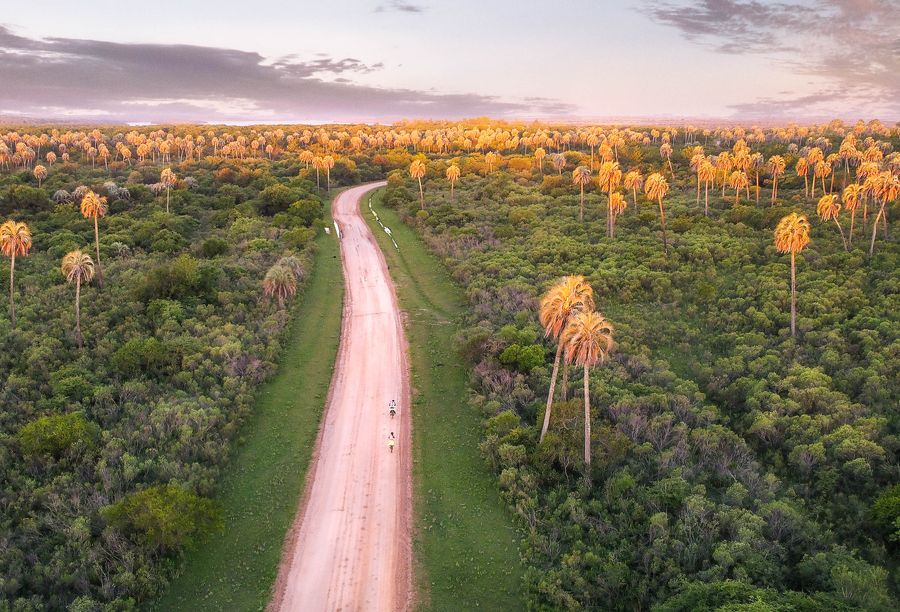
Santa Ana sits in the deepest section of the Chiquitano dry forest — the world's largest intact tropical dry forest (200,000 km²). The 20km unpaved road between San Rafael and Santa Ana passes through uninterrupted forest with higher wildlife density than the roads closer to Santa Cruz. Tapirs, giant anteaters, howler monkeys, peccaries and over 400 bird species are present. The isolation of Santa Ana means the surrounding forest has been subject to less hunting pressure than areas near larger towns.

Local tip
The 20km road between San Rafael and Santa Ana at dawn (6:00–7:30am) is one of the best wildlife driving experiences in the Chiquitano circuit. Drive slowly, windows down, and pause when you hear howler monkeys. Giant anteaters are occasionally seen crossing the road at dawn or dusk — they move slowly and are easy to observe once spotted. Tapirs are more rarely seen but present. Blue-and-yellow macaws (Ara ararauna) are common overhead.
🤫
Context

The Unpublicised Treasure

Remote enough to escape 19th-century deterioration — preserved by isolation

The story of Santa Ana's exceptional preservation is the story of productive neglect. After the Jesuit expulsion of 1767, the Chiquitos missions entered decades of decline. The more accessible missions suffered more modification: new coats of paint, structural changes, replacement of original elements with later versions. Santa Ana, at the end of the most difficult road in the circuit, was largely left alone. When Hans Roth arrived, he found the 18th-century original in better condition here than anywhere else. His restoration was consequently the most conservative.

Local tip
The comparison between Santa Ana and Concepción makes the preservation story vivid: Concepción is the most famous (most photographed, most visited, most publicised) but Santa Ana is arguably the most authentic. If you visit only one church interior on the Chiquitos circuit, the argument for Santa Ana is strong — but the remoteness means it always requires San Rafael as a companion visit. The combination is the complete southern experience.
🎵
Church and community

Chiquitano Baroque Music Tradition

Living music tradition from the Jesuit era · EABO festival venue (biennial)

The Chiquitano baroque music tradition is one of the most extraordinary cultural survivals in South America. The Jesuits composed hundreds of pieces for indigenous choirs and orchestras between 1691 and 1767. These manuscripts were stored in the mission archives and largely forgotten until musicologist Piotr Nawrot rediscovered them in 1972. Santa Ana, as one of the six UNESCO missions, participates in the biennial EABO (Festival de Música Barroca de América) — held in even years, usually in April. The concert in Santa Ana's church, with its exceptional acoustic interior, is one of the festival's most intimate performances.

Local tip
The EABO festival brings international early music ensembles to perform 17th-18th century repertoire in the original mission churches. Attending a Santa Ana concert during the festival is a singular experience — the acoustic of the wooden church, the intimacy of the space and the heritage of the repertoire combine in a way that no other venue can replicate. Festival dates: check the official EABO programme (biennially, even years, usually April).
— History and context of Santa Ana de Velasco

The expulsion that preserved everything.

Why the last mission founded is the best preserved: the paradox of isolation as preservation.

🏛️
The 1767 Jesuit expulsion and its consequences
The pragmatic sanction of King Carlos III of Spain, promulgated on 27 February 1767, ordered the expulsion of the Jesuits from all Spanish territories. In the Chiquitos missions, the Jesuits had weeks to prepare their departure. They handed the missions to the secular clergy and colonial authorities. The post-Jesuit period (1767–1900s) was one of general decline: without the Jesuit organisation, the missions lost their economic structure and many communities dispersed. The preservation quality of each mission correlates inversely with its accessibility during this period.
🔨
Hans Roth at Santa Ana: minimal restoration
Hans Roth's work at Santa Ana was the most conservative of all his restorations in the Chiquitos circuit. Unlike Concepción, where restoration involved significant reconstruction of lost elements, Santa Ana required mainly cleaning, stabilisation and conservation of intact originals. Roth described Santa Ana as the mission that required him to be the most restrained restorer — there was not much to reconstruct, only to preserve.
🗣️
The Bésiro (Chiquitano) language
Bésiro is the language of the Chiquitano nation, spoken by approximately 30,000 people in Bolivia and Brazil. It is a language isolate with no demonstrated kinship with other South American language families. Bésiro survived 300 years of Spanish pressure — first as the liturgical language of the missions (the Jesuits used it in religious services), then as a community language. In Santa Ana, Bésiro is heard more frequently in daily life than in the missions closer to Santa Cruz.
🌳
The Chiquitano dry forest as ecosystem
The Chiquitano dry forest (200,000 km², shared between Bolivia and Brazil) is the world's largest intact tropical dry forest. Unlike the more famous humid tropical forests, the Chiquitano dry forest has a marked seasonality: in the dry season (May–October), the deciduous trees lose their leaves and the forest transforms. It is a very high-biodiversity ecosystem: 400+ bird species, large mammals (jaguar, tapir, giant anteater) and 3,000+ plant species. WWF designates it as a Global 200 — one of the 200 priority ecoregions on the planet.
📐
Jesuit urban planning
The urban planning of the Chiquitano Jesuit reductions followed a standard plan: rectangular central plaza, church on the north side of the plaza, cabildo (town hall) and priest's house to the east and west of the church, community housing in regular blocks around the plaza. This plan is visible today in Santa Ana better than in any other circuit mission — the original blocks still define the village urban fabric, and the spatial relationship between plaza and church has not been distorted by modern development.
🌐
UNESCO and Outstanding Universal Value
The Jesuit Missions of the Chiquitos were inscribed by UNESCO in 1990 under criterion (iv): "to be an outstanding example of a type of building, architectural or technological ensemble or landscape which illustrates a significant stage in human history." The UNESCO Outstanding Value description specifically mentions that the Chiquitos missions are "the only group of Jesuit mission buildings that remain substantially intact in their original setting" — the fact that Chiquitano communities continue to inhabit and use the buildings is part of their value.
— From Santa Ana de Velasco

The complete southern sub-circuit.

Excursion
20km · 45min unpaved

San Rafael de Velasco · 20km north

Most painted interior · twin-tower facade · founded 1696/1747 · Padre Cipriano Baraza SJ

San Rafael de Velasco (20km north of Santa Ana) is the natural companion visit and the staging point for the southern sub-circuit. Almost every visitor to Santa Ana overnight in San Rafael and visit Santa Ana the following morning. San Rafael has the most extensively painted church interior in the circuit (18th-century natural pigment murals) and the distinctive twin-tower facade. Together, San Rafael + Santa Ana constitute the most authentic and least-visited segment of the six UNESCO missions.

Tip
The strategy: San Miguel → San Rafael (55km, overnight) → Santa Ana (20km, morning of day 2) → return north. This gives each church the time it deserves — Santa Ana needs 2 full hours. Don't try to rush San Rafael and Santa Ana into a single half-day from San Miguel; the road conditions and distances make that uncomfortable.
Excursion
75km · 2h (55+20km unpaved)

San Miguel de Velasco · 75km north

First Roth restoration (1972) · weaving cooperative · main circuit junction

San Miguel de Velasco (75km north of Santa Ana — 20km to San Rafael then 55km more) is the junction point for the southern missions and the best-equipped base for the sub-circuit. San Miguel has Hans Roth's first restoration (1972), a women's weaving cooperative, and the most reliable accommodation of the southern missions. The main circuit road from Santa Cruz (paved) reaches San Miguel, making it the natural staging base.

Tip
Most travellers base in San Miguel for the southern sub-circuit: Day 1 afternoon arrive San Miguel, Day 2 early drive San Rafael then Santa Ana, return San Miguel evening. San Miguel's weaving cooperative is worth 30–45 minutes — traditional Chiquitano patterns in cotton and silk sold directly by artisans.
Excursion
210km · 4h via Roboré

San José de Chiquitos · 210km southeast

Largest complex · unique stone facade · most accessible · train from Santa Cruz

San José de Chiquitos (210km southeast of Santa Ana via Roboré and the main highway) is the natural anchor of the full circuit. From Santa Ana, the route east reaches Roboré (80km unpaved) then the main Santa Cruz–Brazil highway, and San José is 130km more west. San José has the largest mission complex (four buildings, stone facade) and the best accommodation of the circuit. It is also the most accessible (train from Santa Cruz stops here).

Tip
The full southern circuit route: Santa Cruz → San Miguel → San Rafael → Santa Ana → Roboré → San José de Chiquitos → Santa Cruz. This loop is 700km total and works in 4–5 days with 4×4. The Santa Ana → Roboré stretch (80km) is the most challenging road of the circuit in wet season — verify conditions before committing to this direction.
Excursion
310km · 5–6h via San Miguel

Santa Cruz de la Sierra · 310km

Circuit base · international connections · best hotels and tour operators

Santa Cruz de la Sierra (310km from Santa Ana — back via San Rafael and San Miguel) is the gateway to the entire Chiquitos circuit. All tour operators, car rental agencies and logistics for the circuit are based here. The city has international connections (via Bogotá, Lima, São Paulo) and domestic flights from La Paz and Cochabamba. Allow 1 night in Santa Cruz before and after the circuit.

Tip
The return from Santa Ana to Santa Cruz takes 5–6 hours via San Rafael (20km) and San Miguel (55km) to the paved road, then 2.5h on pavement to Santa Cruz. Plan an early start (6am from Santa Ana) to arrive Santa Cruz by early afternoon. The same road in reverse in the afternoon gives better wildlife viewing light on the forest sections.
— How to get there

310km from Santa Cruz. Only by 4×4.

🚙

How to get to Santa Ana de Velasco

  • 310km from Santa Cruz: 215km paved to San Miguel + 55km unpaved to San Rafael + 20km unpaved to Santa Ana
  • 4×4 essential in wet season (November–April)
  • No direct public transport to Santa Ana — requires own vehicle or organised tour
  • Recommended base: San Rafael (20km north) for the night before the visit
  • Check road conditions before departure, especially the San Miguel–San Rafael stretch
ℹ️

In Santa Ana: what to know

  • Visit time: 2 full hours (church + plaza + village walk)
  • Church open for mass and visits — coordinate with the parish on arrival
  • Accommodation: very basic options in the village — better to overnight in San Rafael
  • Restaurants: local comedores only — bring additional supplies
  • No ATMs — bring cash from San Rafael or San Miguel
  • Saturday morning market: the best time to see the community gathered
— Seasons and road conditions

May–September: the only safe window.

Jan
Feb
Mar
Apr
May
Jun
Jul
Aug
Sep
Oct
Nov
Dec
May – September
Dry season — essential
The dry season (May–September) is the only reliable time to reach Santa Ana. The San Rafael–Santa Ana road (20km) can become impassable for days in wet season. In dry season: clear skies, dry forest at its most dramatic landscape, fauna more visible on the roads. The EABO festival (even years, usually April — right at the wet season's edge) may coincide with difficult road conditions.
October and April
Possible with preparation and 4×4
The transition months are possible with 4×4 and advance condition checks. April (end of wet season) is generally safer than October (start). In EABO years (biennial festival in April), accommodation demand on the circuit increases but Santa Ana remains little visited.
Wet season (November–March)
Avoid for Santa Ana
The wet season is the highest-risk period for Santa Ana access. The San Rafael–Santa Ana stretch can become completely impassable. If visiting Bolivia in this season, focus on missions accessible by paved road (Concepción, San José de Chiquitos) and postpone San Rafael and Santa Ana to dry season.
FAQ

Questions about Santa Ana.

The 5 most common questions about the most isolated and best-preserved mission in the Chiquitos circuit.

Plan the circuit with us →

Santa Ana de Velasco is the last of the six Jesuit mission churches in the Chiquitano region of eastern Bolivia to be founded (1755). All six were inscribed as a UNESCO World Heritage Site in 1990. Santa Ana is the most isolated (310km from Santa Cruz on unpaved roads) and is widely considered to have the best-preserved church interior of the circuit — its 18th-century painted wooden elements were largely untouched after the Jesuit expulsion, conserved by the isolation that limited subsequent interventions.

Santa Ana's exceptional preservation results from productive isolation. After the 1767 Jesuit expulsion, the more accessible missions suffered modifications — new paint coats, structural changes, element replacements — as they served active communities under secular clergy. Santa Ana, at the end of the most difficult road in the circuit, had fewer interventions simply because it was harder to reach. When Hans Roth arrived for restoration, he found the 18th-century original in better condition here than anywhere else and opted for minimal intervention.

In dry season (May–September), the 20km unpaved road from San Rafael to Santa Ana is passable in a high-clearance vehicle though 4×4 is recommended. In wet season (November–April), 4×4 is essential — the road can be impassable in heavy rain. The Santa Cruz → San Miguel section (215km) is mostly paved. The San Miguel → San Rafael section (55km) is unpaved and also requires 4×4 in wet season. Always verify current road conditions with local operators before the trip.

Allow 2 full hours in Santa Ana: 45–60 minutes in the church interior with a guide, 15 minutes in the museum, 30–45 minutes walking through the village and plaza. Santa Ana receives so few visitors that the church guide may not be immediately available — arrive at the parish and ask. The walk through the village (traditional Chiquitano urban fabric, residential streets, vegetable gardens) gives context that the church visit alone cannot.

Yes, strongly. Santa Ana de Velasco is the hidden highlight of the entire Chiquitos UNESCO circuit. If the other five missions are the story of the Jesuit missions and their restoration, Santa Ana is the punchline — the church that was least touched and therefore most faithfully represents what the mission period actually looked like. The combination of exceptional interior preservation, remoteness, living Chiquitano community and deep forest setting makes it the most singular experience in the circuit.

— The most remote treasure in the circuit

The most authentic.
The most preserved.

45 minutes. We design your Chiquitos circuit with San Rafael, Santa Ana and the 4 remaining missions.

$90 · €85 · Bs. 623

Book consultation → $90 · €85 · Bs. 623Santa Cruz →