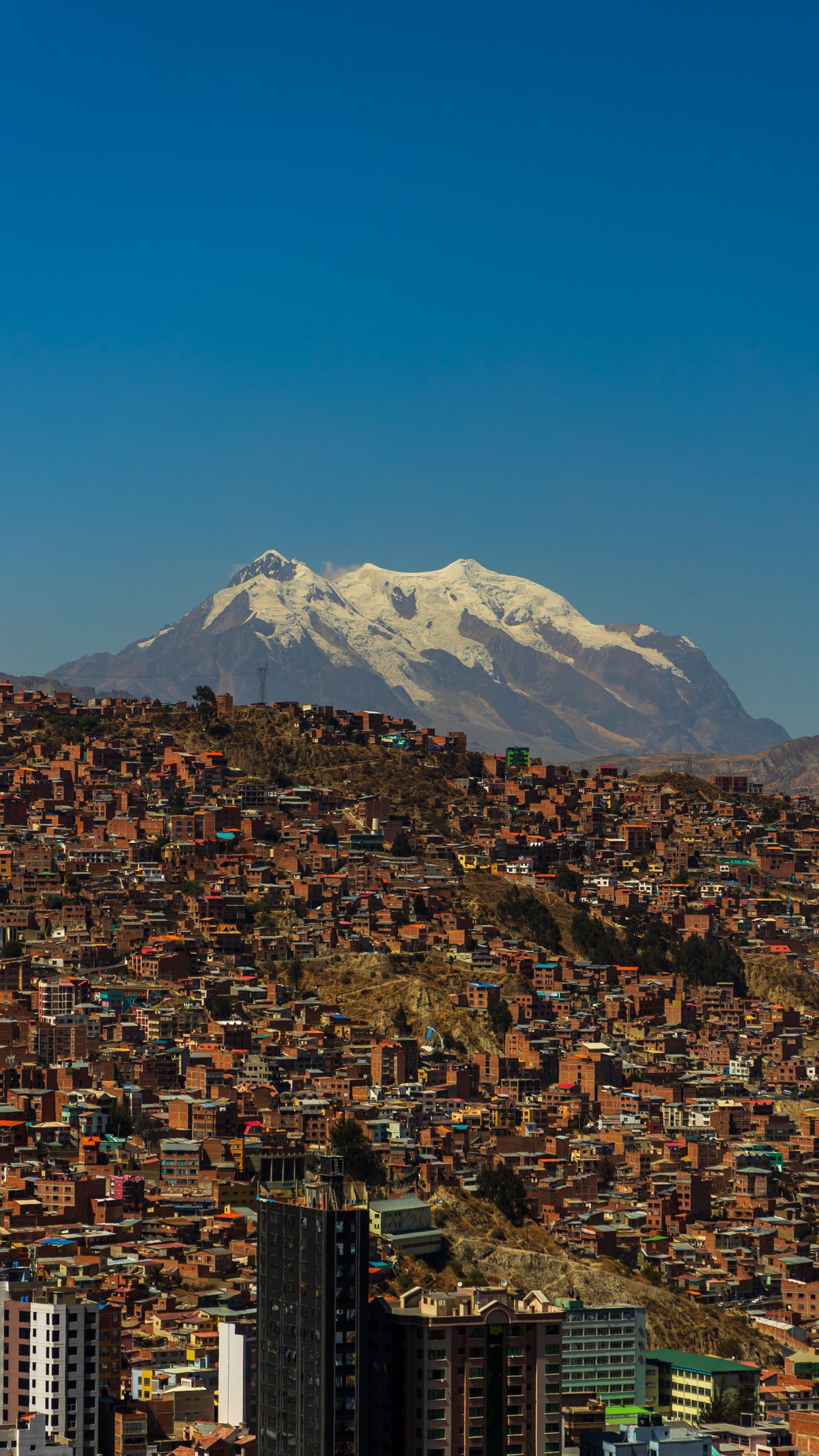
Landing in La Paz is one of travel’s great arrivals. Your plane touches down at El Alto International Airport at 4,058 metres (13,314 ft) — the highest international airport in the world — and then the city itself appears, spilling down the walls of a canyon with the snow-capped Illimani towering behind it. If you only have a day or two before heading to Uyuni or the Amazon, La Paz rewards you fast: it is a place of cable cars gliding over rooftops, markets selling everything from llama-wool sweaters to ritual amulets, and mountain air that will leave you gently breathless. This is our local guide to the best things to do in La Paz, Bolivia, and how to do them well.
Why visit La Paz?
La Paz is Bolivia’s beating heart. Although Sucre is the country’s constitutional capital, La Paz is the seat of government — home to the presidential palace and congress — and it sits at roughly 3,650 m (11,975 ft), the highest administrative capital on Earth. Together with neighbouring El Alto, it forms a metropolitan area of about 2.2 million people, the highest major metro area on the planet.
What makes the city unforgettable is its verticality. Wealthy neighbourhoods sit lower in the valley where the air is warmer, while El Alto stretches across the cold altiplano rim above 4,000 m. Between them run the cable cars, the markets, and centuries of Aymara culture layered over Spanish colonial streets. La Paz is chaotic, friendly and utterly unlike anywhere else in South America.
The best things to do in La Paz
1. Ride Mi Teleférico, the world’s highest cable car
You have never taken public transport like this. Mi Teleférico is the largest urban cable car network on the planet — recognised by Guinness World Records — with 10 colour-coded lines and around 33 km of track carrying up to 200,000 passengers a day. A single ride costs just 3 bolivianos (about US$0.43), making it the best-value sightseeing in Bolivia.
Ride the Red Line (Línea Roja) up to El Alto for the panorama, or the Yellow and Green lines over the affluent southern zone. Buy a rechargeable card, or pay per trip at any station. Go on a clear morning for the sharpest views of the Cordillera Real.
Locals treat the Teleférico as a daily commute; travellers should treat it as the cheapest scenic flight they will ever take.
2. Explore the Witches’ Market (Mercado de las Brujas)
A few steps uphill from San Francisco Church, the Mercado de las Brujas is where Aymara traditions stay very much alive. Stalls sell herbal remedies, soapstone amulets, coca leaves and — most famously — dried llama fetuses, buried under new buildings as an offering to Pachamama (Mother Earth) for good fortune. Treat it as a cultural window rather than a souvenir shop, ask before photographing vendors, and you may leave with a small charm and a much better understanding of Andean belief.
3. Wander the historic centre and Calle Jaén
The colonial core around Plaza Murillo holds the cathedral, the presidential palace and the national congress. A short walk away, cobbled Calle Jaén is the prettiest street in the city, lined with painted colonial houses and small museums. Nearby, the daily street markets of Mercado Rodríguez show La Paz at its most everyday: pyramids of potatoes (Bolivia grows hundreds of varieties), fresh juice stalls and bustling cholita vendors in bowler hats and layered skirts.
4. Stand on the moon at Valle de la Luna
About 10 km south of the centre, Valle de la Luna (“Moon Valley”) is a maze of eroded clay spires and canyons formed by centuries of wind and rain. Marked trails of 15 to 45 minutes wind between the pinnacles, and entry costs only around 15 bolivianos (US$2). It is an easy half-day trip by taxi or the Green Line Teleférico plus a short ride, and a great gentle activity while you acclimatise.
5. Brave the North Yungas “Death Road”
Bolivia’s most adrenaline-charged day trip starts in La Paz. The North Yungas Road — long nicknamed the “Death Road” — drops from La Cumbre pass at 4,650 m down into the humid Yungas cloud forest, losing more than 3,500 m of altitude over roughly 64 km of gravel cliffside. Today a modern bypass carries traffic, and the old road is used almost entirely by mountain-biking tours. Reputable operators charge around US$100–130 including a quality bike, guide, safety gear and transport. Choose your company on safety record, not price.
6. Take a day trip to Tiwanaku
For deep history, the pre-Inca ruins of Tiwanaku lie about 70 km west, near Lake Titicaca. Once the centre of a civilisation that peaked around 500–1000 AD, the UNESCO World Heritage site features the Gate of the Sun, monumental stone heads and the Akapana pyramid. Guided day tours from La Paz run about US$25–40 and pair naturally with a visit toward Copacabana and the lake.
How to get to La Paz
Most international visitors fly into El Alto International Airport (LPB), connected to major hubs via Lima, Santa Cruz and São Paulo. From the airport it is a 30–45 minute descent into the city; a registered taxi costs 70–100 bolivianos (US$10–15).
By land, La Paz is a hub for long-distance buses to Uyuni (about 9–11 hours overnight), Copacabana on Lake Titicaca (3–4 hours) and Cusco, Peru. The main bus terminal is a short taxi ride from the centre.
When to visit
The best time to visit La Paz is the dry season, from May to October, when days are bright and clear and rainfall is minimal — ideal for cable-car views and the Death Road. Nights are cold year-round at this altitude, so pack layers. The wet season (November to March) brings afternoon showers and greener landscapes but muddier trails. If you can, time your trip around a festival: the Gran Poder parade in late May or early June fills the streets with dancers and brass bands in one of the Andes’ great celebrations.
Practical tips for La Paz
- Acclimatise first. Coming straight from sea level to 3,650 m is a shock. Rest on your first day, drink water, go easy on alcohol, and try mate de coca (coca-leaf tea), which locals swear by for the altitude. See our altitude guide before you climb higher.
- Carry small cash. Markets, minibuses and the Teleférico run on bolivianos. Withdraw from ATMs in the centre and keep small notes handy.
- Dress in layers. The sun is fierce at altitude but shade and evenings are cold. Sunscreen and a hat are essential even on cool days.
- Eat like a local. Try a salteña (juicy baked pastry) mid-morning, and api con pastel on a cold day. Street food is delicious but choose busy, high-turnover stalls.
- Use registered taxis at night. Look for radio taxis with a company name and phone number on the roof.
La Paz is not a city you simply pass through — it is one you feel, from the thin air in your lungs to the roar of the markets and the silent glide of a cable car over a canyon of red rooftops. Give it two or three days, respect the altitude, and Bolivia’s highest city will win you over completely.
Key facts
- → La Paz sits at roughly 3,650 m above sea level, the highest administrative seat of government of any country on Earth, while Sucre remains Bolivia's constitutional capital.
- → Mi Teleférico is the world's largest urban cable car network, with 10 colour-coded lines and about 33 km of track, carrying up to 200,000 passengers a day for a fare of 3 bolivianos (about US$0.43) per ride.
- → El Alto International Airport sits at 4,058 m, making it the highest international airport in the world, roughly 13 km from central La Paz.
- → The La Paz–El Alto metropolitan area is home to about 2.2 million people, the highest major metropolitan area on the planet.
- → Valle de la Luna, a landscape of eroded clay spires, lies about 10 km south of the city centre and charges roughly 15 bolivianos (US$2) to enter.
Frequently asked questions
How many days do you need in La Paz? +
Two to three days is enough to see the city itself: one day for the historic centre, markets and cable cars, and one or two more for day trips like Valle de la Luna, Tiwanaku or the Death Road. If you are heading to Uyuni, Titicaca or the Amazon afterwards, La Paz makes a natural base to acclimatise and organise onward travel.
Is La Paz safe for tourists? +
La Paz is generally safe for visitors who use common sense. Stick to registered radio taxis at night, keep valuables out of sight in crowded markets, and only change money at official casas de cambio. Petty theft is the main risk, not violent crime. The bigger challenge for most travellers is the altitude, so take your first day slowly and stay hydrated.
How do I get from El Alto airport to the city centre? +
El Alto International Airport is about 13 km from central La Paz, a 30–45 minute drive downhill. A registered taxi costs around 70–100 bolivianos (US$10–15). The cheapest option is the Teleférico: take a minibus or taxi to a nearby station and ride the cable car down into the city for 3 bolivianos, enjoying spectacular views on the way.