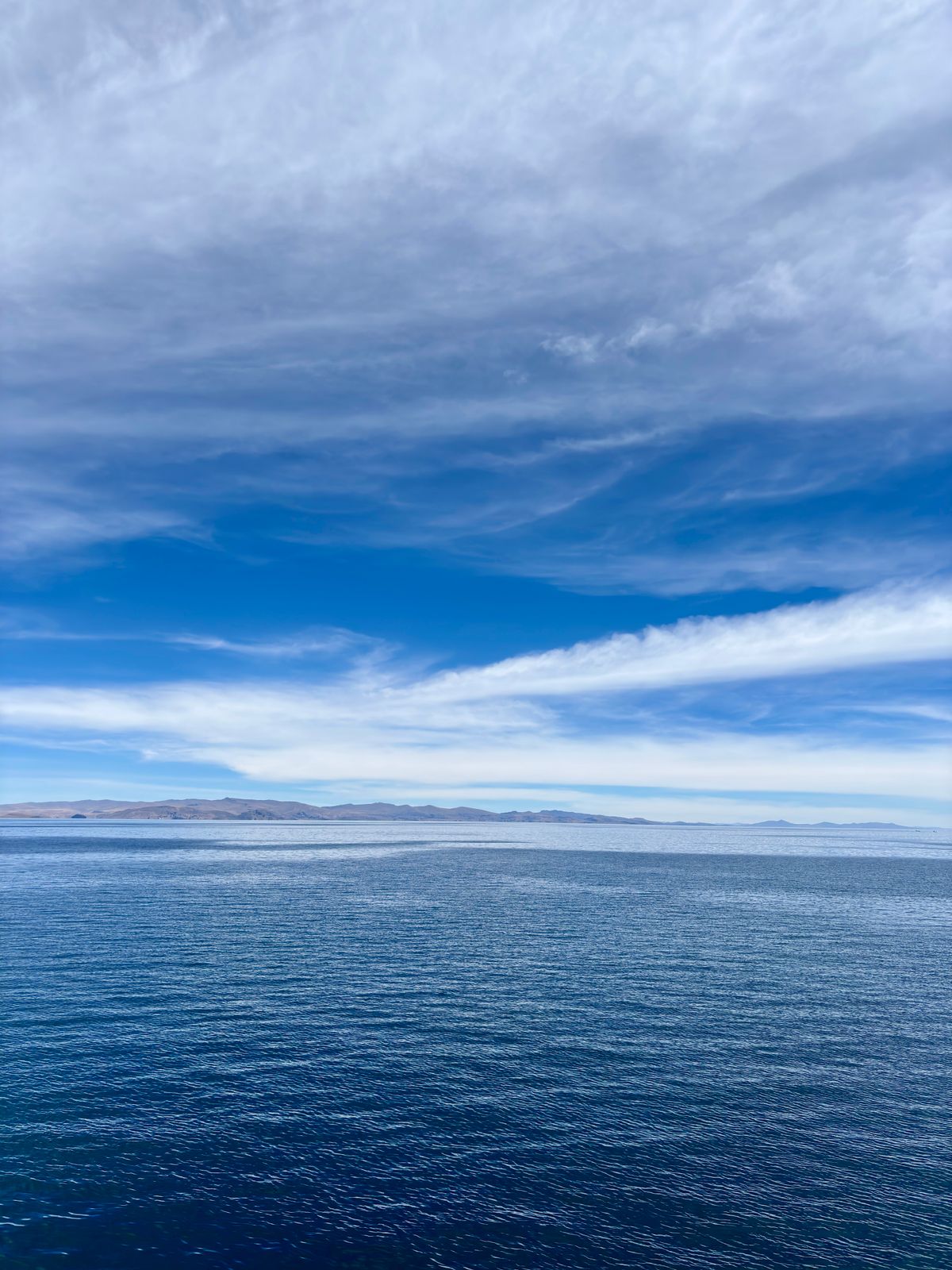
Lake Titicaca, on the border of Bolivia and Peru, is the world’s highest navigable lake, sitting at 3,812 metres (12,507 ft) above sea level. On the Bolivian side you reach it from the pilgrim town of Copacabana, and from there a short boat ride carries you to Isla del Sol — the island the Incas revered as the birthplace of the sun. It is one of the most beautiful and culturally loaded corners of the Andes, and one of the easiest add-ons to a La Paz trip. This guide covers the geography, the history, how to get there, what it costs in 2026 and how to handle the altitude.
Lake Titicaca by the numbers
Titicaca is not just high — it is genuinely vast. Covering about 8,372 km², it is the largest lake in South America by both surface area and volume, stretching roughly 190 km long and up to 80 km wide. It plunges to a maximum depth of 281 m, with an average depth of about 107 m, and it is considered one of the oldest lakes on Earth. Fed by more than 25 rivers off the surrounding peaks, its deep, cold water stays a startling shade of blue under the thin highland air.
The border runs straight through it. Around 60% of the lake lies in Peru (the Puno region) and the remaining 40% in Bolivia, inside the La Paz Department. A narrow neck called the Strait of Tiquina divides the lake into two bodies: the large main basin, Lago Grande (Chucuito), and the smaller southeastern Lago Huiñaymarca. The Bolivian shore, with Copacabana and its islands, sits on this southern side.
Copacabana: Bolivia’s gateway to the lake
Almost every visit to the Bolivian side runs through Copacabana, a small, cheerful town wedged between two hills on a peninsula that pokes into the lake. It has been a pilgrimage site for centuries. Its whitewashed Basilica of Our Lady of Copacabana, completed in the 17th century, houses a revered dark-wood statue of the Virgin of Copacabana, the patron saint of Bolivia. On weekends you will often see Bolivian families lining up to have brand-new cars blessed with flowers and holy water outside the church — a ritual known as the ch’alla.
Beyond the basilica, Copacabana is a relaxed base: a lakefront promenade lined with trout restaurants, stalls selling api and buñuelos, and a steep climb up Cerro Calvario for sunset views over the water. Most travellers spend a night here before or after Isla del Sol, and it is also the main crossing point for the overland route between La Paz and Puno or Cusco in Peru.
Isla del Sol: the birthplace of the sun
The reason most people come is Isla del Sol — the Island of the Sun. In Inca cosmology this was the sacred heart of the world: the creator god Viracocha was said to have risen from the lake and called forth the sun, moon and stars from a crag on the island, ending a time of primordial darkness. The first Inca, Manco Cápac, was believed to have emerged from that same Sacred Rock (Titikala) at the island’s northern end. Long before the Incas, the earlier Tiwanaku culture also held the island holy.
Today Isla del Sol is a car-free world of stone paths, eucalyptus, terraced hillsides farmed much as they were 500 years ago, and small Aymara communities. There are two main settlements: Yumani in the south, home to the Inca Steps and the sacred Fountain of Youth spring, and Challapampa in the north, near the Sacred Rock and the labyrinthine Chincana ruins. Walking between them along the ridge trail is one of the classic Andean day hikes — though access to the north can be restricted (see below). Note that a long-running dispute between the northern and southern communities has, at times, closed the north end; the south around Yumani stays open and is well worth the trip on its own.
How to get to Lake Titicaca and Isla del Sol
Getting there is straightforward and cheap. From La Paz, tourist and public buses to Copacabana take about 3.5 to 4.5 hours and cost roughly US$5–8. Midway, the road hits the Strait of Tiquina, where there is no bridge: passengers cross in a small launch while the bus rides across separately on a wooden vehicle barge — a memorable ten-minute interlude. Buses generally leave La Paz in the morning and early afternoon; book a tourist service the day before in high season.
From Copacabana, public boats to Isla del Sol depart the main jetty, typically around 8:30am and 1:30pm. It is about one hour to the south end (Yumani) and 1.5 hours to the north. A round-trip ticket costs roughly BOB 40–50 (US$5–7), bought at the dock on the morning of travel — bring cash in bolivianos, as there are no card payments and ATMs on the island are unreliable. Take the earliest boat if you want time to hike, and confirm the return departure time when you buy your ticket. For a wider Andean route that can fold in Titicaca, see our Bolivia Andes travel itinerary.
What else to see around the lake
Titicaca rewards those who slow down. Just southeast of Isla del Sol lies the smaller, quieter Isla de la Luna (Island of the Moon), with the ruins of an Inca temple to the moon goddess and, historically, a house for the acllas, women dedicated to the sun cult. Many boat operators combine both islands in a full-day loop.
On the mainland, the lake pairs naturally with Tiwanaku, the pre-Inca archaeological complex about halfway between La Paz and Copacabana, whose Gate of the Sun and monolithic statues are among Bolivia’s most important ancient monuments. Foodies should try the lake’s signature trucha (Andean trout, an introduced species now central to local cuisine) grilled fresh on the Copacabana waterfront. Sunrise and sunset over the water, with the snow-capped Cordillera Real floating on the horizon, are the images most people carry home.
Where to stay and how many days to give it
You can technically visit Copacabana and Isla del Sol as a rushed day trip from La Paz, but it does the place a disservice. The classic, comfortable plan is two days and one night: arrive in Copacabana by early afternoon, explore the basilica and climb Cerro Calvario for sunset, then take the morning boat to Isla del Sol the next day.
For a slower trip, sleep on the island itself. Yumani, in the south, has a cluster of simple family-run guesthouses and lodges perched on the hillside, many with terraces looking straight down the lake — a magical, silent place to watch the stars at nearly 3,900 metres. Expect basic but characterful rooms from around US$10–25 per night, often with limited hot water and electricity that runs on solar. In Copacabana, hotels range from US$8 hostel beds to US$40–70 lakefront rooms. Book ahead only around major holidays and the early-August Fiesta de la Virgen de Copacabana, when the town fills with pilgrims and prices jump.
If you are continuing into Peru, Copacabana is the border town: shared vans and buses run to Puno (about 3 hours, including the frontier at Kasani) and onward to Cusco, making the lake a natural bridge between the two countries. Sort your paperwork first — our Bolivia visa requirements guide covers entry rules by nationality.
Altitude, weather and the best time to visit
Remember that Titicaca sits higher than La Paz, so altitude matters. Spend two or three days acclimatising in the highlands before you arrive, move slowly on Isla del Sol’s steep stone stairways, and lean on water and coca tea rather than alcohol on your first day. Our full Bolivia altitude guide explains how to avoid soroche (altitude sickness).
The lake is a year-round destination, but conditions shift with the season. The dry season (May to October) brings clear skies, intense sun and the sharpest blue water — ideal for photography and hiking, though nights are cold and can drop below freezing. The wet season (November to March) is greener and quieter but cloudier, with afternoon rain. For a full breakdown, see our guide to the best time to visit Bolivia. Whichever month you choose, pack layers: at nearly 3,900 metres the sun is fierce by day and the temperature falls fast the moment it sets.
Between the deep-blue water, the living Aymara culture and the weight of Inca myth, the Bolivian side of Lake Titicaca offers something the salt flats and jungle cannot. Give it two days — one for Copacabana, one for Isla del Sol — and you will understand why the Incas believed the world itself began here.
Key facts
- → Lake Titicaca sits at 3,812 m (12,507 ft) above sea level, making it the world's highest navigable lake.
- → At 8,372 km² it is the largest lake in South America by both surface area and volume, with a maximum depth of 281 m and an average depth of 107 m.
- → The lake straddles Peru and Bolivia; roughly 40% lies in Bolivia's La Paz Department, and it is split by the Strait of Tiquina into Lago Grande and the smaller Lago Huiñaymarca.
- → Isla del Sol is reachable only by boat: a round trip from Copacabana costs about BOB 40–50 (US$5–7) and takes roughly 1 to 1.5 hours each way.
- → The bus from La Paz to Copacabana takes about 3.5 to 4.5 hours, costs around US$5–8, and crosses the Strait of Tiquina on a wooden vehicle barge.
Frequently asked questions
Is Lake Titicaca worth visiting on the Bolivian side? +
Yes. The Bolivian shore centres on Copacabana and Isla del Sol, the island the Incas considered the birthplace of the sun. It is quieter and more traditional than Peru's Puno side, with terraced Inca ruins, Aymara villages and some of the clearest deep-blue lake views in the Andes.
How do you get to Isla del Sol from Copacabana? +
Take a public boat from Copacabana's main jetty, usually departing around 8:30am and 1:30pm. The trip takes about one hour to the south end (Yumani) and 1.5 hours to the north. A round-trip ticket costs roughly BOB 40–50 (US$5–7), paid in cash bolivianos at the dock.
Do I need to worry about altitude at Lake Titicaca? +
Yes, plan for it. At 3,812 m the lake is higher than La Paz, so altitude sickness is possible. Acclimatise for two or three days in the highlands first, walk slowly on Isla del Sol's steep stairways, drink plenty of water and coca tea, and avoid alcohol on your first day at the lake.
Can you visit all of Isla del Sol in 2026? +
Not always. A long-running dispute between the island's northern and southern communities has intermittently closed the north end, including the Sacred Rock and Chincana ruins. The southern village of Yumani stays open and is rewarding on its own. Ask your boat operator in Copacabana whether the north is accessible before buying a ticket.