The best time to visit Bolivia is the dry season, from May to October, when the Andean highlands enjoy clear skies, sunny days and stable, easy travel. But the honest answer depends on what you came for: if your dream is the mirror-like reflection of the Salar de Uyuni, you actually want the wet months of December to April. Bolivia is a country of extremes — from the world’s highest salt flat to steaming Amazon lowlands — so the “perfect” month is the one that matches your priorities. This month-by-month guide breaks down both seasons, region by region, so you can choose with confidence.
Bolivia has two seasons, not four
Sitting entirely within the tropics but climbing from around 130 metres in the Amazon basin to over 6,500 metres in the Andes, Bolivia’s weather is shaped far more by altitude and rainfall than by temperature. There are really only two seasons. The dry season runs roughly from May to October and lines up with the southern-hemisphere winter. The wet season runs from November to March, driven by the humid summer, when most of the year’s rain arrives, usually as short, heavy afternoon downpours.
This pattern holds across the whole country, but its intensity varies enormously by region. In the high Altiplano the dry season simply means cold, brilliant, cloudless days. In the tropical lowlands the wet season can mean genuine flooding and muddy jungle tracks. Understanding which “Bolivia” you are visiting — highland, valley or lowland — matters more than the calendar month alone.
The dry season (May–October): the all-round winner
For most first-time visitors, the dry season is the safe and sensible choice. Across the Altiplano — La Paz, Lake Titicaca, Potosí, Sucre and the road to Uyuni — you get day after day of dry, sunny weather and deep blue skies. Daytime temperatures on the high plateau average a pleasant 15–20 °C (59–68 °F), perfect for walking and sightseeing, and the light is superb for photography.
The catch is the cold. Because the highlands lose heat fast once the sun drops, nights routinely fall to near or below 0 °C (32 °F), and ground frosts can occur in any month of the year. June and July are the coldest, with pre-dawn temperatures on the Uyuni plains regularly plunging well below freezing. Pack as if for a mountain winter after dark, even if your afternoons feel like spring. This is also the peak tourist window: June, July and August bring the largest crowds and the highest prices for tours and hotels, so book popular Uyuni and Amazon trips well ahead.
The wet season (November–March) and the Uyuni mirror
The wet season has a reputation problem it does not fully deserve. Yes, it rains — but usually in dramatic afternoon bursts that clear as quickly as they arrive, not in all-day grey. In return you get green, blooming landscapes, noticeably fewer tourists, lower prices outside the holidays, and one thing the dry season cannot offer: the Uyuni mirror effect.
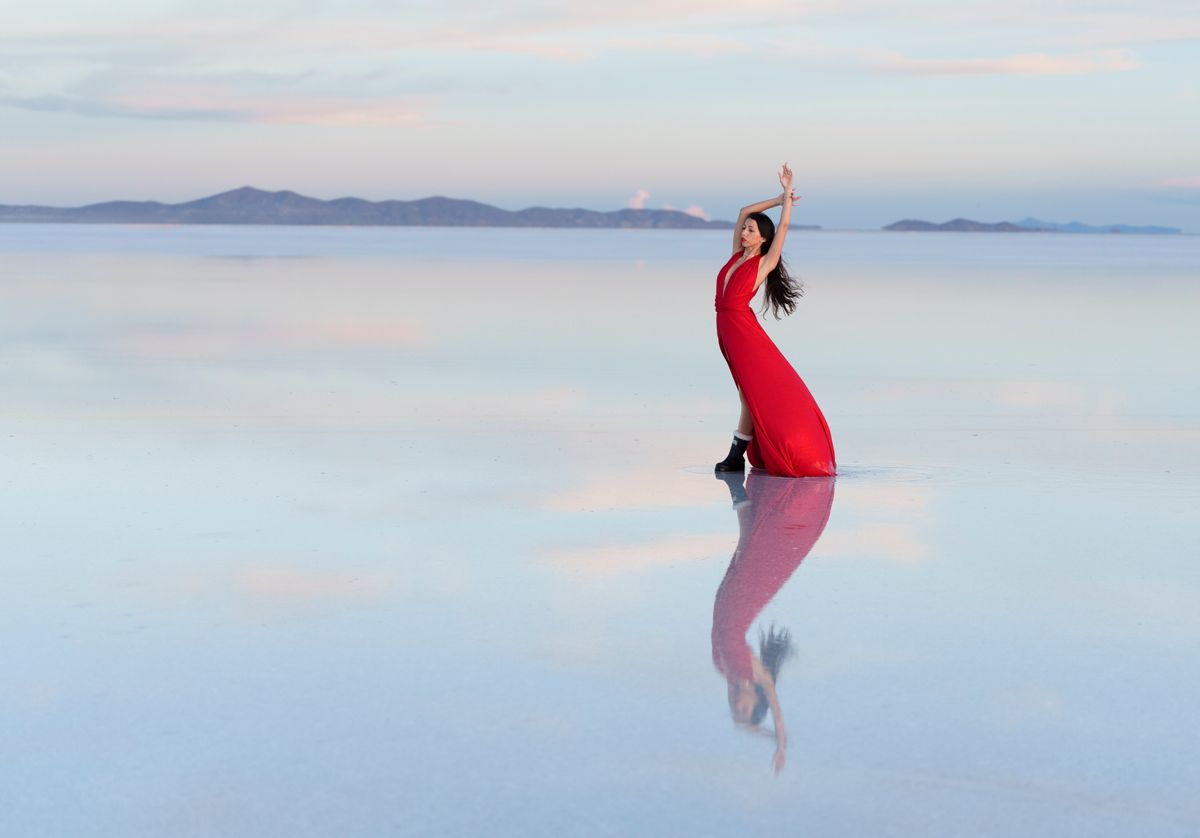
When rain floods the salt crust with a shallow film of water, the Salar de Uyuni turns into what is often called the world’s largest natural mirror, reflecting the sky so perfectly that the horizon disappears. The trade-offs are real: skies are cloudier, some remote roads through the southwest lagoons region can become impassable, and occasional flight or tour delays happen. Keep your plans flexible and build in a spare day, and the wet season rewards you with scenes most travellers never see. If you are torn, our guide to the Salar de Uyuni salt-flat marvel explains both faces of the flat in detail.
Choosing your month for the Salar de Uyuni
The single biggest reason people care about timing in Bolivia is the salt flat, and it genuinely offers two completely different experiences. The Salar sits at 3,656 metres (11,995 ft) and spans about 10,582 km², and it is remarkably dry: it receives only 1–3 mm of rain per month from April to November, but can get up to 80 mm in January.
For the classic mirror reflections, target December to April, with January and February the reliable peak — this is when there is enough water to flood the surface. For the endless white, cracked-hexagon desert, the perspective-trick photos and the easiest driving across the whole flat to distant Incahuasi Island, choose the dry season, roughly May to November. Many travellers consider March/April and November the sweet spots, catching either the tail of the water or the first thin floods with fewer crowds. For a deeper look at getting the shot, see our Uyuni photography and tips guide.
Best time for the Amazon, wildlife and the lowlands
Bolivia’s tropical east and north follow the opposite logic to what jungle-bound travellers might expect. For the Amazon and pampas around Rurrenabaque and Madidi National Park, the dry season (May–October) is best. As rivers and lagoons shrink, wildlife concentrates along the water, trails stay passable, and there are far fewer mosquitoes — giving you the strongest chance of spotting caimans, capybaras, monkeys and birds. The famous pink river dolphins can be seen year-round, but dry-season pampas tours are the most dependable; see our Bufeo Route to the pink dolphins.
In the warm valleys of Sucre, Cochabamba and Tarija, the weather is mild for most of the year, but the dry months are the most comfortable for wine country and colonial towns. The tropical Santa Cruz lowlands are hot and humid throughout the year; the dry season is simply less sticky and less prone to flooding.
Month-by-month quick guide
- January–February: Peak wet season. Prime Uyuni mirror, green highlands, warm lowlands with heavy rain, and the huge spectacle of Carnival (often February). Fewer foreign tourists, but book around Carnival early.
- March–April: Rain easing, landscapes still lush, and often the best balance for Uyuni reflections with thinning crowds — an excellent shoulder window.
- May–June: Dry season begins. Clear skies, firm roads, cool days and cold nights. Great for trekking, Titicaca and starting Amazon trips.
- July–August: Peak dry season and high season. Perfect blue skies but the coldest nights, the biggest crowds and top prices; reserve tours ahead.
- September–October: Still dry and sunny with slightly warmer days and thinning crowds — another strong shoulder period before the rains.
- November–December: The first storms return, the white salt flat starts to flood, and prices soften ahead of the Christmas holidays.
Festivals, crowds and prices
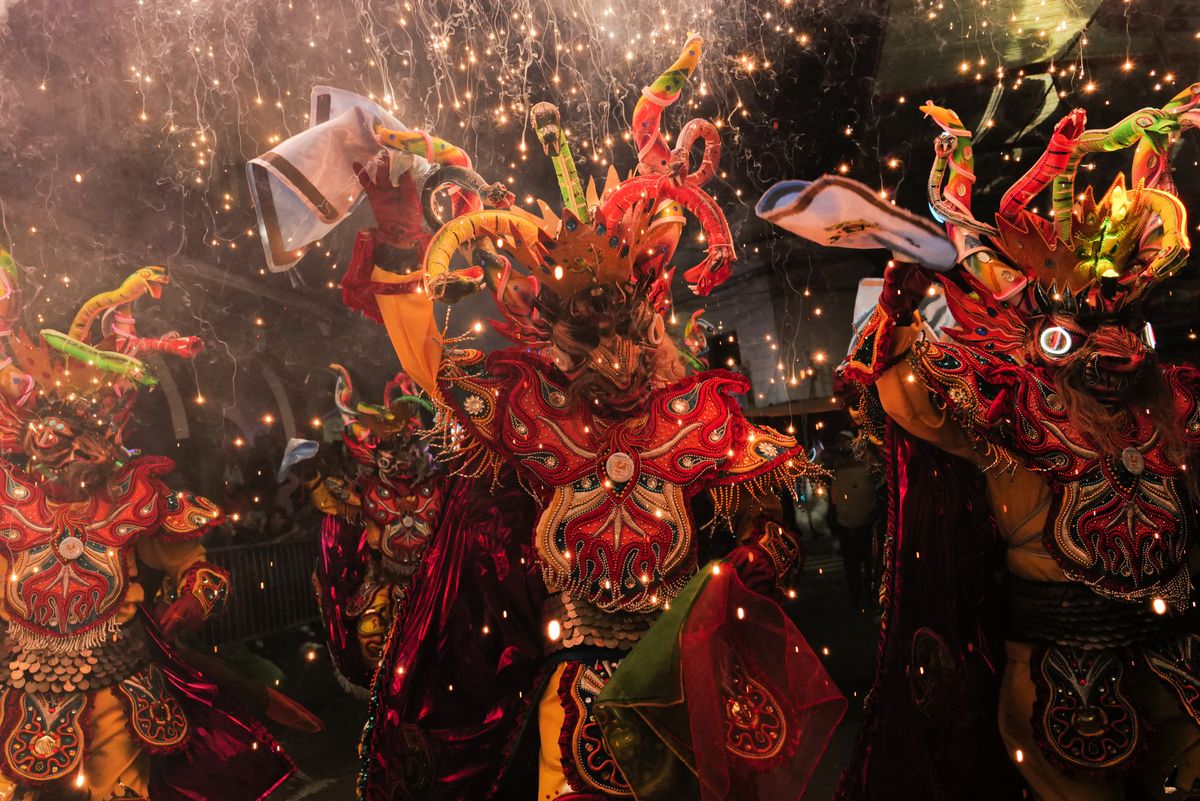
Timing is not only about weather. Bolivia’s festival calendar can be the highlight of a trip or a reason to book early. The Carnival of Oruro, a UNESCO Masterpiece of Oral and Intangible Heritage, falls in February or early March and draws huge crowds. La Paz erupts for the Gran Poder festival in late May or June, and countless regional fiestas dot the year. These dates lift hotel and transport prices sharply in the host cities, so plan around them — our Bolivia festivals calendar maps the full year.
Broadly, the cheapest travel is in the wet-season shoulder months away from Carnival and Christmas, while June to August is the most expensive. Booking Uyuni tours, Amazon lodges and internal flights a few weeks ahead is wise in any high-demand period.
Practical tips whatever month you choose
Two things matter regardless of season. First, altitude. La Paz sits around 3,600 metres and Uyuni higher still, so give yourself two or three days to acclimatise before strenuous activity, in any month — our Bolivia altitude guide covers how. Second, pack for a wide range: on a single altiplano day you may want sun protection at noon and a warm layer, hat and gloves after sunset, plus a light rain shell in the wet season.
Finally, sort your paperwork before you focus on the forecast: check whether you need a visa and how the online entry form works in our Bolivia visa requirements guide, and read our honest take on staying safe in the Bolivia safety guide. Get the season, the altitude and the admin right, and Bolivia delivers in every month of the year — you simply choose whether you want blue-sky salt deserts or the sky itself laid out beneath your feet.
Key facts
- → Bolivia has two seasons: a dry season from roughly May to October and a wet season from November to March, driven by the southern-hemisphere summer.
- → In the Altiplano, daytime temperatures average about 15–20 °C (59–68 °F) while nights fall to near or below 0 °C (32 °F) year-round, with ground frosts possible in any month.
- → The Salar de Uyuni sits at 3,656 m (11,995 ft) and covers about 10,582 km²; it receives only 1–3 mm of rain per month from April to November, but up to 80 mm in January.
- → The Uyuni mirror effect appears when the flat floods during the wet season and is best seen from December to April, peaking in January and February.
- → Lake Titicaca, at 3,812 m, is the world's highest navigable lake and is clearest during the May–October dry season.
Frequently asked questions
What is the overall best time to visit Bolivia? +
May to October, the dry season, is the best all-round time. Days across the highlands are sunny and clear, roads to the salt flats and lagoons stay firm, and trekking is reliable. The trade-off is cold nights near or below freezing and, in July and August, the biggest crowds and highest prices.
When can I see the Uyuni mirror effect? +
The mirror forms when rain floods the salt flat during the wet season. Aim for December to April, with January and February the peak, when a thin layer of water turns the surface into a giant reflection of the sky. Expect some muddy access and cloud, and go at sunrise before wind ripples the water.
Is the rainy season a bad time to visit Bolivia? +
Not at all. The wet season, November to March, brings the Uyuni mirror, green landscapes and fewer tourists. Rain usually falls in short afternoon bursts rather than all day. The main downsides are muddy roads in remote areas, occasional flight or tour delays, and cloudier skies, so keep your itinerary flexible.
When is the best time for the Bolivian Amazon and wildlife? +
For the Amazon and pampas around Rurrenabaque and Madidi, the dry season from May to October is best. Lower water concentrates animals along shrinking rivers and lagoons, trails are passable, and there are fewer mosquitoes. Pink river dolphins can be seen year-round, but dry-season pampas tours give the most reliable wildlife sightings.