Walk through any Bolivian market at seven in the morning and you will smell the drinks before you find them: cinnamon and clove rising from a pot of purple api, the grassy steam of coca tea, sugar caramelising on a street cart. By noon the same stalls have switched to tall glass jars of cold mocochinchi with a dried peach floating at the bottom. By evening, the conversation has moved on to singani.
Bolivian drinks follow the country’s geography. The cold Altiplano runs on hot corn drinks and herbal infusions. The valleys of Cochabamba, Chuquisaca and Tarija make chicha, wine and singani. The warm eastern lowlands around Santa Cruz prefer sweet, cold refreshments. Knowing what to order, and when, is one of the easiest ways to eat and drink like a local.
This guide covers 15 Bolivian drinks worth trying, from breakfast to nightcap, with where to find them and how to drink safely at altitude. If you want the food that goes with them, start with our guide to traditional Bolivian dishes.
Bolivian Drinks at a Glance
Most visitors meet Bolivian drinks at market stalls, set-lunch restaurants and hotel receptions rather than in bars. Here is a quick reference before we look at each one in detail.
| # | Drink | Type | Hot or cold | Where it is most typical |
|---|---|---|---|---|
| 1 | Api | Corn drink | Hot | La Paz, Oruro, Potosí, Cochabamba |
| 2 | Tojorí | Corn drink | Hot | Highland markets |
| 3 | Linaza | Flaxseed drink | Hot or warm | Street carts in the cities |
| 4 | Mate de coca | Coca-leaf infusion | Hot | Everywhere in the Andes |
| 5 | Chicha | Fermented corn beer | Room temperature | Cochabamba valleys |
| 6 | Mocochinchi | Dried peach drink | Cold | Nationwide, especially in summer |
| 7 | Somó | Corn drink | Cold | Santa Cruz and the lowlands |
| 8 | Jugos and licuados | Fresh juices and smoothies | Cold | City markets |
| 9 | Singani | Grape brandy | Neat or mixed | Tarija and the southern valleys |
| 10 | Chuflay | Singani highball | Cold | Nationwide |
| 11 | Yungueño | Singani and orange juice | Cold | Nationwide |
| 12 | Té con té | Hot tea with singani | Hot | Cold highland nights |
| 13 | Sucumbé | Hot milk with singani | Hot | Highland winter evenings |
| 14 | Bolivian beer | Lager | Cold | Nationwide |
| 15 | Tarija wine | High-altitude wine | Room temperature | Tarija |
Hot Drinks for Cold Andean Mornings
La Paz sits at about 3,640 m and early mornings on the Altiplano often hover close to freezing. Bolivians fight the cold with thick, warm drinks sold from steaming pots at markets and street corners, usually before 10am.
Api
Api is the drink of the Bolivian breakfast. It is made from ground corn, usually purple corn (api morado), sometimes mixed with white corn (api blanco), cooked until thick and spiced with cinnamon, cloves and sugar. It tastes somewhere between hot spiced juice and a thin, sweet porridge.
It almost always comes with a pastel, a large, puffy fried pastry sometimes filled with cheese and dusted with sugar, or with buñuelos. A cup costs around 3 to 5 bolivianos at a market stall. In La Paz, the food halls of the Mercado Rodríguez and Mercado Lanza are good places to try it. Our Bolivia street food guide explains the timing: api is a morning drink, and many stalls pack up before lunch.
Tojorí
Tojorí is api’s plainer cousin, a thick drink of ground white corn cooked with cinnamon and cloves. It is less sweet and more filling, and it is especially common in highland markets in the early morning. Look for it on the same stalls that sell api.
Linaza
Linaza is a warm, slightly gelatinous drink made from flaxseed boiled with water, sugar and sometimes fruit or cinnamon. Street vendors sell it by the glass from carts in the morning, often from the same cart that sells quinua drinks. Bolivians drink it as a digestive, and it is a gentle option if your stomach is still adjusting.
Mate de coca
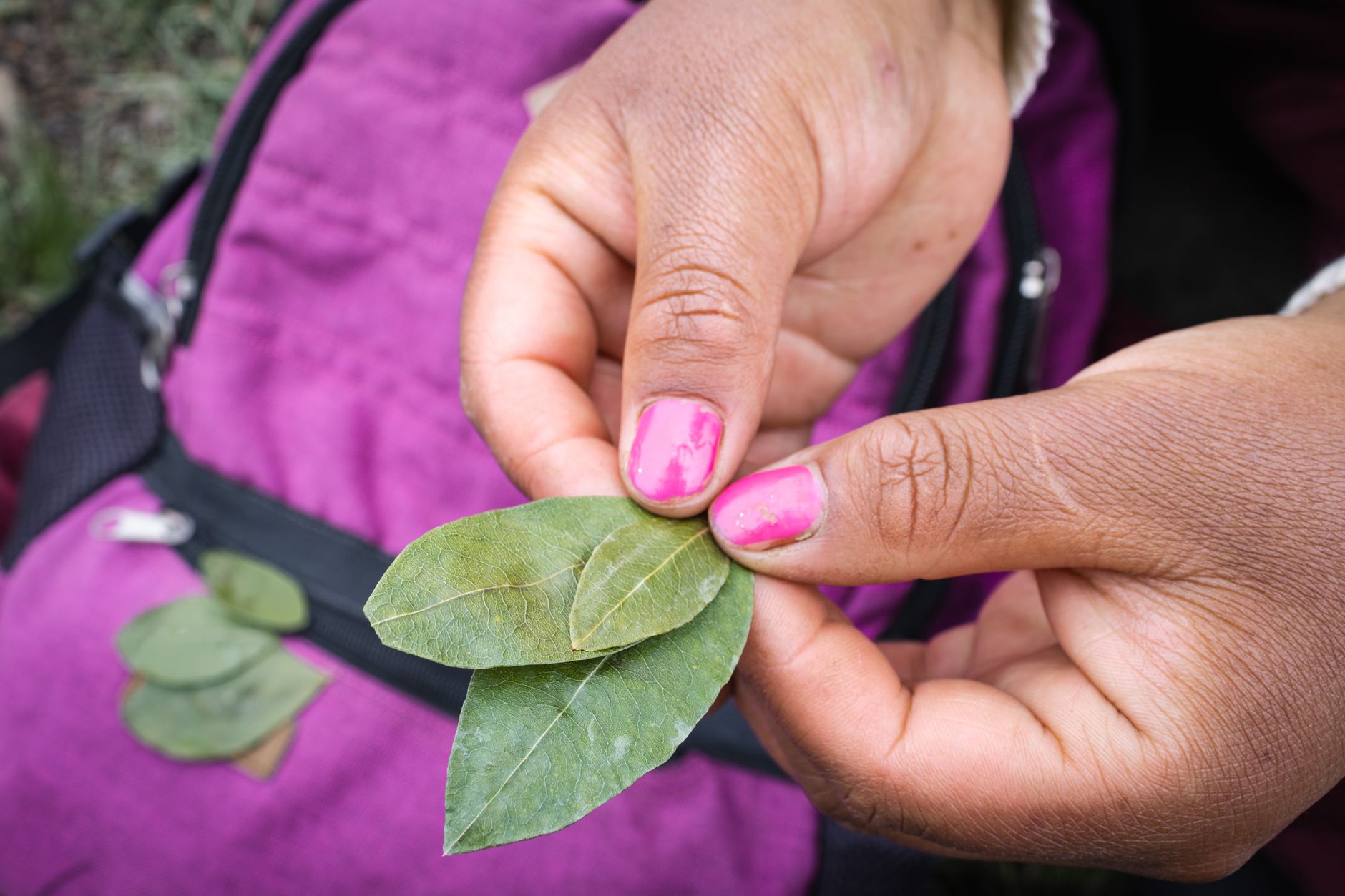
Coca tea is less a drink than part of the infrastructure of the Andes. Hotels in La Paz, Uyuni and Potosí keep a thermos and a bowl of leaves or tea bags at reception, and many travellers drink it throughout their first days at altitude.
A few facts are worth knowing before you drink it:
- It is legal in Bolivia. Bolivia left the 1961 UN Single Convention on Narcotic Drugs on 1 January 2012 and rejoined on 10 February 2013 with a reservation allowing the traditional chewing of coca leaves within its territory.
- It contains alkaloids. A cup made from 1 gram of leaves, the typical contents of a tea bag, contains about 4.2 mg of coca alkaloids.
- It can fail a drug test. One cup of coca tea can cause a positive result for cocaine, which matters if your job tests you after a trip.
- Do not take it home. Coca tea is illegal in the United States unless it is decocainized, and most other countries also prohibit importing coca leaves.
As for altitude sickness, coca tea is a traditional remedy and a comforting one, but its effectiveness has never been properly studied. It does not replace a slow ascent, rest and water. Our La Paz altitude guide covers what actually helps.
Chicha, the Corn Beer of the Valleys
Chicha is one of the oldest drinks in the Andes and the traditional alcoholic drink of Bolivia’s valleys, above all around Cochabamba. In the highlands and valleys it is made from maize that is sprouted or ground, cooked and left to ferment in large clay or plastic vessels for several days. The result is cloudy, slightly sour and low in alcohol, closer to a rustic farmhouse beer than to anything you would find in a bottle.
Chicha is not only made from corn. Amaranth chicha is also traditional, and in the lowlands versions are made from sweet manioc, plantain or banana.
How to find a chichería
Chicha is sold in chicherías, simple bars that are often just a courtyard with benches. Traditionally, a chichería hangs a white flag or white cloth outside its door to show that a fresh batch is ready. The Cochabamba valley towns of Quillacollo, Punata and Cliza are known for it, and a chichería lunch is one of the classic outings in our list of things to do in Cochabamba.
The ch’alla
Before the first sip, many Bolivians pour a small splash of chicha on the ground. This is the ch’alla, an offering to the Pachamama, or Mother Earth. You will see the same gesture with beer and singani at festivals, house blessings and new car celebrations. If you are invited to drink, following the gesture is a respectful way to join in.
Be aware that chicha is homemade and unregulated. It is usually safe in established chicherías, but if your stomach is sensitive, keep it to a small glass.
Cold Refrescos from Markets and Street Carts
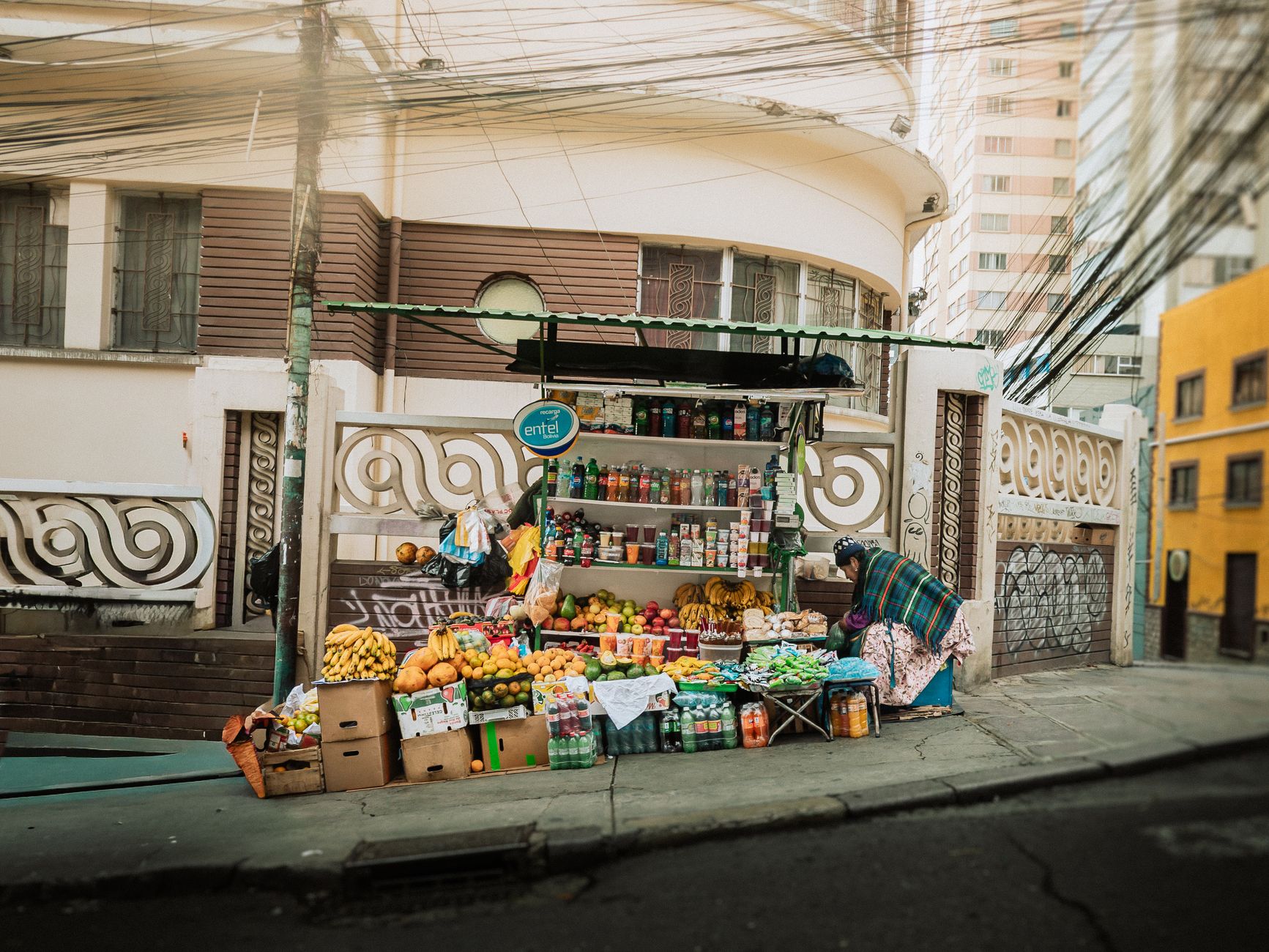
In the warmer valleys and lowlands, and at lunchtime everywhere, Bolivians turn to refrescos, sweet cold drinks served from glass jars. A glass of refresco is included with the almuerzo del día, the set lunch served at markets and simple restaurants.
Mocochinchi
Mocochinchi is Bolivia’s favourite summer drink. The name comes from the Quechua for dried peach. Peeled, dehydrated peaches are soaked in water overnight and then boiled with sugar and cinnamon, and the drink is served ice cold with the peach at the bottom of the glass, which you eat when you finish. It tastes like a light, cinnamon-scented peach iced tea. Vendors sell it from large glass jars on street corners, usually for just a few bolivianos.
Somó
Somó is a cold drink from Santa Cruz and the eastern lowlands, made from a type of cracked white corn called frangollo, cooked with sugar and cinnamon and served chilled with the soft corn kernels still in it. It is filling, sweet and ideal in the lowland heat. If you are travelling to Santa Cruz de la Sierra, look for it on the same carts that sell mocochinchi.
Jugos and licuados
Every Bolivian city market has a juice section where women in aprons blend fresh fruit to order. A jugo is a pure juice, and a licuado is blended with water or milk. Papaya, banana, strawberry, orange and tumbo (banana passionfruit) are common, and in the lowlands you will also find tropical fruits such as passionfruit and pineapple. Many stalls offer a free refill (la yapa) from the jug.
If your stomach is sensitive, ask for your licuado con leche rather than con agua, or stick to freshly squeezed orange juice, because the water and ice may not be purified.
Singani, Bolivia’s National Spirit
Singani is the drink Bolivians are proudest of and the one most visitors have never heard of. It is a clear grape brandy, bottled at 40% ABV, with a floral, aromatic nose that surprises people expecting something harsh.
What makes singani unique
Singani has some of the strictest production rules of any spirit in South America:
- It must be distilled only from Muscat of Alexandria grapes.
- The vineyards must sit at least 1,600 m above sea level, a minimum codified by Supreme Decree 25569 in 1999.
- Bolivia declared singani an exclusive native product with Supreme Decree 21948 in 1988, and Law 1334 of 1992 created its denomination of origin.
- Production zones are defined in four departments: Tarija, Chuquisaca, Potosí and La Paz. Tarija has been the dominant producer since the 1980s.
The grapes arrived with Spanish settlers in the 16th century, and the silver boom that followed the discovery of Cerro Rico in Potosí in 1545 created a huge market for local wine and spirits. Outside Bolivia, singani has no protected category of its own in the United States, where it is sold as a brandy.
The best place to taste it is in Tarija’s wine country, where several bodegas offer singani tastings alongside their wines. Supermarkets across Bolivia stock the big brands, such as Casa Real, Los Parrales and Rujero.
Chuflay
The chuflay is what most Bolivians actually drink when they order singani: singani mixed with ginger ale or lemon-lime soda over ice, with a squeeze of lime. It is light, fizzy and easy to drink. The most common story links its name and origin to British railway workers in Bolivia in the 19th century, though the details are more legend than history.
Yungueño
The yungueño, named after the Yungas region, mixes singani with fresh orange juice and a little sugar syrup, shaken with ice. It is sweeter than a chuflay and a popular party drink.
Té con té
On cold nights in La Paz, Potosí or Uyuni, ask for a té con té, literally “tea with tea”: a cup of hot black tea with a shot of singani, often with lemon and sugar. It is the Bolivian equivalent of a hot toddy.
Sucumbé
Sucumbé is a warming winter drink of hot milk with singani, sweetened and spiced with cinnamon, sometimes whisked with egg until frothy. You are most likely to find it at street stalls and family celebrations in the highlands during the cold months.
Bolivian Beer and High-Altitude Wine
Bolivian beer
Bolivia’s beer market is dominated by Cervecería Boliviana Nacional (CBN), formed in La Paz on 20 October 1886 from the merger of two local breweries. Today CBN is part of AB InBev and controls about 80% of the Bolivian beer market.
Its flagship is Paceña, “the one from La Paz”, a light lager brewed at about 3,600 m. Other brands you will see are Huari, a slightly fuller lager, Taquiña, historically associated with Cochabamba, and Ducal. None of them will surprise a beer lover, but a cold Paceña after a day on the Altiplano is part of the experience. Craft breweries have also opened in La Paz, Cochabamba and Santa Cruz in recent years.
Beer is central to Bolivian festivals. At the Oruro Carnival and other big fiestas, crates of beer are part of the celebration, and dancers often pour a ch’alla before drinking.
Tarija wine
Bolivian wine is one of South America’s best-kept secrets. Around Tarija, vineyards grow mainly between 1,700 and 2,100 m above sea level, which gives thick-skinned grapes, strong sunlight and big temperature swings between day and night. The signature red is Tannat, and the local white is Torrontés. Wineries in the Valle de la Concepción, about 30 km from Tarija city, offer tours and tastings, and the harvest festival (Vendimia) takes place in February and March.
A word on coffee
Bolivia is not only about tea and corn. Coffee grows on the humid slopes of the Yungas, especially around Caranavi, and speciality cafés in La Paz serve single-origin Bolivian beans. Production is small, so it is worth tasting locally.
How to Drink Safely in Bolivia
A few simple rules will keep your drinking experiences in Bolivia enjoyable.
- Do not drink tap water. Buy bottled water, carry a filter bottle or boil it. Our Bolivia health and vaccinations guide covers stomach problems in more detail.
- Be careful with ice and unboiled juices during your first days. Boiled drinks such as api, mocochinchi and tea are usually the safest choice at market stalls.
- Go slow with alcohol at altitude. Alcohol dehydrates you, and dehydration makes altitude symptoms worse. Most doctors advise avoiding alcohol for your first 24 to 48 hours above 3,000 m.
- Watch your drink at night. In busy nightlife areas, never leave a drink unattended, and be wary of strong mixed drinks offered by strangers.
- Remember the drug test. If you are subject to workplace drug testing, skip the coca tea in the weeks before you return.
- Carry small notes. Market drinks cost a few bolivianos, and vendors rarely have change for large notes. Our guide to money in Bolivia explains how to get small bills.
Where to Try Bolivian Drinks
If you only have a few days, these are the easiest places to taste the full range.
- La Paz: api and tojorí in the morning at the Mercado Rodríguez or Mercado Lanza, coca tea at your hotel, a té con té on a cold evening and a Paceña with a view of Illimani. The streets around the Witches’ Market also sell coca leaves and the offerings used in ch’allas.
- Cochabamba: chicha in a traditional chichería in Quillacollo or Punata, and fresh licuados at the huge La Cancha market.
- Sucre and Potosí: api with pasteles for breakfast, and singani drinks and sucumbé during the cold winter months.
- Tarija: singani and wine tastings at the bodegas of the Valle de la Concepción.
- Santa Cruz: somó and mocochinchi from street carts, and fruit juices made with lowland fruits.
Bolivian drinks are a window into the country: Inca-era corn beer, colonial vineyards, Andean rituals and modern city cafés, all in the same trip. Order the api, pour a splash for the Pachamama and raise a chuflay. ¡Salud!
Key facts
- Singani must be distilled from Muscat of Alexandria grapes grown at least 1,600 m above sea level, under Supreme Decree 25569 of 1999, and is bottled at 40% ABV.
- Bolivia declared singani an exclusive native product in 1988 (Supreme Decree 21948) and protected its denomination of origin with Law 1334 in 1992.
- A cup of coca tea made from 1 gram of coca leaves contains about 4.2 mg of coca alkaloids and can cause a positive drug test for cocaine.
- Bolivia left the 1961 UN Single Convention on Narcotic Drugs on 1 January 2012 and rejoined on 10 February 2013 with a reservation allowing traditional coca-leaf chewing on its territory.
- Cervecería Boliviana Nacional, maker of Paceña, was formed in La Paz on 20 October 1886 and now controls about 80% of Bolivia's beer market as part of AB InBev.
Frequently asked questions
What is the national drink of Bolivia?
Singani is Bolivia's national spirit. It is a clear grape brandy of 40% ABV, distilled from Muscat of Alexandria grapes grown above 1,600 m, mainly in Tarija. The most popular way to drink it is the chuflay, singani mixed with ginger ale or lemon-lime soda and a squeeze of lime.
What is a traditional non-alcoholic drink in Bolivia?
Api is the classic one: a thick, hot drink of purple or white corn spiced with cinnamon and cloves, sold at markets in the morning with a fried pastry. In warm weather Bolivians drink mocochinchi, made from dried peaches boiled with sugar and cinnamon and served cold.
Is coca tea legal in Bolivia, and can I take it home?
Coca tea (mate de coca) is legal and sold everywhere in Bolivia. Taking it home is a different matter: coca tea is illegal in the United States unless it is decocainized, and most other countries also prohibit importing coca leaves. One cup can also produce a positive result on a drug test for cocaine.
Can you drink tap water in Bolivia?
No. Travellers should not drink tap water in Bolivia. Buy bottled water, use a filter bottle or boil water, and be cautious with ice and uncooked fruit juices at market stalls until your stomach has adjusted.