A woman in a bowler hat and a knee-length pleated skirt climbs onto the top rope of a ring in El Alto, adjusts her shawl, and drops elbow-first onto an opponent dressed identically. The crowd — mostly Alteño families, children on shoulders, a scattering of foreigners in the front row — loses its mind. This happens most Sunday afternoons, roughly 4,000 metres above sea level, and it has been happening for more than twenty years.
Cholitas wrestling is one of the strangest and best things you can do with a Sunday in Bolivia. It is also routinely misunderstood by visitors who show up expecting either an authentic ancient ritual or a cynical tourist trap, and find something more interesting than both: a working-class Sunday entertainment, run by and for Aymara families, that happens to have become internationally famous.
Here is what it actually is, where to go, what it costs, and how to be a decent guest.
What Cholitas Wrestling Actually Is
The format is lucha libre — the same theatrical wrestling tradition that dominates Mexico, imported to Bolivia and given a distinctly Andean cast. Matches are scripted, with clear rudos (villains) and técnicos (heroes), referees who get flattened, chairs that find their way into the ring, and long stretches of pure crowd work. What is not scripted is the physical toll: these are trained athletes taking real falls on a hard canvas, in a city where the air holds around 40 percent less oxygen than at sea level.

The best-known group, the Fighting Cholitas, does not perform alone. They are part of a mixed company called the Titanes del Ring, which includes male wrestlers and was built by the wrestler and promoter Juan Mamani. Women were added to the card in the early 2000s as a promotional idea; they promptly became the reason anyone bought a ticket. The Titanes have performed at the Gimnasio Multifuncional de La Ceja since 2001, regularly draw crowds of more than a thousand, and tour smaller altiplano towns during the rest of the week.
The outfit is the point
The wrestlers fight in full traditional dress, and this is not a costume choice made for tourists. The pollera — a heavy, layered skirt worn over petticoats — plus two long plaited braids, a fringed manta across the shoulders and a bowler hat perched improbably high on the head is the everyday clothing of hundreds of thousands of Aymara and Quechua women across the altiplano. Seeing it thrown off the top rope is funny precisely because it is ordinary.
It also carries weight. The root word chola was, for most of the twentieth century, an insult, and women who wore the pollera were barred from certain buses, restaurants, hotels and public spaces in La Paz well into the 1990s. That exclusion is recent enough that the wrestlers’ mothers remember it. Bolivia’s 2009 Constitution recognised 36 Indigenous nations and their languages, and the last two decades have seen cholitas move into parliament, television, fashion runways, mountaineering — and, since 2001, professional wrestling. Watching a woman in a pollera body-slam somebody in front of a thousand cheering Alteños is a small piece of that larger shift, played for laughs.
What the wrestlers earn
Keep expectations calibrated. The New York Times reported in 2005 that Titanes wrestlers were paid around USD 13 per bout, with tickets costing roughly a dollar, and that virtually all of them held other jobs — market traders, cooks, seamstresses. The economics have improved with the tourist trade, but nobody is getting rich. If you enjoy the show, buying a photo, a drink or a souvenir at the venue is the direct way to say so.
How to Get There From La Paz
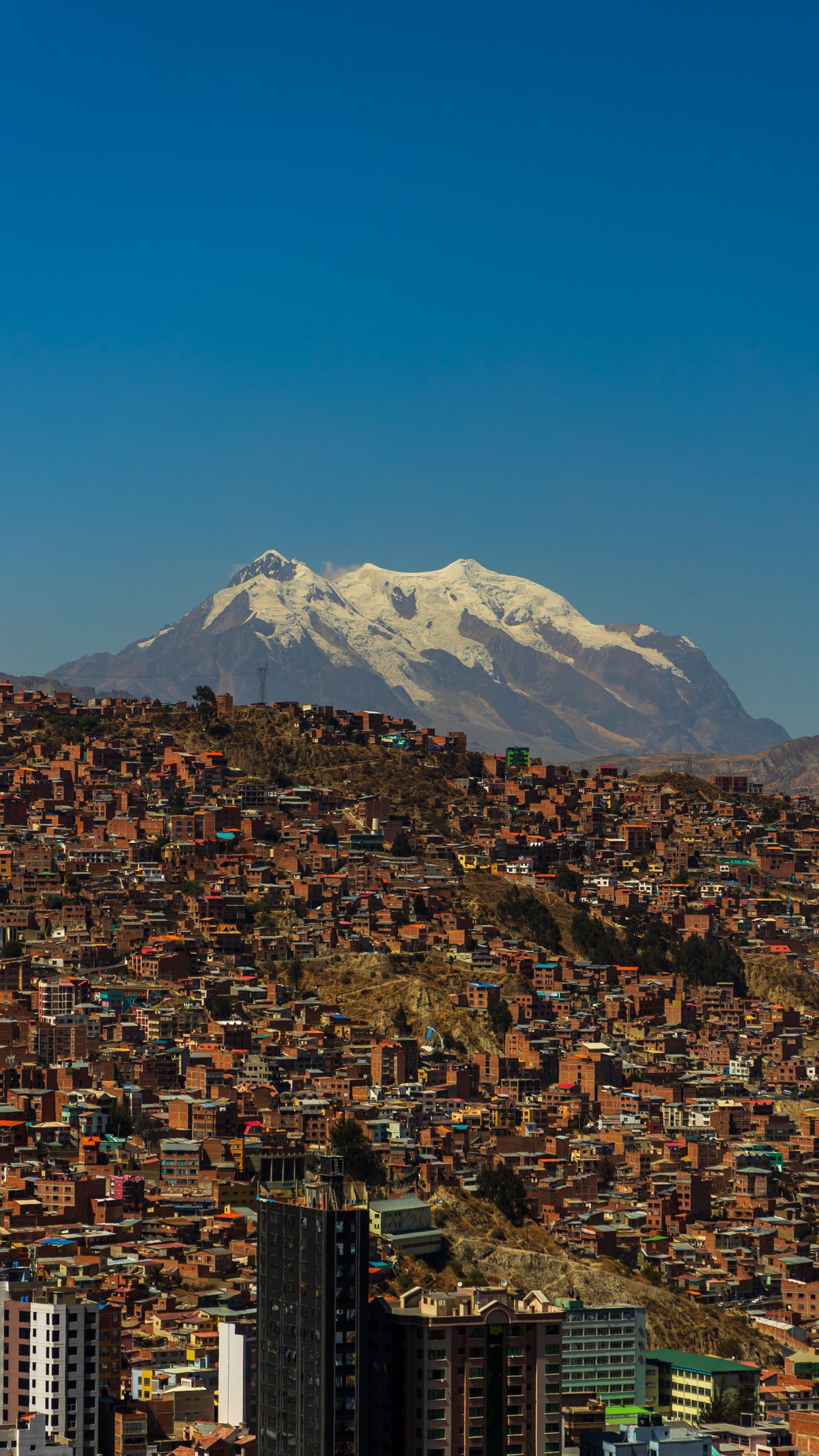
The show is in El Alto, not La Paz. This trips up a lot of visitors. El Alto is a separate city — Bolivia’s second largest, with an estimated 943,558 residents in 2020 and an average elevation of about 4,000 m, which makes it the highest major city on Earth. It sits on the flat plateau directly above the bowl that La Paz is built into, and the two are one continuous metropolitan area.

By cable car
The best way up, by a distance. Mi Teleférico is the longest aerial cable car network in the world, with ten lines and 26 stations, and it exists precisely because moving between La Paz and El Alto by road is slow and miserable. Take the Red Line (Línea Roja) from Estación Central in central La Paz to 16 de Julio in El Alto — about fifteen minutes, for a few bolivianos, with a view over the entire city and, on a clear afternoon, Illimani standing over it. The Multifuncional venue is a short walk from the station through the La Ceja district.
Ride up early enough to see the 16 de Julio market if your visit falls on a Sunday, which it will: it is one of the largest open-air markets in South America and it sprawls for blocks right beside the station.
By minibus or taxi
Minibuses run constantly from central La Paz up to La Ceja for a couple of bolivianos. They are cheap, crowded, and require enough Spanish to confirm the destination shouted by the doorman. A radio taxi will run somewhere in the region of 40 to 70 bolivianos each way depending on your starting point and the traffic, which on a Sunday afternoon is lighter than usual.
By tour package
Most La Paz hostels and agencies sell a cholitas wrestling package for roughly 100 to 150 bolivianos — around USD 10 to 16 at the mid-2026 exchange rate of about 9.7 bolivianos to the dollar. That buys hotel pickup and return, a ringside seat, a drink and snack, some commentary in English, and usually a souvenir. It is a significant markup on the door price and it is still, for most first-time visitors, worth it: the return journey after dark is the part you actually want handled for you.
When the Shows Happen
Sunday afternoon is the fixture. The card generally runs from about 16:00 to 19:00 at the Gimnasio Multifuncional de La Ceja, finishing around dusk. Door prices are usually 20 to 40 bolivianos — our Cholita Wrestling destination page carries the current times and entry price. Some operators also run Thursday shows at alternative venues aimed more squarely at visitors.
Two practical notes. First, schedules in El Alto shift — for holidays, for local festivals, for whatever else is happening — so confirm the same week rather than relying on a blog post, including this one. Second, the show does not run every single Sunday of the year without exception; the weeks around Carnaval and major national holidays are the likeliest to be cancelled or moved. If your Bolivia trip is built around fixed dates, cross-check against the Bolivian festival calendar before you commit.
What the Experience Is Actually Like
You will be sitting in a plain concrete multipurpose hall with a ring in the middle, plastic chairs around it, and tiered seating behind. Tourists are seated ringside — this is deliberate, it is where the wrestlers play to the camera, and it means you will get popcorn thrown at you and possibly a wrestler landing near your feet.
The card usually opens with men’s bouts and builds to the cholitas, who close it. Expect broad comedy, an aggressively partisan referee, at least one villain working the crowd into genuine fury, and children screaming advice. Vendors circulate with api (a hot purple corn drink), pasankalla (sweet puffed corn) and beer. The whole thing runs on the enthusiasm of the room rather than production values.
What to bring
- Layers. El Alto is high, exposed and unheated. Once the sun drops it gets cold fast — bring more than you think, and consult a proper Bolivia packing list if you are still assembling your bag.
- Small notes. Bolivianos in 10s and 20s for entry, snacks and photos. Nobody is breaking a 200.
- A camera you are happy to hold. Photography is welcome and encouraged; posed photos with wrestlers afterwards are part of the deal and a small tip is appropriate.
- Altitude respect. El Alto is about 350 m higher than central La Paz. If you have just arrived in the country, this is not the afternoon for it — read the altitude sickness guide and give yourself a couple of days first.
How to Watch It Without Being a Jerk
The single most common complaint from Bolivians about foreign visitors at these shows is not that they come — it is the register in which they come. A few things worth internalising:
- This is not an ancient Indigenous tradition. It started in the early 2000s. Treating it as folkloric ritual rather than working-class Sunday entertainment gets it exactly backwards, and the wrestlers find that framing tiresome.
- The dress is not a costume. Half the women in the audience are wearing the same thing. Do not photograph strangers in the crowd as though they were part of the show.
- Laugh with the room, not at it. The comedy is intentional and the audience is in on it. Laughing at the premise — women in skirts, how quaint — reads exactly as it sounds.
- Ask before photographing individuals, in the stands and outside the venue, the same courtesy you would extend at the Witches’ Market downtown.
- Tip for posed photos. After the card the wrestlers will pose with anyone who asks. Ten or twenty bolivianos is normal and goes straight to them.
Is It Worth It?
Yes, with one qualification: go for the room, not for the wrestling. As athletic spectacle it is modest — a small-town card in a cold hall. As an afternoon spent inside El Alto’s own entertainment, surrounded by families who are there because it is Sunday and this is what you do on Sunday, it is one of the most genuinely enjoyable things in La Paz, and by a wide margin the most fun.
Build it into a Sunday in El Alto rather than treating it as a standalone excursion. Go up on the Red Line in the late morning, spend two hours getting lost in the 16 de Julio market, eat something you cannot identify, then walk to the Multifuncional for the afternoon card and ride the cable car back down over a city of lights. That is a very good day, and it costs almost nothing.
For the rest of the city below, the full La Paz guide covers the Valle de la Luna, Calle Jaén and everything the cable car network can reach in a day.
Key facts
- El Alto, where the cholitas wrestling shows take place, is Bolivia's second-largest city with an estimated 943,558 residents in 2020 and an average elevation of about 4,000 m, making it the highest major city in the world.
- Cholitas wrestling has run since 2001 at the Gimnasio Multifuncional de La Ceja in El Alto, with shows on Sundays from roughly 16:00 to 19:00 and door prices of about 20 to 40 bolivianos.
- The New York Times reported in 2005 that Titanes del Ring wrestlers earned roughly USD 13 per bout, and that tickets to the shows cost about USD 1 — nearly all the fighters hold other jobs.
- Mi Teleférico, the cable car network linking La Paz with El Alto, runs ten lines and 26 stations and is the longest aerial cable car system in the world; the Red Line reaches El Alto's 16 de Julio station in roughly fifteen minutes.
- A 2006 twenty-minute documentary, The Fighting Cholitas, directed by Mariam Jobrani, received an honourable mention for short filmmaking at the 2007 Sundance Film Festival.
Frequently asked questions
Where exactly does cholitas wrestling take place in La Paz?
Not in La Paz proper — in El Alto, the separate city on the plateau directly above it. The long-running Sunday show is staged at the Gimnasio Multifuncional de La Ceja, a few minutes' walk from the 16 de Julio cable car station, and typically runs from about 16:00 to 19:00. Some tour operators run alternative Thursday shows at smaller venues, but Sunday afternoon in El Alto is the fixture that has run for more than two decades.
How much does it cost to see cholitas wrestling?
There are two prices. Locals buy a general-admission ticket at the door for roughly 20 to 40 bolivianos. Tourist packages sold through La Paz hostels and agencies typically run 100 to 150 bolivianos — roughly USD 10 to 16 at the mid-2026 rate of about 9.7 bolivianos to the dollar — and bundle round-trip transport from your hotel, a reserved ringside seat, a drink and snack, and usually a small souvenir. If you speak some Spanish and are comfortable with minibuses, going independently costs a fraction of that.
Is the wrestling real or staged?
Staged, in the same sense that Mexican lucha libre or American professional wrestling is staged: the outcomes are scripted and the storylines are theatre, with clear heroes and villains playing to the crowd. The athleticism and the impacts are entirely real — these are trained wrestlers taking genuine falls on a hard ring, at 4,000 m, in skirts. Nobody in El Alto pretends otherwise, and the audience treats it as pantomime with real bruises.
Is it safe for tourists to go to El Alto for the show?
Yes, with ordinary city precautions. The venue is busy, family-heavy and used to foreign visitors, and the cable car ride up is one of the safest journeys in the country. The complications are practical rather than dangerous: La Ceja is a crowded, chaotic transport hub where pickpocketing happens, the show ends after dark, and getting back down at night is easier with a booked ride than by flagging a minibus. Take a day bag rather than valuables, and either join a package or arrange your return in advance.
What is a cholita, and is the word offensive?
Cholita describes an Indigenous Aymara or Quechua woman who wears the pollera — the layered skirt — along with a bowler hat, two braids and a shawl. The root word chola was historically a slur, and within living memory women in that dress were refused entry to buses, restaurants and some public buildings in La Paz. The diminutive cholita has been reclaimed and is now used with pride, including by the wrestlers themselves, but it is a word to use respectfully rather than as a punchline.