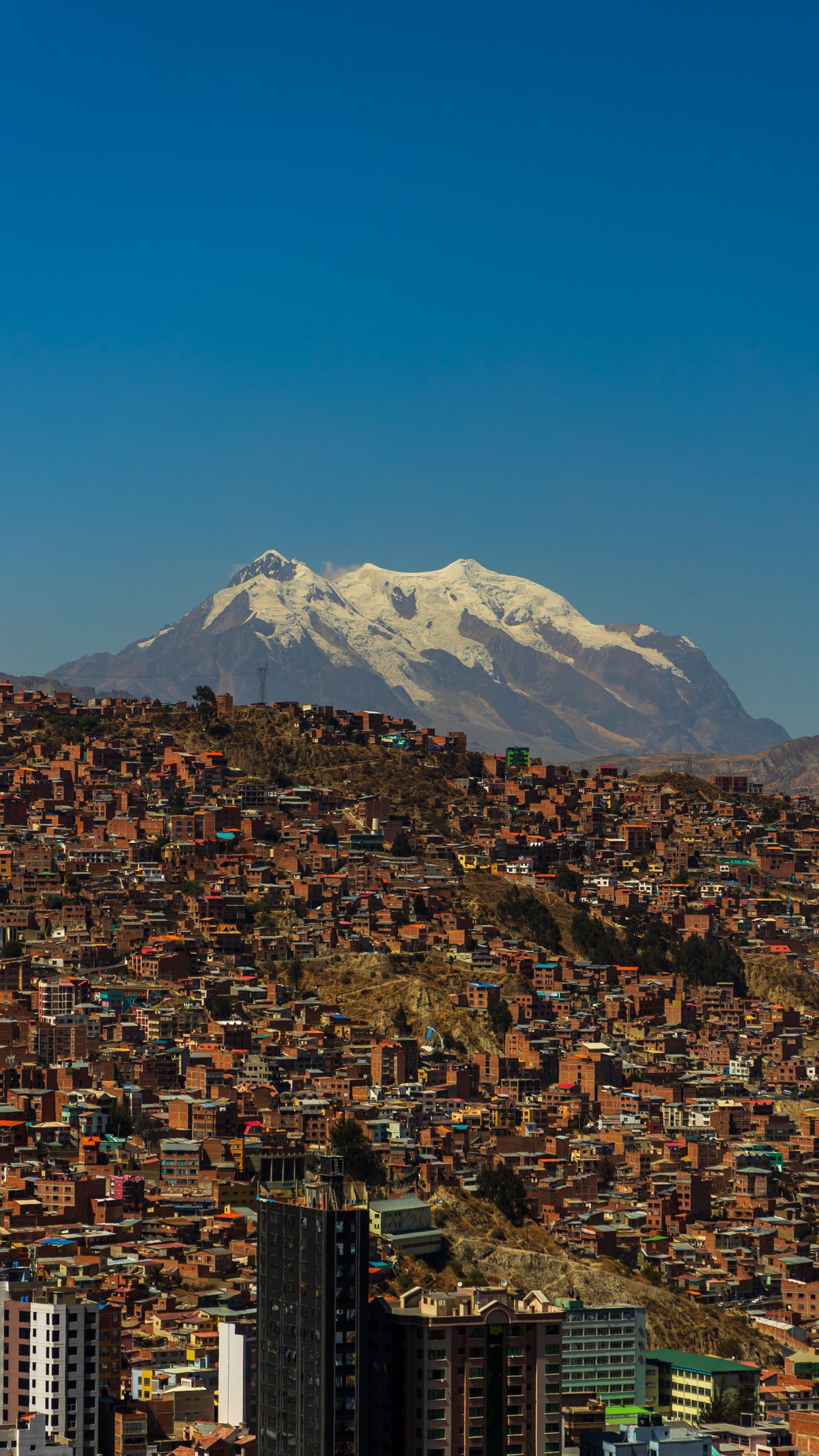
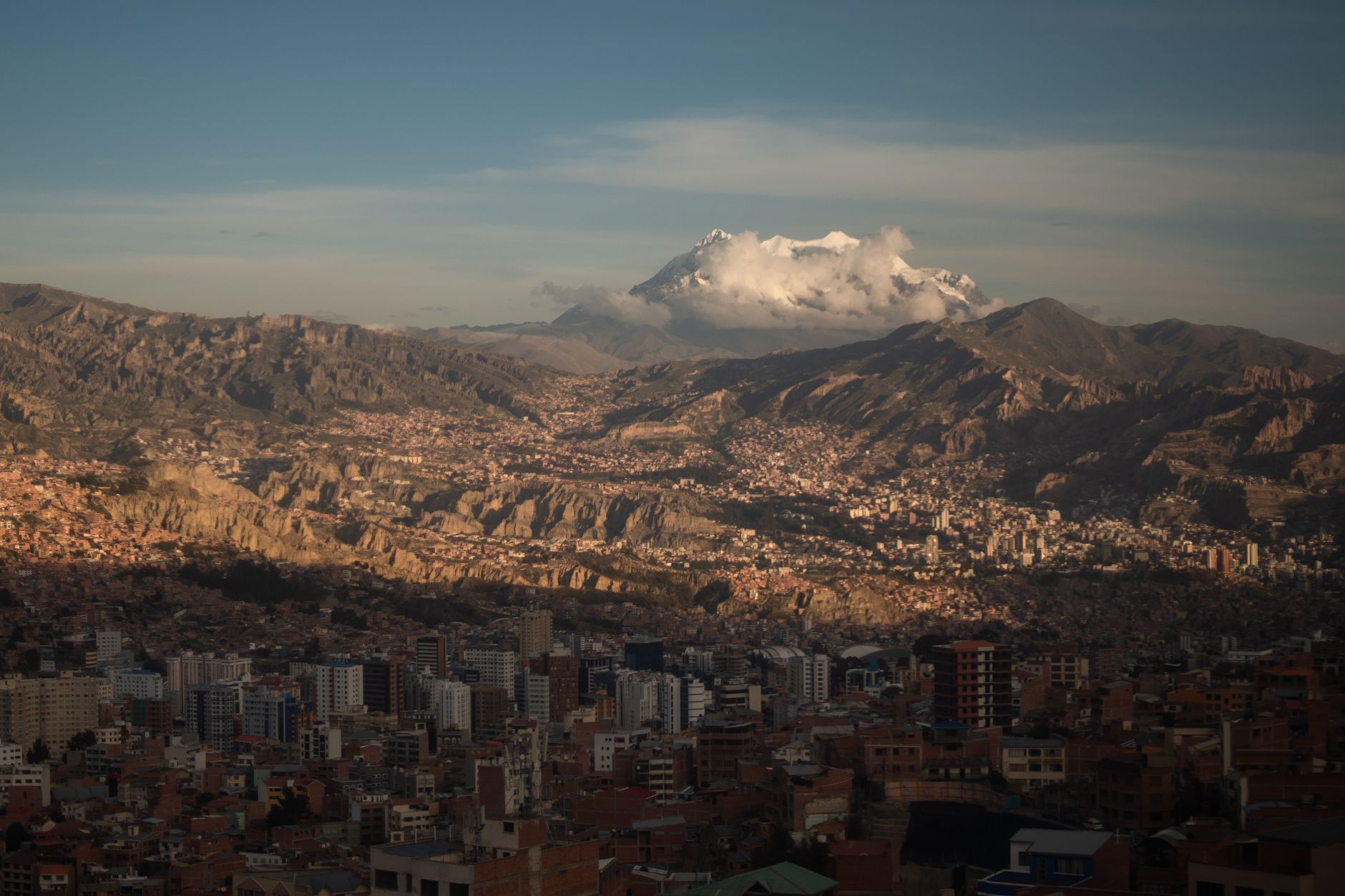
La Paz is a city poured into a canyon. The historic centre sits in the bottom of a steep bowl at around 3,640 m, the neighbouring city of El Alto spreads across the flat Altiplano rim roughly 400 m higher, and for most of the twentieth century the only way between the two was a jammed road of switchbacks and minibuses. Then, in May 2014, the first cabins of Mi Teleférico started gliding over the rooftops, and moving around La Paz changed for good.
Today the network is the longest aerial cable car system in the world, and for a visitor it is three things at once: cheap public transport, the best viewpoint in the city, and a gentle way to handle the altitude. This guide explains how the lines fit together, what a ride costs, which routes are worth your time and how to use the system without any stress.
What Is Mi Teleférico and Why Is It Worth Riding?
Mi Teleférico is the state-owned urban cable car network that links La Paz and El Alto. It is run by the Empresa Estatal de Transporte por Cable “Mi Teleférico” and was designed and built by the Austrian cable car company Doppelmayr. The first line, the Red Line, opened on 30 May 2014. The tenth, the Silver Line, opened on 9 March 2019, completing a network of 10 lines and about 30.6 km of cable.
Unlike a tourist gondola, this is everyday transport. Office workers, schoolchildren, market vendors in pollera skirts and backpackers all share the same cabins, which seat 10 passengers and leave the stations roughly every 12 seconds. The whole network runs with 1,398 cabins, and by the end of October 2023 it had carried around 494 million passengers.
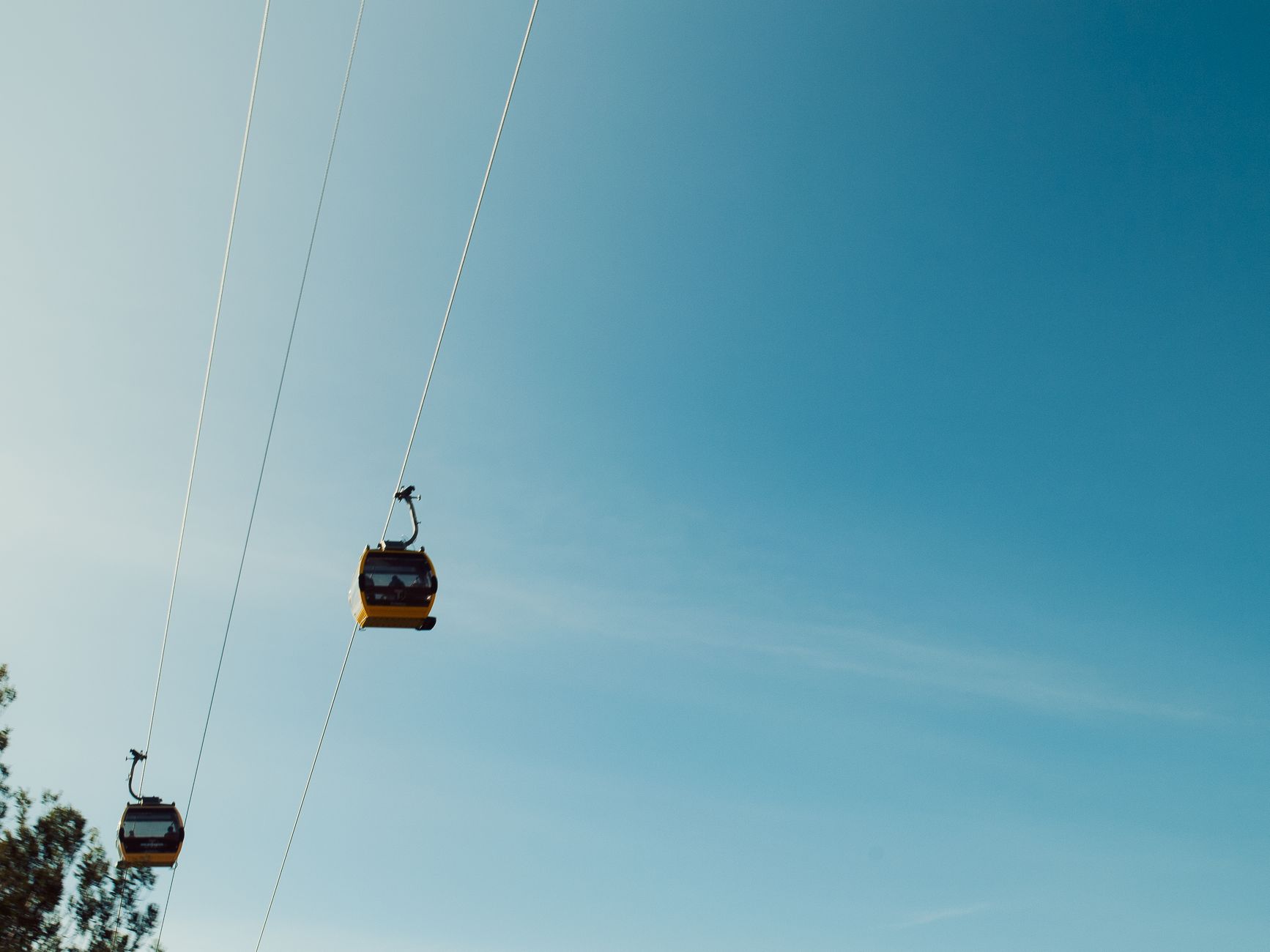
For travellers, the appeal is simple. For 3 bolivianos (about US$0.43) you get a silent, sit-down flight over one of the most dramatic urban landscapes in South America, with the snow-capped Illimani (6,438 m) on the horizon. There is no better introduction to how La Paz is laid out, and no cheaper one. It also appears on almost every list of the best things to do in La Paz for good reason.
A cable car that doubles as an altitude tool
Walking up 400 vertical metres at this elevation is exhausting, especially in your first days. The cable car lets you make that climb sitting down. If you are still acclimatising, a short ride up to El Alto and back is a classic “go high, sleep low” exposure. Our guide to how high La Paz really is explains why that matters and which neighbourhoods are best for your first nights.
The 10 Lines of Mi Teleférico, Explained
Each line is named after a colour, and the stations are clearly signposted in Spanish and Aymara. You do not need to memorise the map, but it helps to know roughly what each line does. The figures below come from the network’s published line data.
| Line | Opened | Length | Stations | Runs between |
|---|---|---|---|---|
| Red (Roja) | 30 May 2014 | 2.4 km | 3 | Estación Central – 16 de Julio (El Alto) |
| Yellow (Amarilla) | 15 Sep 2014 | 3.9 km | 4 | Mirador (El Alto) – Libertador / Chuqui Apu |
| Green (Verde) | 4 Dec 2014 | 3.7 km | 4 | Libertador / Chuqui Apu – Irpavi |
| Blue (Azul) | 3 Mar 2017 | 4.7 km | 5 | Río Seco – 16 de Julio (both in El Alto) |
| Orange (Naranja) | 29 Sep 2017 | 2.6 km | 4 | Estación Central – Plaza Villarroel |
| White (Blanca) | 24 Mar 2018 | 2.9 km | 4 | Plaza Villarroel – San Jorge |
| Sky Blue (Celeste) | 14 Jul 2018 | 2.6 km | 4 | El Prado – Libertador / Chuqui Apu |
| Purple (Morada) | 28 Sep 2018 | 4.3 km | 3 | 6 de Marzo (El Alto) – central La Paz |
| Brown (Café) | 20 Dec 2018 | 0.7 km | 2 | Monumento Busch – Las Villas |
| Silver (Plateada) | 9 Mar 2019 | 2.6 km | 3 | 16 de Julio – Mirador (El Alto rim) |

The three lines most travellers use
Red Line. The original line starts at Estación Central, the old railway station close to the historic centre, passes over the General Cemetery and climbs to 16 de Julio in El Alto. The ride takes around ten minutes and gains roughly 400 m. It is the fastest way to reach El Alto’s huge street market and the Sunday cholitas wrestling shows.
Yellow Line. Running from Mirador on the El Alto rim down through Buenos Aires and Sopocachi to Libertador (Chuqui Apu), this line has what many locals consider the best panorama in the city. Sit facing downhill for a view straight across the canyon towards Illimani.
Green Line. From Libertador the Green Line continues south-east over Obrajes to Irpavi in the Zona Sur, the lower, warmer and greener part of La Paz. It is useful for reaching restaurants and hotels in the south and as a first step towards Valle de la Luna.
The newer lines worth knowing
The Sky Blue Line starts on El Prado, the main avenue of the city centre, and connects to Libertador, which makes it the easiest link between downtown hotels and the Yellow and Green lines. The Orange and White lines serve the eastern districts of Miraflores and San Jorge, while the Purple Line is a long, direct drop from 6 de Marzo in El Alto into central La Paz. The Blue Line stays entirely inside El Alto, and the Silver Line runs along the edge of the Altiplano between 16 de Julio and Mirador, with the whole city spread out below you.
How Much Does the La Paz Cable Car Cost?
Fares are low and simple:
- Standard single ride: Bs 3 (about US$0.43)
- Transfer to a connecting line: Bs 2
- Preferential fare for students, older adults and people with disabilities: Bs 1.50
You buy your ride at the ticket window (boletería) at the entrance of each station. Staff will sell you a single journey, and rechargeable cards are available for frequent riders. Carry small notes and coins, since change for a Bs 100 or Bs 200 note can be a nuisance at a busy window. Our guide to money in Bolivia explains where to get small change and how ATMs work.
Even a long sightseeing loop that uses four lines costs well under US$2, which is why the cable car is often described as the cheapest scenic flight in the world.
Opening Hours and When to Ride
The network generally operates from about 06:30 to 22:30 Monday to Saturday, and from about 07:00 to 21:00 on Sundays and public holidays. Individual lines can open or close slightly earlier or later, and hours change for festivals and special events, so check the official Mi Teleférico channels if you are planning a late ride.
Best times for travellers
- Mid-morning (09:00–11:30): clear Altiplano light, short queues and sharp views of Illimani before afternoon clouds build up.
- Late afternoon and sunset: the most beautiful time to ride, when the canyon turns gold and pink and the city lights come on. Stations get busier, so allow extra time.
- After dark: riding over La Paz at night, with the whole bowl lit up below, is one of the most memorable experiences in the city.
- Avoid rush hours (roughly 07:00–09:00 and 17:30–19:30 on weekdays) if you carry a backpack or want a cabin to yourself.
Three Cable Car Routes for Visitors
Route 1: the classic panoramic loop
Start at Estación Central and take the Red Line up to 16 de Julio. Transfer to the Silver Line and ride along the El Alto rim to Mirador, then take the Yellow Line down to Libertador. From there, either return to the centre on the Sky Blue Line to El Prado or continue on the Green Line to Irpavi. Allow around 90 minutes with photo stops. This route shows you almost every face of La Paz: the colonial centre, the vast Aymara city of El Alto, the canyon edge, the leafy Sopocachi district and the Zona Sur.
Route 2: El Alto market day
On Thursdays and Sundays, the streets around 16 de Julio host one of the largest open-air markets in South America, selling everything from car parts and electronics to second-hand clothes and textiles. Ride the Red Line up in the morning, explore on foot, and on Sunday afternoon combine it with the cholitas wrestling. Keep valuables well hidden: this is the busiest place on the whole network.
Route 3: down to the Zona Sur and Valle de la Luna
Take the Sky Blue Line from El Prado to Libertador, transfer to the Green Line and ride to Irpavi. From Irpavi, a short taxi ride takes you to the eroded clay pinnacles of Valle de la Luna, about 10 km south of the centre. It is an easy half-day trip and, because the Zona Sur sits lower than the centre, a comfortable outing while you adjust to the altitude.
Getting to and From the Airport by Cable Car
El Alto International Airport, at 4,061 m, is not directly on a cable car line. Travelling light, you can take a short taxi from the terminal to a nearby El Alto station and ride down into the city for a few bolivianos, enjoying one of the best first views of La Paz there is. With large luggage, however, a taxi or a pre-booked transfer is far more practical. Our El Alto airport arrival guide compares every option and the going rates.
For longer journeys beyond the city, such as buses to Uyuni or Copacabana and domestic flights, see our complete guide on how to get around Bolivia.
Practical Tips for Riding Mi Teleférico
Keep your ticket or card handy. You need it to pass the entry turnstile, and you pay again when you change to another line.
Watch your bags in busy stations. The cabins themselves feel very safe, but crowded stations and the markets around 16 de Julio attract pickpockets. Wear your backpack on your front. For wider safety advice, read our guide on whether Bolivia is safe for tourists.
Bring a layer. El Alto is noticeably colder and windier than the centre, and the temperature can drop fast once the sun goes down.
Photograph through clean glass. Cabin windows do not open. Sit on the side facing the canyon, press your lens close to the window to reduce reflections, and switch off your flash at night.
Mind the altitude on arrival. Stepping out at 16 de Julio or Mirador puts you above 4,000 m. Walk slowly, drink water and do not plan a long walking tour of El Alto on your first day in Bolivia. If you do feel unwell, our altitude sickness guide covers symptoms and when to get help.
Travel with small children and elderly relatives calmly. Cabins slow right down inside the stations for boarding, and the ride is smooth, enclosed and seated, which makes it one of the most accessible sights in La Paz.
Is the La Paz Cable Car Worth It?
Absolutely. Mi Teleférico is not just a way to cross the city: it is the best way to understand it. In a single afternoon, for less than the price of a coffee, you can rise from the colonial centre to the Aymara metropolis of El Alto, trace the rim of the Altiplano, and drop back down into the canyon with Illimani glowing on the horizon. Ride the Red Line on your first day, save the Yellow and Silver lines for sunset, and let the cabins do the climbing for you.
Key facts
- Mi Teleférico has 10 operating lines and about 30.6 km of cable, making it the longest aerial cable car system in the world.
- The Red Line opened on 30 May 2014; the Silver Line, the tenth, opened on 9 March 2019.
- A single ride costs Bs 3, a transfer to a connecting line Bs 2, and the preferential fare is Bs 1.50.
- Each cabin seats 10 passengers and cabins depart about every 12 seconds, with 1,398 cabins across the network.
- The network had carried about 494 million passengers by 31 October 2023.
Frequently asked questions
How much does the La Paz cable car cost?
A single ride on any Mi Teleférico line costs Bs 3 (about US$0.43). Changing to a connecting line costs Bs 2 more, and students, seniors and people with disabilities pay a preferential fare of Bs 1.50. You pay at the ticket window in each station, in cash or with a rechargeable card.
What are the Mi Teleférico opening hours?
The network generally runs from about 06:30 to 22:30 Monday to Saturday and from about 07:00 to 21:00 on Sundays and public holidays. Hours can vary slightly by line and change for special events, so check the official Mi Teleférico channels before planning a late ride.
Which cable car line has the best views in La Paz?
The Yellow Line between Mirador and Libertador (Chuqui Apu) and the Silver Line along the El Alto rim give the widest views over the La Paz canyon and Illimani. The Red Line is the classic first ride because it climbs about 400 m from the old railway station to El Alto in around ten minutes.
Is the La Paz cable car safe for tourists?
Yes. Mi Teleférico is one of the safest and cleanest ways to move around La Paz, with staffed stations and enclosed cabins. The main risk is pickpocketing in crowded stations and at the El Alto markets near 16 de Julio, so keep bags in front of you and avoid rush hours with luggage.