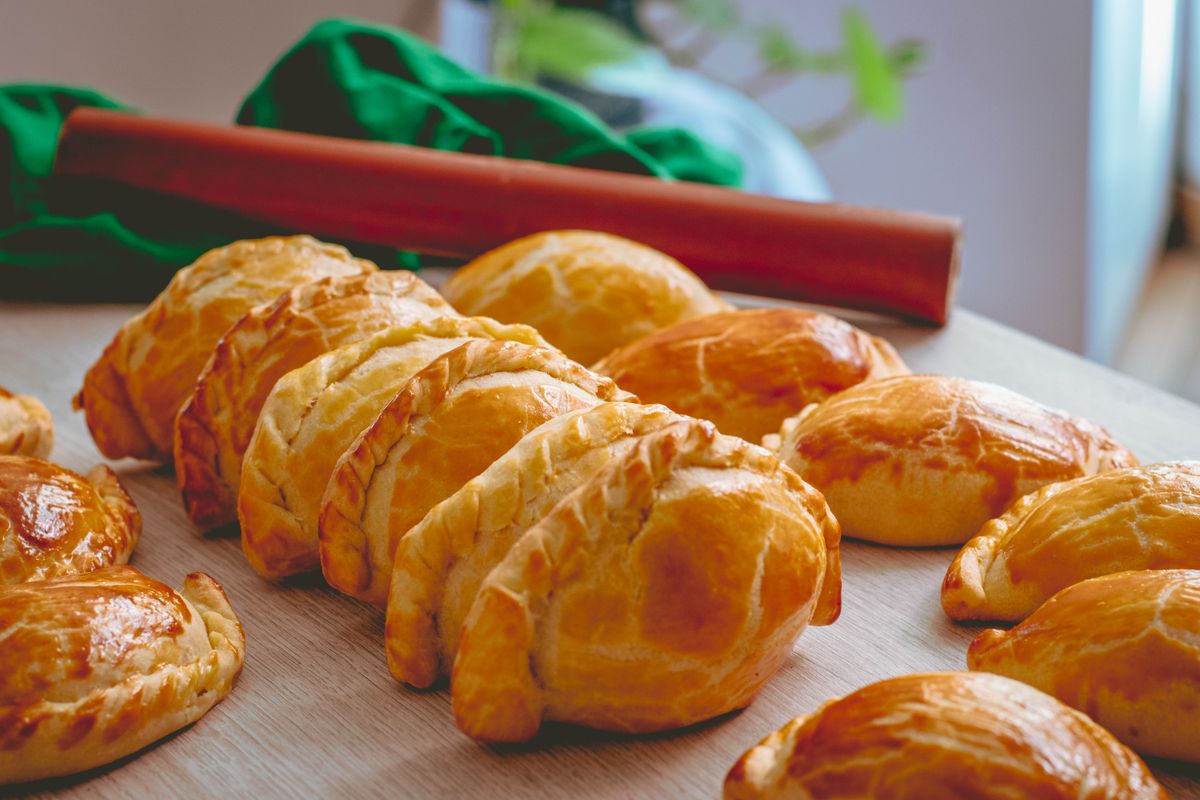
A Bolivian salteña is a baked pastry with a sweet, golden crust and a filling that is closer to soup than to stuffing: meat, potato, peas and ají suspended in a hot, glossy broth. It is the country’s great mid-morning ritual. Salteñerías open early, queues form by nine, and by noon most of them have sold out and pulled the shutters down. If you are travelling through La Paz, Sucre, Cochabamba or Potosí, eating one is not optional — but there is a technique to it, a schedule to respect and a surprising amount of history behind that braided seam. This guide covers all of it, and ends with a recipe you can make at home.
What Is a Salteña?
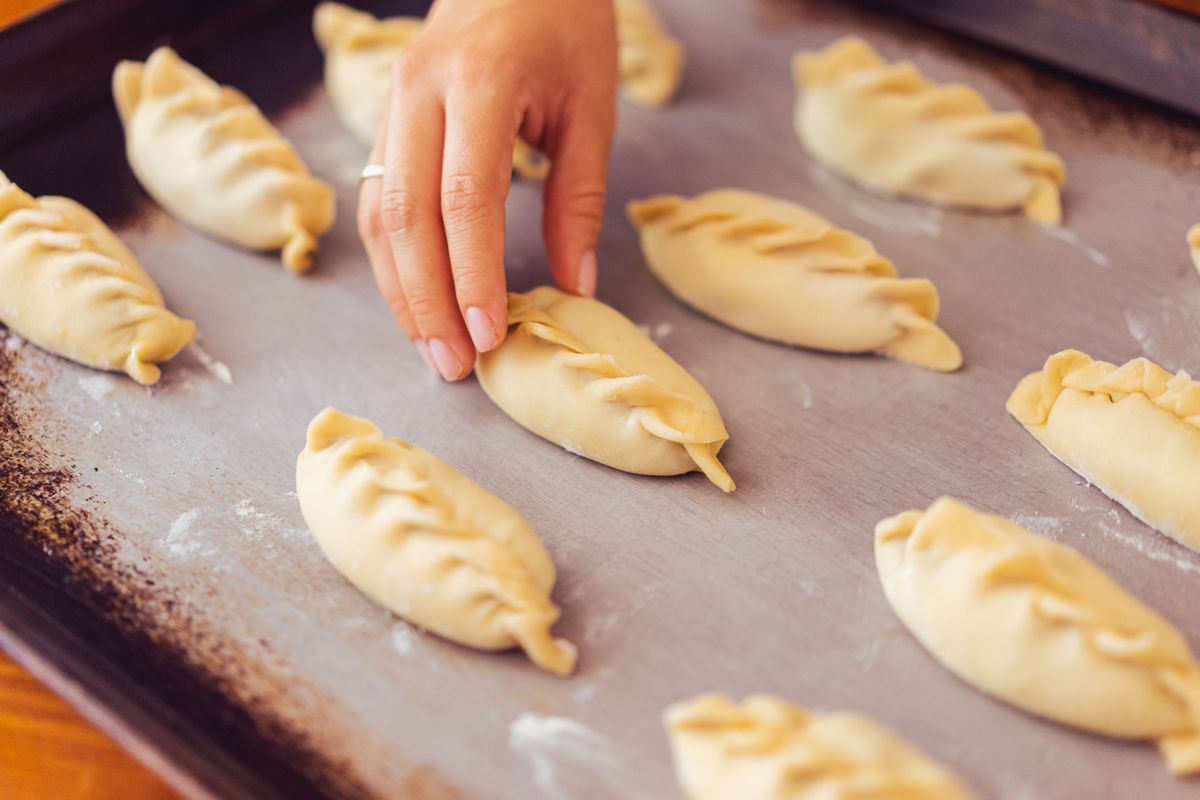
At first glance a salteña looks like an empanada: a half-moon of dough folded over a filling and sealed with a rope-like braid, called the repulgue. The difference is inside. The filling — known as jigote — is a stew of diced beef, chicken or pork cooked with onion, ají, cumin, oregano and a noticeable amount of sugar, then mixed with potato and peas. Before it goes into the pastry the stew is set with gelatin and chilled until firm. In the oven that gelatin melts again, so the finished salteña is sealed around several spoonfuls of hot broth.
The dough is also different from most empanadas. It is firmer and sweeter, often enriched with egg and coloured with annatto (achiote or urucú), which gives the crust its orange-red tint. Tucked into each salteña you will usually find a slice of hard-boiled egg and a black olive, and in some kitchens a raisin or two.
Why the filling is so juicy
The gelatin is the whole trick. Without it, a liquid stew would soak the dough and leak before the pastry could be sealed. By chilling the jigote overnight, the cook can spoon a firm, sliceable filling into each round of dough, crimp it shut and bake it at high heat. The crust sets before the gelatin fully melts, locking the broth inside.
Beef, chicken, pork and vegetarian versions
Beef (carne) and chicken (pollo) are the standard choices in every salteñería. Pork appears in some regions, and a growing number of shops in La Paz and Santa Cruz offer vegetarian salteñas with vegetables and cheese. Spice levels are labelled simply: picante or no picante (sometimes dulce). If you are unsure, the medium heat most shops serve by default is mild by international standards.
Where Did Salteñas Come From?
The best-known origin story involves Juana Manuela Gorriti, a writer born in the province of Salta, Argentina, whose family went into exile in Bolivia in the 1830s during the Rosas era. According to the version popularised by historian Antonio Paredes Candia, she made soupy empanadas to earn a living, and neighbours sent their children to buy them from la salteña — “the woman from Salta”. The nickname stuck to the pastry.
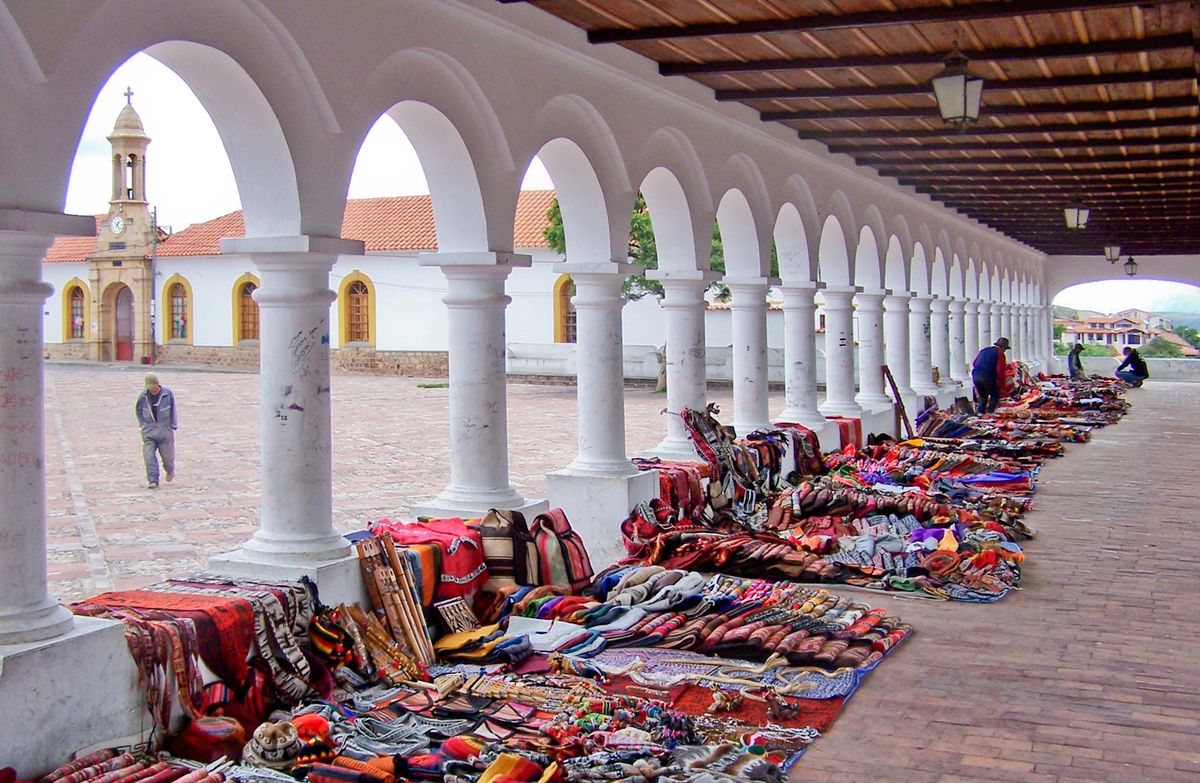
It is a good story, but historians point out that it has no documentary basis. The oldest written evidence is older and more local: the recipe book of Doña Josepha de Escurrechea, written in Potosí in 1776 and described as the only colonial recipe book found in Bolivia. Colonial Potosí was one of the richest cities in the Americas thanks to the silver of the Cerro Rico — something you can still feel on a visit to Potosí and its silver mines — and its kitchens adapted European pastries with local ingredients such as potato and ají.
From colonial kitchens to a national snack
By the early twentieth century the broth empanada was firmly established. Sofía Urquidi’s 1917 recipe book from Sucre includes no fewer than eight recipes for broth empanadas, three of them with ají. Over the following decades the salteña spread to every major city and became Bolivia’s default mid-morning snack.
Official recognition in Potosí
Potosí has formally claimed the salteña. The municipal government declared it intangible heritage on 11 October 2012, and Municipal Law 155/2017 named Potosí the “cradle of the salteña”. You may also see 10 November promoted as the “Day of the Salteña”, but as the Sucre newspaper Correo del Sur has reported, no law sets that date — it grew out of a soft-drink marketing campaign.
When Do Bolivians Eat Salteñas?
Timing matters more than anything else. Salteñas are sold roughly from 7 am until noon, and the most popular salteñerías are often sold out by mid-morning. The peak is between 9 and 11 am, when office workers, students and families step out for a salteñazo. In La Paz and Santa Cruz de la Sierra, a Sunday-morning salteña with the family is a tradition in its own right.
Arrive in the afternoon and you will find shutters down. That is not a problem with the shop — it is how the food works. The whole daily batch is baked in the morning and nobody reheats salteñas for later. We explain the rest of the country’s food timetable in our guide to Bolivian street food.
What to drink with a salteña
The classic pairing is a cold soft drink, and in many salteñerías you will see nearly every table with a bottle on it. On a cold altiplano morning, a cup of hot api — a thick purple-corn drink — is the traditional alternative. For more ideas, see our guide to traditional Bolivian drinks.
How to Eat a Salteña Without Spilling It
First-timers almost always end up with broth down their sleeve. Bolivians eat salteñas with their hands and rarely use a plate, and the technique is simple once you have seen it:
- Hold it upright, braided seam on top, with a napkin wrapped around the base.
- Bite a small opening off one of the top corners — not the middle.
- Sip the broth through that opening before you take a real bite. It is hot, so go slowly.
- Eat from the top down, turning the salteña and drinking the juice as it rises.
- Finish with a spoon if the last of the filling is still loose. Many shops hand you a teaspoon for this.
Never lay a salteña flat on the table or cut it in half with a knife: the broth will run out, and you will get some very sympathetic looks from the next table.
Regional Styles Across Bolivia
Every city believes its salteña is the best one, and the debate is part of the fun. Broadly:
- Potosí: the self-declared cradle of the salteña, where many travellers go out of their way to try the local version.
- Sucre: known for a sweeter filling and dough; Sucre’s salteñas are a point of civic pride and one of the reasons to linger in the city on our list of things to do in Sucre.
- Cochabamba: often described as the best in the country by Bolivians from other regions, with generous, well-spiced fillings. Pair a salteña morning with the rest of our Cochabamba guide.
- La Paz: the busiest salteña culture, with neighbourhood salteñerías in every district and a noticeable trend toward spicier versions.
- Santa Cruz de la Sierra: a lowland city with the same Sunday salteña habit, plus plenty of chicken and vegetarian options.
Salteña, tucumana and empanada: what is the difference?
A salteña is baked and juicy. A tucumana has a similar filling but is fried, crisper and less soupy, and it is the afternoon option when the salteñas are gone. A Bolivian empanada is usually drier: empanadas de queso filled with cheese, or the large fried pastel dusted with sugar that is traditionally eaten with a cup of api. Across the border in Brazil, the salteña has become the saltenha — Corumbá’s first saltenharia opened in 1978.
Where to Eat Salteñas in Bolivia
You do not need a specific address to find a good salteña. You need a few signals:
- A queue before 10 am. High turnover means the batch is fresh from the oven.
- A dedicated salteñería. Shops that sell little else tend to make the best jigote.
- Glossy, deep-golden crusts with an intact braid. Cracks mean broth has leaked.
- Warm to the touch. A salteña that has cooled has lost most of its appeal.
In La Paz, the neighbourhoods of Sopocachi, Miraflores and the southern zone around Calacoto are full of salteñerías; our guide to things to do in La Paz will help you plan the rest of the day. In Sucre and Potosí, you will find good salteñas within a few blocks of the main plaza and around the central markets.
How much does a salteña cost?
In 2026 a standard salteña costs about 6 to 12 bolivianos (roughly USD 0.90 to 1.70), with premium shops charging a little more. That makes a two-salteña breakfast one of the best-value meals in the country — see our Bolivia budget guide for how it fits into daily costs.
How to Make Bolivian Salteñas at Home
Homemade salteñas take time but no special equipment. The key is to make the filling the day before so the gelatin can set. This recipe makes about 20 salteñas.
Filling (jigote)
- 500 g beef (or chicken breast), cut into 1 cm dice
- 2 medium onions, finely chopped
- 3 tablespoons ají colorado paste (red chilli paste), or to taste
- 1 teaspoon ground cumin and 1 teaspoon dried oregano
- 2 tablespoons sugar, plus salt and black pepper
- 400 g potatoes, peeled and cut into small cubes
- 150 g green peas
- 500 ml beef or chicken stock
- 20 g unflavoured powdered gelatin
- A handful of chopped parsley and spring onion
- To assemble: 3 hard-boiled eggs, sliced; about 20 black olives; a few raisins (optional)
Dough
- 1 kg plain flour
- 200 g butter or lard, melted with 2 tablespoons annatto (achiote) for colour
- 150 g sugar and 1 teaspoon salt
- 1 egg, plus 1 egg for brushing
- About 350 ml warm water
Method
- Cook the stew. Soften the onions in a little oil, add the ají paste, cumin, oregano, sugar, salt and pepper, then the meat. Cook for 10 minutes.
- Add potatoes and stock. Parboil the potatoes and peas separately until just tender, then add them to the pan with most of the stock.
- Set the filling. Dissolve the gelatin in the remaining warm stock, stir it into the pan, add the herbs and check the seasoning — it should taste slightly sweet and a little spicy.
- Chill overnight. Pour the filling into a tray and refrigerate for at least 8 hours, until firm.
- Make the dough. Combine the flour, sugar and salt, add the warm coloured fat and the egg, and knead in the water until smooth and firm. Rest for 30 minutes.
- Assemble. Roll the dough into 12–14 cm rounds about 3 mm thick. Place two generous spoonfuls of cold filling in the centre with a slice of egg and an olive, fold, and seal the top with a braided repulgue, so the seam sits upright.
- Bake hot. Brush with beaten egg and bake at 220–240 °C for 15 to 20 minutes, until deep golden. Let them rest for 5 minutes before eating.
Tips for a better result
Keep the filling cold right up to the moment of assembly — warm jigote will melt and tear the dough. Seal the braid tightly, as one weak spot will let the broth escape in the oven. And if you are cooking at high altitude, as in La Paz, expect to add a few minutes to the baking time.
Practical Tips for Trying Salteñas in Bolivia
- Go early. Plan salteñas for 9–11 am and build your sightseeing around them.
- Ask for “no picante” if you do not like heat, or “picante” if you do.
- Carry small notes and coins. Most salteñerías are cash-first, although QR payments are increasingly common.
- Take it easy at altitude. A rich breakfast is fine, but on your first day in La Paz or Potosí keep meals light while you acclimatise.
- Eat where it is busy. As with all street food, turnover is the best indicator of freshness.
The salteña rewards a little planning: an early start, a napkin and a willingness to get it slightly wrong the first time. Once you have the technique, you will understand why Bolivians guard their mid-morning salteña hour so fiercely. For the rest of the country’s table, from silpancho to majadito, continue with our guide to traditional Bolivian food.
Key facts
- The oldest documented source for Bolivian broth empanadas is Josepha de Escurrechea's 1776 recipe book from Potosí, described as the only colonial recipe book found in Bolivia.
- Sofía Urquidi's 1917 recipe book from Sucre contains at least eight recipes for broth empanadas, three of them made with ají.
- The municipality of Potosí declared the salteña intangible heritage on 11 October 2012 and passed Municipal Law 155/2017 naming Potosí the cradle of the salteña.
- Salteñas are sold roughly from 7 am to noon, and most vendors sell out by mid-morning.
- In 2026 a standard salteña costs about 6 to 12 bolivianos (roughly USD 0.90 to 1.70).
- In Brazil the pastry is called saltenha; the first saltenharia in Corumbá was opened by the Ardaya family in 1978.
Frequently asked questions
What is a Bolivian salteña?
A salteña is a baked, slightly sweet pastry filled with a juicy stew of beef, chicken or pork, potato, peas, ají and spices, usually with a piece of boiled egg and an olive. The stew is set with gelatin when the pastry is assembled and melts in the oven, which is why a salteña is full of hot broth when you bite into it.
What time of day are salteñas eaten in Bolivia?
Salteñas are a mid-morning food. Vendors start selling around 7 am and most are sold out by 11 am or noon, so the classic time to eat one is between 9 and 11 am. In the afternoon look for a tucumana instead, which has a similar filling but is fried.
How do you eat a salteña without spilling it?
Hold it upright with the braided seam on top, bite a small hole off one corner and sip some of the broth first. Then keep eating from the top down, drinking the juice as you go. Locals often use a spoon for the last of the filling, and most never use a plate.
Where did the name salteña come from?
The popular story traces the name to Juana Manuela Gorriti, a writer from Salta, Argentina, who lived in exile in Bolivia in the 1830s and was nicknamed la salteña. Historians note that this account lacks documentary evidence, and that broth empanadas were already recorded in Potosí in 1776.