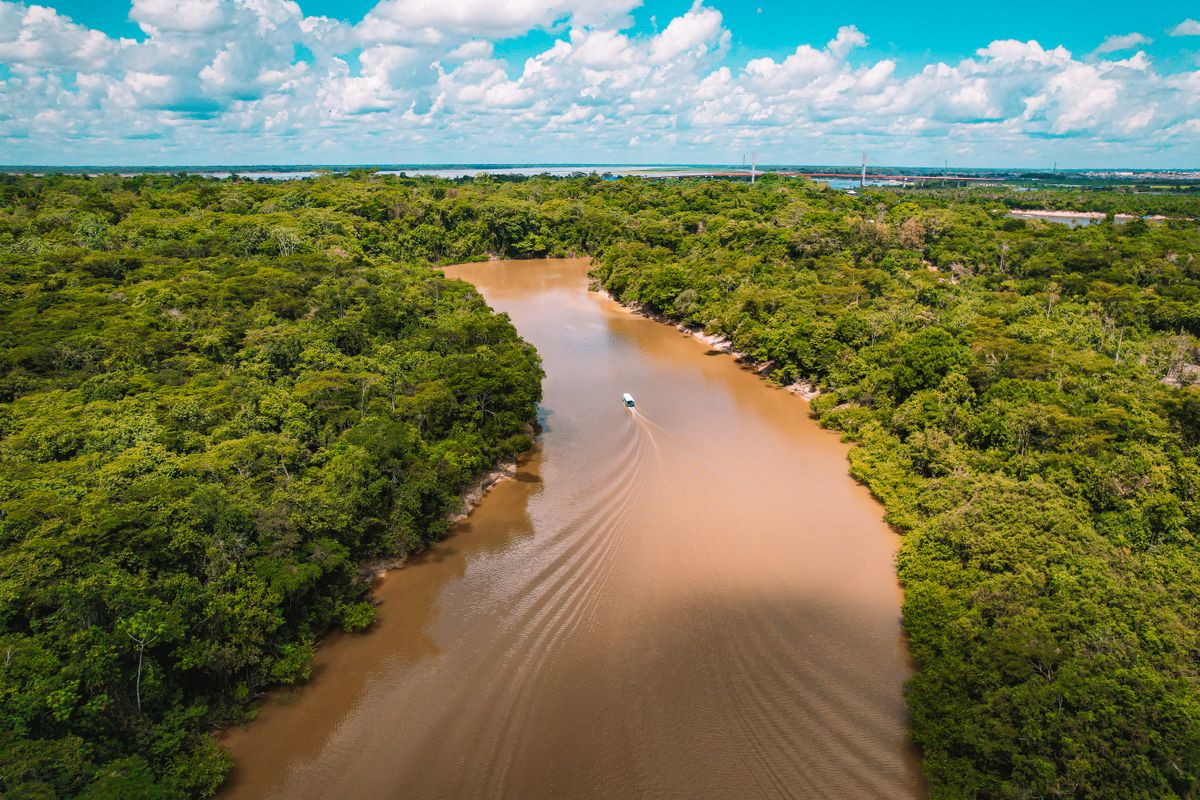
Bolivia packs more wildlife into its borders than almost any country on earth. It sits on the short list of 17 megadiverse countries, and its ten ecosystems stretch from Amazon floodplain at around 90 m above sea level to the summit of Nevado Sajama at 6,542 m. That vertical range is the reason a single two-week trip can put you in front of a pink river dolphin on Monday and an Andean condor on Friday.
This guide runs through the animals of Bolivia species by species — what they are, how big they get, their conservation status and, most importantly, exactly where and when you can realistically see them.
How Biodiverse Is Bolivia, Really?
The headline numbers are extraordinary for a landlocked country of 1.1 million km²:
- More than 1,400 bird species — roughly 14% of all bird species on the planet, placing Bolivia in the world’s top ten birding countries.
- Around 390 mammal species, including eight wild cats and more than 20 primates.
- Over 300 reptiles and around 260 amphibians, many of them found nowhere else.
- More than 1,500 freshwater fish species, from piranhas to the giant paiche.
The reason is geography. Bolivia is the only country in South America that contains substantial slices of the Andes, the Amazon, the Pantanal, the Gran Chaco, the Yungas cloud forest and the Chiquitano dry forest all at once. Each of those holds a completely different animal community, and the boundaries between them are where diversity peaks.
Protection matters too. SERNAP, the national protected-area service, manages 22 national protected areas covering roughly 17% of Bolivian territory — a higher share than most countries in the region.
Big Cats and Large Mammals
The jaguar (Panthera onca)
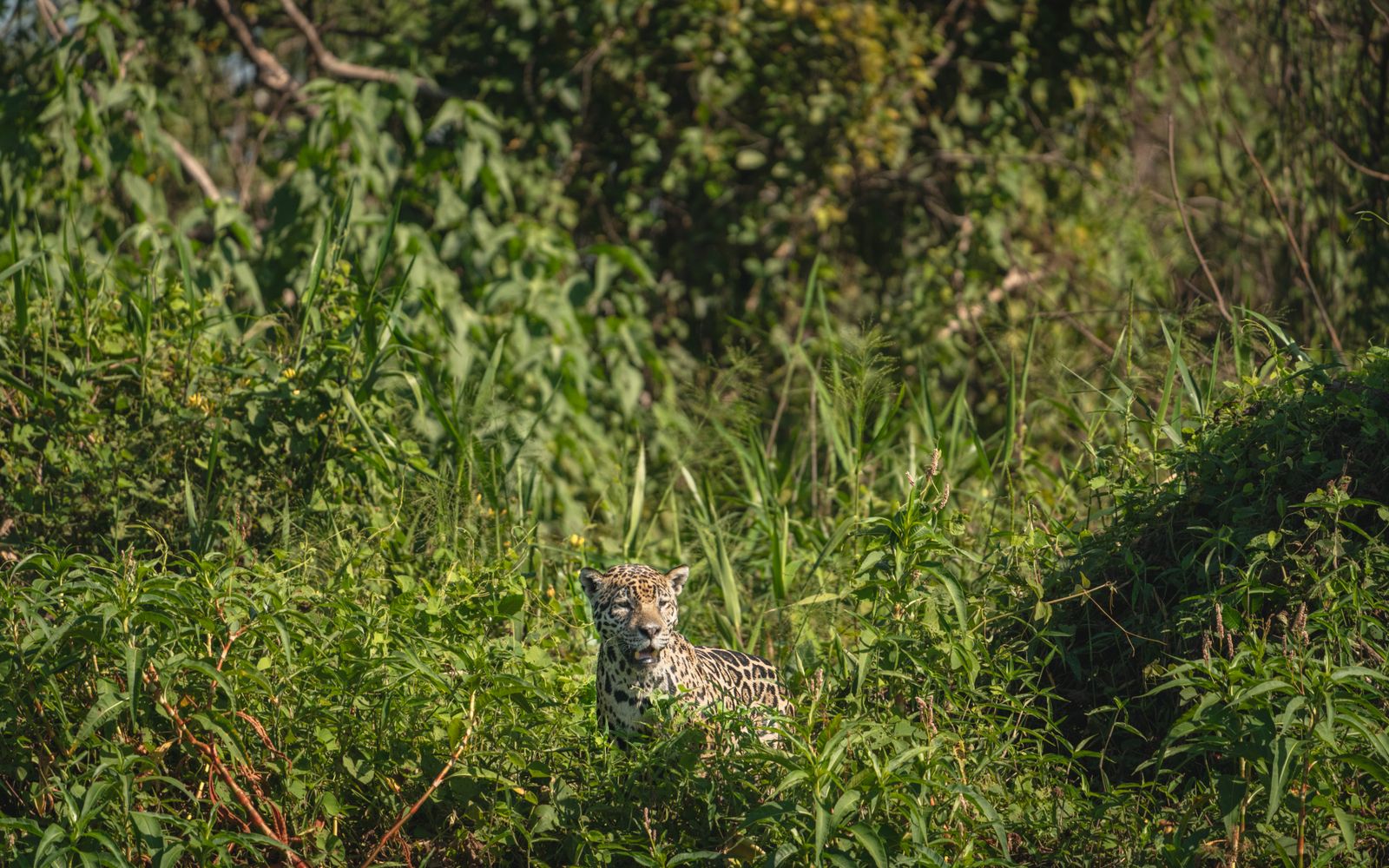
The jaguar is the largest cat in the Americas and the animal most travellers hope to see. Bolivian males reach 90–96 kg in the best habitats, and the species has the strongest bite force relative to size of any big cat — enough to punch through a caiman’s skull. The IUCN lists the jaguar as Near Threatened, with Bolivia holding one of the most important remaining populations.
Where to look: Kaa-Iya del Gran Chaco National Park (34,400 km², Bolivia’s largest protected area) has one of the densest jaguar populations in South America, and the San Matías area of the Bolivian Pantanal offers riverbank sightings in the August–October dry window. Our jaguar tracking route covers the practical logistics of both.
The puma (Puma concolor)
Bolivia’s second big cat is far more widespread than the jaguar and far harder to see. Pumas range from the Chaco lowlands to above 4,000 m in the Andes, hunting vicuña, deer and rodents. They are strictly solitary and largely crepuscular, so most travellers only ever find tracks and scrapes.
The spectacled bear (Tremarctos ornatus)
South America’s only bear species, known in Bolivia as the jucumari. Adults weigh 60–175 kg and are named for the pale rings around their eyes. They live in the Yungas cloud forest between roughly 1,000 and 3,500 m, feeding mostly on bromeliads and fruit. The IUCN classifies them as Vulnerable. Sightings are rare, but Amboró and Carrasco national parks and the upper Yungas cloud forest are the realistic areas to try.
Tapir, peccary and giant anteater
The lowland tapir (Tapirus terrestris) is South America’s largest land mammal at up to 250 kg, a nocturnal river-forest browser you will most often meet as fresh tracks in mud. White-lipped peccaries move in herds of 50 to 200 and are usually heard long before they are seen. The giant anteater (Myrmecophaga tridactyla), up to 2.1 m nose to tail, is one of the most reliable large mammals in the Beni savannas and the Chaco.
Aquatic Animals: Dolphins, Otters and Caimans
The Bolivian river dolphin (Inia boliviensis)
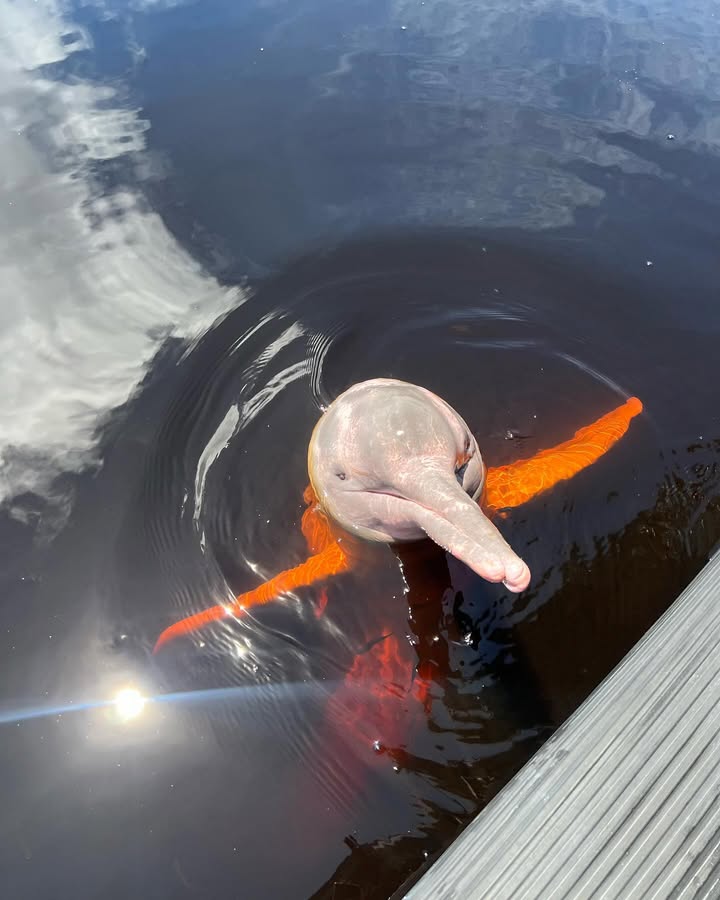
Bolivia’s most emblematic aquatic animal is endemic to the country’s Amazon basin, isolated above the rapids of the Madeira river for millions of years and now recognised as a distinct species. Adults are pale grey to pink, reach about 2.2 m and use echolocation in water far too muddy for sight. Bolivia declared the species national natural heritage by law in 2012.
The Yacuma, Mamoré and Ibare rivers are the classic viewing waters, and a pampas tour from Rurrenabaque gives near-guaranteed sightings. Our guide to Bolivia’s pink river dolphins covers the biology and the best departure points in detail.
The giant otter (Pteronura brasiliensis)
At up to 1.8 m long, the giant otter is the largest otter on earth and one of the loudest animals in the Amazon — family groups of five to eight communicate almost constantly. The IUCN lists it as Endangered after decades of pelt hunting. Noel Kempff Mercado National Park and the oxbow lakes of Madidi are the strongholds.
Caimans and the green anaconda
Two caiman species dominate Bolivian waterways: the yacaré caiman (Caiman yacare, up to 3 m) and the much rarer black caiman (Melanosuchus niger, up to 5 m). The green anaconda (Eunectes murinus) is the heaviest snake in the world, with large females exceeding 100 kg; the seasonally flooded grasslands of the Pampas del Yacuma are the classic place to find one.
Birds of Bolivia
With over 1,400 recorded species, birds are where Bolivia’s biodiversity becomes visible from a boat or a trail rather than only in the data.
The Andean condor (Vultur gryphus)
The condor has a wingspan of up to 3.3 m and weighs up to 15 kg, which makes it one of the largest flying birds alive. It appears on the Bolivian coat of arms and is listed as Vulnerable by the IUCN. Look for it riding thermals along the Cordillera Real, above the Condoriri massif and in Sajama National Park; the canyon miradors at Torotoro are among the most reliable single spots in the country.
The blue-throated macaw (Ara glaucogularis)
Bolivia’s rarest flagship bird, and one that exists nowhere else on earth. It survives only in the Beni savannas, in isolated islands of motacú palm forest, with fewer than 500 mature individuals in the wild. The IUCN lists it as Critically Endangered. Community reserves near Trinidad and Loreto now run controlled visits alongside nest-box programmes that have measurably increased fledging rates.
Flamingos of the high Andes
Three flamingo species feed in the mineral lakes of the southwest altiplano above 4,000 m: the James’s flamingo (Phoenicoparrus jamesi), thought extinct until it was rediscovered at Laguna Colorada in the 1950s, the Andean flamingo (Phoenicoparrus andinus) and the Chilean flamingo (Phoenicopterus chilensis). Laguna Colorada regularly holds tens of thousands of birds — see our full guide to the flamingos of Laguna Colorada.
Other birds worth the binoculars
The harpy eagle, up to 9 kg with talons the size of a bear’s claws, haunts Madidi and Noel Kempff. The hoatzin, a bizarre leaf-eating bird whose chicks are born with wing claws, is common on oxbow lakes. The horned curassow (Pauxi unicornis) is a Bolivian near-endemic of the Yungas, and Amazon kingfishers, jabiru storks and toco toucans are everyday sightings on any lowland river.
Andean Animals: Camelids and Highland Species
Above 3,500 m the cast changes completely. Bolivia has all four South American camelids: the domesticated llama and alpaca, plus the wild guanaco and vicuña. The vicuña produces the finest natural fibre in the world at around 12 microns, and after near-extinction in the 1960s has recovered to Least Concern. If you want to tell them apart in the field, start with our guide to llamas versus alpacas.
Other highland species to look for:
- Vizcacha (Lagidium viscacia) — a rabbit-eared, squirrel-tailed rodent that suns itself on rock piles at 4,000 m.
- Andean fox (Lycalopex culpaeus) — widespread and often seen at dawn on altiplano roads.
- Titicaca water frog (Telmatobius culeus) — the world’s largest exclusively aquatic frog, Critically Endangered and found only in Lake Titicaca.
- Andean flicker, puna tinamou and giant coot — common around the high lakes and easy first ticks for new birders.
Where to See Bolivia’s Animals: Six Best Regions
| Region | Signature animals | Best months |
|---|---|---|
| Madidi National Park | Harpy eagle, jaguar, titi monkeys, macaws | May–October |
| Pampas del Yacuma (Rurrenabaque) | Pink dolphins, capybara, caiman, anaconda | May–October |
| Noel Kempff Mercado | Giant otter, tapir, maned wolf | June–October |
| Kaa-Iya del Gran Chaco | Jaguar, peccary, Chacoan endemics | August–October |
| San Matías / Bolivian Pantanal | Jaguar, jabiru, marsh deer | July–October |
| Southwest altiplano lakes | Flamingos, vicuña, Andean fox | April–November |
Madidi National Park covers 18,958 km² and spans an altitude range from around 180 m to 6,000 m, which is why it consistently appears on lists of the most biodiverse protected areas on the planet — the Madidi Amazon tour is the standard way in. Noel Kempff Mercado protects 15,234 km² of Precambrian plateau and was inscribed as a UNESCO World Heritage Site in 2000; the lost-world plateau is the most remote of the six and needs a charter flight.
For a first trip, the Pampas del Yacuma tour from Rurrenabaque delivers by far the most sightings per day, and it is the only place where three days will realistically produce dolphins, caimans, capybaras, monkeys and an anaconda. If you want rainforest rather than savanna, the Bolivian Amazon guide explains the difference between the two trip types.
Practical Tips for Wildlife Watching in Bolivia
Go in the dry season. From May to October rivers drop and water sources shrink, so animals concentrate. Sighting rates in August can be double those of February. Our best time to visit Bolivia guide breaks the seasons down region by region.
Book the early boat. Most lowland mammals and birds are active in the first two hours after sunrise and the last two before sunset. Midday river trips are the single most common mistake first-time visitors make.
Bring 8×42 binoculars. Bolivian rainforest sightings are mostly canopy sightings. A basic pair transforms the trip more than any camera upgrade.
Choose a certified operator. Ask whether the operator holds a SERNAP permit for the protected area, whether guides come from local communities and whether the itinerary involves baiting or handling animals. Handling anacondas or feeding caimans is a red flag, not an attraction.
Respect distance. The working standard is 20 m from large mammals and 50 m from nesting birds. Never block an animal’s path to water, and never use flash on nocturnal species.
Pack for the ecosystem, not the country. Lowland wildlife trips need closed boots, long sleeves and DEET; altiplano birding needs a windproof layer and serious sun protection at 4,000 m.
The Bottom Line
Bolivia gives you more animal diversity per travel day than almost anywhere in South America, and it does it without the crowds of the Ecuadorian Amazon or the Brazilian Pantanal. Build a trip around two contrasting ecosystems — a lowland river base such as Rurrenabaque plus a highland circuit through the southwest lakes — and you will come home with a species list that would take three separate trips to assemble anywhere else on the continent.
Key facts
- Bolivia is one of the world's 17 megadiverse countries and records more than 1,400 bird species, roughly 390 mammals, over 300 reptiles and around 260 amphibians.
- Madidi National Park covers 18,958 km2 and spans an altitude range from about 180 m to 6,000 m, making it one of the most biodiverse protected areas on the planet.
- Kaa-Iya del Gran Chaco National Park is Bolivia's largest protected area at 34,400 km2 and holds one of South America's densest jaguar populations.
- The Bolivian river dolphin (Inia boliviensis) is endemic to Bolivia's Amazon basin and was declared national natural heritage by law in 2012.
- The blue-throated macaw (Ara glaucogularis) survives only in the Beni savannas, with fewer than 500 mature individuals in the wild; the IUCN lists it as Critically Endangered.
- The Andean condor has a wingspan of up to 3.3 m and weighs up to 15 kg, making it one of the largest flying birds in the world.
- Bolivia's national protected area system, managed by SERNAP, includes 22 national protected areas covering roughly 17% of the country's territory.
Frequently asked questions
What is the national animal of Bolivia?
Bolivia does not have a single official national animal, but the Andean condor (Vultur gryphus) appears on the national coat of arms and is treated as the country's national bird. The llama is the most widely recognised national symbol among domesticated animals, and the Bolivian river dolphin was declared national natural heritage in 2012.
What dangerous animals live in Bolivia?
The animals worth respecting are jaguars, pumas, green anacondas, caimans, bushmasters and fer-de-lance vipers, plus bullet ants and Africanised bees. In practice attacks on travellers are extremely rare: jaguars avoid people, and snakebites almost always happen to farm workers rather than tourists. Wear closed boots in the lowlands, never walk river banks alone at night and always use a guide in the Amazon and Pantanal.
Where is the best place to see wildlife in Bolivia?
For sheer volume of easy sightings, the Pampas del Yacuma near Rurrenabaque is unbeatable: capybaras, caimans, pink river dolphins, howler monkeys and hundreds of birds in three days. For rainforest species and record bird lists, Madidi National Park is the best in the country. For jaguars, Kaa-Iya del Gran Chaco and the San Matías area of the Bolivian Pantanal give the highest odds.
When is the best time of year for wildlife watching in Bolivia?
May to October, the dry season, is the strongest window. Rivers drop, water sources shrink and animals concentrate in predictable places, which raises sighting rates sharply. August and September are the peak months for jaguars and large mammals in the Chaco and Pantanal. The wet season from November to March is better for reptiles, amphibians and breeding birds, but trails flood and travel is slower.
Are there monkeys in Bolivia?
Yes. Bolivia has more than 20 primate species, including red howler monkeys, brown capuchins, squirrel monkeys, spider monkeys, night monkeys and titi monkeys. One of them, the Madidi titi (Plecturocebus aureipalatii), was described in 2005 and is found only in the Madidi region. Squirrel monkeys and capuchins are the easiest to see on any Rurrenabaque tour.