Skip to content
Chiquitanía y Misiones Jesuíticas Bolivia — iglesia barroca Patrimonio Mundial UNESCO 1990 en el oriente boliviano
mision-jesuita
— UNESCO World Heritage 1990 · Santa Cruz, Bolivia

Chiquitanía y
Misiones Jesuíticas.

6 baroque churches built between 1691 and 1760. UNESCO Heritage since 1990. Living communities, not ruins. The most underrated architectural heritage in South America — and the most authentic.

UNESCO Missions
6 churches
Construction period
1691–1760
UNESCO Heritage
since 1990
Communities
Living — active
Full circuit
7–10 days
Access from
Santa Cruz
— The 6 UNESCO Jesuit missions

Six churches. Six living communities.

16913h from Santa Cruz

San Javier

The first — and most complete

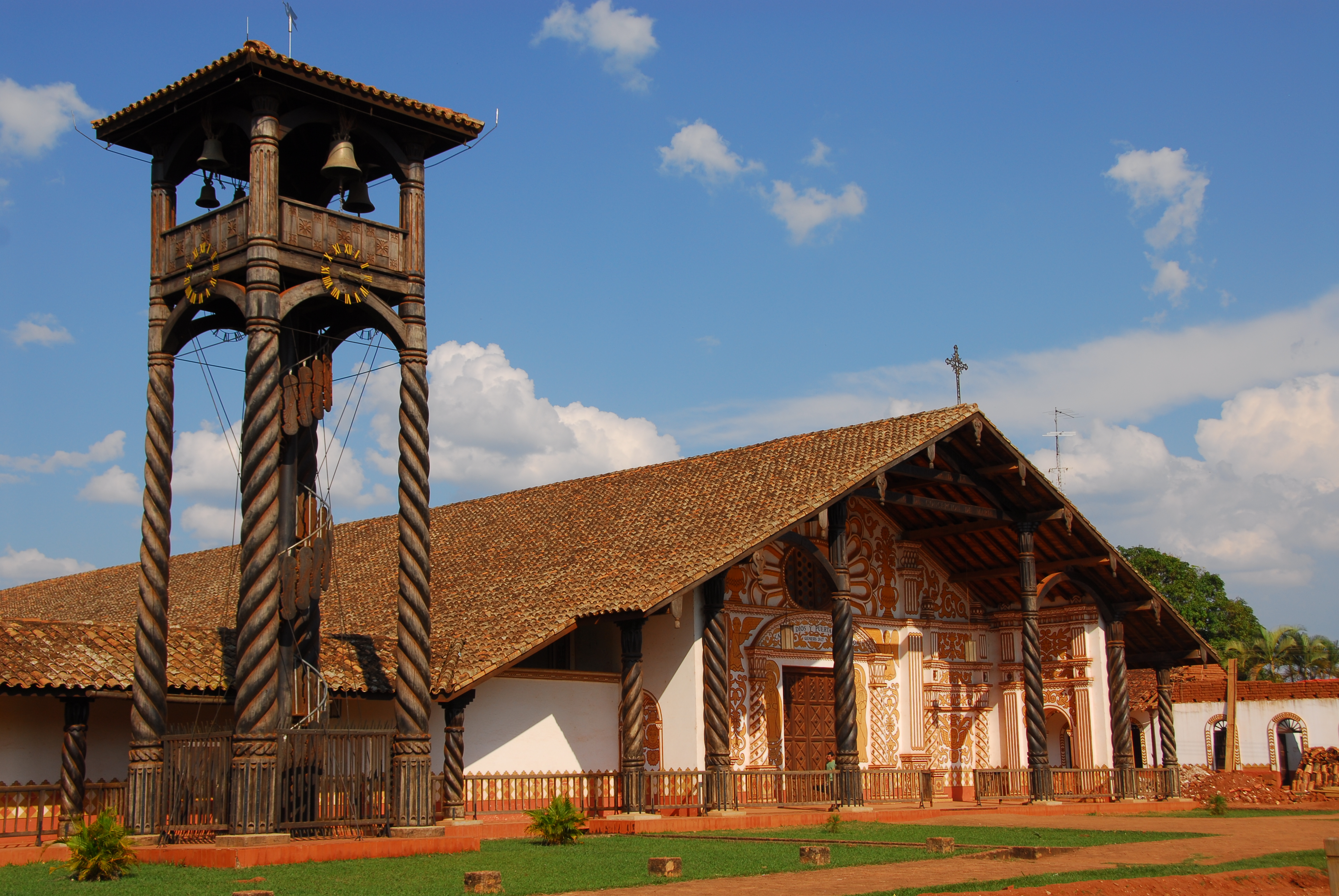
San Javier (1691) is the first Jesuit mission founded in the Chiquitanía. The current church was rebuilt in the 18th century and fully restored between 1987 and 2002 by Swiss architect Hans Roth — the same architect who led the restoration of all six missions. The interior woodwork, gold leaf altarpieces and carved columns are extraordinary.

Tip
San Javier is the closest mission to Santa Cruz (3h) and the most visited. Arrive early — the morning light on the facade is extraordinary. The local guide at the sacristy explains the construction technique (no nails — everything hand-fitted).
Full guide →
17094h from Santa Cruz

Concepción

The most harmonious ensemble

Concepción (1709) is considered by many architects the most harmonious of the six missions. The large central plaza — surrounded by the church, arcade and original community buildings — gives the strongest sense of how the missions functioned as complete urban systems. The cathedral's silver-plated altarpiece is unique.

Tip
Concepción has the best accommodation of the circuit (Hotel La Misión, colonial building, reasonable rates). Stay 2 nights to explore the surrounding forest walks and the traditional craft workshops.
Full guide →
17215h from Santa Cruz

San Miguel

The most intimate mission

San Miguel (1721) is the smallest and most intimate of the six missions. The church interior is smaller but arguably the most finely decorated — every surface covered in hand-painted geometric patterns by Chiquitano artisans. The community maintains active wood-carving and textile workshops in the mission buildings.

Tip
San Miguel is the best place to buy Chiquitano handicrafts directly from the community. The wooden carved figures and the hand-woven textiles here have not been mass-produced — they are made in the same workshops, by the same families, using the same techniques as in the mission period.
Full guide →
17475.5h from Santa Cruz

San Rafael

The most isolated — and the most serene

San Rafael (1747) is the most isolated of the missions — 5.5 hours from Santa Cruz along increasingly rural roads. The distance filters the tourists and what remains is a mission village of extraordinary quietness: the church faces an enormous open square, palm trees, and the sounds of the community going about its daily life. The interior frescoes were fully restored in 2010.

Tip
San Rafael is the place to stay if you want to understand how mission life continues today. Ask to attend the Sunday mass — the Chiquitano polyphonic music, a UNESCO-recognized Intangible Heritage, is performed in the church regularly.
Full guide →
17556h from Santa Cruz

Santa Ana

The most intact original mission

Santa Ana (1755) is the last mission chronologically and the one that has changed least since its construction. The building is smaller than the others but the original structure — including the original bell tower, the atrium walls and the wooden interior — is the most intact of the six. It feels the closest to what a mission looked like in 1760.

Tip
Santa Ana has no hotel — accommodation means staying with a local family or in very basic guesthouses. This is not a disadvantage: the experience of mission hospitality in a community that receives very few tourists is the most authentic of the circuit.
Full guide →
17476h east of Santa Cruz

San José de Chiquitos

The only stone façade — the most spectacular

San José de Chiquitos (1747) is the most architecturally extraordinary of the six — the only Jesuit mission in the Chiquitanía with a stone façade, carved from local sandstone by Chiquitano artisans under Jesuit direction. The complex includes four separate structures (church, mortuary chapel, sacristy and bell tower) in a unique architectural arrangement. It is reached from the east — via Roboré — or by the historic Ferrobus from Santa Cruz.

Tip
The Ferrobus (twice weekly, 6h from Santa Cruz, night service available) is one of the great train journeys of South America — crossing the dry forest of the Chiquitanía. Book it as part of the mission circuit rather than flying. San José's stone façade at dusk is the most photographed image of the Bolivian east.
Full guide →
— The mission circuit

Three ways to do the circuit.

3–4 days
  • Santa Cruz → San Javier (3h) → Concepción (4h total)
  • Concepción → back to San Javier or continue to San Miguel
  • Optional: San José de Chiquitos by Ferrobus

The two most accessible and complete missions. Ideal for a long weekend from Santa Cruz.

7 days
  • Days 1–2: San Javier + Concepción (north circuit)
  • Days 3–4: San Miguel + San Rafael (central zone)
  • Days 5–6: Santa Ana + San José de Chiquitos (south/east)
  • Day 7: Return to Santa Cruz (Ferrobus or flight from Roboré)

The complete 6-mission circuit. The recommended order allows natural progression and avoids repeated road sections.

10 days +
  • Days 1–7: Full 6-mission circuit
  • Days 8–9: Chiquitanía Baroque Music Festival (when scheduled — odd-year July)
  • Day 10: Add Parque Nacional Histórico Santa Cruz de la Sierra (Samaipata)

The extended version. In odd years, the International Baroque Music Festival of Chiquitanía (July) is one of the most extraordinary cultural events in South America.

— Circuit logistics

Getting there and getting around.

🚗

How to do the circuit

  • By car/4×4: most flexible — rental in Santa Cruz (~$80–120 USD/day with driver)
  • By bus: regular buses Santa Cruz–Concepción (6h), Santa Cruz–San Rafael (8h)
  • By Ferrobus: Santa Cruz–San José de Chiquitos 2×/week, ~6h, ~$15 USD
  • Organised tour: 3–7 days from Santa Cruz with transport, guide and accommodation included
  • Self-drive full circuit requires minimum 7 days and comfort with gravel roads
  • North route (San Javier–Concepción–San Miguel–San Rafael–Santa Ana) and east route (San José) connect at Roboré
🏛️

Tips for visiting the missions

  • Visit missions mid-week: Saturdays and Sundays have more visitors
  • Golden hour — sunrise or sunset — the red light on the facades is extraordinary
  • Always hire a local guide at each mission — church wardens charge ~30 Bs and are worth it
  • Respect active worship spaces — the churches are sacred places in use, not museums
  • Chiquitano Baroque Music is heard at Sunday mass in almost all missions
  • International Baroque Music Festival: July of odd years (2027, 2029…)
FAQ

Questions about the Chiquitanía.

Plan your trip →

The Jesuit Missions of the Chiquitanía are six baroque churches built between 1691 and 1760 by Jesuit missionaries alongside the indigenous Chiquitano communities in eastern Bolivia. They are UNESCO World Heritage since 1990. Unlike the ruins of Paraguay or Brazil, Bolivia's missions are living communities — the churches are still the active centre of their towns.

The six UNESCO Jesuit missions of Bolivia are: San Javier (1691, the first), Concepción (1709), Santa Ana (1755), San Rafael (1747), San Miguel (1721) and San José de Chiquitos (1747). San José is the most architecturally spectacular — the only mission with a stone façade. The full circuit from Santa Cruz takes 7–10 days.

From Santa Cruz: by car (most flexible), by Ferrobus (Santa Cruz–San José de Chiquitos, twice weekly, ~6h, ~$15 USD), or by organised tour (3–7 days). The north route (San Javier → Concepción → San Miguel → San Rafael → Santa Ana) and east route (San José de Chiquitos) connect at Roboré. Minimum recommended time: 7 days for the full circuit.

The International Festival of Baroque Music of Chiquitanía is held every two years (odd years — next: July 2027) across all six mission towns. It brings together baroque music ensembles from around the world to perform in the original 18th-century mission churches. It is one of the most extraordinary cultural events in South America and a UNESCO Intangible Heritage of Humanity. Plan well in advance — accommodation fills months ahead.

The Jesuit missions of Bolivia's Chiquitanía are consistently described by travellers and architects as the most underrated UNESCO World Heritage Site in South America. Unlike Machu Picchu or Iguazú, they have no mass tourism, no entrance fee queues, and no loss of authenticity. The churches are still used daily, the Chiquitano community still performs its baroque music tradition, and the landscape of the Chiquitanía is extraordinary. Worth every kilometre.

— Your Chiquitanía circuit

The churches are waiting.
Start here.

45 minutes. We design your 6-mission Jesuit circuit with transport, accommodation and local Chiquitano guides.

$90 · €85 · Bs. 623

Book consultation → $90Chiquitanía ecosystem →