Bolivian Independence Day falls on 6 August, and it is the most important civic date in the country’s calendar. On that day in 1825, in a Jesuit hall in the city then called Chuquisaca — today’s Sucre — 48 delegates signed the act that turned the Spanish territory of Upper Peru into a new republic. Two centuries later, Bolivians still mark the date with flowers laid at monuments, a Te Deum mass, schoolchildren marching in pressed uniforms, brass bands on every main square and the president’s annual report to the nation. If you are travelling in August, this guide explains what the day means, how it is celebrated and how to plan around it.
What Does Bolivian Independence Day Commemorate?
The holiday commemorates the Act of Independence of 6 August 1825, signed by the General Assembly of the provinces of Upper Peru. The assembly met in Chuquisaca from July 1825, presided over by the lawyer José Mariano Serrano, who also co-wrote the act. Its 48 members represented the five provinces of the territory: 7 from Charcas, 14 from Potosí, 12 from La Paz, 13 from Cochabamba and 2 from Santa Cruz.
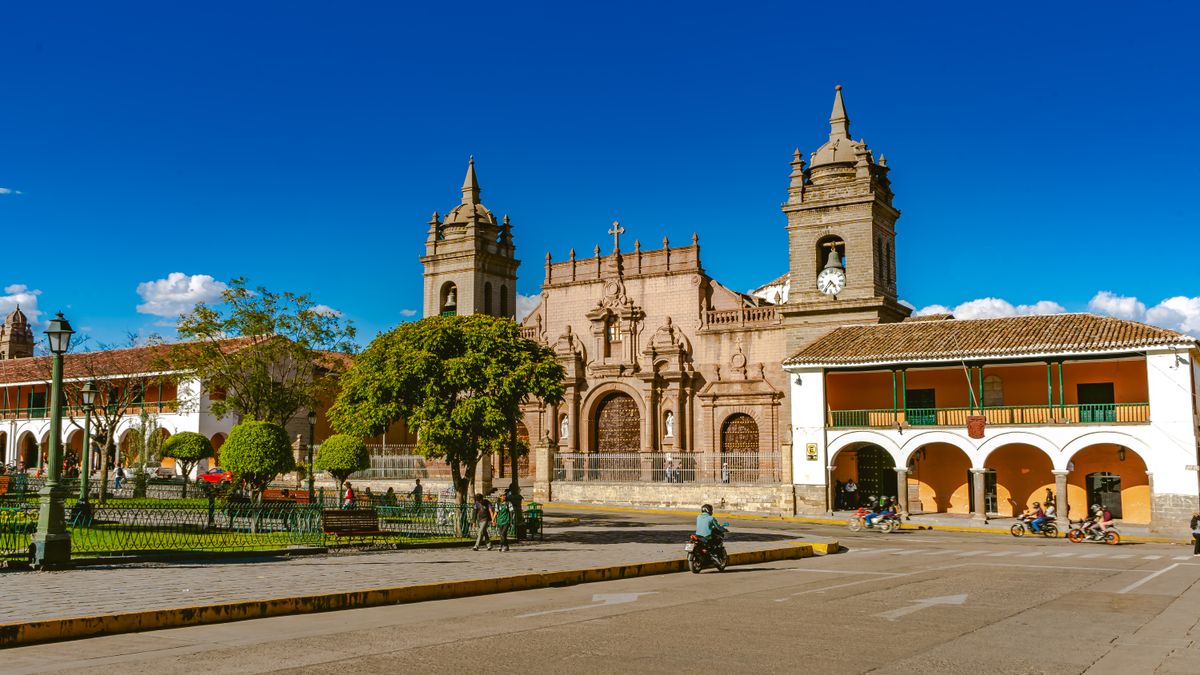
The delegates had a real choice. Upper Peru could have joined Peru, joined the United Provinces of the Río de la Plata (today’s Argentina) or stood alone. They chose independence, and in homage to the Liberator Simón Bolívar they named the new country the Republic of Bolívar. A deputy from Potosí, Manuel Martín Cruz, argued that just as Rome took its name from Romulus, the country should be called Bolivia — and the name stuck.
The long road to 1825
The act of 1825 was the end of a war, not the beginning. Bolivians count their independence struggle from two uprisings in 1809: the revolt of 25 May 1809 in Chuquisaca and the revolution of 16 July 1809 in La Paz, led by Pedro Domingo Murillo. These are often called the first cries for freedom in Spanish South America. What followed was sixteen years of fighting, much of it by guerrilla bands in the valleys and highlands — the so-called republiquetas — whose leaders included Juana Azurduy and Manuel Ascencio Padilla.
The decisive blow came from outside. After the royalist army was defeated at Ayacucho, in Peru, on 9 December 1824, General Antonio José de Sucre moved into Upper Peru. The last royalist commander in the territory, Pedro Antonio de Olañeta, died after the skirmish of Tumusla on 1 April 1825. With the Spanish gone, Sucre called the assembly that would sign the act in August.
Why the city is now called Sucre
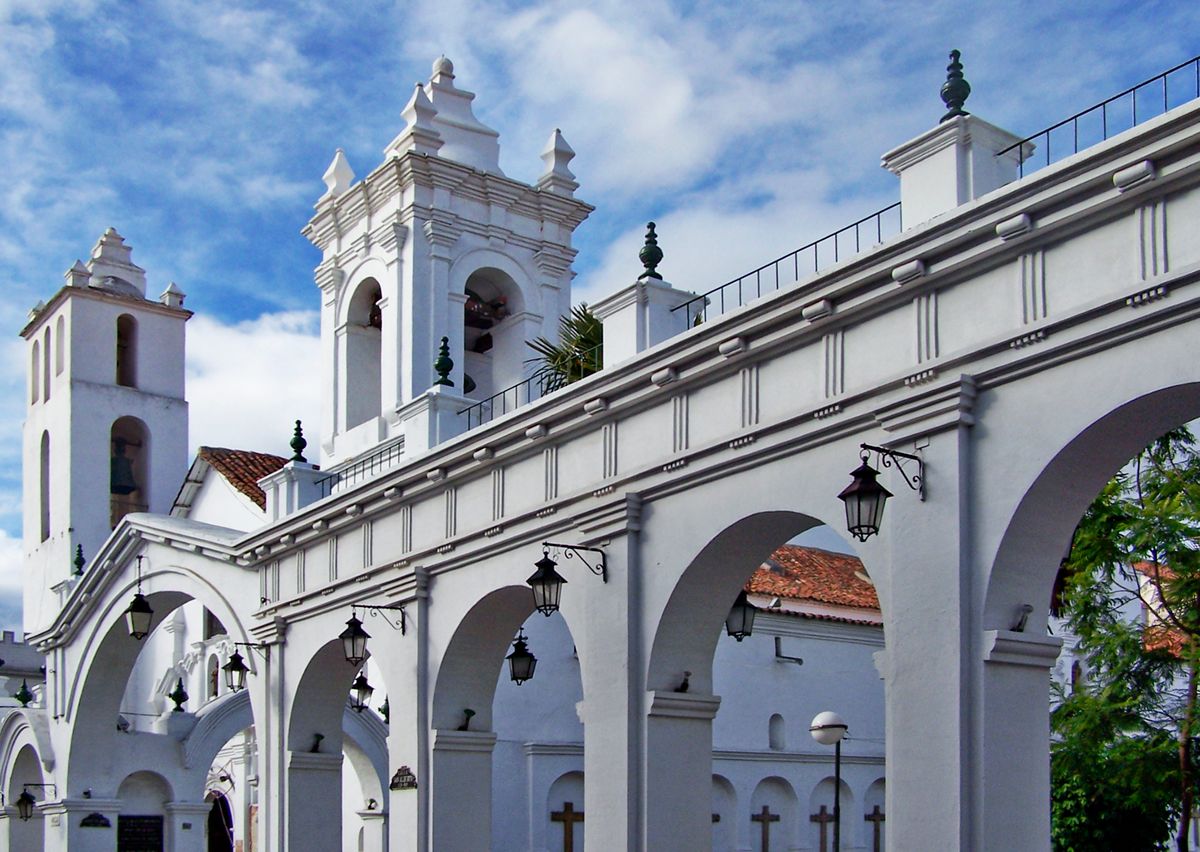
The city where the act was signed has had four names: La Plata, Charcas, Chuquisaca and finally Sucre, in honour of the general who became the country’s second president. It is still Bolivia’s constitutional capital, while La Paz is the seat of government. That split explains why the independence ceremonies move between the two cities depending on the year and the government. If you want to understand the city itself, our guide to things to do in Sucre covers the historic centre in detail.
How Do Bolivians Celebrate 6 August?
The celebrations follow a long-established protocol. The official day usually starts early with floral offerings at monuments to the founders and heroes. Mid-morning there is a Te Deum, a thanksgiving mass in the cathedral attended by the president and senior officials. Then comes the political heart of the day: an honour session of the Plurinational Legislative Assembly, where the president delivers a report on the state of the nation. Parades complete the programme.
In 2026, for the 201st anniversary, the national ceremonies were held in Sucre. The published programme began with floral offerings on Plaza 25 de Mayo at 6:30 am, followed by the Te Deum in the Metropolitan Cathedral at 9:00 am and the honour session of the Assembly in the Casa de la Libertad at 10:00 am, where President Rodrigo Paz presented his report.
Civic parades on every main square
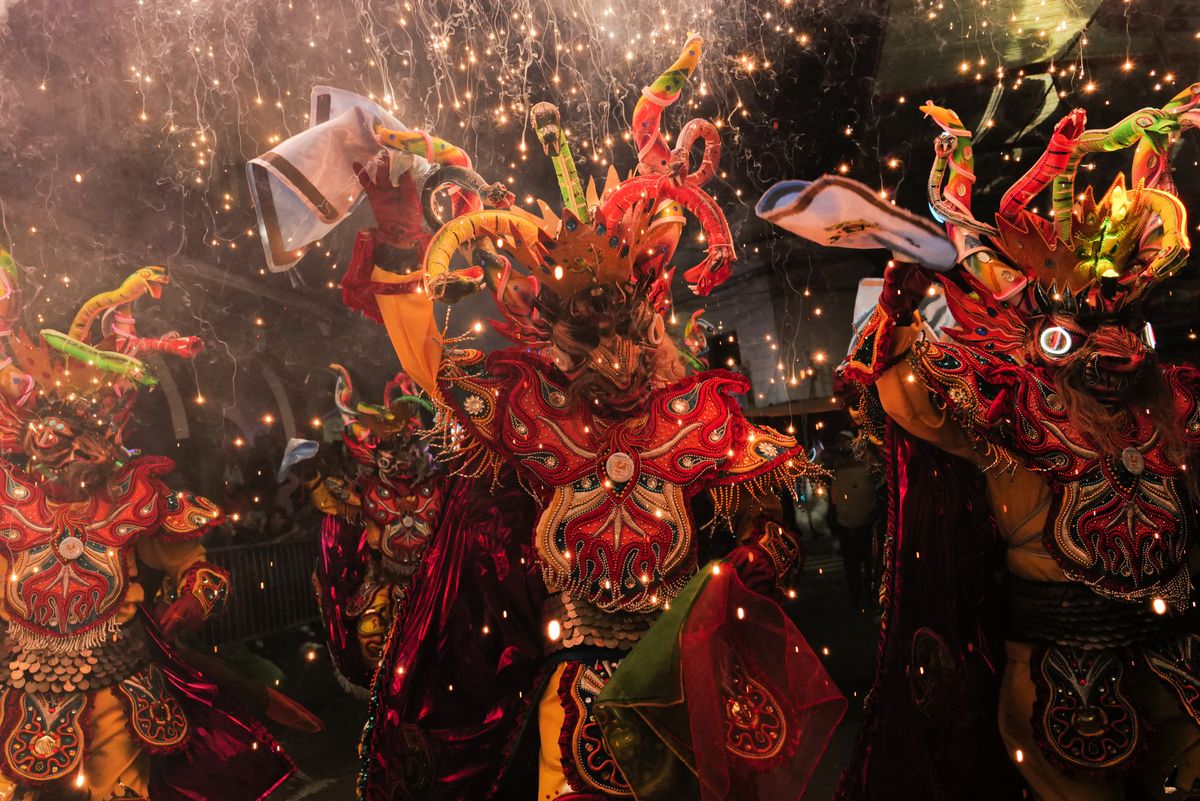
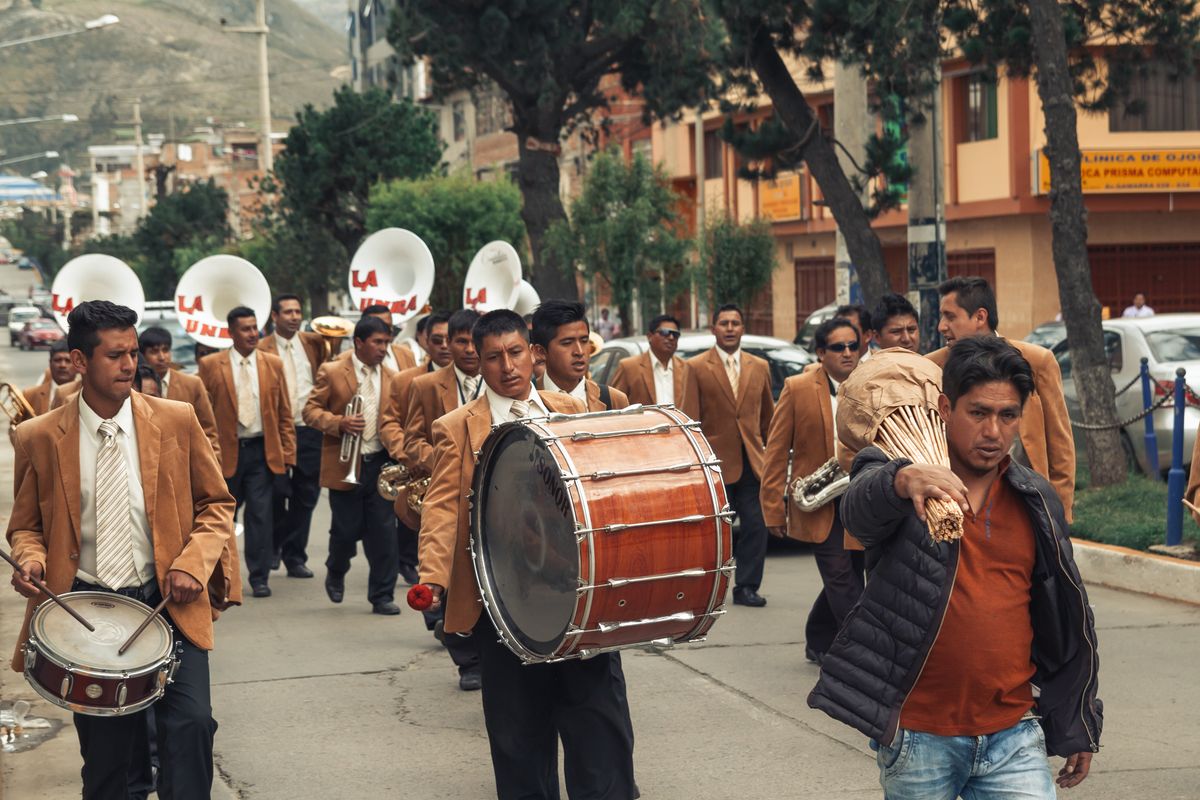
Outside the capital cities, the day belongs to the desfile cívico. Schools, universities, unions, neighbourhood councils and public institutions march past the main square in formation, often behind a brass band and a large tricolour. Students practise for weeks. In small towns the whole community turns out, and the parade can last several hours. For visitors it is one of the most authentic ways to see local life, and nobody minds if you stand at the barrier and watch.
Armed Forces Day on 7 August
The military parade traditionally belongs to 7 August, Armed Forces Day, when the army, navy and air force march before the president. Some years the civic and military parades are close together; in others they are held in different cities. Check local news in the week before the holiday, because the programme is only announced a few days in advance.
Flags, cockades and music
In the days before 6 August, balconies, taxis and shop windows fill with red, yellow and green. Street sellers offer flags, ribbons and escarapelas (tricolour cockades), which many people pin to their chest. Radio stations play patriotic marches and folk music, and the evening often ends with concerts and dances. The music at these events draws on the same traditions described in our guide to Bolivian music, instruments and dances.
What Are Bolivia’s National Symbols?
Independence Day is when the national symbols are most visible, so it helps to know their stories.
The tricolour flag
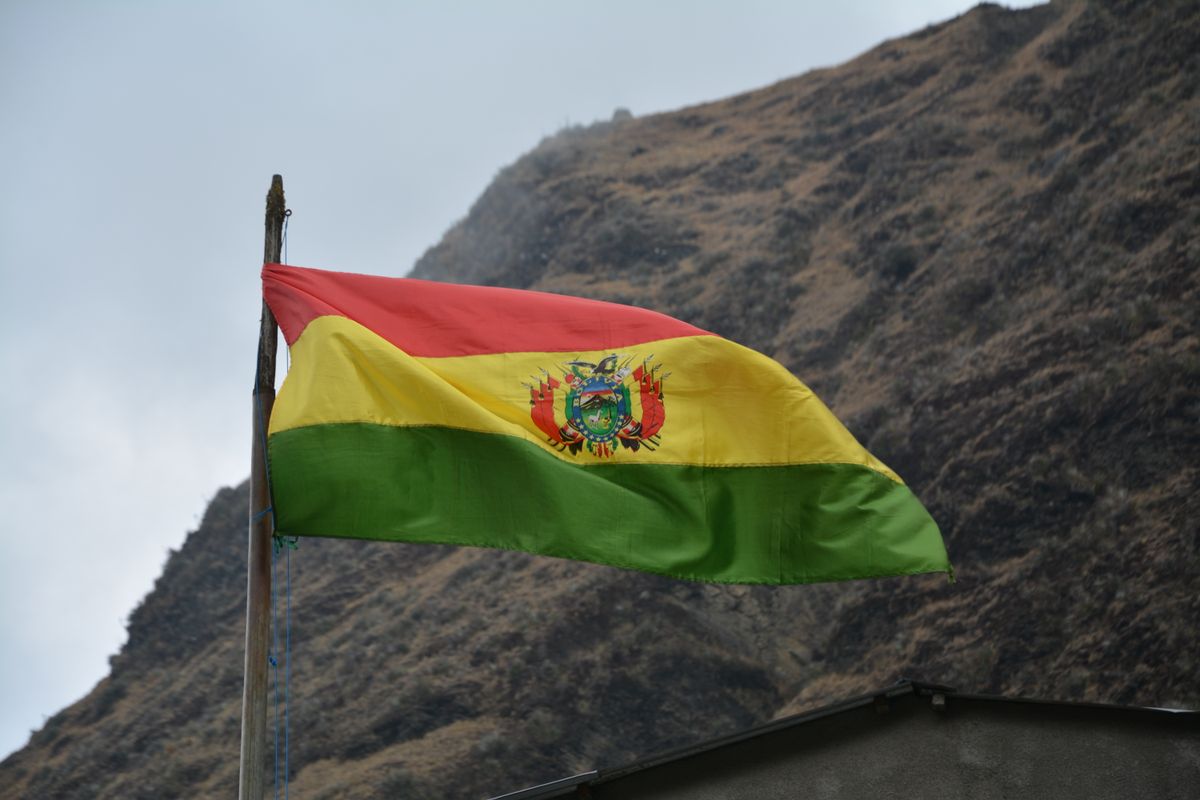
Bolivia’s first flag was decreed on 17 August 1825, eleven days after independence. It looked very different from today’s banner. The current red, yellow and green flag was adopted on 31 October 1851 under President Manuel Isidoro Belzu. An 1888 decree explains the colours: red for the blood of the heroes who fought for the republic, yellow for the country’s wealth and resources, and green for the richness of its natural areas and hope. A supreme decree of 30 July 1924 made 17 August the national Flag Day, so the patriotic season lasts most of the month.
The Wiphala
Next to the tricolour you will often see the Wiphala, a square flag made of a 7×7 grid of coloured squares associated with the Andean Indigenous peoples. The 2009 Constitution, in Article 6, section II, recognises it as a national symbol alongside the tricolour. In official ceremonies it is flown to the left of the tricolour, and on 6 August both flags appear side by side.
The national anthem
The anthem, formally called the Canción Patriótica, has lyrics by José Ignacio de Sanjinés, a lawyer and poet who signed the Act of Independence. The music is by the Italian composer Leopoldo Benedetto Vincenti. It was first performed at noon on 18 November 1845 in La Paz’s Plaza Murillo by about 90 military musicians. It opens with the line Bolivianos, el hado propicio and is sung at every official act on 6 August.
Where Is the Best Place to Spend Independence Day in Bolivia?
Each city offers something different, and the choice depends on whether you want history, spectacle or a smaller local party.
Sucre: where it all began
Sucre is the obvious choice for history lovers. The act was signed in the Casa de la Libertad, a former Jesuit building on Plaza 25 de Mayo whose Salón de la Independencia hosted the first congress. It is now Bolivia’s main history museum, managed by the Fundación Cultural del Banco Central de Bolivia since 1995, with portraits of the founders, historical documents and objects from the colonial and republican periods. Entry costs around 15 bolivianos (about US$2). During national ceremonies the square is cordoned off, so visit the museum on another day. Read more about the city on our Sucre destination page.
La Paz: parades and politics
In La Paz, the parades pass through the city centre around Plaza Murillo, the square where the government palace and the legislature stand. The atmosphere is big and busy, and the combination of marching bands, flags and the surrounding mountains is spectacular. At 3,600 m, though, the August air is thin and cold — take your time if you have just arrived. Our La Paz guide has more on the city.
Cochabamba, Santa Cruz and small towns
Cochabamba combines its civic parades with the build-up to the Virgen de Urkupiña pilgrimage in nearby Quillacollo, held on 14–16 August in 2026. Santa Cruz de la Sierra celebrates with a warmer, more tropical flavour. Small towns, however, often give the most memorable experience: the whole population marches, and a visitor watching from the square is quickly offered a drink or a plate of food. See our Cochabamba city page if you are heading to the valleys.
Tips for Travelling in Bolivia During the Fiestas Patrias
Independence Day is a great time to be in Bolivia, but a national holiday changes how the country works. These tips will save you trouble.
Plan transport and accommodation early
Many Bolivians travel to visit family around 6 August, especially when the holiday creates a long weekend. Long-distance buses and domestic flights fill up, and fares can rise. Book at least a week ahead. If the national ceremonies are held in Sucre, hotels there fill with officials and journalists, so reserve early. Our guide to getting around Bolivia explains buses, flights and routes.
Carry cash and expect closures
Banks, government offices and schools close on 6 August, and many shops open late or not at all. Restaurants, markets and tourist sites in the main cities usually stay open. Withdraw cash a day or two before, because ATMs in busy areas can run empty. Our money guide covers currency and ATMs.
Expect road closures in city centres
Parades close the main streets for several hours, and taxis may refuse to enter the centre. Plan to walk, and leave extra time if you have a bus or flight that morning. Crowds also bring pickpockets, so keep your phone and wallet in front pockets. Our Bolivia safety guide has practical advice for crowded events.
Dress for the dry season
August is the heart of the dry season, with clear skies and strong sun in the highlands. Nights in La Paz, Oruro and Potosí can drop close to or below freezing, so bring warm layers for early-morning ceremonies. The lowlands are warm and dry. See our guide to the best time to visit Bolivia for month-by-month conditions.
Be respectful during official acts
When the national anthem plays, Bolivians stop and stand still, and men remove their hats. Do the same. Ask before photographing marching children up close, and never walk through a parade to cross the street — wait for a gap, or use the crossings the police open.
What Else Happens in Bolivia in August?
Independence Day sits in the middle of one of the busiest cultural months of the year.
- 1 August — Pachamama month begins. Across the Andes, families make offerings (ch’allas and k’oas) to Mother Earth throughout August.
- 6 August — Independence Day. National holiday with ceremonies and parades.
- 7 August — Armed Forces Day. Military parade and honours.
- 14–16 August (2026) — Virgen de Urkupiña. One of Bolivia’s largest pilgrimages, in Quillacollo near Cochabamba.
- 17 August — Flag Day. School acts and flag ceremonies.
Late August also brings local festivals in the highlands, including the Ch’utillos celebrations in Potosí. For the full year, see our Bolivia festivals calendar.
What to Eat and Drink on 6 August
There is no single dish tied to Independence Day, but the holiday is a day for eating out with family. Mornings are the time for a salteña on the way to the parade, and lunches often bring regional favourites such as pique macho in Cochabamba, fricasé in La Paz or majadito in Santa Cruz. In the evening, street stalls near the squares sell anticuchos (grilled beef heart skewers). If you want to toast the republic like a local, our guide to traditional Bolivian drinks explains singani, chicha and api.
Why 6 August Matters for Understanding Bolivia
For travellers, Independence Day is more than a public holiday. It shows how Bolivians see their country: a republic born in Sucre, named after Bolívar, shaped by uprisings in La Paz and Chuquisaca, and today officially plurinational, with the Wiphala flying beside the tricolour. Watching a town’s parade — the teachers, the miners’ unions, the market vendors, the children with their cockades — tells you more about Bolivian society than most museums. To go deeper, our complete guide to Bolivian culture and traditions is a good next read.
Key facts
- Bolivia's Act of Independence was signed on 6 August 1825 in Chuquisaca (now Sucre) by 48 delegates: 7 from Charcas, 14 from Potosí, 12 from La Paz, 13 from Cochabamba and 2 from Santa Cruz.
- The assembly that declared independence was presided over by José Mariano Serrano, who co-wrote the act.
- Bolivia's first flag was decreed on 17 August 1825, and a supreme decree of 30 July 1924 made 17 August the national Flag Day.
- The current red, yellow and green flag was adopted on 31 October 1851 under President Manuel Isidoro Belzu.
- The national anthem, with lyrics by independence signatory José Ignacio de Sanjinés and music by Leopoldo Benedetto Vincenti, was first performed on 18 November 1845 in La Paz's Plaza Murillo.
- The 2009 Constitution (Article 6, section II) recognises the Wiphala as a national symbol alongside the tricolour flag.
- In 2026 Bolivia marked the 201st anniversary of independence, with the official acts held in Sucre on Thursday 6 August.
Frequently asked questions
When is Bolivian Independence Day?
Bolivian Independence Day is on 6 August every year. It commemorates the signing of the Act of Independence in Chuquisaca, now Sucre, on 6 August 1825. It is a national public holiday, and in 2027 it falls on a Friday, creating a long weekend.
How many years of independence does Bolivia have?
Bolivia declared independence in 1825, so it celebrated its bicentennial (200 years) on 6 August 2025 and its 201st anniversary on 6 August 2026. On 6 August 2027 it will mark 202 years.
Where is the best place to celebrate Bolivian Independence Day?
Sucre is the most meaningful place because the act was signed in its Casa de la Libertad, and the national ceremonies are often held there. La Paz, the seat of government, hosts large civic parades around Plaza Murillo, and every town holds its own parade on the main square.
Are shops and banks open on 6 August in Bolivia?
Government offices, banks and schools close on 6 August, and many shops keep reduced hours. Restaurants, markets and tourist sites in the main cities usually stay open, but withdraw cash beforehand and expect city centres to be closed to traffic during parades.