Fly into La Paz and the first thing you hear in the arrivals hall is not Spanish. It is Aymara — clipped, glottal, full of sounds that sit at the back of the throat — spoken by porters, taxi drivers and the women in bowler hats waiting by the doors. El Alto, the city you drive through on the way down into the canyon, is one of the largest Indigenous cities in the Americas, and it is overwhelmingly Aymara. Yet most visitors leave Bolivia without ever learning who the Aymara are, how long they have been here, or why they say the future is behind them.
This guide is an attempt to fix that. It covers the population figures, the deep history that predates the Inca, the peculiar logic of the language, the religious calendar that still governs the farming year, and — at the end — where you can encounter Aymara culture as a traveller without turning people into a photo opportunity.
Who Are the Aymara?
The Aymara are an Indigenous Andean people of roughly 2.3 million, of whom about 1,594,000 live in Bolivia. Another 655,000 or so live in southern Peru, around 179,000 in northern Chile and close to 19,000 in northwest Argentina. In Bolivia they are the second-largest Indigenous group after the Quechua, and by far the dominant one in the departments of La Paz and Oruro. In Aymara the word for a person is jaqi, and the language is jaqi aru, “human speech”.
Where the Aymara live today
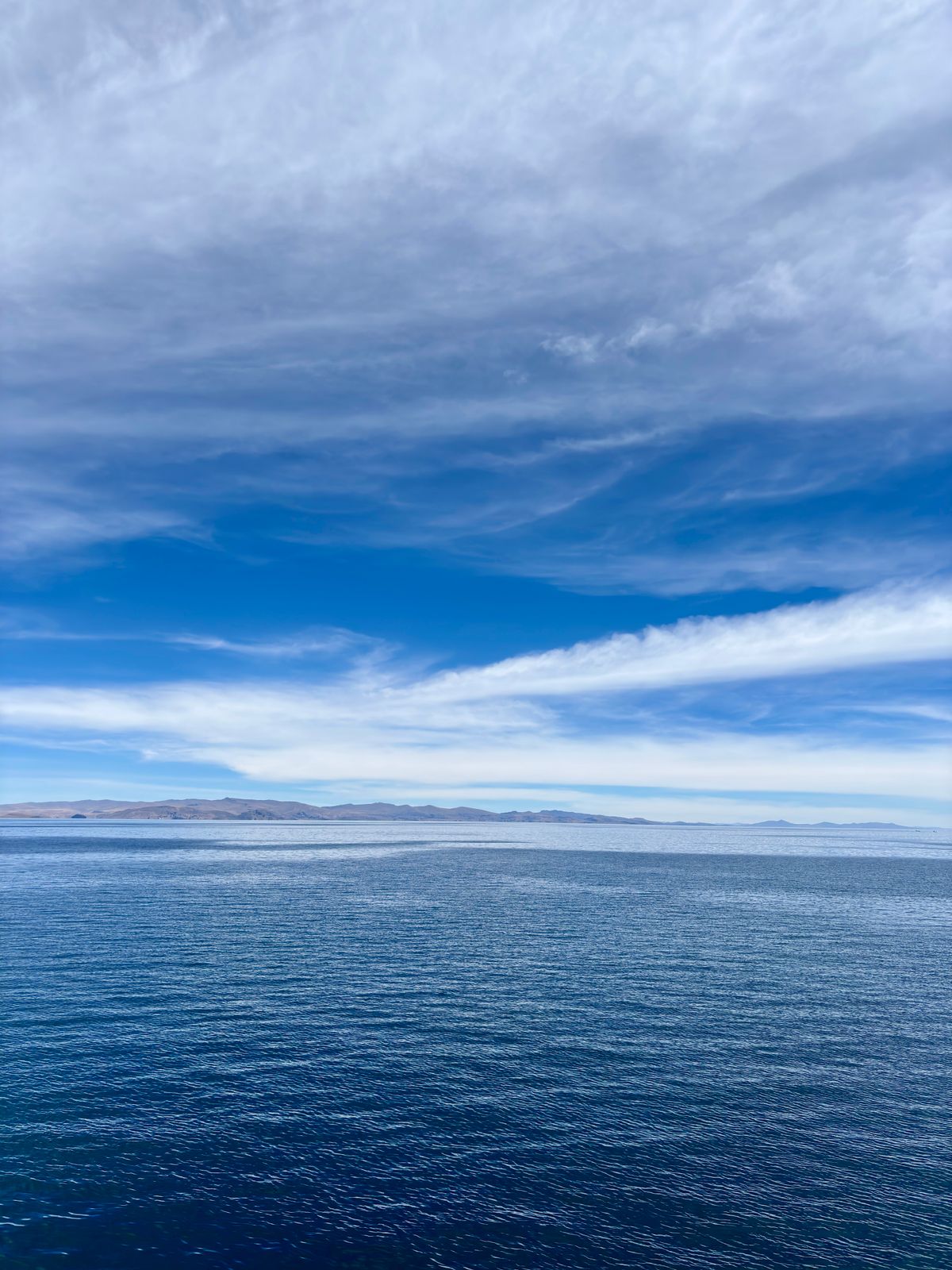
The Aymara heartland is the northern Altiplano: the treeless high plain that runs between the eastern and western ranges of the Andes at 3,600 to 4,200 metres, wrapped around Lake Titicaca. The lake sits at roughly 3,812 m, and the Peru–Bolivia border cuts straight across it, so Aymara communities face one another across an international frontier that means little to them culturally.
Since the middle of the twentieth century the population has also become intensely urban. El Alto, which grew out of the shantytowns on the rim above La Paz and became a separate municipality in 1985, is now a city of roughly a million people and is the political centre of Aymara Bolivia. What happens in El Alto — its neighbourhood councils, its blockades, its enormous Thursday and Sunday market — has repeatedly decided national politics.
Aymara and Quechua are not the same thing
This is the single most common confusion. Aymara and Quechua are two different peoples speaking two different languages. Broadly, the Aymara occupy the cold, high Altiplano; the Quechua are more numerous in the temperate valleys of Cochabamba, Chuquisaca and Potosí. Quechua speakers outnumber Aymara speakers in Bolivia overall.
The two languages share a great deal of vocabulary and a near-identical sound system, which led earlier scholars to propose a common ancestor. The majority position among linguists today is that these are areal features — the result of a thousand years of living side by side and borrowing from each other — rather than evidence of a shared family tree. We go into the full picture in our guide to the languages spoken in Bolivia.
A History That Predates the Inca
Bolivia’s Andean history is usually told as though it began with the Inca. It did not. By the time Inca armies pushed south of Lake Titicaca after 1438, the Aymara had already been organised into powerful regional kingdoms for centuries, and the ruins of a far older city were already ancient.
The Tiwanaku question
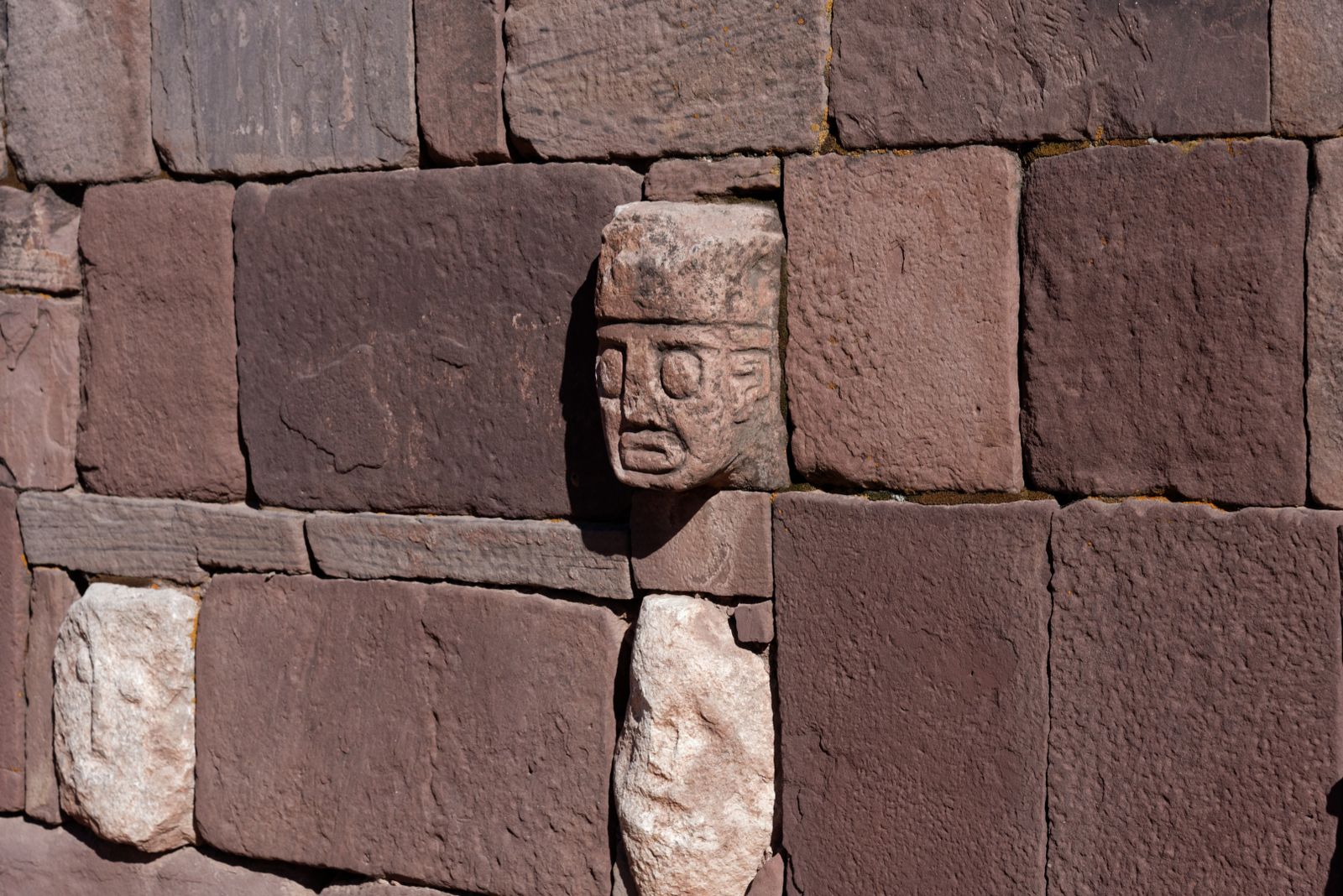
Twenty kilometres from the southern shore of Titicaca stand the ruins of Tiwanaku, a ceremonial and political centre founded around 110 AD that dominated the southern Andes for close to a millennium before collapsing in the eleventh century. Tiwanaku was inscribed on the UNESCO World Heritage List in 2000.
Whether the people of Tiwanaku were Aymara is genuinely unresolved. The city predates any written record of the Aymara language in the region, and archaeologists are cautious. What is not in doubt is that today’s Aymara claim Tiwanaku as their own: it is where the Aymara New Year is celebrated, where Bolivian presidents have taken symbolic Indigenous oaths of office, and where the iconography on the Gateway of the Sun still circulates as a marker of Aymara identity. If you visit, our Tiwanaku ruins guide covers the site itself in detail.
The Aymara lordships and the Inca conquest
Between the fall of Tiwanaku and the arrival of the Inca, the Altiplano was divided among a set of Aymara señoríos or lordships — among them the Lupaca, the Colla, the Pacajes and the Carangas — each controlling herds of llamas and alpacas, terraced fields and, crucially, colonies at different altitudes that supplied maize, coca and chilli from the warmer valleys.
The Inca conquest began after 1438 and was essentially complete by 1500, but it was an incorporation rather than an erasure. Aymara lords kept much of their authority, and the language survived intact. Then, in 1534, Francisco Pizarro reached Cusco and the Spanish colonial system arrived, bringing the mita — forced labour drafts that sent Aymara and Quechua men into the silver mines of Potosí’s Cerro Rico in numbers that devastated highland communities.
Túpac Katari and the siege of La Paz
Aymara resistance did not end with conquest. In 1781 Julián Apaza, an Aymara from the Sica Sica region who took the name Túpac Katari, laid siege to La Paz twice, for a total of more than six months, with an army drawn from Altiplano communities. The rebellion was crushed and Katari was executed by quartering that November. The phrase attributed to him — that he would return, and be millions — became one of the founding slogans of twentieth-century Aymara political movements, and his name was taken by both a guerrilla group and, later, Bolivia’s first telecommunications satellite.
How the Aymara Language Works
Aymara is not a difficult language to admire, even if you never learn to speak it. It is unusually systematic, and two features in particular tend to stop visitors in their tracks.
Three vowels and a wall of suffixes
Aymara has only three phonemic vowel qualities — /a/, /i/ and /u/ — each of which can be short or long. Consonants do the heavy lifting instead, with a three-way contrast between plain, aspirated and ejective stops, which is what gives spoken Aymara its characteristic popping quality.
Grammatically it is agglutinative and suffixing: a single root can carry a long chain of suffixes that encode person, tense, direction, and — notably — how the speaker knows what they are saying. That last feature, evidentiality, is obligatory. An Aymara speaker must grammatically mark whether they witnessed something themselves or heard it from someone else.
Why the past is in front and the future behind
Most of the world’s languages place the future ahead of the speaker and the past behind. Aymara does the opposite. The word nayra means “eye”, “front” and “past”; qhipa means “back” and “future”, so qhipa uru — “back days” — means the days to come.
This is not a poetic flourish. In a study published in Cognitive Science in 2006, Rafael Núñez and Eve Sweetser filmed Aymara speakers in northern Chile and found that their spontaneous hand gestures matched the words: speakers gestured forward when talking about the past and back over the shoulder when talking about the future. The logic is about knowledge, not chronology. The past is what you have seen, so it is in front of your eyes; the future is unseen, so it is at your back.
A few words worth knowing
Kamisaraki — how are you. Waliki — I am well. Jikisiñkama — until we meet again. Jallalla — an exclamation of celebration and good wishes, roughly “hurrah”, heard constantly at festivals. Suma qamaña — “living well”, the Aymara concept written into Bolivia’s 2009 Constitution as a state principle.
That constitution matters here. Article 5 makes Spanish and 36 Indigenous languages official languages of the Bolivian state, with Aymara listed first among them, and Article 6 makes the wiphala — the 49-square rainbow chequerboard flag, seven colours by seven rows — an official national symbol alongside the red, yellow and green tricolour. You will see the wiphala flying beside the national flag on every government building in the country.
Pachamama, Ch’alla and the Achachilas
Aymara religious practice today is layered: Catholic on the surface, Andean underneath, and entirely unbothered by the contradiction. The central figure is Pachamama, the earth as a living being who must be fed before she gives. Alongside her are the achachilas, the ancestor spirits who inhabit mountains — Illimani above La Paz, Sajama, Illampu — and who are addressed as grandfathers.
The everyday ritual is the ch’alla: before drinking, a few drops are tipped onto the ground for Pachamama. It happens in bars, at construction sites, at the wheel of a new minibus. In August, when the earth is considered open and hungry after the dry season, the ch’alla scales up into full mesa offerings — bundles of sweets, wool, herbs and a dried llama foetus, burned so that the smoke reaches the mountains.
The yatiri and the Mercado de las Brujas
Ritual specialists called yatiris — “those who know” — prepare and read those offerings, and many are Aymara men and women from the Altiplano who have moved into La Paz. The Mercado de las Brujas on Calle Linares is where the ingredients are sold, and it is the most accessible entry point into this world for a visitor. Our Witches’ Market guide explains what is on the stalls and how to behave there.
Food and Farming at 4,000 Metres
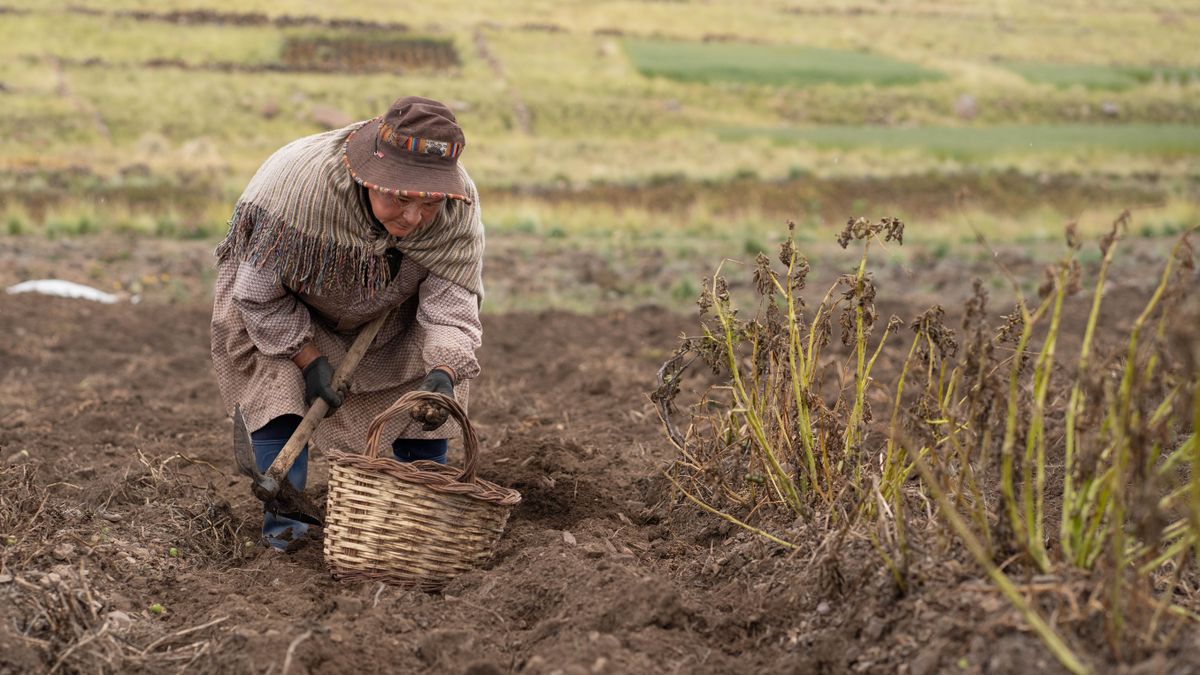
Aymara agriculture is a solution to an almost impossible problem: growing food on a frost-prone plain where night temperatures drop below zero for much of the year. The answers are old and ingenious.
Potatoes. Bolivia’s Altiplano is part of the potato’s centre of origin, and Aymara farmers still cultivate dozens of native varieties in a single field as insurance against frost, drought and disease.
Chuño. The classic Aymara preservation technique turns that harvest into something that keeps for years. Small potatoes are left out to freeze overnight, trodden underfoot to press out the water, then dried in the sun over several days. The result is rock-hard, light and effectively immortal — the reason Altiplano communities could survive bad years, and still a staple in soups across the highlands.
Quinoa and cañahua. Both are high-protein Andean grains adapted to saline, high-altitude soils, and quinoa in particular is now a significant Bolivian export.
Llamas and alpacas. Domesticated camelids provide wool, meat, transport and dung for fuel, and they graze land that would support nothing else. If you are unsure which animal you are looking at, we sort it out in our guide to llamas and alpacas.
Dried llama meat, charque, and the mid-morning cups of api you will be offered in any highland market are both part of the same food system. For the wider picture, see our traditional Bolivian dishes guide.
The Pollera, the Bowler Hat and the Aguayo
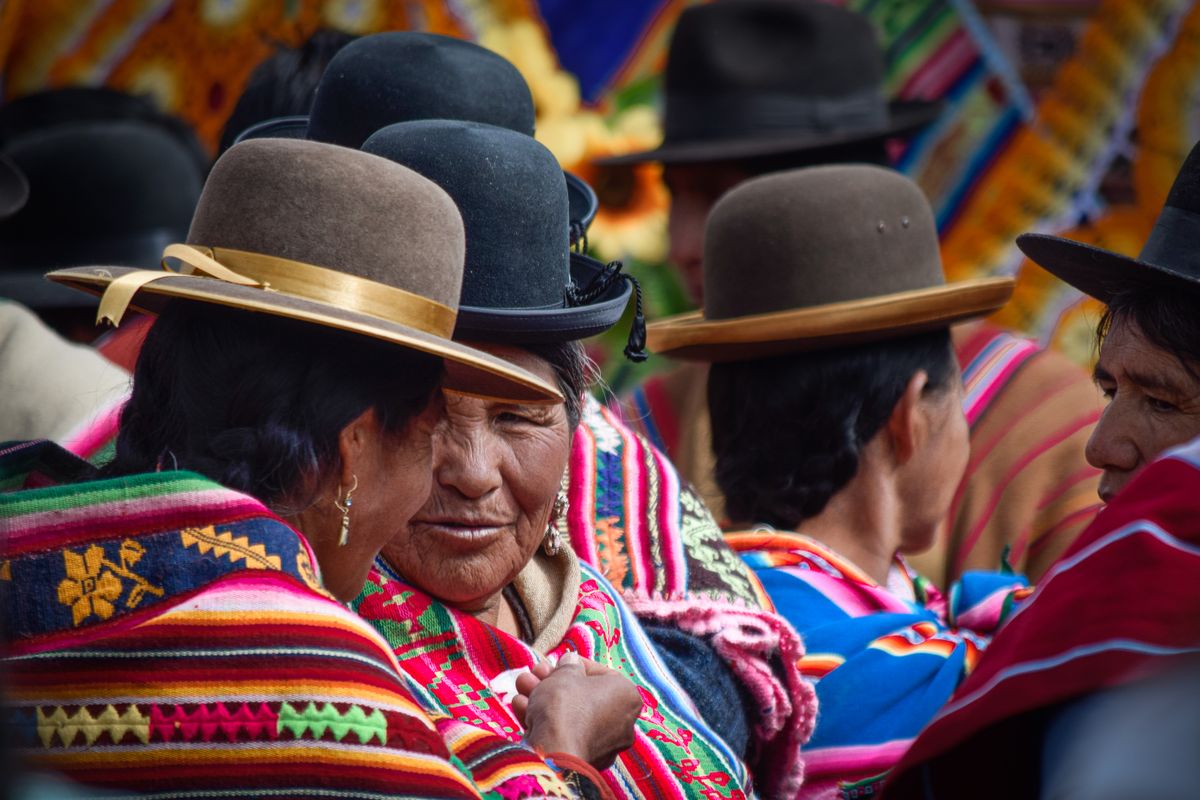
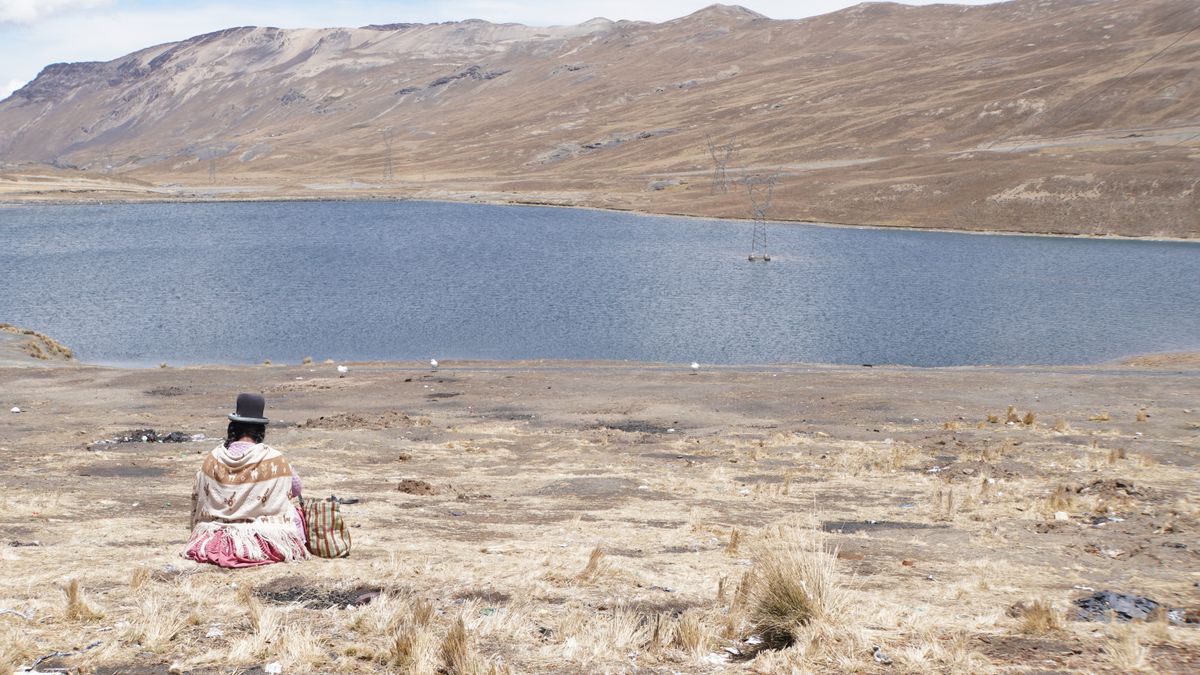
The image most associated with Bolivia — a woman in a layered skirt, a fringed shawl and a small bowler hat perched improbably high on her head — is Aymara dress, worn by women known as cholitas or, respectfully, señoras de pollera.
The pollera is a pleated skirt worn over several petticoats. The manta or shawl is fastened with a decorative pin. The aguayo is the rectangular woven cloth, striped in bright synthetic or natural dyes, used to carry everything from babies to groceries on the back; its patterns once identified a wearer’s community. The bowler hat, or bombín, arrived from Europe in the 1920s and was adopted so completely that it is now unmistakably Bolivian. The way it is worn signals marital status in some communities.
For most of the twentieth century, pollera dress was a reason to be refused entry to restaurants, buses and professional jobs. That has changed sharply: there are now cholita fashion shows, cholita climbers who summit 6,000-metre peaks in their skirts, and the theatrical cholitas wrestling matches held weekly in El Alto.
Machaq Mara: the Aymara New Year
Machaq Mara, also called Willkakuti — “the return of the sun” — is celebrated on 21 June, the winter solstice in the southern hemisphere and the start of the new agricultural year. Bolivia declared it a national public holiday in 2009.
The largest ceremony is at Tiwanaku, where tens of thousands of people spend a night that routinely drops below freezing waiting for the sun to rise through the Gateway of the Sun. At the moment it appears, the crowd raises both palms to receive the first rays. Smaller ceremonies happen simultaneously at high points across the Altiplano and at Copacabana on the lake. Other dates in the Aymara calendar — the Alasitas fair in La Paz each January, Carnival ch’allas in February — are covered in our Bolivian festivals calendar.
Meeting Aymara Culture as a Traveller
There is a difference between visiting a culture and consuming it. A few practical notes.
La Paz and El Alto
Ride the Mi Teleférico cable car — the red, blue and silver lines climb to El Alto and give you the clearest possible view of how the two cities relate to each other. The Feria 16 de Julio in El Alto, held on Thursdays and Sundays, is one of the largest open-air markets in South America. Go early, take almost nothing with you, and expect to walk for hours.
Lake Titicaca
Copacabana and Isla del Sol are where Aymara communities, Inca-era ruins and the lake meet. Much of Isla del Sol is managed directly by its three Aymara communities, and access to some sections has been restricted in recent years by disputes between them — check the current situation before you plan a full traverse. Our Lake Titicaca and Isla del Sol guide and Copacabana guide have the logistics.
Etiquette
Ask before photographing people, and accept no as an answer — this matters especially with women in pollera, who are photographed constantly without consent. Buy directly from weavers and market vendors rather than from city souvenir shops. If you are invited to drink, tip the first drops on the ground before you drink; it will be noticed. Learn kamisaraki and jallalla. And remember that everything described here happens between 3,600 and 4,200 metres — read our altitude guide before you arrive, and give yourself two days in La Paz before doing anything strenuous.
The Aymara are not a historical people. They are a fifth of Bolivia’s population, they run its largest Indigenous city, their flag flies over its parliament, and their language is taught in its schools. Arriving with that in mind changes what you see.
Key facts
- About 1,594,000 Aymara live in Bolivia, out of roughly 2.3 million across Bolivia, Peru, Chile and Argentina.
- Article 5 of Bolivia's 2009 Constitution makes Spanish and 36 Indigenous languages official, with Aymara listed first alphabetically among them.
- Aymara has roughly 1.7 million speakers and just three phonemic vowels, /a/, /i/ and /u/.
- Aymara speakers place the past in front of the body and the future behind it, documented by Núñez and Sweetser in Cognitive Science volume 30 in 2006.
- The Aymara New Year, Machaq Mara, falls on 21 June and has been a Bolivian public holiday since 2009.
- Lake Titicaca sits at about 3,812 m, and the Aymara heartland runs along both its Bolivian and Peruvian shores.
- Article 6 of the 2009 Constitution makes the 49-square wiphala an official national symbol alongside the tricolour flag.
Frequently asked questions
Who are the Aymara people?
The Aymara are an Indigenous Andean people of about 2.3 million, concentrated on the high Altiplano plateau around Lake Titicaca. Roughly 1.6 million live in Bolivia, with smaller populations in southern Peru, northern Chile and northwest Argentina. They have their own language, farming system, dress and religious calendar, and they were established in the region long before the Inca expansion of the fifteenth century.
What is the difference between Aymara and Quechua?
They are two distinct peoples with two unrelated languages. Aymara is centred on the Altiplano around Lake Titicaca and the La Paz and Oruro departments, while Quechua speakers are more numerous in the valleys of Cochabamba, Chuquisaca and Potosí. The two languages share sound patterns and vocabulary from centuries of contact, but most linguists now treat that as borrowing rather than common ancestry.
Is the Aymara language still spoken today?
Yes. Aymara has roughly 1.7 million speakers, the majority of them in Bolivia, and it is an official language of both Bolivia and Peru. It is taught in schools, used in radio broadcasting and heard daily in El Alto, the rural Altiplano and the markets of La Paz, although most speakers are bilingual in Spanish and urban transmission to children has weakened.
Where can travellers experience Aymara culture in Bolivia?
La Paz and El Alto are the obvious starting points: the Mercado de las Brujas, the Thursday and Sunday Feria 16 de Julio in El Alto, and the cable car network that crosses both cities. Beyond them, the Bolivian shore of Lake Titicaca around Copacabana and Isla del Sol, and the ruins of Tiwanaku, are the two places where the landscape and the culture are inseparable.
When is the Aymara New Year?
Machaq Mara, also called Willkakuti or the return of the sun, is celebrated on 21 June, the winter solstice in the southern hemisphere. It has been a Bolivian public holiday since 2009. The best-known ceremony takes place at the ruins of Tiwanaku, where thousands wait through a freezing night with their palms raised to catch the first rays of sunrise.